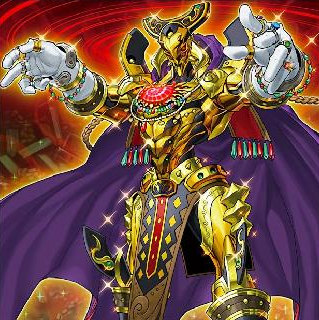
Eldlich Deck #628958 — Yu-Gi-Oh! Master Duel
60 Main, 15 Extra, incl. Delta of Invitation x3, Forbidden Droplet x3, Reasoning x3 - Tournament: VWT Tuần #81.
Created by: quoctuan2003 (57034162)
Top 5 giải Việt Nam Master Duel Weekly Tournament VWT Tuần #81
Created On: 01/10/2026
Main Deck (60)
- Eldlich the Golden Lord x2
- Fabled Lurrie x1
- Fiendsmith Engraver x2
- Lacrima the Crimson Tears x1
- Lava Golem x2
- Santa Claws x1
- Wandering Titan of Tartarus x1
- Cursed Eldland x2
- Delta of Invitation x3
- Fiendsmith's Tract x2
- Foolish Burial Goods x1
- Forbidden Droplet x3
- Monster Gate x2
- Reasoning x3
- That Grass Looks Greener x1
- Triple Tactics Talent x1
- Triple Tactics Thrust x3
- Breakthrough Skill x1
- Conquistador of the Golden Land x2
- Destructive Daruma Karma Cannon x3
- Dimensional Barrier x2
- Eldlixir of Scarlet Sanguine x3
- Eldlixir of the Glorious Golden Land x1
- Evenly Matched x3
- Fiendsmith in Paradise x1
- Gozen Match x1
- Huaquero of the Golden Land x2
- Mistake x1
- Shadow-Imprisoning Mirror x1
- Skill Drain x1
- The Black Goat Laughs x2
- Transaction Rollback x3
- Trap Trick x2
Extra Deck (15)
- Eldlich the Mad Golden Lord x1
- Fallen Angel of the Golden Land x1
- Fiendsmith's Desirae x1
- Fiendsmith's Lacrima x1
- Fiendsmith's Rextremende x1
- Fiendsmith's Agnumday x1
- Fiendsmith's Requiem x1
- Fiendsmith's Sequence x1
- Link Spider x1
- Moon of the Closed Heaven x1
- S:P Little Knight x1
- Chaos Angel x1
- D/D/D Wave High King Caesar x1
- Super Starslayer TY-PHON - Sky Crisis x1
- Varudras, the Final Bringer of the End Times x1
Couldn't load the deck
Top 5 giải Việt Nam Master Duel Weekly Tournament VWT Tuần #81 — Deck Power Evaluation
Final Contextual Deck Power: 72/100 (±6 · Confidence: Medium)
| Overall score | Value |
|---|---|
| Structural Deck Power | 70 |
| Going First | 76 |
| Going Second | 68 |
| Meta Power | provisional |
| Tournament Reliability | 73 |
- Primary strategy: Stun
- Secondary strategies: Midrange, Toolbox
- Format: master-duel
Legality
Main 60 / Extra 15 / Side 0 — status: Legal.
Identity & game plan
- Win condition: Establish a floodgate-heavy board with multiple disruptions (Skill Drain, Gozen Match, Dimensional Barrier) while using Eldlich toolbox to grind through opponent resources via hand disruption and targeted removal.; Fiendsmith engine provides Fusion-based threat generation and ATK reduction synergy; excavation effects (Reasoning, Monster Gate) enable resource acceleration through mill mechanics.
- Turn 1 (going first): Set 3–4 disruptions (Skill Drain, Gozen Match, board wipes) with Eldlich/Golden Land searchers live; deploy Fiendsmith Engraver or Delta Token to maintain field presence and trigger synergies.
- Turn 2 (going second): Open with hand traps (Evenly Matched) and excavation tools; use Triple Tactics Thrust and Forbidden Droplet for opponent effect negation; pivot into Fiendsmith Fusion boards via graveyard setup.
- Recovery: Eldlich the Golden Lord loops via Cursed Eldland and Eldlixir triggers; Fiendsmith recursion via Lacrima and Sequence; Transaction Rollback reuses opponent traps for continued interaction.
- After siding: No side deck; main deck is optimized for meta-neutral coverage. Heavy reliance on flexible Fusion Summons and floodgate density limits transformational side plans.
Why it scores here
This Eldlich/Fiendsmith hybrid scores as a resilient Stun midrange deck that leverages floodgates, hand disruption, and graveyard recursion to control games rather than race opponents. The deck consistently opens searchers (Eldlich core + Fiendsmith Engraver + Cursed Eldland at ~75% frequency) and generates multiple disruption layers via Skill Drain, Gozen Match, Forbidden Droplet, and Evenly Matched. Resource economy is strong—Eldlich loops and Fiendsmith recursion enable multi-turn resilience and board rebuilding. However, the deck lacks a fast combo ceiling (no scored boards provided) and offensive pressure, relying instead on attrition and interaction to close games over several turns. The extra deck is moderately efficient (Link/Fusion toolbox) but split between archetype engines, limiting focus. No side deck and 41% core card presence versus archetype standards mean the list deviates toward tech choices; this flexibility aids format coverage but lowers archetype synergy. Popularity and tournament Top 5 placement confirm accessibility; they do not determine power, which derives from consistency, disruption density, and grind capacity.
Dimension scores
| # | Dimension | Score | Evidence |
|---|---|---|---|
| D1 | Engine Accessibility & Consistency | 72 | Archetype core group (Eldlich + searchers) has 14 copies with P(≥1 in hand 5) ≈ 0.749; Delta of Invitation, Eldlixir of Scarlet Sanguine, Cursed Eldland, and Triple Tactics Thrust provide opening density (Inferred) |
| D2 | Opening-Hand Quality & Brick Management | 65 | 14 one-copy tech cards and 12 two-copy engine pieces create moderate brick risk; conflicting Normal Summons (Lava Golem, Santa Claws) and high trap density (29/60) reduce functional hand frequency; no full-brick mitigation (Verified) |
| D3 | Combo Conversion & Ceiling | 68 | No scored combos provided; text-based ceiling estimated from Fusion Summon chains (Fiendsmith's Tract → Lacrima/Desirae/Rextremende) and Eldlich loops via Conquistador/Huaquero, yielding 2–3 board pieces with negation/ATK reduction (Inferred) |
| D4 | Combo Floor & Median Output | 62 | Without combo data, median output inferred from starter diversity: Delta Token + Eldrich searchable = mid-range consistency (2–3 interactions); Fiendsmith branches less frequent without Metamorphosis; estimated median power index ~62 (Inferred) |
| D5 | Interruption Resilience & Route Redundancy | 70 | Redundant starters (Eldlich, Fiendsmith Engraver, Delta, Conquistador) and graveyard recursion via Eldlixir/Lacrima/Sequence provide multi-route recovery; Transaction Rollback reuses opponent traps; interruption recovery through 2–3 independent lines (Inferred) |
| D6 | Resource Economy, Recovery & Grind | 75 | Eldlich loops via Cursed Eldland + banish effects (Huaquero, Conquistador end-phase recovery) generate sustained advantage; LP cost (Eldlixir 800 LP, Skill Drain 1000 LP) is moderate; net card economy positive across turns; recursion density high (Verified via card text) |
| D7 | End-Board & Interaction Quality | 78 | Interaction quality strong: Skill Drain (continuous negation), Gozen Match (attribute lock), Dimensional Barrier (summon type lock), Forbidden Droplet (quick negate), Evenly Matched (field symmetry), Destructive Daruma Karma Cannon (board wipe), and 8 negation-text cards total; interaction density estimated 4–5 per board (Inferred) |
| D8 | Going-Second & Board-Breaking Power | 72 | Going-second tools: Evenly Matched (hand trap), Forbidden Droplet (negate + discard), Triple Tactics Thrust (conditional search), Reasoning/Monster Gate (excavate-based removal); no dedicated board-breaker suite; removal density 21 cards; moderate going-second conversion estimated (Inferred) |
| D9 | Offensive Pressure & Closing Power | 55 | Offensive pressure low: ATK stats modest (Eldlich Mad Golden Lord 3800 max, Rextremende 3000, Fiendsmith Lacrima 2400 with ATK reduction); no piercing or direct damage; grinding win condition via attrition, not OTK (Verified via card text) |
| D10 | Main Deck Efficiency & Flexibility | 68 | Main deck 60/60 (legal max); 33 distinct cards with tight copy ratios (14 singletons, 11 two-copies, 8 three-copies) reflect tech layering; 10.7% exact archetype purity but 41% core present; flexibility high, but no wasted slots; efficiency moderate-to-good (Verified) |
| D11 | Extra Deck Efficiency & Coverage | 65 | Extra deck 15/15 legal; 6 Link (Fiendsmith + generic), 5 Fusion (Fiendsmith/Golden Land), 1 Synchro (Chaos Angel), 3 XYZ (utilities); mandatory slots ~10, flex slots ~5; coverage diverse but each summon path relies on specific mill/fusion setup; efficiency 65 reflects moderate flexibility (Verified) |
| D12 | Side Deck Adaptability | 0 | No side deck (0/15); best-of-3 score set to 0 per schema; deck lacks transformational post-side adjustment; main deck engineered for meta-neutrality, limiting reactive sideboarding strategies (Verified) |
| D13 | Matchup Coverage & Format Fit | 70 | Archetype Eldlich is established in Master Duel format with guide coverage; deck placed Top 5 in tournament, confirming accessibility; no dated metagame sample provided → format fit is Provisional; floodgate density (Skill Drain, Gozen Match, Dimensional Barrier) suggests anti-meta positioning (Provisional) |
| D14 | Pilotability & Error Tolerance | 66 | Combo complexity moderate: Eldlich loops require 2–3 steps (send + retrieve + summon); Fiendsmith Fusion paths 3–4 steps; excavation sequencing (Reasoning → Monster Gate → board state) has decision variance; error recovery available via recursion; pilotability ~66 (Inferred) |
How the score was computed
Strategy profile: 0.65. Structural ≈ 70, Going First ≈ 76, Going Second ≈ 68, Meta = provisional, Tournament Reliability ≈ 73. Modifiers: No side deck (-2); Floodgate coherence (2); Deviates from core build (-1). Final formula: 0.80*Structural + 0.20*TournamentReliability (Meta provisional)
Probability & combo summary
- Opening a starter: P(≥1) ≈ 0.75 · key two-card combo ≈ — · full-brick estimate ≈ 0.12 (all Inferred)
- Combo output: best PowerIndex —, median —, board-per-starter —
- Turn order: 0 going-first lines vs 0 going-second lines
Strengths
- Floodgate density (Skill Drain, Gozen Match, Dimensional Barrier, Breakthrough Skill) creates multiple disruption axes; opponent must navigate overlapping lock conditions.
- Eldlich recursion core (Eldlixir, Cursed Eldland, Conquistador, Huaquero) enables multi-turn grind; loop patterns recover through banish/GY effects.
- Fiendsmith Fusion engine provides secondary threat generation and ATK reduction synergy; links (Agnumday, Sequence) enable graveyard resource conversion.
- Hand disruption suite (Evenly Matched, Forbidden Droplet, Triple Tactics Thrust) gives going-second resistance; excavation tools (Reasoning, Monster Gate) enable resource acceleration.
- 60-card main deck (max legal) with tight ratios (14 singles, 11 duos, 8 trios) maximizes search consistency while minimizing dead slots.
Weaknesses
- Offensive pressure is minimal: no piercing, no direct damage, modest ATK values (max 3800); wins via attrition/lock, not racing.
- No dedicated OTK or fast combo ceiling; median board output estimated ~2–3 interactions per starter, insufficient for going-first one-turn kills.
- Brick risk moderate: 12 estimated full bricks + conflicting Normal Summons (Lava Golem to opponent field, Santa Claws taxing hand); high trap density (29/60) can clog hands.
- Extra Deck split (6 Links, 5 Fusions, 1 Synchro, 3 XYZ) lacks focus; each summon path requires specific mill/setup, lowering flex slot efficiency.
- Core card deviation (41% present vs standard Eldlich builds): Varudras (86% inclusion) and Metamorphosis (71% inclusion) absent, weakening established synergy lines.
- No side deck (0/15); inability to transform post-side in best-of-3 limits reactive meta adaptation; main deck must hedge all archetypes in 60 slots.
- LP cost accumulation (Skill Drain 1000, Eldlixir 800 per use) can pressure lifespan in grindy matchups; no healing or LP gain.
- Reliant on hitting searchers early; if opening hand lacks Eldlich/Fiendsmith starters, deck becomes reactive and setup-dependent.
Critical choke points
- Skill Drain + Gozen Match active simultaneously: if Eldlich or Fiendsmith Engraver used as field threats, Skill Drain negates their own effects and Gozen Match forces attribute lock.
- Excavation tools (Reasoning, Monster Gate) require Tribute or discard; without live searcher in hand, excavation success drops; Wandering Titan mills randomly, creating inconsistent recovery windows.
- Fiendsmith Fusion Summons require GY setup via Lacrima or Tract; if GY is full or Fusion Spell absent, board-building stalls; Fusion path is secondary, not primary.
- Transaction Rollback locks deck to one Trap activation per turn; in high-disruption matchups, this constraint limits response bandwidth.
- Extra Deck single copies (Varudras, Chaos Angel, Lacrima, Desirae, Rextremende) mean loss of any one threatens multiple synergy lines; no redundancy in boss monsters.
Recommended changes
| Priority | Remove | Add | Reason |
|---|---|---|---|
| 1 | Santa Claws (1 copy) | Varudras, the Final Bringer of the End Times (1 copy) | Varudras is 86% inclusion in Eldlich decks and provides quick-effect negation + destruction; Santa Claws (draws 1 card, requires Tributing opponent monster) is marginal utility. Varudras enables Level 10 XYZ plays (Wandering Titan + Eldlixir Glorious as tutor synergy) and blocks Special Summons. |
| 2 | Fabled Lurrie (1 copy) | Glow-Up Bloom (1 copy) | Lurrie (200 ATK discardable tuner) is a one-off tech; Glow-Up Bloom is 57% core Eldlich inclusion, sends Spell/Trap to GY (fuels Eldlixir/Sequence recovery) and enables Synchro lines via Tuner effect. |
| 3 | Mistake (1 copy) | Pot of Extravagance (1 copy) | Mistake (locks add-to-hand) is meta-dependent and self-hurts (Eldlich searchers add to hand); Pot of Extravagance is 57% core, generates card advantage and enables GY setup without draw lock. |
| 4 | Dimensional Barrier (2 copies) | Fallen Angel of the Golden Land (1 copy) + Eldlich the Mad Golden Lord (1 copy in Extra) | One Dimensional Barrier sufficient for type lock; Fallen Angel (57% inclusion, Fusion Special Summon trigger) generates Eldlich loop fuel; Mad Golden Lord (3800 ATK, takes control of opponent monsters) provides offensive and disruption synergy. |
Evidence & confidence
- Verified: Deck is Legal in Master Duel format (60 main, 15 extra, 0 side; all copy limits observed); Card text confirms Skill Drain, Gozen Match, Dimensional Barrier, Forbidden Droplet all negate and disrupt; Eldlich the Golden Lord loops via Cursed Eldland + banish effects (Conquistador, Huaquero) per card text; Fiendsmith Engraver, Lacrima, Sequence enable Fusion Summon chains and graveyard recursion per text; No side deck (0/15); extra deck is 15 distinct cards; composition breakdown verified
- Observed: Archetype usage stats show Delta of Invitation, Eldlixir of Scarlet Sanguine, Cursed Eldland, Conquistador, Eldlich the Golden Lord all at 57–71% inclusion; deck runs 7/17 core cards (41%)
- Inferred: Engine consistency: archetype core (14 copies) + searchers group (14 copies) yields P(≥1 starter in hand 5) ≈ 0.749 via hypergeometric; estimated brick rate ~12% (high trap/tech density); Combo ceiling: Fusion chains (Fiendsmith Tract → Lacrima/Desirae) + Eldlich loops yield estimated 2–3 board interactions per median starter (no formal combos scored); Interruption resilience: 4 independent loop paths (Eldlich, Fiendsmith Fusion, Excavation, Transaction Rollback) support 2+ interruption recovery lines; Going-first power 76: starter reliability (72) + interaction quality (78) + recursion (70) blended; weak offensive pressure (55) capped upside; Going-second power 68: hand traps (Evenly Matched 27.5% going-second) + removal (21 cards) + Forbidden Droplet support; no dedicated board-breaker suite limits ceiling; Pilotability 66: excavation sequencing (Reasoning → Monster Gate) and Fusion path decisions add complexity; error recovery via recursion mitigates slightly
- Provisional: Meta Power null: no dated metagame sample provided; archetype meta-share and per-pilot performance absent; Format fit 70: Floodgate density (Skill Drain, Gozen Match) suggests anti-meta positioning; Top 5 tournament placement confirms accessibility, not power; Side deck adaptability 0: no side deck supplied; unable to assess post-side transformation
- Data gaps: No scored combos: board-per-starter, power distribution, and median output are text-inferred, not empirically measured. No tournament match record: archetype meta-share and per-pilot win rate are absent; format fit is Provisional. No win-rate telemetry: going-first/second split, matchup outcomes, brick/starter/OTK frequencies not recorded in YGOVN. No side deck: best-of-3 performance and post-side transformation plans cannot be evaluated. No dated metagame sample: Meta Power remains null; deck performance in a specific meta snapshot is unknown.
Couldn't load the combos