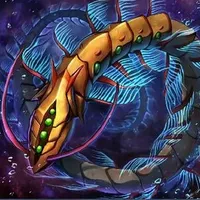
Paleozoic Deck #467500 — Yu-Gi-Oh! Master Duel
60 Main, 15 Extra, incl. Reasoning x3, Time-Tearing Morganite x3, Traptantalizing Tune x3.
Created by: YGO Mod (20517634)
Created On: 04/16/2025
Main Deck (60)
- Absolute King Back Jack x2
- Vulmina, Statue of the Sacred Dragon x1
- Magicolloidal Sol x2
- Pot of Desires x1
- Reasoning x3
- That Grass Looks Greener x1
- Time-Tearing Morganite x3
- Traptantalizing Tune x3
- Balance of Judgment x2
- Destructive Daruma Karma Cannon x3
- Different Dimension Ground x1
- Dimensional Barrier x2
- Elemental Burst x1
- Evenly Matched x2
- Fiend Griefing x2
- Needlebug Nest x3
- Paleozoic Canadia x2
- Paleozoic Dinomischus x3
- Paleozoic Leanchoilia x3
- Paleozoic Marrella x3
- Paleozoic Olenoides x2
- Rise to Full Height x3
- The Black Goat Laughs x1
- Titanocider x2
- Transaction Rollback x3
- Trap Trick x3
- Waboku x3
Extra Deck (15)
Couldn't load the deck
Deck — Deck Power Evaluation
Final Contextual Deck Power: 53/100 (±6 · Confidence: Medium)
| Overall score | Value |
|---|---|
| Structural Deck Power | 58.4 |
| Going First | 65 |
| Going Second | 60 |
| Meta Power | provisional |
| Tournament Reliability | 54 |
- Primary strategy: Midrange
- Secondary strategies: Control, Graveyard/Backrow-centric
- Format: master-duel
Legality
Main 60 / Extra 15 / Side 0 — status: Legal.
Identity & game plan
- Win condition: Xyz and Link beatdown from the Extra Deck (Paleozoic Anomalocaris, Paleozoic Opabinia, Gigantic Spright, Accesscode Talker) after the Paleozoic traps have removed or disrupted the opposing board.; Level 12 Xyz finishers (Divine Arsenal AA-ZEUS - Sky Thunder, Super Starslayer TY-PHON - Sky Crisis), reached only through their alternate Xyz Summon text rather than through Level 12 materials in the deck.
- Turn 1 (going first): Set Paleozoic traps and generic interaction on turn 1, then activate a Paleozoic trap to open the graveyard summon of a 1200 ATK Level 2 monster and build toward a Level 2 Xyz or Link using that monster.
- Turn 2 (going second): Use Evenly Matched, Dimensional Barrier, Olenoides, Canadia, and Rise to Full Height to answer the opposing board, then rebuild with graveyard-summoned Paleozoic monsters, which cannot be affected by monster effects.
- Recovery: Recover from the graveyard: Paleozoic trap monsters return whenever a Trap is activated, and Opabinia or Anomalocaris can add a Paleozoic trap back to hand by detaching material.
- After siding: No side deck is registered, so there is no post-side plan; the deck cannot change its interaction suite between games.
Why it scores here
The deck is a trap-driven midrange shell: 13 Paleozoic-named Trap cards in the Main Deck revive themselves from the Graveyard as 1200 ATK Level 2 monsters whenever any Trap is activated, and those monsters are unaffected by opposing monster effects. By the hypergeometric estimate, at least one such Paleozoic trap appears in a five-card opening hand about 72% of the time, so the engine is reachable on most turns, but the remaining 31 non-Paleozoic traps make many hands functionally thin. Interaction is the strongest part of the system: Olenoides, Canadia, Rollback, Rise to Full Height, Daruma, Elemental Burst, and Dimensional Barrier give broad, layered answers to the opposing board, and recursion keeps those answers coming back. Conversion is capped by the lack of recorded boards and by two Level 12 Xyz that require alternate summon conditions, and the empty side deck removes any post-side adjustment. Popularity and archetype usage did not earn points, and the score was built from the interacting parts of the system rather than by averaging the individual card scores.
Dimension scores
| # | Dimension | Score | Evidence |
|---|---|---|---|
| D1 | Engine Accessibility & Consistency | 62 | Estimated P(at least one Paleozoic trap in a 5-card opening hand) ≈ 0.72 across 13 main-deck copies; the engine also needs a Trap activation to wake the graveyard monsters (Inferred). |
| D2 | Opening-Hand Quality & Brick Management | 48 | 44 Trap cards with 31 non-Paleozoic traps and only 5 Main Deck monsters, so many hands are reactive and lack a graveyard-summonable body (Inferred). |
| D3 | Combo Conversion & Ceiling | 55 | No recorded boards exist; the ceiling is read from card text as Xyz/Link extension via Anomalocaris and Opabinia plus graveyard recursion (Inferred). |
| D4 | Combo Floor & Median Output | 48 | No recorded boards exist, so median output cannot be measured and is held near the middle of the scale (Inferred). |
| D5 | Interruption Resilience & Route Redundancy | 66 | Paleozoic monsters are unaffected by monster effects and the graveyard summon repeats across five trap-monsters, giving several independent restart routes (Inferred). |
| D6 | Resource Economy, Recovery & Grind | 66 | Trap recursion from the graveyard, Opabinia and Anomalocaris searching Paleozoic traps, and Traptantalizing Tune plus Time-Tearing Morganite for card flow give good regeneration (Inferred). |
| D7 | End-Board & Interaction Quality | 74 | Interaction density is high: 37 removal-text cards and 4 negation-text cards in the Main Deck, with layered answers to monsters and Spell/Trap cards (Inferred semantic read, supported by card text). |
| D8 | Going-Second & Board-Breaking Power | 60 | Going-second hand quality relies on two hand traps and a 6-card hand; P(at least one hand trap) ≈ 0.19 and the Board Breaker set is mostly reactive (Inferred). |
| D9 | Offensive Pressure & Closing Power | 62 | Closing pressure comes from Anomalocaris (2400 ATK), Gigantic Spright (doubling ATK), and the 2900–3000 ATK Level 12 Xyz, which are reachable only through alternate summon text (Verified stats, Inferred reach). |
| D10 | Main Deck Efficiency & Flexibility | 52 | 27 distinct Main Deck cards in 60 slots, but only 19 of 75 copies are Paleozoic-named, so about half the list is off-engine generic filler (Verified composition, Inferred efficiency). |
| D11 | Extra Deck Efficiency & Coverage | 55 | The Extra Deck holds 15 cards with 5 Paleozoic-named Xyz/Link engine pieces, while the rest are generic or off-archetype finishers with conditional summon routes (Verified composition, Inferred efficiency). |
| D12 | Side Deck Adaptability | 35 | The Side Deck is empty (0 cards), which is legal in Master Duel but leaves no way to adapt between games (Verified). |
| D13 | Matchup Coverage & Format Fit | 50 | No tournament link or dated meta sample exists, so matchup and format fit cannot be measured (Provisional). |
| D14 | Pilotability & Error Tolerance | 50 | Chaining Trap activations, graveyard summons, Xyz material detaching, and alternate Xyz conditions requires several decision points per turn (Inferred). |
How the score was computed
Strategy profile: Midrange weights used; Control influence (interaction and recursion) reflected in D7 and D6 scores rather than in a separate weight blend. Structural ≈ 58.4, Going First ≈ 65, Going Second ≈ 60, Meta = provisional, Tournament Reliability ≈ 54. Modifiers: Generic trap dilution (-3); No side deck (-2). Final formula: 0.80*Structural + 0.20*TournamentReliability + ContextModifiers (Meta provisional, no dated metagame sample); 0.80*58.4 + 0.20*54 - 5 = 52.5, rounded to 53
Probability & combo summary
- Opening a starter: P(≥1) ≈ 0.72 · key two-card combo ≈ — · full-brick estimate ≈ — (all Inferred)
- Combo output: best PowerIndex —, median —, board-per-starter —
- Turn order: 0 going-first lines vs 0 going-second lines
Strengths
- Interaction is layered: monster, Spell/Trap, and graveyard-based answers across many cards.
- Graveyard recursion repeats: Paleozoic traps revive as 1200 ATK monsters on each Trap activation.
- Paleozoic monsters are unaffected by opposing monster effects, which protects the engine board.
- The Extra Deck has a clear Paleozoic Xyz/Link core (Anomalocaris, Opabinia, Cambroraster) plus strong closers.
Weaknesses
- Trap-heavy composition: 31 non-Paleozoic Traps dilute the engine and create dead draws.
- Only 5 Main Deck monsters, so the deck has few bodies to build with outside graveyard summons.
- No Side Deck, so no adaptation between games.
- The Level 12 Xyz finishers have no Level 12 materials in the deck and depend on alternate summon conditions.
Critical choke points
- The engine needs a Trap activation after a Paleozoic Trap reaches the graveyard, so a hand with no Trap activation option can stall.
- Opabinia or Anomalocaris are the main ways to rebuild the Paleozoic trap count, so losing them removes the recursion route.
- Without a side deck, a single opposing answer to the Paleozoic board can leave no backup plan.
Recommended changes
| Priority | Remove | Add | Reason |
|---|---|---|---|
| 1 | One copy of Different Dimension Ground | A Paleozoic-named Trap, if the Trap count can be raised without breaking the copy limit | It is a one-copy situational card, and replacing it with an engine-linked trap lowers brick risk. |
| 2 | None (side deck is empty) | A short side deck of targeted answers for the most common opposing threats | An empty side deck removes all post-side adjustment and lowers Side Deck Adaptability. |
Evidence & confidence
- Verified: Main Deck 60 cards, Extra Deck 15 cards, Side Deck 0 cards; legal for Master Duel (size 40–60, extra 0–15, side 0–15).; That Grass Looks Greener is Limited with 1 copy, within legal limits.; Paleozoic-named copies total 19 of 75 cards.; Main Deck composition is 44 Trap, 11 Spell, and 5 monsters.; Usage statistics show only 1 of 18 standard core cards present; no tournament link.
- Inferred: Opening-hand starter probability of ≈0.72 derived from the hypergeometric count of 13 Paleozoic-named main traps.; Recursion and interaction density read from card text.; Going-first and going-second estimates derived from the dimension scores.; Level 12 Xyz reach depends on alternate summon text.
- Provisional: Meta Power is null and Matchup and Format Fit is scored only as a provisional read, because no dated meta sample exists.
- Data gaps: No recorded boards, so combo floor, median, and ceiling are text-only inference. No tournament link, so archetype meta-share and per-pilot records are absent. No win-rate telemetry for going-first, going-second, matchups, or brick and starter rates. Meta Power remains provisional without a dated metagame sample. Usage statistics show only 1 of 18 standard core cards present, so archetype-standard comparison is weak.
Couldn't load the combos