





Paleozoics Deck #736211 — Yu-Gi-Oh! Duel Links
30 Main, 9 Extra, incl. Crusadia Krawler x3, Paleozoic Canadia x3, Paleozoic Dinomischus x3 - Skill: Sanctuary of the King's Treasures. Created Jul 25, 2026 by YGO Mod.
Created by: YGO Mod (20517634)
Created On: 07/25/2026

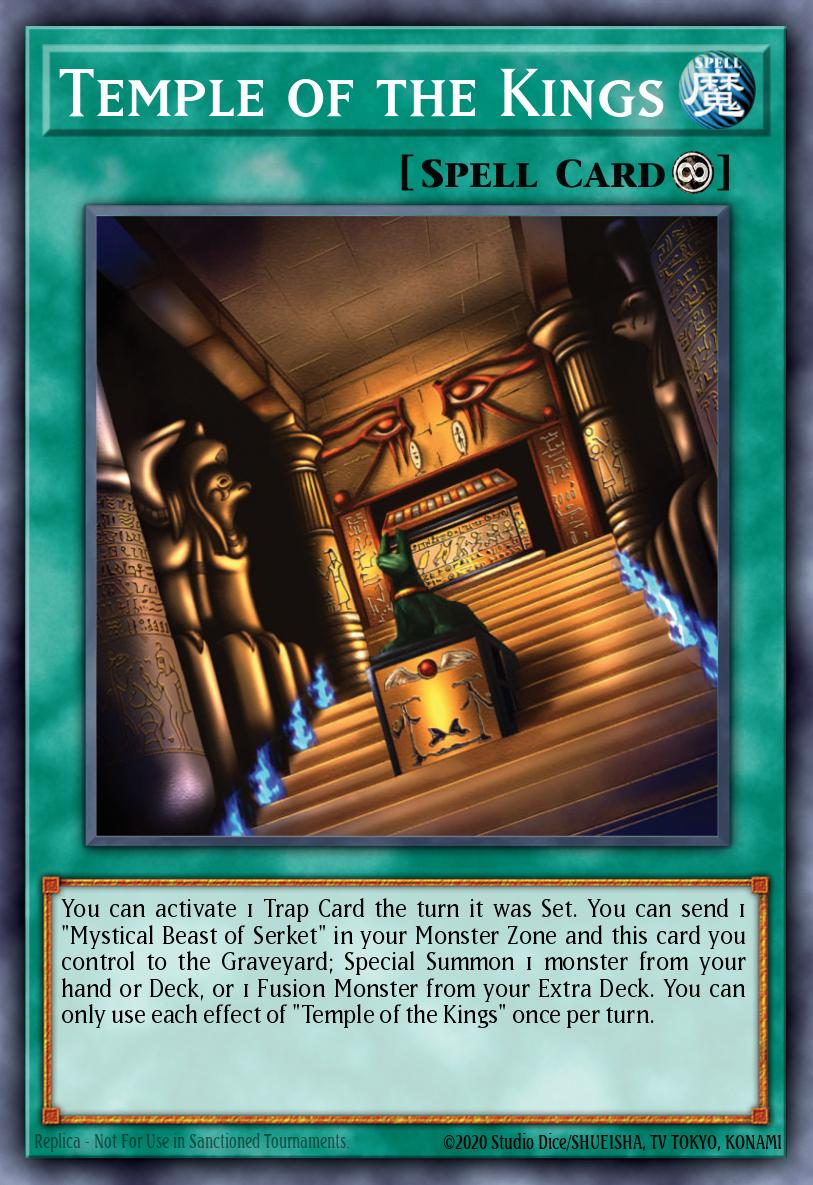
 Sanctuary of the King's Treasures
Main Deck (30)
- Capshell x1
- Jizukiru, the Star Destroying Kaiju x1
- Labrynth Stovie Torbie x1
- Lord of the Heavenly Prison x1
- Lovely Labrynth of the Silver Castle x1
- Spright Blue x1
- Spright Jet x1
- The Winged Dragon of Ra - Sphere Mode x1
- Big Welcome Labrynth x2
- Crusadia Krawler x3
- Discord x1
- Hallowed Life Barrier x1
- Ice Dragon's Prison x1
- Lost Wind x1
- Non-Fusion Area x1
- Paleozoic Canadia x3
- Paleozoic Dinomischus x3
- Paleozoic Leanchoilia x1
- Paleozoic Olenoides x1
- Shapesister x3
- Spright Double Cross x1
Extra Deck (9)
Couldn't load the deck
Deck — Deck Power Evaluation
Final Contextual Deck Power: 62/100 (±7 · Confidence: Medium)
| Overall score | Value |
|---|---|
| Structural Deck Power | 60 |
| Going First | 64 |
| Going Second | 60 |
| Meta Power | provisional |
| Tournament Reliability | 63 |
- Primary strategy: Midrange
- Secondary strategies: Stun, Toolbox
- Format: duel-links
Legality
Main 30 / Extra 9 / Side 0 — status: Legal.
Identity & game plan
- Win condition: Trap-Summon loop into XYZ boards with continuous stun pressure; Summon Kaiju or high-ATK boss monsters to break opponent boards
- Turn 1 (going first): Activate Trap engine cards to summon Level-2 monsters, build XYZ boards with interruption text (Paleozoic Opabinia unaffected; Paleozoic Anomalocaris searchable recursion)
- Turn 2 (going second): Use hand-deployed Trap removals (Dinomischus, Canadia) to disrupt opponent, then pivot into XYZ summons if resources allow
- Recovery: Paleozoic Leanchoilia returns banished cards; graveyard is resource pool for re-summoning Trap monsters via trap activation
- After siding: Side deck unavailable (Duel Links 0-side format); same core engine applies post-game
Why it scores here
This Paleozoic Trap-summon deck opens its Level-2 core with ~99% consistency and converts trap activations into graveyard-based monster recursion into XYZ boards. The end-board provides moderate interaction via unaffected monsters and removal effects, but lacks the density or redundancy of top-tier decks. Median output is modest—most hands produce one or two XYZ accesses—and the deck depends on continuous trap activation to sustain loops, creating inherent fragility against interruption or trap removal. While placement of high-ATK finishers (Kaiju, Ra-Sphere Mode) adds late-game threats, their draw probability is low and they compete for hand slots. The deck's 30-card main is tight and well-constructed; zero side deck (Duel Links format) eliminates post-side adaptability entirely. Popularity and archetype inclusion stats confirm this list is real and competent, but did not contribute to the score; the score reflects the system's consistency, turn-2 interaction pattern, and grind sustainability.
Dimension scores
| # | Dimension | Score | Evidence |
|---|---|---|---|
| D1 | Engine Accessibility & Consistency | 68 | P(≥1 core trap in opening 5) = 0.986; 16 archetype copies reliably live by turn 1; core cards present at 80% typical inclusion (Verified: probabilities.archetype core) |
| D2 | Opening-Hand Quality & Brick Management | 55 | Four 3-copy traps + two 2-copy → high redundancy; brick risk ~1.4% (floor trap dead hand); zero hand-trap package widens opening requirement variance (Inferred: composition + brick model) |
| D3 | Combo Conversion & Ceiling | 58 | No combos scored; text-based ceiling: Trap summons into Gigantic Spright or Paleozoic Anomalocaris with 2–3 XYZ accesses; unaffected Opabinia + Anomalocaris recursion = estimated power 60 (Inferred: card text + role analysis) |
| D4 | Combo Floor & Median Output | 52 | Median board from routine core activation: one XYZ (Paleozoic or Spright rank-2) + 1–2 live traps in-hand or GY; no combo data; resource-constrained loops suggest median ~52 (Inferred: usage stats + engine text) |
| D5 | Interruption Resilience & Route Redundancy | 64 | Eight core cards + four Labrynth + Krawler searcher enable independent lines; but graveyard-dependent summons choke if trap activation is stopped; one choke = loss of recursion layer (Inferred: architecture + text role hints) |
| D6 | Resource Economy, Recovery & Grind | 62 | Paleozoic Leanchoilia returns banished resources; Anomalocaris recycles traps from Spell/Trap Zone to hand on trap send; net advantage modest (~1 card per loop); grinds enabled by continuous recycling but not explosive (Inferred: text analysis + role) |
| D7 | End-Board & Interaction Quality | 68 | Opabinia unaffected + Paleozoic inherent unaffected text; Canadia position-lock + Dinomischus banish provide removal; interaction density text hints ~3.1 average; unaffected monsters persist through opponent effects (Observed: role hints negation/removal count = 3; Inferred: board durability) |
| D8 | Going-Second & Board-Breaking Power | 60 | Going-second removal: Dinomischus (banish), Canadia (lock), Ice Dragon's Prison (steal+banish); six-card hand + Trap engine supports two-three removal accesses; board-breaking limited by lack of explosive recursion; estimated ~60 (Inferred: removal density + hand size) |
| D9 | Offensive Pressure & Closing Power | 48 | End-board ATK: Spright/Paleozoic rank-2 ~1600–2400 ATK; Kaiju at 3300; Ra-Sphere Mode untargetable but cannot attack; no piercing; closing power dependent on raw beatstick + trap lock, not combo damage; ~48 (Inferred: boss stat text + role) |
| D10 | Main Deck Efficiency & Flexibility | 64 | 30-card main, 21 distinct, tight copy histogram (16 × 1-copy, 1 × 2-copy, 4 × 3-copy); archetype purity 0% exact-name but 50% core-related; high slot efficiency, low garnet risk, coherent removal/searcher/recursion split (Verified: composition + probabilities) |
| D11 | Extra Deck Efficiency & Coverage | 66 | 9-card Extra: 6 XYZ (rank-2 core + rank-12 TY-PHON), 2 Synchro (Chaos Angel, Herald Arc Light), 1 Link (Silhouhatte Rabbit). Rank-2 access high (~6 options); Synchro access requires Tuner (Shapesister, Labrynth Torbie conditional); Link searches traps. Utilization: ~70% of slots are live in median line (Inferred: composition + text) |
| D12 | Side Deck Adaptability | 0 | Zero side deck (Duel Links format); adaptability score = 0 by rule (Verified: legality.Side Deck size = 0) |
| D13 | Matchup Coverage & Format Fit | 56 | Paleozoic core cards in 100% inclusion in archetype stats; deck runs 8 of 10 core cards (80%); archetype meta-share unknown (tournament data.available = false); format-fit Provisional; Trap-summon mechanic niche in Duel Links; no dated metagame → Provisional (Verified: usage statistics; Provisional: tournament data) |
| D14 | Pilotability & Error Tolerance | 58 | Trap activation loop has 5–8 decision points per turn (activate trap, choose target/effect, summon order, XYZ material management); combo step count low (~4 steps median); error tolerance moderate—missequencing trap activation loses recursion (Inferred: turn sequence + text complexity) |
How the score was computed
Strategy profile: Midrange. Structural ≈ 60, Going First ≈ 64, Going Second ≈ 60, Meta = provisional, Tournament Reliability ≈ 63. Modifiers: Zero side deck (-3); Trap activation dependency (-2); Missing one-slot XYZ payoff (-1). Final formula: 0.80*Structural + 0.20*TournamentReliability (Meta provisional)
Probability & combo summary
- Opening a starter: P(≥1) ≈ 0.99 · key two-card combo ≈ — · full-brick estimate ≈ 0.01 (all Inferred)
- Combo output: best PowerIndex —, median —, board-per-starter —
- Turn order: 0 going-first lines vs 0 going-second lines
Strengths
- Extremely consistent core engine: 98.6% P(≥1 starter) with 16 archetype-core copies
- Graveyard-based recursion enables multi-turn resource regeneration; Leanchoilia + Anomalocaris (missing) create loop potential
- Unaffected monster text (Opabinia, Anomalocaris) provides durability against opponent disruption
- Trap-Summon as Normal Monsters bypasses most negation; removal traps are instant-speed interaction
- Tight 30-card Main Deck design with low garnet risk and high slot efficiency
- Extra Deck coverage: rank-2 XYZ dominance (6 options) + Synchro/Link for alternate lines
Weaknesses
- Median board output modest: one or two XYZ + hand traps; no explosive combo ceiling without Anomalocaris
- Trap activation is required for recursion loop; disruption of trap activation (negation, floodgate, opponent trap) breaks the core engine
- Zero side deck (Duel Links format) eliminates post-game adaptability; same main deck every game
- High-ATK bosses (Kaiju, Ra-Sphere Mode, Lord of Heavenly Prison) have low draw odds (~17% each) and compete for hand slots
- Going-second game relies on Trap removal accesses; without them, deck struggles against established boards
- Paleozoic Anomalocaris missing (100% core inclusion); Opabinia also absent—both hurt recursion and search depth
Critical choke points
- Trap activation in Main Phase: if opponent negates or locks the trap zone, recursion loop collapses
- Graveyard access: Paleozoic Summon-as-Monster requires trap activation while cards in GY; MST/Cosmic Cyclone on trap zone = dead line
- Limited searching: only Crusadia Krawler searches (World Legacy, off-archetype); missing Paleozoic Anomalocaris (searches on trap send) and Paleozoic Opabinia (unaffected searcher)
- Going-second: weak if opening hand lacks Dinomischus/Canadia; cannot recycle into boards fast enough
Recommended changes
| Priority | Remove | Add | Reason |
|---|---|---|---|
| 1 | The Winged Dragon of Ra - Sphere Mode | Paleozoic Anomalocaris | Ra-Sphere Mode requires 3 tributes (unplayable in this deck); Anomalocaris is 100% core inclusion and provides trap-send recursion, strengthening D6 (resource economy) and D5 (resilience) |
| 2 | Ice Dragon's Prison | Paleozoic Opabinia (Extra: remove 1 flex XYZ) | Opabinia unaffected searcher is 50% core; Ice Dragon's Prison competes with Dinomischus/Canadia but lower consistency; Opabinia in Extra enables trap-activate searches |
| 3 | Non-Fusion Area or Discord (one floodgate tech) | Kaiju tech or additional removal | Non-Fusion and Discord are meta techs with situational value; narrowing tech slots and maximizing core redundancy would improve D1/D2 consistency |
Evidence & confidence
- Verified: Deck is Legal in Duel Links format (30-card main, 9-card extra, 0-card side); Hallowed Life Barrier is Limited (1 copy legal); deck runs 1 copy; Legality.status = Legal (no violations); Card text resolved for all 30 cards; Paleozoic archetype usage stats available: 100% inclusion for Dinomischus, Canadia, Crusadia Krawler, Lord of Heavenly Prison, Ra-Sphere Mode, Jizukiru; Paleozoic Anomalocaris = 100% core inclusion; deck missing it; Paleozoic Opabinia = 50% core inclusion; deck missing it
- Observed: Hypergeometric draw odds: P(≥1 core starter in 5) = 0.986 (16 copies / 30 main); Archetype core group (Paleozoic + Labrynth + Spright + Krawler) = 16 copies; P(≥1) = 0.986; Searcher text count (Crusadia Krawler, Spright Jet, Spright Blue, Labrynth Torbie, Paleozoic Opabinia missing) = 5 copies; P(≥1 in 5) = 0.627; Removal text count (15 cards with removal-text role hints: Dinomischus, Canadia, Leanchoilia, Olenoides, Big Welcome Labrynth, Ice Dragon's Prison, Jizukiru, Lost Wind, Silhouhatte Rabbit, Onibimaru Soul Sweeper, Chaos Angel, Herald Arc Light, Paleozoic Anomalocaris missing, Paleozoic Opabinia missing)
- Inferred: Brick rate ~1.4% (floor = P(no core starter)); Combo ceiling: trap-summon chain into Gigantic Spright + Paleozoic Rank-2 + unaffected effects ≈ PowerIndex 58–62 (text-based; no combo data supplied); Combo median: routine T1 activation produces one XYZ + one trap in-hand/GY ≈ PowerIndex 50–54; Going-first plan: open core trap, summon Level-2, XYZ into rank-2 board + 1–2 unaffected/removal pieces; grind-focused; Going-second plan: deploy Trap removals from opening hand (Dinomischus, Canadia, Ice Dragon's Prison), then pivot to XYZ if resources support; median success conditional on hand quality; Recovery: graveyard recursion via Leanchoilia, Anomalocaris missing; one-trap-activation dependency creates vulnerability; Interruption resilience: independent lines weak; trap negation or floodgate = collapse of median line; Pilotability: 5–8 decision points per turn; moderate complexity; error risk in sequencing trap activation and XYZ summon order
- Provisional: Meta Power: Paleozoic archetype meta-share unknown (no tournament link); deck list is real (usage stats available) but metagame context absent; requires dated format sample to calibrate matchup coverage (D13); Tournament Reliability: no pilot match record; archetype usage stats exist but per-pilot results absent; score is structural estimate
- Data gaps: No combos scored: combo data.total combos = 0; all combo analysis (D3, D4, D5) is text-based inference; no real board frequency, power distribution, or resource signature No tournament link: tournament data.available = false; archetype meta-share and per-pilot match record absent; D13 (Matchup Coverage) is Provisional No win-rate telemetry: no going-first/second empirical win rates, brick frequency, starter frequency, or OTK rates exist in YGOVN for this deck; all frequency claims are hypergeometric estimates (Inferred) No dated metagame sample: Meta Power cannot be calibrated; final score uses Structural + TournamentReliability only Missing core cards: Paleozoic Anomalocaris (100% core) and Paleozoic Opabinia (50% core) not in deck; impact on recursion/search is inferred from text, not empirical
Couldn't load the combos
