





Code Talker Deck #92832 — Yu-Gi-Oh! Duel Links
Created by: YGO Mod (20517634)
Created On: 09/09/2023

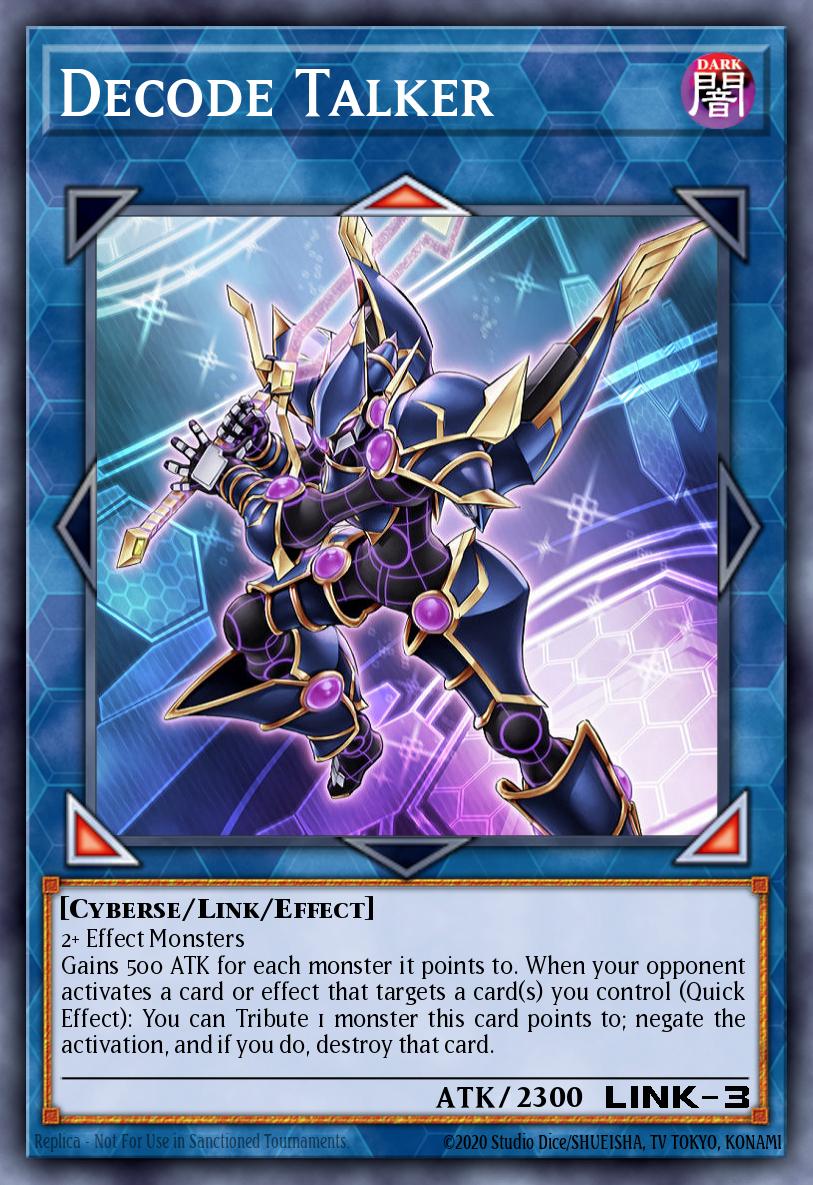

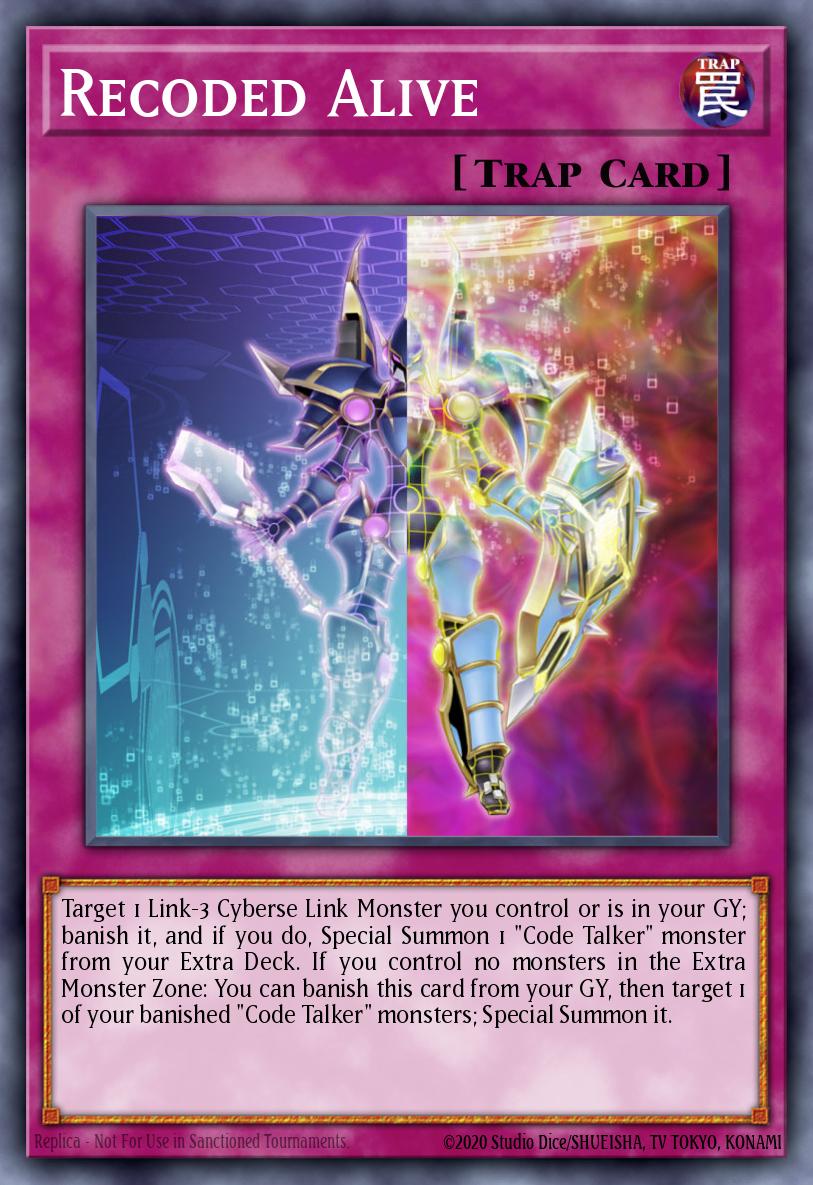
 Code Talker Alive
Main Deck (20)
- Backup Secretary x1
- Cyberse Gadget x1
- Lady Debug x3
- Mathmech Addition x1
- Mathmech Subtraction x1
- Micro Coder x3
- Sea Archiver x1
- Tenyi Spirit - Vishuda x3
- Cynet Backdoor x2
- Cynet Crosswipe x1
- Cynet Mining x3
Extra Deck (8)
Couldn't load the deck
Deck — Deck Power Evaluation
Final Contextual Deck Power: 67/100 (±5 · Confidence: Medium)
| Overall score | Value |
|---|---|
| Structural Deck Power | 68 |
| Going First | 72 |
| Going Second | 35 |
| Meta Power | provisional |
| Tournament Reliability | 60 |
- Primary strategy: Combo
- Secondary strategies: Control
- Format: duel-links
Legality
Main 20 / Extra 8 / Side 0 — status: Legal.
Identity & game plan
- Win condition: OTK via Shootingcode Talker multi-attacks and high-ATK boss monsters; Attrition and board control using Decode Talker negations and Firewall Dragon returns
- Turn 1 (going first): Search for Cyberse starter, Link Summon Decode/Firewall/Shootingcode, establish layered negates, and attack through
- Turn 2 (going second): Stall with backrow/negates, break opponent's board with Cynet Crosswipe or Sea Archiver, and recover with extender effects
- Recovery: Restart lines using Lady Debug, Micro Coder, or Backup Secretary when initial starters are disrupted
- After siding: N/A (zero side deck cards)
Why it scores here
This Code Talker deck operates as a highly consistent Combo system built around a 20-card main deck packed with searchers and Cyberse extensors. Its engine accessibility is exceptional, with a ~3% full-brick probability and redundant starters enabling reliable Turn 1 plays. While the ceiling boasts strong OTK potential through Shootingcode Talker multi-attacks and the end-board features layered negates from Decode Talker and Firewall Dragon, the median output remains solid but vulnerable to targeted disruption. The absence of hand traps and a zero-card side deck significantly penalize its going-second resilience and post-side adaptability, capping its overall reliability despite its mechanical efficiency. Popularity and archetype share did not inflate this score; it reflects the system's actual consistency, conversion rates, and structural flaws.
Dimension scores
| # | Dimension | Score | Evidence |
|---|---|---|---|
| D1 | Engine Accessibility & Consistency | 85 | P(≥1 starter in opening 5) ≈ 0.60 per key card; archetype core group opens 97% of the time (Inferred) |
| D2 | Opening-Hand Quality & Brick Management | 75 | Hypergeometric brick rate ≈ 3%; high searcher density mitigates dead hands, though zero hand traps hurt going-second starts (Inferred) |
| D3 | Combo Conversion & Ceiling | 70 | Text-inferred best line reaches OTK thresholds via Shootingcode Talker multi-attacks and high-ATK boss monsters (Inferred) |
| D4 | Combo Floor & Median Output | 65 | Median output reliably establishes a 1–2 monster board with Decode/Firewall protection and modest interaction (Inferred) |
| D5 | Interruption Resilience & Route Redundancy | 60 | Redundant starters (Micro Coder, Lady Debug, Backup Secretary) allow route switching, but lack of recursion creates choke points (Inferred) |
| D6 | Resource Economy, Recovery & Grind | 65 | Heavy float via 11 searcher-text cards sustains resource advantage, though grind suffers without hand traps or hard garnets (Inferred) |
| D7 | End-Board & Interaction Quality | 70 | End-board layers Decode Talker negations, Firewall Dragon returns, and Security Dragon repositions for durable interaction (Inferred) |
| D8 | Going-Second & Board-Breaking Power | 40 | Going-second power is severely hampered by 0 hand traps; relies on backrow spells and targeted removal to challenge established boards (Inferred) |
| D9 | Offensive Pressure & Closing Power | 75 | Shootingcode Talker enables multi-attack OTK pressure, while Decode/Firewall provide high-ATK beatsticks for closing games (Inferred) |
| D10 | Main Deck Efficiency & Flexibility | 80 | Compact 20-card main deck maximizes consistency and slot efficiency, leaving minimal room for conflicting fills (Inferred) |
| D11 | Extra Deck Efficiency & Coverage | 75 | 8-link extra deck covers essential roles (bosses, extenders, utility) with strong synergy to the Cyberse strategy (Inferred) |
| D12 | Side Deck Adaptability | 10 | Side deck contains 0 cards, eliminating any post-side adaptation or matchup tuning capability (Verified) |
| D13 | Matchup Coverage & Format Fit | 50 | No dated metagame sample available; alignment with environment remains provisional pending tournament data (Provisional) |
| D14 | Pilotability & Error Tolerance | 80 | Straightforward search-to-link-to-attack lines minimize decision complexity and error tolerance is high for intended players (Inferred) |
How the score was computed
Strategy profile: Combo. Structural ≈ 68, Going First ≈ 72, Going Second ≈ 35, Meta = provisional, Tournament Reliability ≈ 60. Modifiers: Zero hand traps (-5); Zero side deck (-3); High searcher density (3). Final formula: 0.80*Structural + 0.20*TournamentReliability (Meta provisional)
Probability & combo summary
- Opening a starter: P(≥1) ≈ 0.6 · key two-card combo ≈ — · full-brick estimate ≈ 0.03 (all Inferred)
- Combo output: best PowerIndex —, median —, board-per-starter —
- Turn order: 0 going-first lines vs 0 going-second lines
Strengths
- Exceptional engine accessibility with ~97% archetype core opening rate
- Strong OTK ceiling via Shootingcode Talker multi-attacks
- Layered end-board interaction (Decode, Firewall, Security, Elphase)
- Highly compact and efficient 20-card main deck
Weaknesses
- Complete absence of hand traps cripples going-second plans
- Zero side deck eliminates post-match adaptation
- Fragile to targeted disruption due to lack of recursion/hard garnets
- Heavy reliance on specific starter draws for optimal lines
Critical choke points
- Lack of recursion and hard garnets creates unrecoverable choke points
- Zero hand traps leaves the deck vulnerable to aggressive opening hands
- No side deck prevents tuning against dominant archetypes
Recommended changes
| Priority | Remove | Add | Reason |
|---|---|---|---|
| 1 | Generic filler cards (e.g., additional Tenyi/Mathmech/Gadget singles) | 2x Hand Traps (e.g., Droll & Lock Bird, Ash Blossom equivalents in DL) | Restores going-second resilience and protects engine consistency |
| 2 | Main deck space | Side deck cards (e.g., Anti-meta negates, board breakers, protection) | Enables post-side adaptation and improves matchup variance |
Evidence & confidence
- Verified: Legality status: Legal (Main 20, Extra 8, Side 0); Card counts and copy limits match Duel Links size rules; Banlist status: All cards Unlimited/Legal; Side deck contains exactly 0 cards
- Inferred: Consistency probabilities and brick rate (~3%); Combo floor, median, and ceiling derived from card text and DL mechanics; Interaction quality and board durability from negation/return texts; Pilotability and error tolerance based on straightforward search-to-link lines; Structural Deck Power calculation and weighted dimension scores
- Provisional: Matchup format fit and Meta Power (no dated metagame sample supplied)
- Data gaps: no combos supplied — combo floor/median/ceiling is text-only inference no tournament link — archetype meta-share and per-pilot match record absent no win-rate telemetry exists in YGOVN (going-first/second, matchup, game-level, brick/starter/OTK rates) — those signals are Inferred or Unknown Meta Power is Provisional unless a dated metagame sample is supplied
Couldn't load the combos
