





Mathmech Deck #765514 — Yu-Gi-Oh! Duel Links
21 Main, 9 Extra, incl. Mathmech Nabla x3, Kiteroid x2, Effect Veiler x2 - Skill: Mathmech Slicer.
Created by: YGO Mod (20517634)
Created On: 10/14/2026

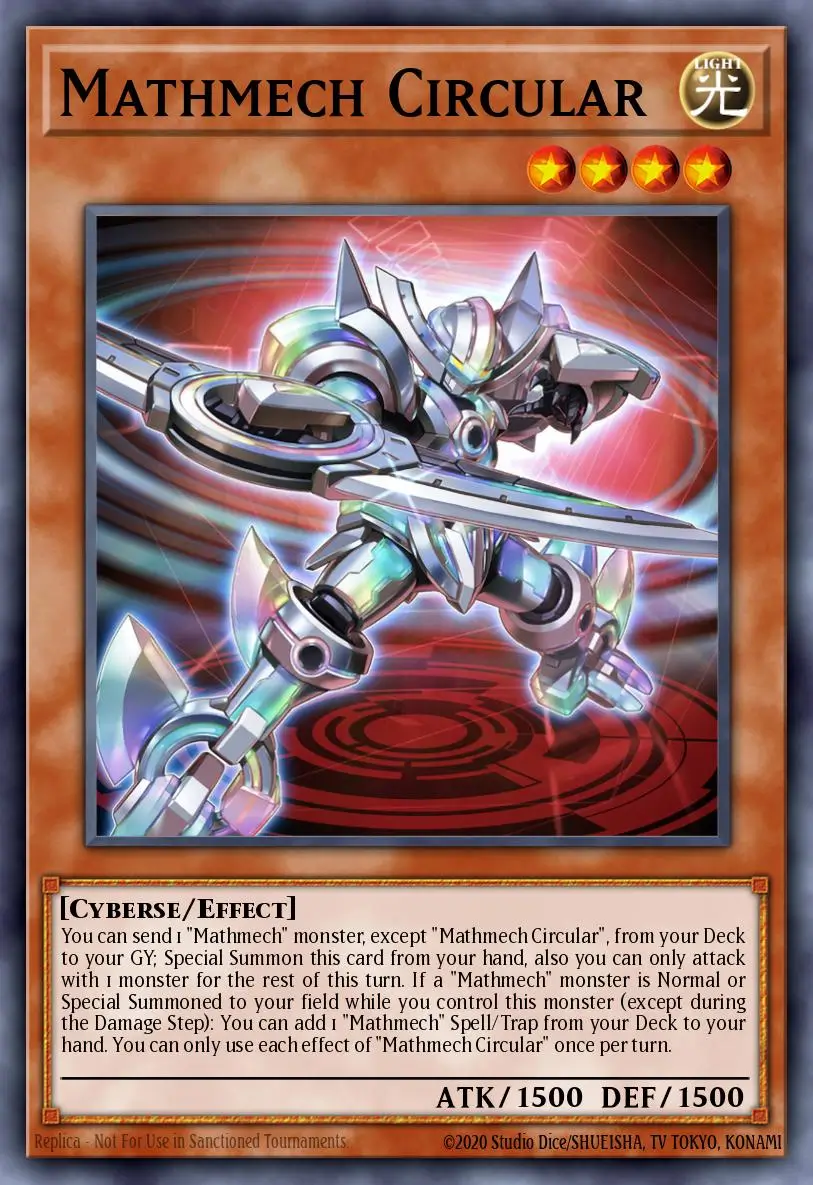
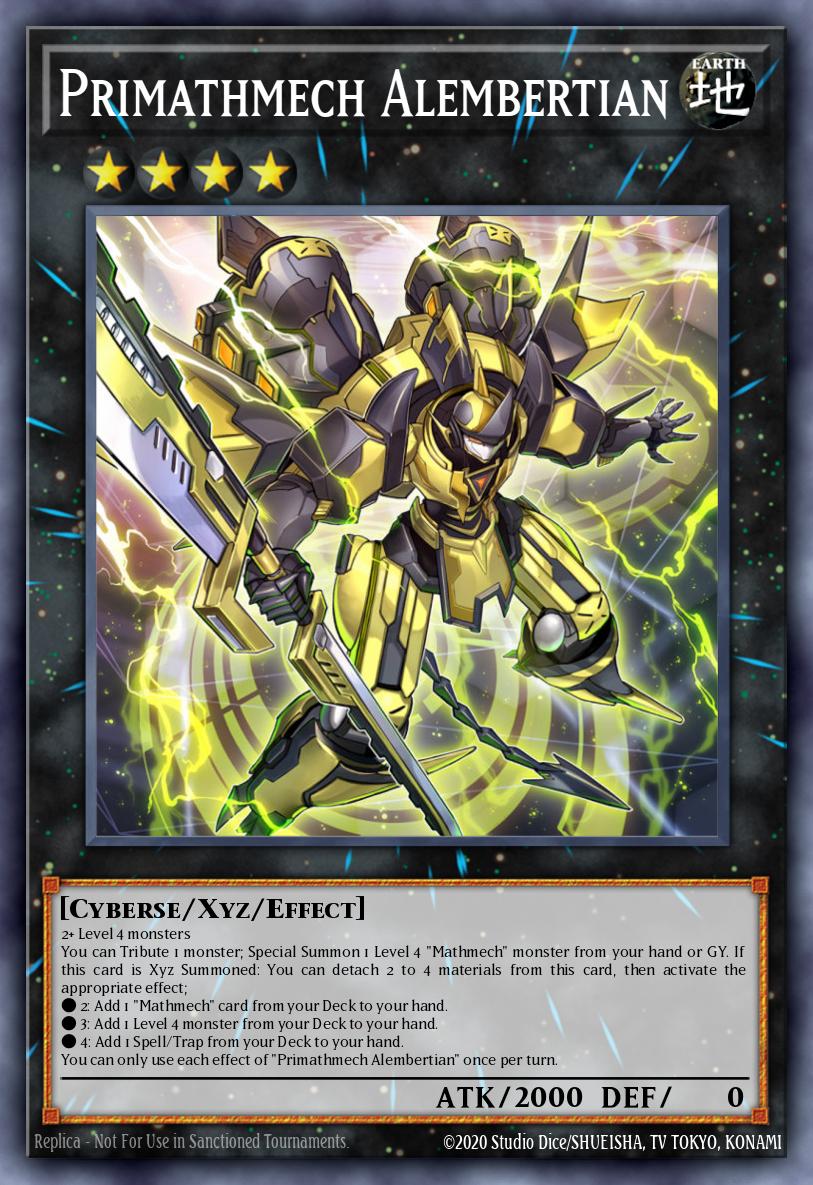
 Mathmech Slicer
Main Deck (21)
- Artifact Lancea x1
- Droll & Lock Bird x1
- Kiteroid x2
- Mathmech Addition x1
- Mathmech Multiplication x1
- Mathmech Subtraction x1
- Wightprincess x1
- Effect Veiler x2
- Mathmech Diameter x2
- Mathmech Nabla x3
- Mathmech Sigma x2
- Book of Eclipse x2
- Mathmech Equation x1
- Mathmech Superfactorial x1
Extra Deck (9)
Couldn't load the deck
Deck — Deck Power Evaluation
Final Contextual Deck Power: 62/100 (±10 · Confidence: Low)
| Overall score | Value |
|---|---|
| Structural Deck Power | 63.4 |
| Going First | 62 |
| Going Second | 60 |
| Meta Power | provisional |
| Tournament Reliability | 60 |
- Primary strategy: Midrange
- Secondary strategies: Combo, Stun
- Format: duel-links
Legality
Main 21 / Extra 9 / Side 0 — status: Legal.
Identity & game plan
- Win condition: Synchro/Xyz/Link board led by Geomathmech Final Sigma (3000 ATK, doubled battle damage) and Primathmech Laplacian, with Link-3 support; Recursion-driven Mathmech Synchro summons from the GY via Mathmech Superfactorial and the Equation/Multiplication/Addition/Subtraction line
- Turn 1 (going first): Open a Tuner (Nabla, Diameter, Sigma, Veiler) and a summon-from-hand enabler (Addition or Subtraction), Synchro/Link into a Mathmech board, keep Veiler and Lancea up as interaction
- Turn 2 (going second): Use Effect Veiler, Droll & Lock Bird, Artifact Lancea and Kiteroid to blank the opponent's first play, then rebuild through GY Mathmech recursion
- Recovery: Rebuild from the GY using Mathmech Equation, Multiplication, Addition and Subtraction effects, and Superfactorial's Synchro option
- After siding: Not applicable: no side deck is run in this Duel Links list (Side Deck size 0)
Why it scores here
The deck reliably opens a live Tuner in its opening hand: 9 Tuners in 21 Main Deck cards give P(at least one in a 5-card opening hand) ≈ 0.96 going first and ≈ 0.98 going second, and Mathmech Nabla alone is present in 58% of going-first hands (Inferred). Its conversion ceiling comes from the Extra Deck, where Final Sigma's doubled battle damage and Laplacian/Justify/Trisbaena provide closing pressure, but no recorded boards exist, so the ceiling and median are text-only inferences. Interruption resilience rests on four hand traps (P(at least one in a 6-card going-second hand) ≈ 0.77) and GY recursion through Equation, Multiplication, Addition, Subtraction and Superfactorial. The main weaknesses are the absence of any post-side plan in this format, no meta or matchup data, and 14 off-archetype copies that compete for Extra and Main slots. The score comes from consistency, recursion and closing power on the system, not from the guide's note that Mathmech is a tier-3 archetype in a new minibox, and not from averaging individual card scores.
Dimension scores
| # | Dimension | Score | Evidence |
|---|---|---|---|
| D1 | Engine Accessibility & Consistency | 70 | P(≥1 Tuner in 5-card hand) ≈ 0.96; P(≥1 Mathmech Nabla in 5) = 0.58 (Inferred) |
| D2 | Opening-Hand Quality & Brick Management | 62 | Many singleton enablers and dead-ish conditional cards (Wightprincess, Equation) raise brick risk; hand traps provide fallback plays (Inferred) |
| D3 | Combo Conversion & Ceiling | 70 | No recorded boards; Final Sigma and Laplacian with Link-3 support imply a high ceiling from text only (Inferred) |
| D4 | Combo Floor & Median Output | 55 | No parseable boards, so median output is unknown; estimated from starter diversity and recursion text (Inferred) |
| D5 | Interruption Resilience & Route Redundancy | 66 | Four hand traps, Superfactorial and GY recursion give independent second lines after one interruption (Inferred) |
| D6 | Resource Economy, Recovery & Grind | 68 | Multiple GY-to-field effects (Equation, Multiplication, Addition, Subtraction) and Heatsoul's LP-for-draw recycle resources (Inferred) |
| D7 | End-Board & Interaction Quality | 66 | Veiler and Lancea negate, Splash Mage, Packbit and Justify negate on the Extra side, Trisbaena removes (Inferred semantic read of card text) |
| D8 | Going-Second & Board-Breaking Power | 62 | Droll, Veiler, Lancea and Kiteroid cover a going-second turn; Book of Eclipse is the only mass board-breaker (Inferred) |
| D9 | Offensive Pressure & Closing Power | 72 | Final Sigma 3000 ATK with doubled battle damage, Justify 2600 ATK, Trisbaena 2500 ATK and Laplacian give high end-board ATK (Verified stats, Inferred closing) |
| D10 | Main Deck Efficiency & Flexibility | 62 | 21 Main cards at the 20-card minimum, 14 distinct and 8 singletons; functional but not perfectly compact (Verified counts) |
| D11 | Extra Deck Efficiency & Coverage | 70 | 9 Extra cards, all 9 slots used, 4 Link / 3 Synchro / 2 Xyz, with Final Sigma and Laplacian duplicated (Verified) |
| D12 | Side Deck Adaptability | 40 | No side deck is run and Duel Links play gives no sideboarding window, so adaptability is effectively absent (Provisional) |
| D13 | Matchup Coverage & Format Fit | 50 | No tournament link or dated meta sample; guide snippet calls Mathmech tier 3 in a new minibox (Provisional) |
| D14 | Pilotability & Error Tolerance | 50 | Multi-step Synchro/Link/Xyz chains with several decision points and GY targeting (Inferred) |
How the score was computed
Strategy profile: Midrange. Structural ≈ 63.4, Going First ≈ 62, Going Second ≈ 60, Meta = provisional, Tournament Reliability ≈ 60. Modifiers: banlist exposure (-1); engine conflicts (-1). Final formula: 0.80*Structural + 0.20*TournamentReliability + ContextModifiers (Meta provisional; no dated meta sample)
Probability & combo summary
- Opening a starter: P(≥1) ≈ 0.58 · key two-card combo ≈ — · full-brick estimate ≈ — (all Inferred)
- Combo output: best PowerIndex —, median —, board-per-starter —
- Turn order: 0 going-first lines vs 0 going-second lines
Strengths
- Nine Tuners in 21 Main cards give high starter access
- Four hand traps plus Superfactorial and GY recursion give interaction after disruption
- Extra Deck covers Synchro, Xyz and Link with strong ATK and doubled-damage closing
Weaknesses
- No recorded boards, so ceiling and median are unverified
- 14 off-archetype copies and a 53.3% exact-name purity dilute engine coherence
- No side deck, so no post-side plan
Critical choke points
- Summon-from-hand enablers (Addition, Subtraction) are singletons
- Extra Deck Synchro access depends on Tuner + non-Tuner pairing in the Extra Monster Zone
Recommended changes
| Priority | Remove | Add | Reason |
|---|---|---|---|
| 1 | Wightprincess (1 copy, conditional GY/field plays) | A second Mathmech Addition (summon-from-hand enabler) | Adds a second hand-based Mathmech entry point that is still legal (3-copy limit), improving access to the Synchro line (Inferred) |
Evidence & confidence
- Verified: Legal size (21 Main, 9 Extra, 0 Side) within duel-links rules 20-30 and 0-9; Mathmech Superfactorial 1/1 (Limited) and Kiteroid 2/2 (Semi-Limited) are legal; Card counts, copy histogram, type spread and Extra Deck breakdown reconcile with the card list; Usage statistics show Mathmech core present (Nabla, Addition, Equation, Superfactorial)
- Observed: Guide snippet (single source) describes Mathmech as tier 3 in the newest minibox
- Inferred: P(≥1 Tuner in 5-card opening hand) ≈ 0.96 and P(≥1 hand trap in 6) ≈ 0.77; Dimension scores D1–D11 and D14 from card text and composition; Midrange primary with Combo and Stun secondaries
- Provisional: Meta Power and D13 matchup fit; no dated metagame sample; D12 side adaptability; no side deck in this format
- Data gaps: no combos supplied: combo floor, median and ceiling are text-only inference usage statistics marks Splash Mage, S-Force Justify, Decode Talker Heatsoul, Geomathmech Final Sigma and Primathmech Laplacian as in this deck=false even though they appear in the deck's Extra zone; the usage join looks wrong for Extra-Deck cards, so core-card presence (68.4) is understated and was not used no tournament link: archetype meta-share and per-pilot match record absent no win-rate telemetry: going-first/second, matchup and brick rates are Inferred Meta Power is Provisional unless a dated metagame sample is supplied no side deck data, so post-side adaptability cannot be measured
Couldn't load the combos
