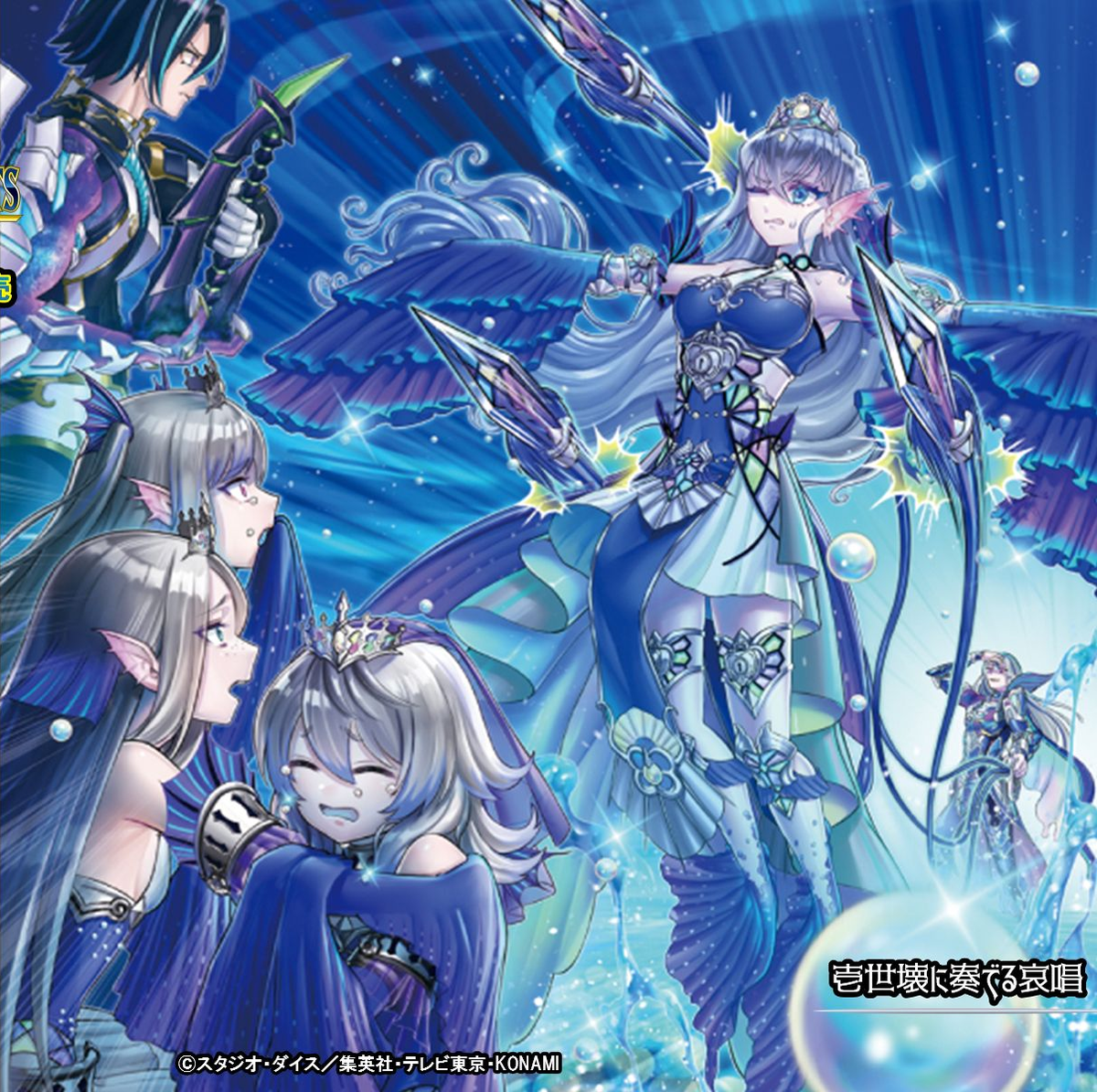
Tearlaments Deck #759297 — Yu-Gi-Oh! Master Duel
40 Main, 15 Extra, incl. Kashtira Fenrir x3, Tearlaments Havnis x3, Tearlaments Reinoheart x3.
Created by: YGO Mod (20517634)
Created On: 10/02/2026
Main Deck (40)
- Droll & Lock Bird x2
- Fabled Lurrie x1
- Fairy Tail - Snow x1
- Fiendsmith Engraver x2
- Gem-Knight Nepyrim x1
- Kashtira Fenrir x3
- Keldo the Sacred Protector x1
- Lacrima the Crimson Tears x1
- Maxx "C" x1
- Mudora the Sword Oracle x1
- Tearlaments Havnis x3
- Tearlaments Kashtira x1
- Tearlaments Reinoheart x3
- Tearlaments Scheiren x2
- Gem-Knight Iolite x1
- Ash Blossom & Joyous Spring x3
- Brilliant Fusion x3
- Fiendsmith's Tract x1
- Instant Fusion x1
- Tearlaments Heartbeat x1
- Tearlaments Scream x3
- Tearlaments Cryme x1
- Tearlaments Metanoise x1
- Tearlaments Sulliek x1
- The Black Goat Laughs x1
Extra Deck (15)
- Fiendsmith's Desirae x1
- Fiendsmith's Lacrima x1
- Fiendsmith's Rextremende x1
- Gem-Knight Amethyst x1
- Tearlaments Kaleido-Heart x1
- Tearlaments Kitkallos x1
- Tearlaments Rulkallos x1
- Fiendsmith's Agnumday x1
- Fiendsmith's Requiem x1
- Fiendsmith's Sequence x1
- Moon of the Closed Heaven x1
- S:P Little Knight x1
- Evilswarm Exciton Knight x1
- Number 60: Dugares the Timeless x1
- Pilgrim Reaper x1
Couldn't load the deck
Deck — Deck Power Evaluation
Final Contextual Deck Power: 56/100 (±6 · Confidence: Medium)
| Overall score | Value |
|---|---|
| Structural Deck Power | 62.7 |
| Going First | 66 |
| Going Second | 64 |
| Meta Power | provisional |
| Tournament Reliability | 58 |
- Primary strategy: Midrange
- Secondary strategies: Combo, Stun
- Format: master-duel
Legality
Main 40 / Extra 15 / Side 0 — status: Legal.
Identity & game plan
- Win condition: Fusion boss monsters (Tearlaments Rulkallos, Tearlaments Kaleido-Heart, Fiendsmith's Desirae, Fiendsmith's Rextremende) reached through Tearlaments mill and graveyard recursion; Kashtira Fenrir and Tearlaments Havnis pressure, backed by Fiendsmith and Gem-Knight link and fusion options
- Turn 1 (going first): Open on searchers (Tearlaments Scream, Tearlaments Reinoheart, Fiendsmith Engraver, Kashtira Fenrir), mill three cards with Havnis or Reinoheart, and send Tearlaments monsters to the GY to fuel a Fusion Summon (Inferred from card text)
- Turn 2 (going second): Use Ash Blossom, Droll and Lock Bird, Maxx C, Tearlaments Cryme, Tearlaments Sulliek and Tearlaments Metanoise to interrupt the opponent's first engine, then rebuild a board through Reinoheart and Havnis recursion (Inferred from card text)
- Recovery: Recover from interruption by re-summoning Tearlaments monsters from the GY (Reinoheart, Havnis) and using the 16 searcher-text cards to refill the hand (Inferred)
- After siding: None: no side deck is built, so there is no post-side plan
Why it scores here
The deck's Structural score comes from how the system behaves, not from averaging its cards: the archetype core (20 copies, about 98% to have at least one in an opening five-card hand, Inferred) and 16 searcher-text cards (about 94% to have at least one in five, Inferred) make the engine reliably switch on, and graveyard recursion through Reinoheart and Havnis keeps it running after interruption. Six hand traps (Ash Blossom, Droll and Lock Bird, Maxx C) plus three Tearlaments negations give the deck real interaction, which is what keeps its going-second score at a fair level (about 65% to find a hand trap in six cards, Inferred). The deck's closing power is strong at the top end (Rulkallos, Kaleido-Heart, Desirae, Rextremende, all at 2800 ATK or more), but it is built from three or four overlapping archetypes (exact-name purity 29.1%), which lowers consistency and efficiency. There is no recorded combo data, so floor, median and ceiling are text-based and Inferred only; the usage stats conflict with the extra-deck list and were not used to raise the score. Popularity or meta share did not earn any points, since no tournament or meta data was supplied, and card scores were not averaged.
Dimension scores
| # | Dimension | Score | Evidence |
|---|---|---|---|
| D1 | Engine Accessibility & Consistency | 70 | P(at least one archetype core in hand 5) about 0.98 and P(searcher text in hand 5) about 0.94, but the key Tearlaments starters are single 3-copy cards with about 0.34 each (Inferred) |
| D2 | Opening-Hand Quality & Brick Management | 58 | Six hand traps and 16 singles dilute redundancy, and Fiendsmith and Gem-Knight cards add off-plan dead draws, which lowers opening-hand quality (Inferred) |
| D3 | Combo Conversion & Ceiling | 66 | No recorded boards exist; the text ceiling comes from Rulkallos and Kaleido-Heart (3000 ATK each) plus Desirae's negation, which is a semantic read only (Inferred) |
| D4 | Combo Floor & Median Output | 55 | No combo data, so the typical output is unknown and the score is held near the middle (Provisional) |
| D5 | Interruption Resilience & Route Redundancy | 70 | Six hand traps, three Tearlaments negations, and GY recursion from Reinoheart and Havnis give several independent routes after one interruption (Inferred from card text) |
| D6 | Resource Economy, Recovery & Grind | 72 | Sixteen searcher-text cards, mill-based graveyard fuel, and Fusion recursion give good resource regeneration (Inferred from card text) |
| D7 | End-Board & Interaction Quality | 70 | Five negation-text cards and 16 removal-text cards give broad but mostly one-shot interaction, with some durability through Rulkallos (Inferred semantic read) |
| D8 | Going-Second & Board-Breaking Power | 66 | Hand traps and Fabled Lurrie style disruption help going second, and Mudora and Keldo add board removal, but the deck has no true mass-removal or board-breaker plan (Inferred) |
| D9 | Offensive Pressure & Closing Power | 74 | Multiple 2800 to 3000 ATK Fusion and Link closers appear in the Extra Deck, with Kashtira Fenrir as a 2400 attacker (Verified stats) |
| D10 | Main Deck Efficiency & Flexibility | 52 | A 40-card main with 25 distinct cards and only 29.1% exact-name purity means the deck is spread thin across Tearlaments, Fiendsmith, Gem-Knight and Kashtira (Verified composition) |
| D11 | Extra Deck Efficiency & Coverage | 60 | Fifteen distinct Extra Deck cards cover Fusion, Link and Xyz (7/5/3) with no duplicates, which is flexible but not focused (Verified composition) |
| D12 | Side Deck Adaptability | 15 | No side deck is built (0 cards), so there are no post-side adjustments and no post-side performance data (Verified legality, Provisional) |
| D13 | Matchup Coverage & Format Fit | 50 | No tournament link and no dated metagame sample, so matchup and format fit cannot be measured (Provisional) |
| D14 | Pilotability & Error Tolerance | 50 | Multi-step Fusion chains and many triggered responses need a moderate number of decisions per turn (Inferred) |
How the score was computed
Strategy profile: Midrange. Structural ≈ 62.7, Going First ≈ 66, Going Second ≈ 64, Meta = provisional, Tournament Reliability ≈ 58. Modifiers: engine conflicts (-3); no side plan (-2); banlist exposure (-1). Final formula: 0.80*Structural + 0.20*TournamentReliability (Meta provisional) + ContextModifiers = 0.80*62.7 + 0.20*58 - 6 = 55.8, rounded to 56
Probability & combo summary
- Opening a starter: P(≥1) ≈ 0.98 · key two-card combo ≈ — · full-brick estimate ≈ — (all Inferred)
- Combo output: best PowerIndex —, median —, board-per-starter —
- Turn order: 0 going-first lines vs 0 going-second lines
Strengths
- Dense searcher and recursion text (16 searcher-text cards, Reinoheart and Havnis GY recursion) gives reliable resource regeneration
- Six hand traps plus three Tearlaments negations give layered interaction on both turns
- Strong Extra Deck closers at 2800 to 3000 ATK
Weaknesses
- Three or four archetypes share one main deck, with only 29.1% exact-name purity, so engines compete for space
- No side deck, so the deck cannot adapt between games
- Several one-copy Limited cards (Kashtira, Kitkallos, Sulliek, Mudora) are single points of failure
Critical choke points
- Access to the single-copy Limited Tearlaments starters (Kashtira, Sulliek, Kitkallos) decides whether the Tearlaments plan runs at all
- Hand-trap density (6 cards, about 65% to find one going second) is the only answer to the opponent's first engine
Recommended changes
| Priority | Remove | Add | Reason |
|---|---|---|---|
| 1 | One or two off-plan Fiendsmith or Gem-Knight singles (for example Lurrie or Keldo) | A 15-card side deck or extra Tearlaments-focused searchers to raise purity | Raises exact-name purity and reduces brick risk; this is Inferred from the composition, and D12 is at its floor because no side is built |
Evidence & confidence
- Verified: Legality: 40 main, 15 extra, 0 side, all Limited and Semi-Limited counts within limits; Card text and stats for all 40 main and 15 extra cards; Composition counts: 6 hand traps, 16 searchers, 7/5/3 Fusion/Link/Xyz split
- Inferred: Opening-hand probabilities (0.98 core proxy, 0.94 searcher, 0.34 for single 3-copy starters, 0.65 hand trap going second); Engine accessibility, brick management and resilience from text and hypergeometric draws; Going-first and going-second plans from card text
- Provisional: Meta power (null, no dated sample); Matchup and format fit (D13 = 50)
- Data gaps: No combos supplied, so combo floor, median and ceiling are text-only inference No tournament link, so archetype meta share and pilot match record are absent No win-rate telemetry exists in YGOVN, so brick, starter and matchup rates are Inferred or Unknown Meta Power is Provisional unless a dated metagame sample is supplied Usage stats conflict with the deck list: Tearlaments Kitkallos, Kaleido-Heart, Rulkallos, Fiendsmith's Sequence, Moon of the Closed Heaven, S:P Little Knight, Fiendsmith's Requiem, Pilgrim Reaper, Fiendsmith's Lacrima and Number 60 all appear in the Extra Deck list but are flagged in this deck false, so the core coverage figure of 56% is unreliable and was not used for scoring Deck title is null, so the deck name is unknown
Couldn't load the combos