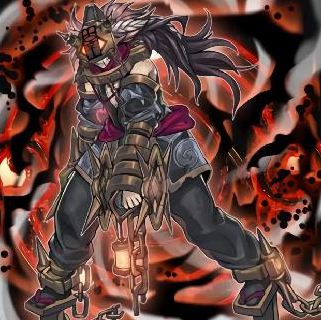
Unchained Deck #757216 — Yu-Gi-Oh! Master Duel
45 Main, 15 Extra, incl. Tour Guide From the Underworld x3, Unchained Soul of Sharvara x3, Ash Blossom & Joyous Spring x3. Created Sep 28, 2026 by YGO Mod.
Created by: YGO Mod (20517634)
Created On: 09/28/2026
Main Deck (45)
- Abominable Unchained Soul x1
- Buio the Dawn's Light x2
- Droll & Lock Bird x2
- Fabled Lurrie x1
- Fiendsmith Engraver x2
- Lacrima the Crimson Tears x1
- Maxx "C" x1
- Mulcharmy Fuwalos x2
- Mulcharmy Purulia x1
- Tour Guide From the Underworld x3
- Unchained Soul of Sharvara x3
- Unchained Soul of Shyama x1
- Unchained Twins - Aruha x2
- Unchained Twins - Rakea x1
- Unchained Twins - Sarama x1
- Ash Blossom & Joyous Spring x3
- Ghost Belle & Haunted Mansion x1
- Abomination's Prison x3
- Crossout Designator x1
- Fiendsmith's Sanct x1
- Fiendsmith's Tract x2
- Mutiny in the Sky x1
- The Fallen & The Virtuous x2
- Triple Tactics Talent x1
- Triple Tactics Thrust x1
- Abominable Chamber of the Unchained x2
- Escape of the Unchained x1
- Infinite Impermanence x2
Extra Deck (15)
- Aerial Eater x1
- Albion the Branded Dragon x1
- Fiendsmith's Lacrima x1
- Luce the Dusk's Dark x1
- A Bao A Qu, the Lightless Shadow x1
- Fiendsmith's Requiem x1
- Fiendsmith's Sequence x1
- Moon of the Closed Heaven x1
- S:P Little Knight x1
- Unchained Soul Lord of Yama x1
- Unchained Soul of Anguish x1
- Unchained Soul of Rage x1
- Underworld Goddess of the Closed World x1
- Ecclesia and the Dark Dragon x1
- D/D/D Wave High King Caesar x1
Couldn't load the deck
Deck — Deck Power Evaluation
Final Contextual Deck Power: 56/100 (±8 · Confidence: Medium)
| Overall score | Value |
|---|---|
| Structural Deck Power | 56 |
| Going First | 58 |
| Going Second | 60 |
| Meta Power | provisional |
| Tournament Reliability | 55 |
- Primary strategy: Midrange
- Secondary strategies: Stun, Toolbox
- Format: master-duel
Legality
Main 45 / Extra 15 / Side 0 — status: Legal.
Identity & game plan
- Win condition: Unchained monsters (Abominable Unchained Soul, Unchained Soul of Sharvara and Shyama, Unchained Soul of Rage and Anguish) take the board after the Unchained Twins and Soul recursion loop repeatedly rebuilds it; Fusion and Link pressure from Aerial Eater, Fiendsmith's Lacrima, Unchained Soul Lord of Yama, and Underworld Goddess of the Closed World
- Turn 1 (going first): Open a live Unchained starter, use Unchained Soul of Sharvara or Abominable Chamber to Special Summon, then convert with Twins or Soul link material while holding hand traps for the opponent's first response
- Turn 2 (going second): Hold Ash Blossom, Droll and Lock Bird, Ghost Belle, Infinite Impermanence and Maxx C to stop the opponent's board, then rebuild through Unchained recursion
- Recovery: Unchained monsters revive from the GY when destroyed by card effect or battle, so a single interrupted line usually still leaves a Special Summon route
- After siding: No side deck is run (side 0), so there is no post-side plan; adaptation happens only through the main deck's tech slots such as Crossout Designator and Triple Tactics Talent
Why it scores here
The deck scores as a connected system rather than from averaged card power. Its Unchained core (17 exact-name copies, with 96.5% chance of at least one core card in a 5-card opening hand) gives a reasonably reliable starter route, and the recursion of Unchained monsters from the GY supports resilience after a disrupted turn. Its strongest reads are interaction density: 9 hand traps and 12 negation-text cards cover both going first and going second, with a 76% chance of at least one hand trap in a 6-card going-second hand. Popularity and the archetype guide do not earn points by themselves, and the lack of recorded boards keeps combo ceiling and median at neutral values. The deck is also split across several sub-archetypes (Fiendsmith, Branded, Mulcharmy, D/D, Ecclesia), which limits coherence and pulls the efficiency and pilotability scores down. No side deck and no tournament data keep side adaptability and matchup fit low and provisional.
Dimension scores
| # | Dimension | Score | Evidence |
|---|---|---|---|
| D1 | Engine Accessibility & Consistency | 62 | P(at least one core card in 5-card opening hand) is about 0.97 across 21 core copies; 3-copy starters are about 0.30 each in hand 5 (Inferred) |
| D2 | Opening-Hand Quality & Brick Management | 58 | 9 hand traps and 45 main-deck cards with 28 distinct names keep most hands functional, but Abomination's Prison and Abominable Chamber add dead-draw risk without the Unchained board (Inferred) |
| D3 | Combo Conversion & Ceiling | 55 | No parseable recorded boards exist, so ceiling is text-only from Unchained Twins, Soul revival and Fusion or Link access (Inferred) |
| D4 | Combo Floor & Median Output | 50 | No median power index or board distribution is available, so the floor is a text-only estimate held near neutral (Inferred) |
| D5 | Interruption Resilience & Route Redundancy | 55 | Unchained monsters revive after destruction and multiple Twins/Soul routes exist, but no independent second-line data is recorded (Inferred) |
| D6 | Resource Economy, Recovery & Grind | 60 | Recursion from GY through Unchained revival and Twins gives regeneration, but no resource signature or netCardAdvantage data is recorded (Inferred) |
| D7 | End-Board & Interaction Quality | 68 | 9 hand traps, 12 negation-text cards and 16 removal-text cards provide layered interaction on both turns (Inferred semantic read) |
| D8 | Going-Second & Board-Breaking Power | 60 | A 6-card going-second hand has a 76% chance to contain a hand trap, and Unchained monsters can challenge a board, but board-breaker density is not recorded (Inferred) |
| D9 | Offensive Pressure & Closing Power | 60 | Abominable Unchained Soul (3000 ATK), Ecclesia and the Dark Dragon (2500) and Unchained Soul of Sharvara (2000) give closing bodies; no end-board ATK aggregate is recorded (Inferred) |
| D10 | Main Deck Efficiency & Flexibility | 52 | 45 main cards is standard for Master Duel, but only 17 of 45 are exact-name Unchained and 24 are generic staples, reducing compactness (Verified structure, Inferred coherence) |
| D11 | Extra Deck Efficiency & Coverage | 62 | 15 Extra Deck slots across 9 Link, 4 Fusion, 1 Synchro and 1 XYZ give flexible but partly off-archetype coverage (Verified composition) |
| D12 | Side Deck Adaptability | 25 | No side deck is present, so post-side adaptability cannot be measured and is held low (Provisional) |
| D13 | Matchup Coverage & Format Fit | 50 | No tournament link or dated meta sample exists; archetype share is unavailable and matchup fit is held neutral (Provisional) |
| D14 | Pilotability & Error Tolerance | 45 | Multi-target Unchained effects and mixed sub-archetype sequencing raise decision load, though the core lines are repeated (Inferred) |
How the score was computed
Strategy profile: Midrange primary, Stun secondary at about 80/20 weight reasoning from hand trap density. Structural ≈ 56, Going First ≈ 58, Going Second ≈ 60, Meta = provisional, Tournament Reliability ≈ 55. Modifiers: Banlist exposure (-1); Engine compactness and core access (1). Final formula: 0.80*Structural + 0.20*TournamentReliability (Meta provisional); Structural 56.3, TR 55, modifiers net 0, final 56
Probability & combo summary
- Opening a starter: P(≥1) ≈ 0.97 · key two-card combo ≈ — · full-brick estimate ≈ — (all Inferred)
- Combo output: best PowerIndex —, median —, board-per-starter —
- Turn order: 0 going-first lines vs 0 going-second lines
Strengths
- Core Unchained engine is highly accessible in the opening hand
- Layered hand-trap and negation coverage on both turns
- Recursion from GY gives resilience after interruption
- Legal in format with every restricted card at or below its legal copy limit
Weaknesses
- Spread across several sub-archetypes, so only 28 percent of cards are exact-name Unchained
- No side deck, so no post-side adaptation
- Combo ceiling and median are unmeasured because no boards are recorded
- Several dead-draw cards such as Abomination's Prison and Abominable Chamber
Critical choke points
- Unchained core and Twins route: if the early Unchained starter is hand-trapped, the Fusion and Link follow-up is slower
- Single copies of Crossout Designator and Maxx C are one-card answers that are not repeatable
Recommended changes
| Priority | Remove | Add | Reason |
|---|---|---|---|
| 1 | Fiendsmith's Sanct | A second copy of an Unchained Twins or Unchained Soul route card | Fiendsmith's Sanct is off-archetype and the deck already has 17 exact Unchained copies; more on-archetype starters improve D1 and D2 (Inferred) |
Evidence & confidence
- Verified: Deck is legal: 45 main, 15 extra, 0 side, all restricted cards within legal copies; Archetype composition: 17 exact-name Unchained copies, 28.3 percent exact purity; Core access P(at least one) = 0.9652 across 21 core copies
- Inferred: Starter reliability and brick estimates from hypergeometric draws; Interaction density from hand-trap and negation text; Recursion resilience from card text; Going-first and going-second split from hand composition
- Provisional: Meta power is null: no dated metagame sample; Matchup fit and side adaptability held low or neutral without data
- Data gaps: No combos supplied, so combo floor, median and ceiling are text-only inference No tournament link, so archetype meta-share and per-pilot match record are absent No win-rate telemetry exists for going-first, going-second, matchup or brick rate Meta Power is provisional unless a dated metagame sample is supplied Deck has no title and no side deck, limiting side adaptability scoring
Couldn't load the combos