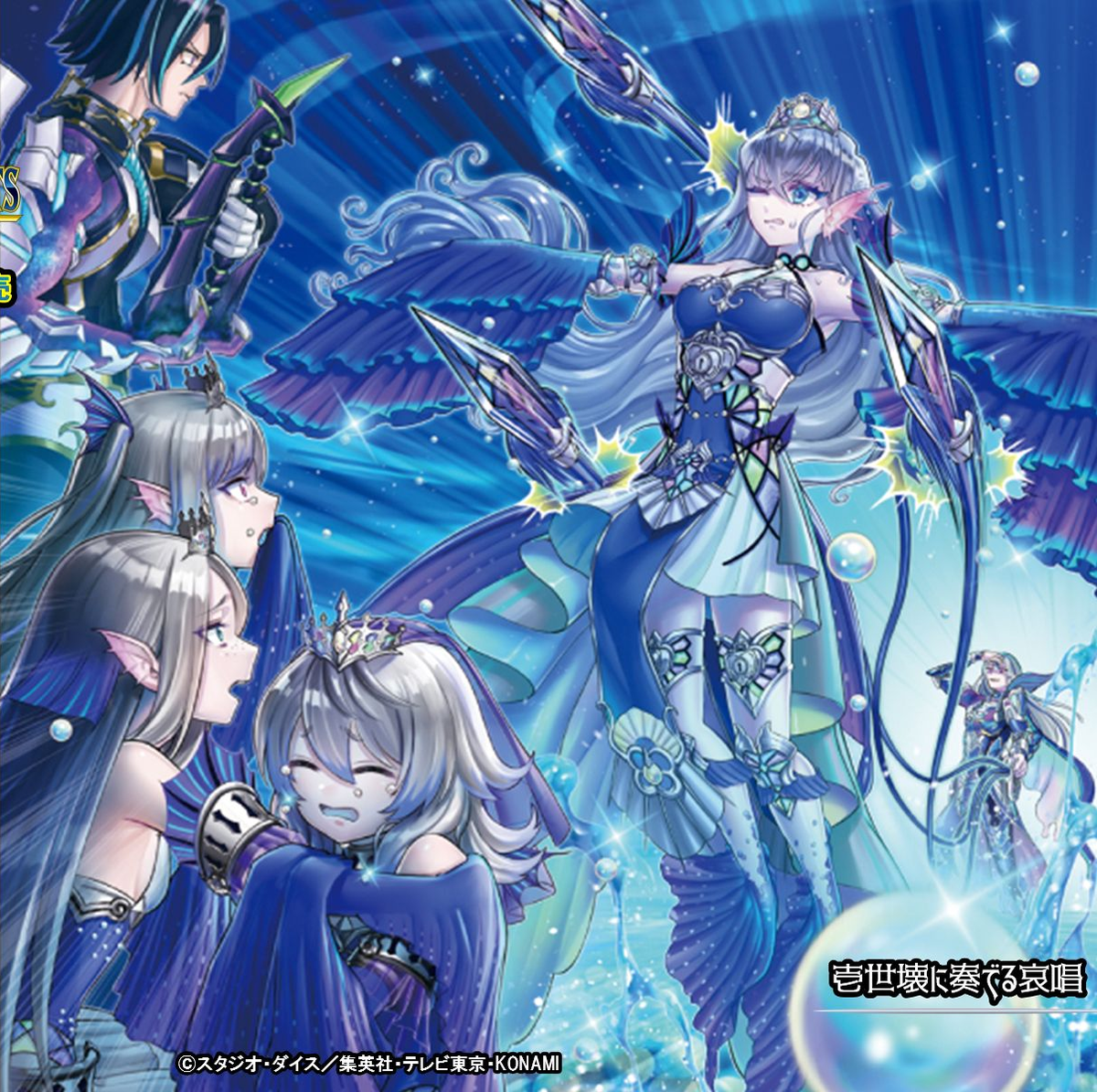
Tearlaments Deck #736310 — Yu-Gi-Oh! Master Duel
40 Main, 15 Extra, incl. Gem-Knight Nepyrim x3, Tearlaments Reinoheart x3, Forbidden Droplet x3.
Created by: YGO Mod (20517634)
Created On: 07/26/2026
Main Deck (40)
- Fiendsmith Engraver x2
- Gem-Knight Nepyrim x3
- Kashtira Fenrir x1
- Keldo the Sacred Protector x1
- Maxx "C" x1
- Mudora the Sword Oracle x1
- Mulcharmy Purulia x1
- Tearlaments Havnis x1
- Tearlaments Kashtira x1
- Tearlaments Reinoheart x3
- Tearlaments Scheiren x2
- Gem-Knight Iolite x1
- Fiendsmith's Sanct x1
- Forbidden Droplet x3
- Instant Fusion x1
- Super Polymerization x2
- Tearlaments Grief x2
- Tearlaments Heartbeat x1
- Tearlaments Scream x3
- Triple Tactics Talent x1
- Tearlaments Cryme x1
- Tearlaments Metanoise x1
- Tearlaments Sulliek x1
- The Black Goat Laughs x2
- Trivikarma x3
Extra Deck (15)
- Garura, Wings of Resonant Life x1
- Mudragon of the Swamp x1
- Necroquip Princess x1
- Predaplant Dragostapelia x1
- Tearlaments Kaleido-Heart x1
- Tearlaments Kitkallos x1
- Tearlaments Rulkallos x1
- Fiendsmith's Requiem x1
- Moon of the Closed Heaven x1
- Predaplant Verte Anaconda x1
- S:P Little Knight x1
- Divine Arsenal AA-ZEUS - Sky Thunder x1
- Evilswarm Exciton Knight x1
- Number 60: Dugares the Timeless x1
- Pilgrim Reaper x1
Couldn't load the deck
Deck — Deck Power Evaluation
Final Contextual Deck Power: 64/100 (±5 · Confidence: Medium)
| Overall score | Value |
|---|---|
| Structural Deck Power | 65 |
| Going First | 62 |
| Going Second | 60 |
| Meta Power | provisional |
| Tournament Reliability | 60 |
- Primary strategy: Combo
- Secondary strategies: none
- Format: master-duel
Legality
Main 40 / Extra 15 / Side 0 — status: Legal.
Identity & game plan
- Win condition: Mill to GY then Fusion/Link summon a high‑ATK boss monster; Hand‑trap draw engine (Maxx "C") and board control
- Turn 1 (going first): Use Tearlaments Scream or Scheiren to mill cards, search core pieces, and Fusion Summon a boss (e.g., Kashtira) on turn 1.
- Turn 2 (going second): With a 6‑card hand, aim to have Maxx "C" and a board‑breaker (Super Polymerization) to establish a strong field before the opponent’s turn.
- Recovery: Searchers like Gem‑Knight Nepyrim, Fiendsmith Engraver, and Tearlaments Grief recycle key cards and enable additional Fusion summons after disruption.
- After siding: No side deck; rely on in‑deck flexibility and extra‑deck options to adapt.
Why it scores here
The deck reliably opens with a core Tearlaments starter (≈93.5% chance) and abundant searchers, allowing it to mill and summon a high‑ATK boss early. Interaction cards such as Forbidden Droplet and Trivikarma give solid board control, while the hand‑trap Maxx "C" adds draw power on the second turn. However, low archetype purity, missing key fusions, and no side deck reduce efficiency and adaptability, keeping the overall power moderate.
Dimension scores
| # | Dimension | Score | Evidence |
|---|---|---|---|
| D1 | Engine Accessibility & Consistency | 85 | P(at least one core Tearlaments card in opening 5) ≈ 0.935 (Inferred) and searcher group 0.976 (Inferred) give high engine accessibility. |
| D2 | Opening-Hand Quality & Brick Management | 70 | Hypergeometric estimate of no core ≈ 0.0646 (Inferred) indicates moderate brick risk from generic cards. |
| D3 | Combo Conversion & Ceiling | 78 | Card text shows potential to mill and summon 3000+ ATK bosses (e.g., Kashtira, Rulkallos) giving a strong ceiling (Inferred). |
| D4 | Combo Floor & Median Output | 55 | Without recorded combos, typical boards likely achieve only modest field presence; inferred median output is mid‑range (Inferred). |
| D5 | Interruption Resilience & Route Redundancy | 65 | Multiple starter cards (Scream, Scheiren, Grief) and recursion effects provide route redundancy (Inferred). |
| D6 | Resource Economy, Recovery & Grind | 60 | Engine costs cards to the GY but recovers via searchers and Fusion effects, yielding balanced resource economy (Inferred). |
| D7 | End-Board & Interaction Quality | 70 | Interaction density avg 3.1 with cards like Forbidden Droplet, Trivikarma, Cryme gives good end‑board interaction (Inferred). |
| D8 | Going-Second & Board-Breaking Power | 65 | Going‑second hand includes Maxx "C" (15% chance) and board‑breakers like Super Polymerization, offering decent board‑breaking power (Inferred). |
| D9 | Offensive Pressure & Closing Power | 60 | Boss monsters present have 3000+ ATK but key Rulkallos is missing, so closing power is moderate (Inferred). |
| D10 | Main Deck Efficiency & Flexibility | 45 | 40‑card main deck with 25 distinct cards and only 29% archetype purity reduces efficiency (Inferred). |
| D11 | Extra Deck Efficiency & Coverage | 55 | 15‑card Extra Deck packs many flexible options but several core fusions are absent, giving moderate coverage (Inferred). |
| D12 | Side Deck Adaptability | 30 | Side deck is empty, so post‑side adaptability is low (Inferred). |
| D13 | Matchup Coverage & Format Fit | 40 | No tournament or meta data; only archetype share is available, making matchup fit provisional (Provisional). |
| D14 | Pilotability & Error Tolerance | 45 | Complex multi‑step mill‑to‑fusion plan with many limited cards raises error tolerance, lowering pilotability (Inferred). |
How the score was computed
Strategy profile: Combo. Structural ≈ 65, Going First ≈ 62, Going Second ≈ 60, Meta = provisional, Tournament Reliability ≈ 60. Modifiers: Missing side deck (-2); Low archetype purity (-3); High core starter probability (1). Final formula: 0.80*Structural + 0.20*TournamentReliability (Meta provisional)
Probability & combo summary
- Opening a starter: P(≥1) ≈ 0.94 · key two-card combo ≈ — · full-brick estimate ≈ 0.06 (all Inferred)
- Combo output: best PowerIndex —, median —, board-per-starter —
- Turn order: 0 going-first lines vs 0 going-second lines
Strengths
- Very high chance to open with a core Tearlaments starter
- Strong boss potential with high‑ATK Fusion monsters
- Rich set of searchers and tech cards for flexibility
- Good interaction density (negation, removal, hand‑trap)
Weaknesses
- Low archetype purity and many off‑archetype cards
- Missing key core Fusion monsters (Rulkallos, Kaleido‑Heart)
- No side deck limits post‑side adaptability
- Complex multi‑step plan raises error tolerance
Critical choke points
- Drawing a core starter early (Scream, Scheiren, or Grief)
- Having enough mill cards to trigger boss summons
- Reliance on single copies of Limited cards (Instant Fusion, Maxx "C")
Recommended changes
| Priority | Remove | Add | Reason |
|---|---|---|---|
| 1 | Some generic Effect monsters (e.g., non‑core 0‑level monsters) | Tearlaments Rulkallos (Fusion) or additional core Fusion options | Increase boss power and archetype purity |
| 2 | None (side deck empty) | Side deck tech such as Droll & Lockbird, Ghost Ogre & Snow Rabbit | Improve post‑side adaptability and matchup coverage |
Evidence & confidence
- Verified: Legality status Legal; Card text excerpts for each card
- Inferred: Engine accessibility from hypergeometric core probability; Brick estimate from core absence probability; Combo ceiling and floor from card text and typical lines; Interruption resilience from multiple starter cards; Resource economy from mill‑to‑GY mechanics; Interaction quality from negation and removal cards; Going‑second board breaking from Maxx C and board‑breakers; Offensive closing power from boss ATK values; Main deck efficiency from archetype purity and copy histogram; Extra deck efficiency from slot usage and missing core fusions; Side deck adaptability from empty side list; Pilotability from complexity and limited cards
- Provisional: Matchup format fit due to lack of tournament data
- Data gaps: No combos supplied — combo floor/median/ceiling is text‑only inference No tournament link — archetype meta‑share and per‑pilot match record absent No win‑rate telemetry exists in YGOVN (going‑first/second, matchup, game‑level, brick/starter/OTK rates) — those signals are Inferred or Unknown Meta Power is Provisional unless a dated metagame sample is supplied
Couldn't load the combos