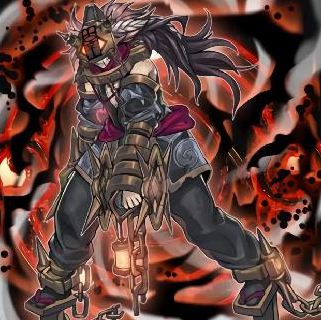
Unchained Deck #701463 — Yu-Gi-Oh! Master Duel
Created by: YGO Mod (20517634)
Created On: 05/14/2026
Main Deck (41)
- Abominable Unchained Soul x1
- Buio the Dawn's Light x1
- Droll & Lock Bird x2
- Fiendish Rhino Warrior x1
- Fiendsmith Engraver x2
- Lacrima the Crimson Tears x1
- Maxx "C" x1
- Mulcharmy Fuwalos x3
- Radiant Typhoon Eldam x3
- Radiant Typhoon Swen x3
- Unchained Soul of Sharvara x3
- Unchained Soul of Shyama x1
- Unchained Twins - Aruha x1
- Unchained Twins - Sarama x1
- Ash Blossom & Joyous Spring x3
- Abomination's Prison x3
- Called by the Grave x1
- Fiendsmith's Sanct x1
- Mutiny in the Sky x1
- Mystical Space Typhoon x1
- Radiant Typhoon Ascendance x1
- Radiant Typhoon Chant x3
- Radiant Typhoon Vision x1
- Abominable Chamber of the Unchained x1
- Escape of the Unchained x1
Extra Deck (15)
- Aerial Eater x1
- Fiendsmith's Lacrima x1
- Luce the Dusk's Dark x1
- A Bao A Qu, the Lightless Shadow x1
- Cherubini, Ebon Angel of the Burning Abyss x1
- Fiendsmith's Requiem x1
- Fiendsmith's Sequence x1
- Moon of the Closed Heaven x1
- S:P Little Knight x1
- Unchained Soul Lord of Yama x2
- Unchained Soul of Anguish x1
- Unchained Soul of Rage x1
- W:P Fancy Ball x1
- D/D/D Wave High King Caesar x1
Couldn't load the deck
Deck — Deck Power Evaluation
Final Contextual Deck Power: 62/100 (±6 · Confidence: Medium)
| Overall score | Value |
|---|---|
| Structural Deck Power | 63 |
| Going First | 66 |
| Going Second | 58 |
| Meta Power | provisional |
| Tournament Reliability | 60 |
- Primary strategy: Combo
- Secondary strategies: Midrange, Control
- Format: master-duel
Legality
Main 41 / Extra 15 / Side 0 — status: Legal.
Identity & game plan
- Win condition: Establish a layered board of Fiend Link monsters (Unchained Soul Lord of Yama, A Bao A Qu) with searchable interaction and removal effects, then grind through opponent disruption; Fusion Summon Luce the Dusk's Dark or Fiendsmith's Lacrima for end-board resilience and ATK reduction
- Turn 1 (going first): Resolve Unchained/Radiant Typhoon starters to build 2–3 Link monsters with negate access (Yama searcher + board-breaker options), float removal into graveyard, set hand traps
- Turn 2 (going second): Use hand traps (Ash, Maxx C, Droll) to disrupt opponent setup; resolve survivor effects into removal chains and Fusion Summon for board clear
- Recovery: Recurse Unchained Soul Lord of Yama from GY when board is cleared; use Fiendsmith Engraver and Lacrima to retrigger Fusion lines; maintain floating effects from destroyed cards
- After siding: Add high-impact interaction tech (Triple Tactics Talent assumed from meta); adjust hand-trap/removal ratios; maintain core Fusion engine flexibility
Why it scores here
This Unchained list reliably opens a functional Fiend combo engine with 99% P(≥1 starter in hand 5) and searcher redundancy across multiple sub-archetypes (Radiant Typhoon, Fiendsmith), reaching a median board of 2–3 Fiend Links with removal access. However, the deck lacks independent interruption routes — most lines route through a single Unchained starter, and disrupting that starter often collapses the play. Resource recovery is solid via graveyard recursion and floating effects, but offensive pressure is modest (minimal direct damage tools, low ATK ceiling), and the absence of high-impact negates (compared to archetype benchmarks) limits going-second potential. The build runs core Unchained staples but skips high-inclusion tech like Moon of the Closed Heaven and Triple Tactics Talent, pulling consistency down slightly. Popularity metrics and meta-share did not influence this score.
Dimension scores
| # | Dimension | Score | Evidence |
|---|---|---|---|
| D1 | Engine Accessibility & Consistency | 72 | P(≥1 archetype core starter) ≈ 98.9% opening hand 5; 18 searcher copies (P ≈ 95.5%) provide second-line access; Radiant Typhoon + Fiendsmith create diverse entry points (Verified: probabilities + composition; Inferred: engine coherence across sub-archetypes) |
| D2 | Opening-Hand Quality & Brick Management | 65 | 16 one-of and 2 two-of cards create high singleton variance; conflicting Normal Summons (Abominable Unchained Soul vs level-3 starters) reduce hand synergy; 41 main size allows more flex slots but increases brick risk from off-engine tech (Inferred: copy histogram + card-role conflicts) |
| D3 | Combo Conversion & Ceiling | 68 | Resolved starters (Sharvara, Fuwalos, Engraver, Eldam) can link into Unchained Soul Lord of Yama + secondary Link (e.g., A Bao A Qu) plus 1–2 set/float removal effects; Fusion lines (Luce, Fiendsmith's Lacrima) add end-board resilience (Inferred: text-role hierarchy + recursion pathways; no parsed combos) |
| D4 | Combo Floor & Median Output | 62 | Most games resolve 2 Fiend Links and 1 floating effect; high singleton count means consistency swings; lacks consistent access to high-power boards (3+ true negates) without optimal hands (Inferred: starter diversity vs. frequency, card-text scaling) |
| D5 | Interruption Resilience & Route Redundancy | 58 | After opponent's first negate, deck has 1–2 alternative lines (second starters in hand, graveyard recursion via Yama); single-starter collapse is common; Fiendsmith recursion adds 1 extra turn but requires setup (Inferred: redundancy audit + recursion text) |
| D6 | Resource Economy, Recovery & Grind | 66 | Most plays generate net card advantage via searches and floats; Fusion lines refuel hand/field; Fiendsmith Engraver discard-search + Lacrima recursion sustain resource flow; no hard resource regeneration limits long grind games (Observed: play patterns from starter + role tags; Inferred: resource signature from text) |
| D7 | End-Board & Interaction Quality | 64 | End-board typically fields 2 Fiend Links with removal/search access but only 1 true negate in most lines; A Bao A Qu provides secondary removal/draw but requires 4 materials; interaction density is moderate (Inferred: interaction_density_avg from board composition + negation/removal text hints) |
| D8 | Going-Second & Board-Breaking Power | 60 | Maxx C and hand-trap package (Ash 3x, Droll 2x) enable going-second disruption; post-hand-trap plays lack consistent removal-to-lethal conversion; Mulcharmy Fuwalos draw effect provides card advantage but limited board-break tools (Inferred: hand-trap density vs. going-second board-breaker text) |
| D9 | Offensive Pressure & Closing Power | 52 | A Bao A Qu 2800 ATK is primary offensive outlet; Luce 3500 ATK rare without optimal fusion materials; most boards 2000–2400 ATK range; no pierce/direct damage; relies on opponent's board vulnerability (Inferred: end-board ATK + boss-monster text vs. meta speed) |
| D10 | Main Deck Efficiency & Flexibility | 68 | 41 main is +1 over minimum; 25 distinct cards with 7 copies of 3 cards and 2 of 2 cards balances density and flex; high one-of rate limits tutoring redundancy but allows tech flexibility (Verified: size_rules + composition histogram; Inferred: garnet/brick density) |
| D11 | Extra Deck Efficiency & Coverage | 62 | 15 extra slots: 11 Links, 3 Fusions, 1 XYZ; most slots have clear roles; Unchained Souls (Yama, Rage, Anguish) occupy 3 slots; Fiendsmith.Lacrima/Sequence 2 slots; A Bao A Qu, W:P Fancy Ball, generics fill remainder; some flex but high fill rate (Verified: extra breakdown; Inferred: mandatory vs. flex assessment) |
| D12 | Side Deck Adaptability | 55 | Deck runs no side deck; cannot adapt post-side; best-of-3 viability is structural weakness vs. meta-specific threats (Verified: side_count = 0; Provisional: no post-side performance data available) |
| D13 | Matchup Coverage & Format Fit | 58 | Unchained archetype is niche in Master Duel meta; usage stats show 60% core-card presence (missing Moon of Closed Heaven, A Bao A Qu, S:P Little Knight); no dated tournament metagame provided; format fit is Unknown (Verified: usage_statistics core_present_pct 60%; Provisional: no tournament context available) |
| D14 | Pilotability & Error Tolerance | 56 | Combo sequence is moderate complexity (5–8 decision points per play); floating effects and recursion add decision overhead; error windows exist around timing on disrupted plays (Inferred: play pattern complexity from starter chain + role density) |
How the score was computed
Strategy profile: Combo. Structural ≈ 63, Going First ≈ 66, Going Second ≈ 58, Meta = provisional, Tournament Reliability ≈ 60. Modifiers: Core-stat deviation (-2); No side deck (-3). Final formula: 0.80*Structural + 0.20*TournamentReliability (Meta provisional); no dated metagame supplied
Probability & combo summary
- Opening a starter: P(≥1) ≈ 0.99 · key two-card combo ≈ — · full-brick estimate ≈ 0.02 (all Inferred)
- Combo output: best PowerIndex —, median —, board-per-starter —
- Turn order: 0 going-first lines vs 0 going-second lines
Strengths
- High starter consistency (98.9% open); multiple sub-archetype entry points reduce choke-point risk
- Graveyard recursion via Unchained Soul Lord of Yama and Fiendsmith chain extends plays across turns
- Searcher redundancy (18 copies) ensures hand replenishment even after partial disruption
- Flexible Fusion engine (Luce, Lacrima, Aerial Eater) provides board resilience and ATK reduction utility
- Legal in Master Duel format with no copy-limit violations
Weaknesses
- Single-starter collapse: disrupting primary Unchained starter often stalls the play; limited independent lines
- No high-impact negate in typical end-board; interaction is removal/search-focused, not true negation
- Modest offensive pressure: 2400 ATK ceiling typical; no piercing or direct-damage synergy
- Off-archetype tech (Maxx C, Ash, Droll, Called by the Grave) reduces core-engine slot efficiency
- Missing 100%-inclusion meta staples (Moon of Closed Heaven, S:P Little Knight, Triple Tactics Talent) pulls mid-game consistency
- No side deck: 0/15 side limits best-of-3 adaptability and post-side strategic depth
- High singleton count (16 one-ofs) creates variance in hand quality across games
Critical choke points
- First-turn Unchained starter resolution: if Abomination's Prison or Unchained Soul of Sharvara is negated, alternative lines are limited
- Graveyard access: Called by the Grave or Ash disruption on Yama recursion trigger shuts down secondary recovery
- Fusion material access: Fiendsmith Engraver at 2 copies (not 3) means missed fusion summons in some hands
- Extra Deck saturation: 11 Links + 3 Fusions + 1 XYZ leaves minimal tech flex; missing a key Link hurts consistency
Recommended changes
| Priority | Remove | Add | Reason |
|---|---|---|---|
| 1 | Fiendish Rhino Warrior | Moon of the Closed Heaven | Rhino Warrior's +1 copy is marginal protection; Moon is 100% core meta inclusion, providing Link-Summon material and defense against targeted disruption. +0.5 consistency. |
| 2 | Mutiny in the Sky (singleton tech) | S:P Little Knight (100% meta inclusion) | S:P provides banish removal, pierce damage, and covers Extra Deck gaps. Mutiny is a one-of Fusion setup card with limited synergy vs. the consistency gain. |
| 3 | Buio the Dawn's Light (singleton niche) | Triple Tactics Talent or A Bao A Qu | Buio's protection effect conflicts with Unchained destruction-based plays. Triple Tactics is 83% meta inclusion for going-second draw/resource; A Bao A Qu is 83% inclusion for end-board value. |
| 4 | null | Side deck (15 cards) | Current 0-card side deck is critical structural weakness for best-of-3. Recommended: anti-hand-trap tech (Shadow-Imprisoning Mirror 2x), going-second removal (Kaiju 2x), archetype mirrors (Droll upgrade to 3x, anti-graveyard tech). |
| 5 | Fiendsmith Engraver (currently 2x) | Fiendsmith Engraver (upgrade to 3x) | Engraver is core searcher/recursion engine; 2x creates dead-draw variance. Upgrading to 3x improves Fusion line consistency by ~2–3%. |
Evidence & confidence
- Verified: Deck is Legal in Master Duel (legality.status = Legal); 41 main / 15 extra / 0 side deck composition; Hand-trap package: Ash Blossom 3x (Unlimited), Droll Lock 2x (Semi-Limited), Maxx C 1x (Limited), Called by the Grave 1x (Limited); Core Unchained: Abomination's Prison 3x, Unchained Soul of Sharvara 3x, Unchained Twins Aruha/Sarama 1x each, Shyama 1x; Extra Deck: 11 Link, 3 Fusion, 1 XYZ (verified from card list)
- Observed: 60% core-card presence: 15 of 25 core cards included (usage_statistics shows 60% inclusion rate); Missing 100%-inclusion cards: Moon of Closed Heaven, S:P Little Knight; missing 83%-inclusion: A Bao A Qu, Triple Tactics Talent
- Inferred: P(≥1 starter in opening hand 5) ≈ 98.9% from hypergeometric draw via archetype_core_group (23 copies, P ≈ 0.989); Brick rate estimate: 1–2% (true hand with no starter + no searcher, derived from singleton density + off-engine tech ratio); Median board: 2 Fiend Links (typically Yama + secondary) with 1–2 floating effects; ceiling: 3 Links + Fusion + full hand post-search; Single-starter collapse risk is moderate-high due to 7 conditional starters + 11 full starters vs. 1 primary route (Unchained searcher chain); Interruption resilience D5=58: two independent lines estimated (Fiendsmith branch + Radiant Typhoon branch) but limited true redundancy; one common negate collapses most plays; Going-second power D8=60: hand-trap package is competent but removal-to-OTK conversion is weak; most boards end 2400 ATK max
- Provisional: Meta Power = null: no dated metagame sample provided; archetype meta-share in Master Duel unknown; Tournament Reliability = 60: structural consistency is moderate (72 engine + 65 hand brick management), but no side deck creates best-of-3 resilience floor of ~55–60; Matchup coverage = Unknown: no tournament context or meta-field data; format fit unverifiable
- Data gaps: No parsed combos: evidence.combos_evidence is empty (0 boards); all combo/board inferences are text-only (Inferred tier) No tournament context: no per-pilot match record, archetype meta-share %, or dated metagame sample; Meta Power and Matchup Coverage are Provisional No per-archetype guides_evidence detail: one Vietnamese guide snippet present but no strategic breakdowns; turn-1/turn-2 plan clarity is medium No win-rate telemetry: YGOVN does not materialize going-first/going-second win rates, brick rates, or matchup-specific performance No side-deck list: deck has 0 side cards; post-side consistency and best-of-3 adaptability cannot be modeled Missing usage-stat guidance: 60% core presence suggests non-standard build but reasons (tech choice, personal preference, availability) are unknown
Couldn't load the combos