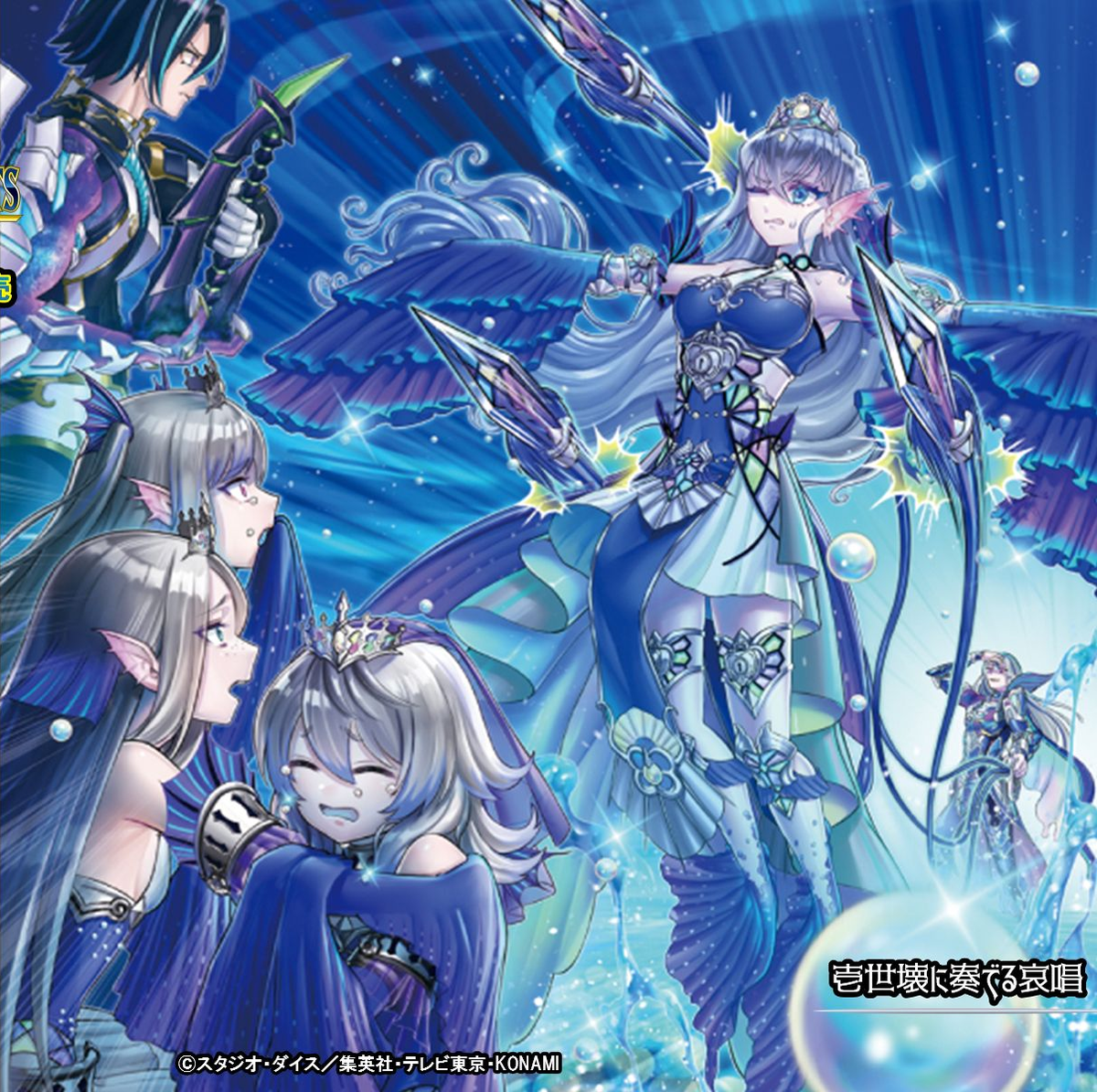
Tearlaments Deck #698137 — Yu-Gi-Oh! Master Duel
41 Main, 15 Extra, incl. Gem-Knight Nepyrim x3, Ash Blossom & Joyous Spring x3, Herald of Orange Light x3.
Created by: YGO Mod (20517634)
Created On: 05/04/2026
Main Deck (41)
- Eva x2
- Fabled Lurrie x1
- Fiendsmith Engraver x2
- Gem-Knight Hollowcore x2
- Gem-Knight Nepyrim x3
- Herald of Green Light x2
- Keldo the Sacred Protector x1
- Lacrima the Crimson Tears x1
- Maxx "C" x1
- Mudora the Sword Oracle x1
- Tearlaments Havnis x1
- Tearlaments Kashtira x1
- Tearlaments Reinoheart x2
- Tearlaments Scheiren x2
- Gem-Knight Iolite x1
- Ash Blossom & Joyous Spring x3
- Destrudo the Lost Dragon's Frisson x1
- Diviner of the Herald x1
- Herald of Orange Light x3
- Brilliant Fusion x3
- Called by the Grave x1
- Fiendsmith's Tract x1
- Gem-Knight Dispersion x1
- Gem-Knight Fusion x1
- Vingolf's Blessing x2
- Tearlaments Sulliek x1
Extra Deck (15)
- Fiendsmith's Lacrima x1
- Gem-Knight Amethyst x1
- Gem-Knight Lady Rose Diamond x1
- Tearlaments Kaleido-Heart x1
- Tearlaments Kitkallos x1
- Tearlaments Rulkallos x1
- A Bao A Qu, the Lightless Shadow x1
- Fiendsmith's Requiem x1
- Fiendsmith's Sequence x1
- Gem-Knight Phantom Quartz x1
- Moon of the Closed Heaven x1
- S:P Little Knight x1
- Baronne de Fleur x1
- Number 60: Dugares the Timeless x1
- Pilgrim Reaper x1
Couldn't load the deck
Deck — Deck Power Evaluation
Final Contextual Deck Power: 38/100 (±12 · Confidence: Low)
| Overall score | Value |
|---|---|
| Structural Deck Power | 54 |
| Going First | 50 |
| Going Second | 48 |
| Meta Power | provisional |
| Tournament Reliability | 45 |
- Primary strategy: Combo
- Secondary strategies: Midrange
- Format: master-duel
Legality
Main 41 / Extra 15 / Side 0 — status under the rules at evaluation time: Illegal. 1 violation(s).
Identity & game plan
- Win condition: Fusion boss summon via Tearlaments engine; Graveyard mill to trigger powerful effects
- Turn 1 (going first): Open with hand traps (Ash Blossom, Maxx C) and a starter like Tearlaments Scheiren to mill and set up a Fusion boss.
- Turn 2 (going second): Use hand traps to disrupt opponent, then on opponent's turn Fusion Summon a Tearlaments boss using milled materials.
- Recovery: Recursion via Fiendsmith Engraver, Mudora the Sword Oracle, and Graveyard banish effects to retrieve or replay key pieces.
- After siding: No side deck present; the list lacks a post‑side adaptation plan.
Why it scores here
The deck builds a Tearlaments mill‑to‑Fusion engine that can summon powerful Aqua bosses, and it fields many hand traps for disruption. However the list is illegal (three copies of a Limited card) and lacks a side deck, heavily lowering its practical reliability. The core engine is fairly consistent in theory (≈95 % chance to draw a starter), but without legal construction the deck cannot be run as‑is. Resource recursion exists but is fragmented across many cards, giving only moderate grind. Overall the system is conceptually strong but illegal and fragile, resulting in a low contextual power rating.
Dimension scores
| # | Dimension | Score | Evidence |
|---|---|---|---|
| D1 | Engine Accessibility & Consistency | 70 | P(at least one core starter in opening 5) ≈ 0.955 (Inferred) |
| D2 | Opening-Hand Quality & Brick Management | 75 | Full‑brick estimate 0.045, but 3 copies of a Limited card raise risk (Inferred) |
| D3 | Combo Conversion & Ceiling | 40 | No recorded boards; best‑case combo inferred from Fusion boss potential (Inferred) |
| D4 | Combo Floor & Median Output | 35 | Median output inferred lower than ceiling due to hand‑trap reliance (Inferred) |
| D5 | Interruption Resilience & Route Redundancy | 60 | Multiple hand traps and recursion cards give some resilience (Inferred) |
| D6 | Resource Economy, Recovery & Grind | 65 | Mill effects on Tearlaments cards provide resource flow (Inferred) |
| D7 | End-Board & Interaction Quality | 60 | Negation text on many monsters and spells supplies interaction layers (Inferred) |
| D8 | Going-Second & Board-Breaking Power | 55 | Going‑second hand‑trap density 0.701 gives decent board‑breaking (Inferred) |
| D9 | Offensive Pressure & Closing Power | 55 | Boss monsters' ATK range 2300‑3000, but no direct damage engines (Inferred) |
| D10 | Main Deck Efficiency & Flexibility | 45 | Only 14 % exact‑name purity; many off‑archetype staples dilute focus (Inferred) |
| D11 | Extra Deck Efficiency & Coverage | 60 | 15‑slot Extra filled with relevant Fusion/Link options (Verified) |
| D12 | Side Deck Adaptability | 0 | Side deck empty; no adaptability post‑side (Verified) |
| D13 | Matchup Coverage & Format Fit | 30 | No tournament data; archetype meta‑share unavailable (Provisional) |
| D14 | Pilotability & Error Tolerance | 40 | Complex multi‑step Fusion line and many limited cards increase error tolerance (Inferred) |
How the score was computed
Strategy profile: Combo. Structural ≈ 54, Going First ≈ 50, Going Second ≈ 48, Meta = provisional, Tournament Reliability ≈ 45. Modifiers: Illegal over‑copy violation (-5); No side deck (-2); High dependence on limited cards (-1). Final formula: 0.80*Structural + 0.20*TournamentReliability (Meta provisional, illegal deck capped low)
Probability & combo summary
- Opening a starter: P(≥1) ≈ 0.96 · key two-card combo ≈ — · full-brick estimate ≈ 0.04 (all Inferred)
- Combo output: best PowerIndex —, median —, board-per-starter —
- Turn order: 0 going-first lines vs 0 going-second lines
Strengths
- Strong mill‑to‑Fusion engine concept
- High hand‑trap count for disruption
- Rich Extra Deck with relevant Fusion/Link options
Weaknesses
- Illegal construction (3 copies of a Limited card)
- No Side Deck, limiting post‑side adaptation
- Low archetype purity; many off‑archetype staples dilute focus
- Complex multi‑step combo reduces pilotability
Critical choke points
- Herald of Orange Light over‑copy limits legality
- Reliance on specific Fusion bosses that may be disrupted
Recommended changes
| Priority | Remove | Add | Reason |
|---|---|---|---|
| 1 | Herald of Orange Light (3 copies) | Herald of Orange Light (1 copy) and another staple such as Instant Fusion | Bring deck into legal limits and improve consistency |
| 2 | None (side deck empty) | A few flexible Side‑deck options (e.g., Droll & Lock Bird, Twin Twisters) | Add post‑side adaptability |
Evidence & confidence
- Verified: Extra‑deck card list; Side‑deck count = 0
- Inferred: Core starter probability; Brick estimate; Engine consistency and resource flow
- Provisional: Matchup coverage
- Data gaps: no combos supplied — combo floor/median/ceiling is text‑only inference no tournament link — archetype meta‑share and per‑pilot match record absent no win‑rate telemetry exists in YGOVN (going‑first/second, matchup, game‑level, brick/starter/OTK rates) — those signals are Inferred or Unknown Meta Power is Provisional unless a dated metagame sample is supplied
Couldn't load the combos