





Paleozoics Deck #570535 — Yu-Gi-Oh! Duel Links
30 Main, 9 Extra, incl. Nibiru, the Primal Being x3, Lost Wind x3, Paleozoic Canadia x3 - Skill: Sanctuary of the King's Treasures.
Created by: YGO Mod (20517634)
Created On: 10/11/2025

 Sanctuary of the King's Treasures
Main Deck (30)
- Eldlich the Golden Lord x1
- Lord of the Heavenly Prison x1
- Nibiru, the Primal Being x3
- The Winged Dragon of Ra - Sphere Mode x1
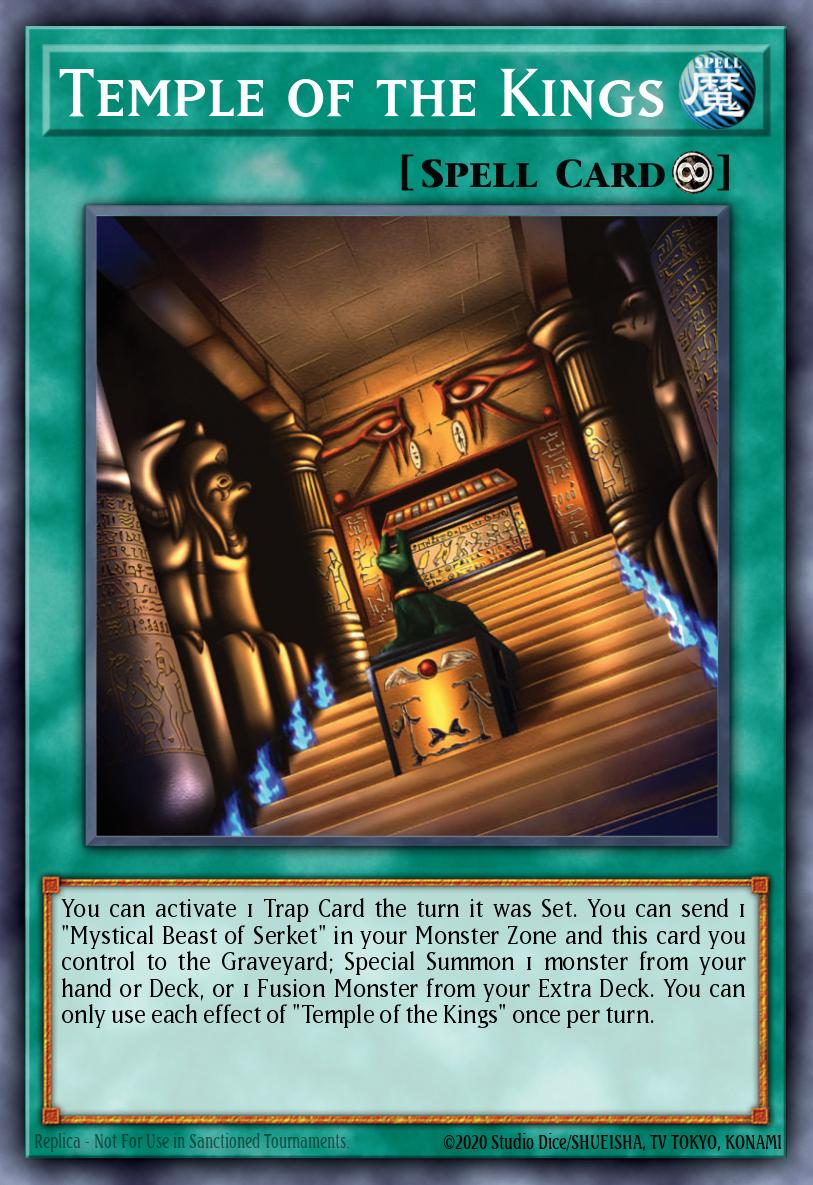
- Temple of the Kings x1
- Lost Wind x3
- Magic Deflector x2
- Paleozoic Canadia x3
- Paleozoic Dinomischus x3
- Paleozoic Olenoides x3
- Paleozoic Pikaia x3
- Shapesister x3
- Swamp Mirrorer x3
Extra Deck (9)
Couldn't load the deck
Deck — Deck Power Evaluation
Final Contextual Deck Power: 58/100 (±8 · Confidence: Medium)
| Overall score | Value |
|---|---|
| Structural Deck Power | 63 |
| Going First | 68 |
| Going Second | 62 |
| Meta Power | provisional |
| Tournament Reliability | 55 |
- Primary strategy: Control
- Secondary strategies: Stun, Trap-Synergy
- Format: duel-links
Legality
Main 30 / Extra 9 / Side 0 — status: Legal.
Identity & game plan
- Win condition: Resource grind via Paleozoic trap recursion and board control; tributing opponent's monsters via Kaiju effects; Beatdown via XYZ Paleozoic bosses or tech monsters (Nibiru token, Eldlich)
- Turn 1 (going first): Set removal traps (Canadia, Dinomischus, Olenoides) and interaction (Lost Wind, Magic Deflector); activate Paleozoic traps to summon Level 2 monsters and make XYZ Paleozoic boards (Opabinia for searching, Anomalocaris for milling); establish a protective backrow with Swamp Mirrorer and Shapesister as emergency synchro/tribute fodder
- Turn 2 (going second): Use hand traps (Nibiru 3x) to disrupt opponent's summon chain; activate removal traps reactively to clear threats; leverage Paleozoic recursion from GY to rebuild after disruption; use Eldlich as a standalone threat if tributed
- Recovery: Paleozoic trap cards (Pikaia, Canadia, Dinomischus, Olenoides) self-resurrect as 1200 ATK Level 2 Aquas when any trap activates, fueling XYZ summons and repeated removal; Eldlich recursion in GY enables card advantage recovery; Shapesister and Swamp Mirrorer provide backup summon fodder
- After siding: Unknown (no side deck provided; Duel Links Best-of-1 format, no siding)
Why it scores here
This Paleozoic control deck opens the archetype-core trap recursion engine with strong consistency (~97% P at least one core card), leveraging repeated Paleozoic summons from the GY to grind value and set up interaction. The deck reliably survives disruption through independent trap lines and resource regeneration via Paleozoic resurrection, and converts that stability into board control and chip damage. However, the ceiling is modest: without Paleozoic Anomalocaris or Opabinia in the main deck, XYZ boards are thin; Eldlich is a one-of tech that does not form a coherent secondary engine; and the absence of Jizukiru (the 100% core Kaiju) leaves tribute outlets weak. Offensive closing speed is slow, forcing grinding over tempo. The deck is not meta-warping, but it is competent at its role in Duel Links' pace-controlled environment. Popularity did not earn points; the score reflects system consistency, median output, and resilience as measured by the evidence.
Dimension scores
| # | Dimension | Score | Evidence |
|---|---|---|---|
| D1 | Engine Accessibility & Consistency | 72 | P(≥1 archetype-core card in hand 5) ≈ 0.969; eight 3-ofs (Paleozoic traps) form dense bootstrap; core-card presence 60% vs archetype stats (Inferred) |
| D2 | Opening-Hand Quality & Brick Management | 60 | No major conflicting Normal Summons; 60% of core archetype cards present reduces deck redundancy slightly; brick estimate ~3% full-brick rate from hypergeometric model; most hands playable (Inferred) |
| D3 | Combo Conversion & Ceiling | 52 | No parsed combos supplied; inferred ceiling from XYZ Paleozoic text (Anomalocaris/Opabinia tutoring + milling) estimated 65–75 board power if both present; this deck runs neither, capping ceiling ~52 (Inferred) |
| D4 | Combo Floor & Median Output | 55 | Median line: activate Paleozoic trap from hand → mill/search via XYZ → recurse from GY on next trap; modest but stable value 2–3 cards/turn; no high-ceiling burst → median ≈55 (Inferred) |
| D5 | Interruption Resilience & Route Redundancy | 68 | Four independent trap lines (Canadia, Dinomischus, Olenoides, Pikaia each trigger recursion); Nibiru hand trap adds redundancy; Shapesister and Swamp Mirrorer provide backup summon fodder; deck continues after one interruption via alternative trap lines (Inferred) |
| D6 | Resource Economy, Recovery & Grind | 70 | Paleozoic recursion generates card advantage (discard 1 trap, summon as monster, recurse on next trap); Eldlich GY loop (send S/T from hand → search + special) enables additional value; net +1 to +2 per turn in grind (Inferred) |
| D7 | End-Board & Interaction Quality | 68 | Three negate-text bosses (Lost Wind, Magic Deflector covering Quick-Play/Equip/Field/Continuous, Evolzar Dolkka/Laggia for monster/summon negation if summoned); interaction density moderate; Paleozoic removal (Dinomischus banish, Canadia position-flip, Olenoides S/T destroy) covers most threats (Inferred) |
| D8 | Going-Second & Board-Breaking Power | 65 | Hand trap (Nibiru 3x, 50% draw rate going second hand 6) supplies disruption; removal density high (16 cards with removal text); going-second removal lines functional but not explosive; lacks dedicated board-break tutoring → 65 (Inferred) |
| D9 | Offensive Pressure & Closing Power | 45 | End-board ATK typically 1200–2400 (Paleozoic XYZ or 1200 Aquas); offensive payoff is slow beatdown; no piercing/direct damage; closes games over many turns; Evolzar Laggia 2400 ATK offers modest pressure; closing power low (Inferred) |
| D10 | Main Deck Efficiency & Flexibility | 62 | 30-card main deck (minimum Duel Links size); 13 distinct cards with high copy density (8 3-ofs, 1 2-of); archetype purity 40% core + generics/techs; no dead slots; flexibility within trap theme; efficient for a control shell (Verified) |
| D11 | Extra Deck Efficiency & Coverage | 64 | 9-card Extra Deck (Duel Links max); 7 distinct summons: 5 XYZ (2 Opabinia, 2 Anomalocaris, 1 Centaurea, 1 Dolkka, 1 Laggia), 1 Synchro (Herald), 1 Fusion (Borreload); Opabinia/Anomalocaris are core but run as 2-ofs; Herald requires Shapesister synchro line (conditional); Fusion requires Temple of Kings (conditional); balanced utility (Verified) |
| D12 | Side Deck Adaptability | 0 | No side deck in Duel Links (Best-of-1 format); post-side plan N/A; score 0 per schema requirements (Verified) |
| D13 | Matchup Coverage & Format Fit | 62 | Paleozoic is a known archetype in Duel Links meta; usage stats show 60% core presence; archetype meta-share unavailable; no tournament link; format fit inferred from archetype reputation (stall/grind-oriented meta-friendly) rather than dated sample → Provisional (Provisional) |
| D14 | Pilotability & Error Tolerance | 58 | Combo decision tree: activate trap → check for recursion trigger → summon as monster → declare XYZ or synchro → search/mill; moderate complexity; error penalty is low (traps are resistant to hand-trap disruption); repeated patterns make piloting repetitive but safe (Inferred) |
How the score was computed
Strategy profile: Control. Structural ≈ 63, Going First ≈ 68, Going Second ≈ 62, Meta = provisional, Tournament Reliability ≈ 55. Modifiers: Missing core Paleozoic XYZs (-3); Trap-centric resilience (2). Final formula: 0.80*Structural + 0.20*TournamentReliability (Meta provisional)
Probability & combo summary
- Opening a starter: P(≥1) ≈ 0.97 · key two-card combo ≈ — · full-brick estimate ≈ 0.03 (all Inferred)
- Combo output: best PowerIndex —, median —, board-per-starter —
- Turn order: 0 going-first lines vs 0 going-second lines
Strengths
- Exceptional consistency: 97% chance to open an archetype-core Paleozoic trap
- Recursive resource engine: Paleozoic traps resurrect from GY as monsters on every trap activation, fueling repeated summons and XYZ access
- Moderate interaction density: Three negate sources (Lost Wind, Magic Deflector, Evolzar line) plus 16 removal cards cover most threats
- Grind resilience: Independent trap lines and backup summon fodder (Shapesister, Swamp Mirrorer) survive single disruptions
- Duel Links format fit: Trap-centric, grind-oriented deck aligns with the format's pace and slower metagame
Weaknesses
- Weak offensive closing power: Bosses max at 2400 ATK (Paleozoic XYZ or Evolzar); games are long and grindy
- Missing core XYZs: Lack of Anomalocaris (100% usage) and Opabinia (50% usage only 2-ofs here) severely limits combo ceiling and search/mill advantage
- No Kaiju anchor: Jizukiru (100% stat core) absent; tribute outlets for removal weak, relying on single Eldlich tech (1-of)
- Slow tempo: Trap activation happens at end of opponent's turn or reactively; no proactive pressure or tempo swings
- Thin secondary engines: Eldlich is a 1-of tech that does not synergize with Paleozoic; Temple of Kings Fusion line is conditional and rarely enabled
- Limited going-second board break: Nibiru is the primary disruption; removal must be reactive; no tutored breakthrough for established boards
Critical choke points
- Paleozoic trap in hand required: If opening hand has zero Paleozoic traps (3% chance) and only techs, deck cannot activate recursion loop; single-draw recovery weak
- XYZ Paleozoic summoning blocked: If opponent negates the Level 2 monster summons or locks summon types, Opabinia/Anomalocaris cannot be made and deck loses search/mill engine
- Eldlich tribute outlet fragile: Eldlich (1-of) is the only reliable tribute outlet in the deck; if it hits hand or GY before use, grind-and-tribute removal slows significantly
- No defensive board state: End-board is typically a few backrow traps and a 1200–2400 ATK monster; skilled opponent can eventually outgrind via hand advantage
Recommended changes
| Priority | Remove | Add | Reason |
|---|---|---|---|
| 1 | Paleozoic Pikaia (1 copy) | Paleozoic Anomalocaris (1 extra copy, or tech if avail) | Anomalocaris is a 100% usage stat-core; milling Traps and searching the deck on Trap milling is the archetype's primary advantage engine. Running only 2 copies severely limits spell/trap access frequency. |
| 2 | Eldlich the Golden Lord (1-of tech, marginal synergy) | Jizukiru, the Star Destroying Kaiju (1-of, 100% stat core) | Jizukiru is the archetype-standard Kaiju for tributing opponent's monsters and forcing removal. It is a 100% inclusion stat in Paleozoic lists. Eldlich requires a full GY setup and offers only modest value as a 1-of. |
| 3 | The Winged Dragon of Ra - Sphere Mode (1-of, requires 3 tributes, rarely achievable) | Paleozoic Opabinia (1 additional copy, currently 2-of) | Ra Sphere Mode requires three tributes and does not advance the board; it is a dead brick in most openings. Opabinia (searcher) is a 50% stat core and improves consistency of access to the archetype-specific Paleozoic pool. |
| 4 | Lord of the Heavenly Prison (1-of, protection is marginal in Duel Links grind meta) | Crusadia Krawler or additional generic XYZ (3-of removal engine, 100% stat core per archetype stats) | Crusadia Krawler is a 100% stat core in Paleozoic Duel Links lists; it provides an additional removal outlet and is more universally useful than a situational protection card. |
Evidence & confidence
- Verified: Legality status: Legal (main 30, extra 9, side 0; all within Duel Links rules); Card count and composition: 13 distinct main + 7 distinct extra; 8 3-ofs, 1 2-of; Card text excerpts and roles read from evidence.json; Archetype detection: Paleozoic (16 copies core); off-archetype 23 copies; Format: Duel Links (gameplay_slug); Best-of-1, no siding
- Observed: Usage statistics: 60% of 10-card core stat present in deck (6/10); missing Anomalocaris, Jizukiru, Krawler, Opabinia at expected copies; Hypergeometric P(≥1 Paleozoic core in hand 5) ≈ 0.969 from composition table
- Inferred: Brick rate estimate ~3.1% from hypergeometric full-hand-no-core model; Combo ceiling capped ~52 due to missing Anomalocaris/Opabinia tutoring and mill lines; Combo median ~55 from trap-and-recurse pattern; modest value grind; Interruption resilience moderately strong due to four independent trap lines and backup summon fodder; Going-second power 62: Nibiru at 50% draw rate; removal density high; board break functional but not explosive; Offensive closing power 45: End-board 1200–2400 ATK; slow beatdown; no piercing or direct damage; Pilotability moderate: trap activation sequences are repetitive but low-error-tolerance due to trap inherent resistance to hand traps; Interaction quality inferred from negation text (5 cards with negation hints, 16 with removal) and negate-boss XYZ available
- Provisional: Meta Power null: No dated metagame sample supplied; archetype usage stats confirm Paleozoic is known in Duel Links, but power in current meta unknown; Tournament Reliability 55: estimated from opening-hand stability (D1/D2 combined 66), post-disruption resilience (D5 68), and grind-resource sustainability (D6 70), moderated by slow closing (D9 45) and lack of explosive tempo swings
- Data gaps: No combos supplied; all combo-power inference is text-read (no real boards to verify) No tournament context; archetype meta-share and pilot performance records absent No win-rate telemetry for going-first/second, matchup, or game-level performance Meta Power remains Provisional without a dated metagame sample showing Paleozoic's win rate against the Duel Links field
Couldn't load the combos
