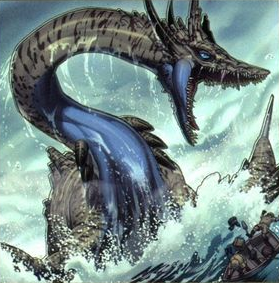
Danger! Deck #411052 — Yu-Gi-Oh! Master Duel
40 Main, 15 Extra, incl. Alpha, the Master of Beasts x3, Danger! Bigfoot! x3, Danger! Thunderbird! x3.
Created by: YGO Mod (20517634)
Created On: 01/19/2025
Main Deck (40)
- Alpha, the Master of Beasts x3
- Battle Fader x1
- Danger! Bigfoot! x3
- Danger! Thunderbird! x3
- Fairy Tail - Luna x3
- Gizmek Orochi, the Serpentron Sky Slasher x3
- Mulcharmy Fuwalos x3
- Mulcharmy Purulia x1
- Schwarzschild Limit Dragon x2
- Ash Blossom & Joyous Spring x3
- Change of Heart x2
- Dark Hole x2
- Foolish Burial x1
- Harpie's Feather Duster x1
- Raigeki x1
- Trade-In x3
- Triple Tactics Talent x2
- Triple Tactics Thrust x3
Extra Deck (15)
- Aussa the Earth Charmer, Immovable x1
- Berserker of the Tenyi x1
- Black Luster Soldier - Soldier of Chaos x1
- Dharc the Dark Charmer, Gloomy x1
- Eria the Water Charmer, Gentle x1
- Lyna the Light Charmer, Lustrous x1
- Mekk-Knight Crusadia Avramax x1
- Dingirsu, the Orcust of the Evening Star x1
- Hieratic Sky Dragon Overlord of Heliopolis x1
- Number 62: Galaxy-Eyes Prime Photon Dragon x1
- Number 68: Sanaphond the Sky Prison x1
- Number 77: The Seven Sins x1
- Number 84: Pain Gainer x1
- Teardrop the Rikka Queen x1
- The Zombie Vampire x1
Couldn't load the deck
Deck — Deck Power Evaluation
Final Contextual Deck Power: 49/100 (±12 · Confidence: Low)
| Overall score | Value |
|---|---|
| Structural Deck Power | 54 |
| Going First | 52 |
| Going Second | 50 |
| Meta Power | provisional |
| Tournament Reliability | 45 |
- Primary strategy: Toolbox
- Secondary strategies: Midrange, Tempo
- Format: master-duel
Legality
Main 40 / Extra 15 / Side 0 — status: Legal.
Identity & game plan
- Win condition: Danger! Bigfoot and Danger! Thunderbird discard-to-summon from hand for 3000 and 2800 ATK beaters, closed out by high-ATK Extra Deck Xyz and Link monsters such as Number 77 and Number 62.; Link and Xyz boss monsters, supported by Charmer link searches, Mulcharmy hand-draw value and Triple Tactics control-steal or draw effects.
- Turn 1 (going first): Open with a Danger! starter in hand, or a Mulcharmy Fuwalos or Purulia that draws on opposing summons, then use Triple Tactics or Trade-In to build a 2-3 card board and keep Ash Blossom up for the opponent's response.
- Turn 2 (going second): Hold Ash Blossom, Battle Fader and Triple Tactics Talent to answer the opponent's first board, then use Dark Hole or Raigeki if the opponent has committed monsters, and summon a Danger! starter afterwards.
- Recovery: Rebuild from the graveyard using the Charmer link monsters, which Special Summon a DARK, LIGHT, WATER or EARTH monster from the opponent's graveyard, and Gizmek Orochi, which can come back from hand or graveyard.
- After siding: No side deck is registered, so no post-side plan can be evaluated; a best-of-3 player would need to build one from scratch.
Why it scores here
The deck's starters are six Danger! copies (three Bigfoot, three Thunderbird) that can Special Summon from hand after a random discard, giving a hypergeometric chance of about 0.58 to have at least one in a 5-card opening hand (Inferred). Its disruption suite is broad: four hand traps, Dark Hole, Raigeki, Harpie's Feather Duster, Foolish Burial and Triple Tactics give several ways to answer a board, which lifts end-board interaction and resilience. Closing power comes from 2800-4000 ATK bosses, but no recorded boards exist for this list, so ceiling and median output are text-based estimates and the scores stay in the middle. Archetype popularity and archetype usage data were not used to raise the score: the deck is only 10.9 percent exact-name Danger!, and the reference core list points at a different archetype. Scores were assigned to the whole system and were not derived from averaging card scores.
Dimension scores
| # | Dimension | Score | Evidence |
|---|---|---|---|
| D1 | Engine Accessibility & Consistency | 55 | At least one of six Danger! starters in a 5-card opening hand is about 0.58 (Inferred); Mulcharmy adds a second hand-based starter line. |
| D2 | Opening-Hand Quality & Brick Management | 50 | Dark Hole, Raigeki, Harpie's Feather Duster and Foolish Burial are situational bricks, and Mulcharmy needs an empty field, so hands are not uniformly functional (Inferred). |
| D3 | Combo Conversion & Ceiling | 55 | No recorded boards exist for this list; the ceiling is inferred from text, with Danger! hand discards into Thunderbird and Bigfoot boss plays and Gizmek or Dark Hole cleanup (Inferred). |
| D4 | Combo Floor & Median Output | 40 | No recorded boards exist, so the median output is unknown and given a conservative provisional score (Provisional). |
| D5 | Interruption Resilience & Route Redundancy | 60 | Ash Blossom x3 and Battle Fader provide hand-trap responses to a single disruption, and Triple Tactics Thrust and Trade-In give replacement draws (Inferred). |
| D6 | Resource Economy, Recovery & Grind | 60 | Trade-In, Triple Tactics and Charmer link summons from the graveyard give moderate resource regeneration (Inferred). |
| D7 | End-Board & Interaction Quality | 65 | Dark Hole, Raigeki, Feather Duster, Gizmek banish-destroy, Hieratic's negate and Black Luster Soldier removal give broad interaction (Inferred from card text). |
| D8 | Going-Second & Board-Breaking Power | 60 | Dark Hole and Raigeki, Triple Tactics Talent control-steal and Change of Heart give several ways to challenge an opposing board when going second (Inferred). |
| D9 | Offensive Pressure & Closing Power | 65 | Thunderbird 2800, Bigfoot 3000, Galaxy-Eyes Prime Photon Dragon 4000, Number 77 4000 and Mekk-Knight Avramax 3000 give strong attacking bosses (Verified card text). |
| D10 | Main Deck Efficiency & Flexibility | 55 | Forty main-deck cards across 18 distinct names, with 9 tech and 4 hand-trap roles, are reasonably compact but carry a notable tech density (Verified composition). |
| D11 | Extra Deck Efficiency & Coverage | 50 | Fifteen Extra Deck cards across eight Xyz, Link and other types are all single-copy, with no mandatory core but a broad spread of options (Verified composition). |
| D12 | Side Deck Adaptability | 25 | No side deck is registered, so there is no post-side adaptability evidence and this dimension is scored low (Provisional). |
| D13 | Matchup Coverage & Format Fit | 45 | No dated metagame sample or tournament link exists, so format fit can only be provisional (Provisional). |
| D14 | Pilotability & Error Tolerance | 50 | Hand-revealed discards, Extra Deck choice and multi-step link and Xyz routes raise decision load, though the basic starter plays are direct (Inferred). |
How the score was computed
Strategy profile: Toolbox. Structural ≈ 54, Going First ≈ 52, Going Second ≈ 50, Meta = provisional, Tournament Reliability ≈ 45. Modifiers: No side deck (-3). Final formula: 0.80*Structural + 0.20*TournamentReliability (Meta provisional); 0.80*54 + 0.20*45 = 52.2, then -3 modifier = 49
Probability & combo summary
- Opening a starter: P(≥1) ≈ 0.58 · key two-card combo ≈ — · full-brick estimate ≈ — (all Inferred)
- Combo output: best PowerIndex —, median —, board-per-starter —
- Turn order: 0 going-first lines vs 0 going-second lines
Strengths
- Six hand-activated Danger! starters give a reasonably likely T1 play.
- Four hand traps and several removal and board-wipe cards cover different interaction timings.
- Extra Deck bosses reach 2800 to 4000 ATK and include several Link and Xyz routes.
- Charmer link monsters recycle opposing graveyard monsters, giving graveyard-based recovery.
Weaknesses
- The deck has no side deck, so it cannot adapt between games.
- It is 10.9 percent exact-name Danger!, so its engine is spread across several sub-archetypes rather than one core.
- Dark Hole, Raigeki and Feather Duster are situational and can hit the deck's own board.
- No recorded boards exist, so it is unverified whether the combo lines work in practice.
Critical choke points
- Danger! starters depend on the opponent randomly choosing a card from the hand, which is not fully under the player's control.
- Mulcharmy and similar draw effects need an empty field, which clashes with boards built around the Extra Deck bosses.
Recommended changes
| Priority | Remove | Add | Reason |
|---|---|---|---|
| 1 | Single-copy situational cards such as Foolish Burial | A side deck of 8 to 15 cards covering the format's most common threats | A zero-card side deck gives no post-side plan, which is the largest single gap in a best-of-3 deck. |
| 2 | One Mulcharmy copy | A second hand trap or a Danger! starter | Mulcharmy needs an empty field to work, and the deck has more reliable options that do not require one. |
Evidence & confidence
- Verified: Legal status with 40 main and 15 Extra Deck cards, and Foolish Burial and Harpie's Feather Duster at their Limited copy caps.; Card text and stats for all 40 main and 15 Extra Deck cards, including Danger! Thunderbird 2800 ATK and Number 77 4000 ATK.; Exact-name archetype purity of 10.9 percent, with 6 of 55 cards carrying the Danger! name.
- Inferred: Starter access of about 0.58 for at least one of six Danger! starters in a 5-card opening hand.; Interaction breadth from hand traps, board wipes and targeted removal.; Recovery through Charmer link monsters and Gizmek.
- Provisional: Format and matchup fit, since no dated metagame sample exists.; Tournament reliability, since no tournament link exists.
- Data gaps: No combos were supplied, so combo floor, median and ceiling are text-only inference. No tournament link exists, so archetype meta-share and per-pilot results are absent. No win-rate telemetry exists, so going-first, going-second, matchup and brick rates are Inferred or Unknown. The archetype's reference core list is dominated by Phantom Knights cards that this deck does not run, so it does not describe Danger! and was not used to score this deck. Meta Power is provisional unless a dated metagame sample is supplied.
Couldn't load the combos