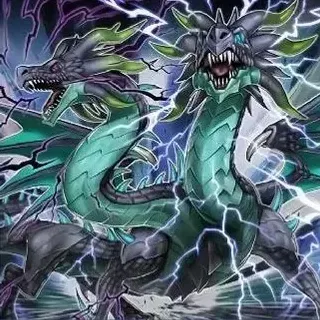
Thunder Dragon Deck #780240 — Yu-Gi-Oh! Duel Links
30 Main, 9 Extra, incl. Imsety, Glory of Horus x3, The Bystial Lubellion x3, Thunder Dragon x3 - Skill: Precious Cards of the Dark.
Created by: YGO Mod (20517634)
Created On: 10/31/2026
 Precious Cards of the Dark
Main Deck (30)
- Bystial Druiswurm x1
- Bystial Magnamhut x1
- Chaos Dragon Levianeer x1
- Hapi, Guidance of Horus x1
- Imsety, Glory of Horus x3
- Lava Golem x2
- Nibiru, the Primal Being x2
- Qebehsenuef, Protection of Horus x1
- The Bystial Lubellion x3
- Thunder Dragon x3
- Thunder Dragondark x2
- Thunder Dragonhawk x1
- Thunder Dragonroar x3
- King's Sarcophagus x2
- The Gaze of Timaeus x1
- Thunder Dragon Fusion x1
- Walls of the Imperial Tomb x2
Extra Deck (9)
Couldn't load the deck
Deck — Deck Power Evaluation
Final Contextual Deck Power: 59/100 (±7 · Confidence: Medium)
| Overall score | Value |
|---|---|
| Structural Deck Power | 63 |
| Going First | 64 |
| Going Second | 57 |
| Meta Power | provisional |
| Tournament Reliability | 60 |
- Primary strategy: Midrange
- Secondary strategies: Combo, Fusion
- Format: duel-links
Legality
Main 30 / Extra 9 / Side 0 — status: Legal.
Identity & game plan
- Win condition: Extra Deck boss monsters (Thunder Dragon Titan, Red-Eyes Dark Dragoon, Thunder Dragon Colossus) reached through the Thunder Dragon searcher and Fusion engine.; Level 8 Xyz boss (Number 68 or Dingirsu) and high-ATK Horus or Bystial bodies revived from the Graveyard.
- Turn 1 (going first): Discard Thunder Dragon, Thunder Dragonroar or Thunder Dragondark to search the next engine piece, then build toward a Fusion or Xyz boss; the Sarcophagus and Horus revival line is the backup.
- Turn 2 (going second): Use Bystial Druiswurm or Magnamhut as Quick-Effect hand summons when the opponent controls a monster, and Nibiru as a hand trap against 5+ summons, to slow the opening before the Extra Deck boss lands.
- Recovery: Re-summon Thunder Dragon monsters from the Graveyard or banish with Dragonhawk and Dragondark, and re-search with Thunder Dragon, to rebuild after a lost board.
- After siding: Not applicable in practice: the format allows up to 9 side cards, but the list runs none, so there is no post-side adjustment.
Why it scores here
The deck reliably opens a searcher: 18 searcher-text copies give about a 99% chance of at least one in a 5-card opening hand, so the engine is accessible even though any single Thunder Dragon starter appears only about 43% of the time. Its conversion ceiling comes from Extra Deck bosses with removal or destruction text and high ATK, and that ceiling is scored from card text because no recorded boards exist, so the typical output (median) is held at a neutral 50 rather than inferred upward. Resilience and resource flow are good: Graveyard and banish recursion lets the Thunder, Bystial and Horus lines rebuy after disruption, and the score reflects those as system properties, not as an average of card scores. The deck loses points for engine conflict (33% exact-name purity across three sub-engines), dead Horus and Bystial cards without their enablers, a 36.6% chance of a going-second hand 6 Nibiru, and no side deck to adapt; popularity and the archetype's past meta standing did not earn any points.
Dimension scores
| # | Dimension | Score | Evidence |
|---|---|---|---|
| D1 | Engine Accessibility & Consistency | 72 | 18 searcher-text copies give about a 99% chance of at least one searcher in a 5-card opening hand, while three Thunder Dragon starters give about 43% for any single one (Inferred). |
| D2 | Opening-Hand Quality & Brick Management | 58 | Horus cards need King's Sarcophagus or Walls to revive and Bystial cards need LIGHT or DARK monsters in the Graveyard, so hands without those enablers brick (Inferred). |
| D3 | Combo Conversion & Ceiling | 66 | No recorded boards exist, so the ceiling is read from text: three Extra Deck bosses with removal or destruction effects and 2500 to 3200 ATK (Inferred, semantic). |
| D4 | Combo Floor & Median Output | 50 | No recorded boards exist, so the typical output cannot be measured and is held at a neutral 50 (Provisional). |
| D5 | Interruption Resilience & Route Redundancy | 70 | Thunder, Bystial and Horus lines give several routes, and Graveyard and banish summons (Dragonhawk, Dragondark, Dragonroar) rebuy the engine after disruption (Inferred from text). |
| D6 | Resource Economy, Recovery & Grind | 72 | Discard-to-search and Graveyard recursion keep card flow going, and Walls is roughly hand-neutral (search then bottom a card) (Verified text; economy Inferred). |
| D7 | End-Board & Interaction Quality | 62 | Five removal-text cards plus removal on two Extra Deck bosses, but no negation text in the list and only two hand-tagged Nibiru (Inferred from text). |
| D8 | Going-Second & Board-Breaking Power | 60 | Going-second hand-6 chance of at least one Nibiru is 36.6%, and Dragoon, Titan and Colossus provide board removal, with no recorded going-second split (Inferred). |
| D9 | Offensive Pressure & Closing Power | 74 | High-ATK finishers (Titan 3200, Dragoon 3000, Levianeer 3000, Colossus 2600) give strong end-board damage (Verified stats; closing Inferred). |
| D10 | Main Deck Efficiency & Flexibility | 58 | 30 main cards across 17 distinct names, but only 33% are exact Thunder Dragon, the rest split across Bystial, Horus and generic staples (Verified composition; coherence Inferred). |
| D11 | Extra Deck Efficiency & Coverage | 64 | 9 Extra Deck cards across 8 distinct names with 18 Level 8 cards in the list supports Xyz options, but two Colossus copies are a dependence (Verified composition; Inferred). |
| D12 | Side Deck Adaptability | 35 | The format allows up to 9 side cards, but the list runs none, so there is no post-side plan (Verified). |
| D13 | Matchup Coverage & Format Fit | 50 | No tournament share or dated meta sample exists, so this dimension is excluded from the structural score (Provisional). |
| D14 | Pilotability & Error Tolerance | 50 | Several conditional summons (Quick-Effect Bystial hand summons, Horus Graveyard revivals, opponent-tribute Lava Golem) raise the decision load (Inferred). |
How the score was computed
Strategy profile: Midrange, meta-neutral (D13 dropped and renormalized over 95). Structural ≈ 63, Going First ≈ 64, Going Second ≈ 57, Meta = provisional, Tournament Reliability ≈ 60. Modifiers: Engine conflict (-3); Redundant searcher density (2); Extra Deck dependence (-1); Hard-garnet burden (-2). Final formula: 0.80*Structural + 0.20*TournamentReliability + ContextModifiers (Meta provisional; 0.80*63.2 + 0.20*60 - 4 = 58.5, rounded to 59)
Probability & combo summary
- Opening a starter: P(≥1) ≈ 0.99 · key two-card combo ≈ — · full-brick estimate ≈ 0.01 (all Inferred)
- Combo output: best PowerIndex —, median —, board-per-starter —
- Turn order: 0 going-first lines vs 0 going-second lines
Strengths
- Searcher density: 18 searcher-text copies make the engine almost always accessible.
- Graveyard and banish recursion (Dragonroar, Dragonhawk, Dragondark) lets the deck rebuild after disruption.
- High-ATK Extra Deck finishers with removal or destruction text.
- Level 8 density supports several Xyz options.
Weaknesses
- Three sub-engines (Thunder, Bystial, Horus) with only 33% exact-name purity.
- Horus and Bystial cards are dead without King's Sarcophagus, Walls, or LIGHT and DARK monsters in the Graveyard.
- Little negation or hand disruption: no negation text, and only two hand-tagged cards.
- Going-second hand-6 chance of at least one Nibiru is about 37%.
Critical choke points
- King's Sarcophagus and Walls of the Imperial Tomb (4 total) gate the five Horus monsters; without them that engine is dead.
- Thunder Dragon Colossus (2 copies) is the main boss, so losing both Colossus removes the primary finisher.
- Lava Golem (2 copies) needs the opponent to control monsters to tribute, so it is dead on an empty opposing field.
Recommended changes
| Priority | Remove | Add | Reason |
|---|---|---|---|
| 1 | One Lava Golem | A non-conditional searcher or Level 8 extender that works on an empty opposing field | Lava Golem needs the opponent to control two monsters to Special Summon; this is a conditional brick (Inferred from text). |
| 2 | One Walls of the Imperial Tomb | A second Thunder Dragon-type searcher or a Thunder Fusion enabler | Walls is the weakest engine link, since it needs the Sarcophagus line to matter; more Thunder access lowers the Horus dependence (Inferred). |
Evidence & confidence
- Verified: Main 30, Extra 9, Side 0 are within the Duel Links size rules (0-9 side, though none is run).; Coach King Giantrainer at 1 copy is at its Limited cap; Bystial Druiswurm and Magnamhut at 1 copy are under their Semi-Limited cap of 2.; Card text, stats and archetype tags for all listed cards.; Archetype usage statistics show Thunder Dragon, Bystial, Horus and generic staples as the typical core.
- Inferred: At least one searcher in the opening 5 is about 99% (hypergeometric).; Horus and Bystial cards brick without their enablers.; Removal and boss conversion ceiling read from text.; Going-second hand-6 Nibiru chance is 36.6% (hypergeometric).
- Provisional: Meta Power is null: no dated metagame sample exists.; Guide text says the archetype was dominant then nerfed after banlist waves; the current standing is unverified.
- Data gaps: No recorded boards: combo floor, median and ceiling are text-only inference. No tournament link: archetype meta-share and per-pilot record are absent. No win-rate telemetry exists for this deck (going-first/second, matchup, brick or starter rates). Usage statistics flag Thunder Dragon Colossus, Dingirsu, Number 68 and Thunder Dragon Titan as not in this deck, but the resolved card list includes all four with the counts that match the 9-card Extra Deck; the card list was taken as authoritative, so the 10-of-14 core-present figure is unreliable. Guide text says the archetype was nerfed after earlier banlist waves; current Duel Links standing and ban status beyond the list's own banlist fields are unverified. Deck title is null, so the deck is identified only by its archetype and card list.
Couldn't load the combos