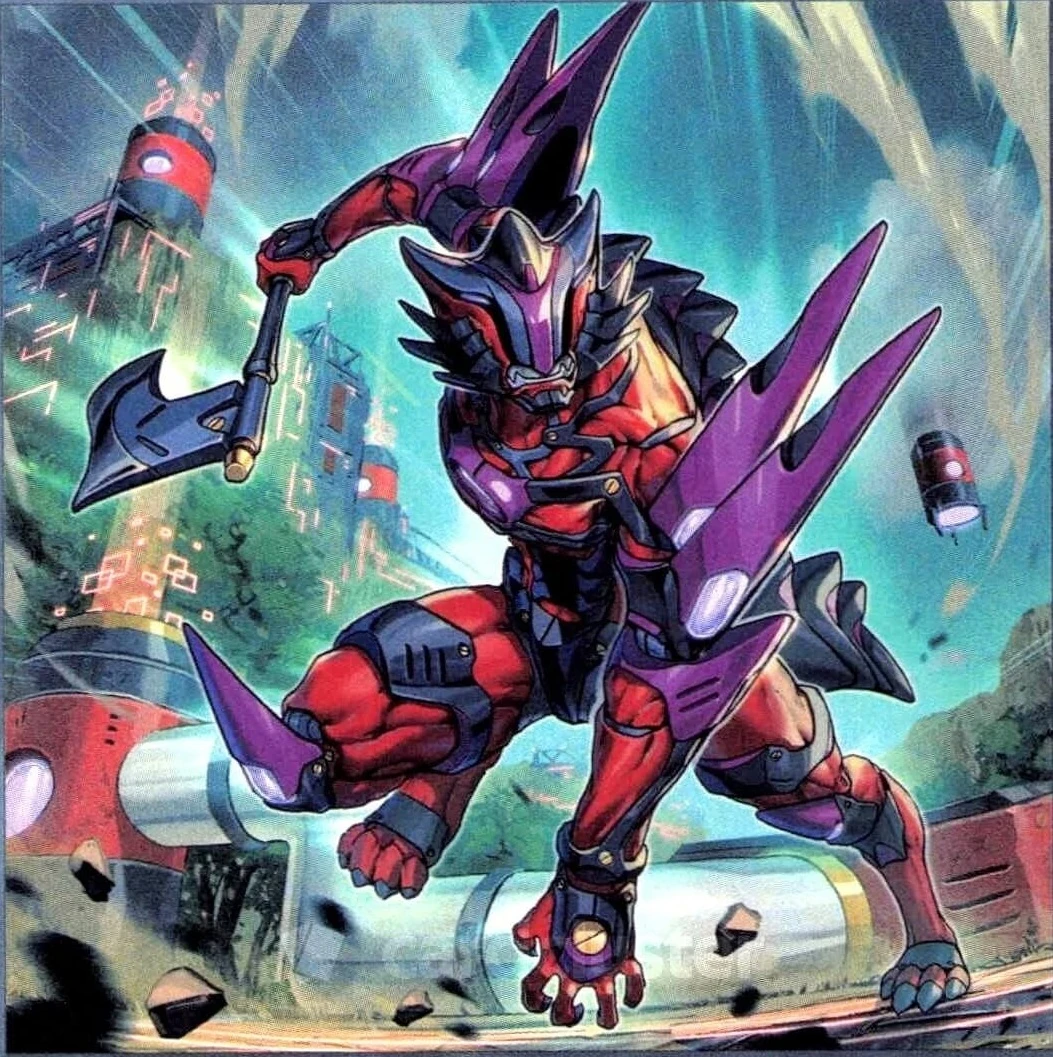
Kashtira Deck #773603 — Yu-Gi-Oh! Master Duel
40 Main, 15 Extra, incl. Evilswarm Castor x3, Kashtira Fenrir x3, Primite Dragon Ether Beryl x3. Created Oct 24, 2026 by YGO Mod.
Created by: YGO Mod (20517634)
Created On: 10/24/2026
Main Deck (40)
- Droll & Lock Bird x1
- Evilswarm Castor x3
- Kashtira Fenrir x3
- Kashtira Riseheart x1
- Kashtira Unicorn x2
- Maxx "C" x1
- Mulcharmy Fuwalos x1
- Nibiru, the Primal Being x1
- Primite Dragon Ether Beryl x3
- Rescue Rabbit x1
- Evilswarm Heliotrope x3
- Ash Blossom & Joyous Spring x1
- Ghost Ogre & Snow Rabbit x1
- Dimensional Fissure x3
- Infestation Pandemic x1
- Kashtira Birth x1
- Kashtiratheosis x1
- Metamorphosis x1
- Pressured Planet Wraitsoth x1
- Primite Drillbeam x1
- Primite Lordly Lode x3
- Primite Roar x1
- Reinforcement of the Army x1
- Small World x1
- Solemn Judgment x1
- Solemn Strike x1
- Solemn Warning x1
Extra Deck (15)
- Invoked Caliga x1
- The Last Warrior from Another Planet x1
- S:P Little Knight x1
- Arc Rebellion Xyz Dragon x1
- Dark Armed, the Dragon of Annihilation x1
- Divine Arsenal AA-ZEUS - Sky Thunder x2
- Evilswarm Exciton Knight x1
- Evilswarm Ophion x2
- Kashtira Arise-Heart x1
- Kashtira Shangri-Ira x1
- Number 11: Big Eye x1
- Raider's Knight x1
- Tornado Dragon x1
Couldn't load the deck
Deck — Deck Power Evaluation
Final Contextual Deck Power: 57/100 (±6 · Confidence: Medium)
| Overall score | Value |
|---|---|
| Structural Deck Power | 60.4 |
| Going First | 60 |
| Going Second | 64 |
| Meta Power | provisional |
| Tournament Reliability | 52 |
- Primary strategy: Midrange
- Secondary strategies: Stun, Toolbox
- Format: master-duel
Legality
Main 40 / Extra 15 / Side 0 — status: Legal.
Identity & game plan
- Win condition: Kashtira Shangri-Ira Standby Phase summons into Xyz Rank 7 boards (Kashtira Arise-Heart, Divine Arsenal AA-ZEUS, Arc Rebellion, Dark Armed) that attack for 2800 to 3000 ATK; Kashtira Birth and Kashtiratheosis recycle banished or GY Kashtira monsters, and Number 11 Big Eye can steal an opposing monster
- Turn 1 (going first): Hand-summon Kashtira Fenrir or Kashtira Unicorn (both need an empty field), search a Kashtira monster or Spell, then build a Rank 7 Xyz with Shangri-Ira or Arise-Heart
- Turn 2 (going second): Use hand traps (Ash Blossom, Ghost Ogre, Nibiru, Droll and Lock Bird, Maxx C) and Solemn responses to break the opponent's opening summon, then land a Kashtira body from hand
- Recovery: Kashtira Birth and Kashtiratheosis summon Kashtira monsters back from the banished zone or GY, and Primite Lordly Lode searches the next Primite piece
- After siding: No side deck was supplied (side_count 0), so no post-side plan can be assessed
Why it scores here
The deck opens a functional plan through a Kashtira core of six hand-summonable or Standby-summoned bodies (Fenrir 3, Unicorn 2, Riseheart 1) plus Shangri-Ira and Arise-Heart in the Extra Deck, which gives an estimated 58% chance of at least one hand-summonable starter in five cards (Inferred). It converts that plan into Rank 7 boards with 3000-ATK Xyz monsters, so closing power is strong, but the median and floor are unmeasured because no recorded boards exist. Interaction is the system's best feature: five hand traps, three Solemns, and Drillbeam and Ghost Ogre give layered answers to summons and activations, and Kashtira Birth and Kashtiratheosis provide recursion after disruption. The score is held down by an unfocused build: only 16% of the main deck carries the exact Kashtira name, and Primite, Evilswarm, Solemn, and Phantom Knights pieces compete for slots, with Dimensional Fissure also conflicting with graveyard-based recursion. This is a structural read of the list and its text, not of popularity, and the score was not produced by averaging individual card scores.
Dimension scores
| # | Dimension | Score | Evidence |
|---|---|---|---|
| D1 | Engine Accessibility & Consistency | 60 | P(at least one of the six hand-summonable Kashtira starters in 5 cards) ≈ 0.58 from hypergeometric estimate; no recorded boards to confirm (Inferred) |
| D2 | Opening-Hand Quality & Brick Management | 50 | Five hand traps, three Solemns and off-archetype pieces create dead-hand risk on the going-first hand, but each hand has a real reaction (Inferred) |
| D3 | Combo Conversion & Ceiling | 62 | Shangri-Ira Standby summons and Arise-Heart banish-stacking give a high text-level ceiling; no recorded boards to measure it (Inferred) |
| D4 | Combo Floor & Median Output | 48 | No recorded boards, so median output is unmeasured; floor is set by whether a Kashtira starter is drawn (Inferred) |
| D5 | Interruption Resilience & Route Redundancy | 62 | Five hand traps, Birth and Kashtiratheosis recursion, and multiple Kashtira starters give several independent restart routes (Inferred) |
| D6 | Resource Economy, Recovery & Grind | 70 | About 15 searcher-text cards and Kashtira Birth recursion give good resource regeneration; Solemns and Roar cost LP (Inferred) |
| D7 | End-Board & Interaction Quality | 76 | Three Solemns, Ash Blossom, Ghost Ogre, Drillbeam, Arc Rebellion and Tornado Dragon layer negation and destruction across turns (Inferred semantic read, with flags verified) |
| D8 | Going-Second & Board-Breaking Power | 70 | Five hand traps and Solemns challenge a going-second board, with Big Eye stealing a monster as a board-breaker (Inferred) |
| D9 | Offensive Pressure & Closing Power | 74 | Arise-Heart 3000 ATK, Zeus 3000 ATK, Arc Rebellion 3000 ATK and Dark Armed 2800 ATK give strong end-board pressure (Verified stats, Inferred conversion) |
| D10 | Main Deck Efficiency & Flexibility | 52 | Compact 40-card main with 27 distinct cards, but only 9 exact Kashtira copies and 46 off-archetype copies lower coherence (Verified composition, Inferred efficiency) |
| D11 | Extra Deck Efficiency & Coverage | 62 | Extra Deck of 15 with 12 Xyz monsters; Shangri-Ira and Arise-Heart are the core, while Ophion and Zeus pull in other engines (Verified composition, Inferred) |
| D12 | Side Deck Adaptability | 35 | No side deck supplied, so post-side adaptability cannot be assessed (Provisional) |
| D13 | Matchup Coverage & Format Fit | 50 | No tournament link or dated meta sample, so matchup and format fit cannot be measured (Provisional) |
| D14 | Pilotability & Error Tolerance | 40 | Multi-engine decks with Xyz chains and hand-trap timing are demanding to pilot, with many decision points (Inferred) |
How the score was computed
Strategy profile: Midrange. Structural ≈ 60.4, Going First ≈ 60, Going Second ≈ 64, Meta = provisional, Tournament Reliability ≈ 52. Modifiers: engine conflict (-3); banlist exposure (-1); hand-trap interaction density (2). Final formula: 0.80*Structural + 0.20*TournamentReliability + ContextModifiers (Meta provisional)
Probability & combo summary
- Opening a starter: P(≥1) ≈ 0.58 · key two-card combo ≈ — · full-brick estimate ≈ — (all Inferred)
- Combo output: best PowerIndex —, median —, board-per-starter —
- Turn order: 0 going-first lines vs 0 going-second lines
Strengths
- Layered interaction: five hand traps, three Solemns, Drillbeam and Ghost Ogre
- Strong Rank 7 Xyz end-board with 3000-ATK bodies
- Recursion through Kashtira Birth and Kashtiratheosis
- Searchers cover most starting needs
Weaknesses
- Low exact-archetype purity (16%) and several competing engines
- Median and floor output are unmeasured
- Single-copy Limited cards are fragile
- No side deck supplied
Critical choke points
- Kashtira starters (Fenrir, Unicorn, Riseheart) depend on the field state and on hand traps not being dead
- Shangri-Ira is the single Standby engine and the Extra Deck core
Recommended changes
| Priority | Remove | Add | Reason |
|---|---|---|---|
| 1 | Dimensional Fissure | A second Kashtira-compatible or Kashtira-searching card | It conflicts with graveyard-based Kashtira recursion and does not support the core plan |
| 2 | One off-archetype splash (Phantom Knights Raider's Knight or Invoked Caliga) | Another Kashtira card or a second Shangri-Ira support | Raises exact-archetype density and reduces engine conflict |
Evidence & confidence
- Verified: Legal status: 40 main, 15 extra, 0 side; all restricted copies within legal limits; Card text and stats for each listed card; Archetype purity counts (9 exact, 46 off-archetype)
- Inferred: Starter probability of about 0.58 in the opening five; Going-first and going-second power estimates; Interaction and resilience reads from card text
- Provisional: Meta power (no dated metagame sample); Matchup and format fit (no tournament link)
- Data gaps: No combos supplied: floor, median and ceiling are text-only inference No tournament link: meta-share and per-pilot match record absent No side list supplied (side_count 0), so post-side adaptability is unassessed Usage statistics mark S:P Little Knight, Kashtira Shangri-Ira and Kashtira Arise-Heart as not in this deck, but the card list includes all three in the Extra Deck; the card list was trusted No win-rate telemetry exists in YGOVN Meta power is provisional without a dated metagame sample
Couldn't load the combos