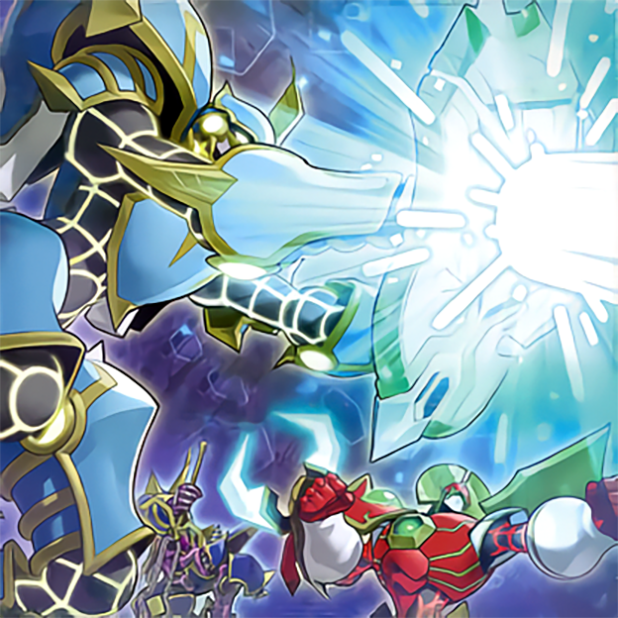
Code Talker Deck #773401 — Yu-Gi-Oh! Master Duel
43 Main, 15 Extra, incl. Firewall Defenser x3, Mathmech Circular x3, Mulcharmy Fuwalos x3. Created Oct 22, 2026 by YGO Mod.
Created by: YGO Mod (20517634)
Created On: 10/22/2026
Main Deck (43)
- Achichi @Ignister x1
- Code Generator x1
- Dotscaper x1
- Droll & Lock Bird x2
- EM:P Meowmine x1
- Firewall Defenser x3
- Firewall Guardian x1
- Firewall Phantom x1
- Gatchiri @Ignister x1
- Lady Debug x1
- Mathmech Addition x1
- Mathmech Circular x3
- Mathmech Multiplication x1
- Maxx "C" x1
- Micro Coder x1
- Mulcharmy Fuwalos x3
- Nibiru, the Primal Being x1
- Ash Blossom & Joyous Spring x3
- Backup @Ignister x1
- Effect Veiler x2
- Ghost Ogre & Snow Rabbit x1
- Mathmech Diameter x1
- Mathmech Sigma x1
- A.I. Connect x2
- Crossout Designator x1
- Cynet Codec x1
- Cynet Mining x1
- Salamangreat Sanctuary x1
- Small World x2
- Cynet Conflict x1
- Mathmech Superfactorial x1
Extra Deck (15)
- Cyberse Desavewurm x1
- Accesscode Talker x1
- Code Talker x1
- Code Talker Inverted x1
- Cyberse Wicckid x1
- Decode Talker Heatsoul x1
- Firewall Dragon Darkfluid - Neo Tempest Terahertz x1
- G Golem Crystal Heart x1
- Link Decoder x1
- Salamangreat Balelynx x1
- Splash Mage x1
- Transcode Talker x1
- Enigmaster Packbit x1
- Primathmech Alembertian x1
- Primathmech Laplacian x1
Couldn't load the deck
Deck — Deck Power Evaluation
Final Contextual Deck Power: 59/100 (±6 · Confidence: Medium)
| Overall score | Value |
|---|---|
| Structural Deck Power | 63.9 |
| Going First | 66 |
| Going Second | 68 |
| Meta Power | provisional |
| Tournament Reliability | 54 |
- Primary strategy: Midrange
- Secondary strategies: Combo
- Format: master-duel
Legality
Main 43 / Extra 15 / Side 0 — status: Legal.
Identity & game plan
- Win condition: Link-chained boards ending in 2300 to 3000 ATK Link attackers (Accesscode Talker, Decode Talker Heatsoul, Transcode Talker, Firewall Dragon Darkfluid, Enigmaster Packbit); Nibiru, the Primal Being (3000 ATK) via Tribute when the opponent Summons 5 or more monsters in a turn; Cyberse Desavewurm as a late-game beater
- Turn 1 (going first): Search and Link-climb: A.I. Connect or Small World into a Cyberse starter (Lady Debug, Achichi, Backup, Mathmech Diameter), then Link Summon Code Talker Inverted or Code Talker and extend toward a Link-3 or Link-4 monster. Hold Ash Blossom and Effect Veiler for the opponent's first engine.
- Turn 2 (going second): Hand-trap first: Ash Blossom, Effect Veiler, Droll and Lock Bird, Maxx C and Ghost Ogre stop the opponent's first engine, then rebuild a Link board from the remaining hand and GY recursion.
- Recovery: GY recursion and draw: Firewall Phantom, Mathmech Superfactorial, Mathmech Multiplication, Cynet Mining and Cynet Codec return Cyberse bodies and refill hand after a disruption.
- After siding: None. The deck runs 0 side cards, so there is no post-side plan.
Why it scores here
The deck opens a functional Link engine most of the time: the archetype core (18 copies) has about a 94% chance of at least one copy in a 5-card opening hand, and the 15 searchers give about 90%. Its strength lies in redundancy across starters and in a full Link ladder in the Extra Deck, which covers Link-1 through Link-5 threats, with 2300 to 3000 ATK closers. Interaction is dense (10 hand traps, 11 negation effects, 13 removal-text cards), which is most valuable going second, where the hand-trap group has about 82% to appear in a 6-card hand. The score is not inflated by Code Talker's popularity: the archetype usage data only confirms the list is real and accessible. Points are also not earned by averaging card power. The deck is held back by a 15.5% exact-archetype purity, a 0-card side deck, and no recorded boards, so the combo ceiling and median are text-only inferences.
Dimension scores
| # | Dimension | Score | Evidence |
|---|---|---|---|
| D1 | Engine Accessibility & Consistency | 68 | P(at least one archetype-core copy in a 5-card hand) = 0.94; single 3-copy starters only about 0.32; searcher group about 0.90 (Inferred) |
| D2 | Opening-Hand Quality & Brick Management | 55 | Many non-engine or conditional cards (Small World, Maxx C, Nibiru, Dotscaper, Ghost Ogre, Mulcharmy x3) raise dead-draw risk; the 3-copy histogram is moderate (Inferred) |
| D3 | Combo Conversion & Ceiling | 72 | Text-only: Accesscode Talker, Transcode Talker, Decode Talker Heatsoul and Firewall Dragon Darkfluid give a high Link-chain ceiling; no recorded boards (Inferred) |
| D4 | Combo Floor & Median Output | 58 | No parseable recorded boards, so the median is estimated from the hit rate of the Link ladder and redundancy; no observed distribution (Inferred) |
| D5 | Interruption Resilience & Route Redundancy | 70 | Redundant starters (Lady Debug, Achichi, Backup, Mathmech), GY recursion, and protection text on Code Talker Link monsters; no observed interruption data (Inferred) |
| D6 | Resource Economy, Recovery & Grind | 68 | Recursion and searches (Cynet Mining, Cynet Codec, Firewall Phantom, Mathmech Multiplication) offset the spend; no ResourceScore is available (Inferred) |
| D7 | End-Board & Interaction Quality | 74 | 10 hand traps, 11 negation-text cards and 13 removal-text cards; strong layering across Link and Main Phase windows (Verified text, Inferred quality) |
| D8 | Going-Second & Board-Breaking Power | 62 | Going-second hand-trap group about 0.82 in a 6-card hand plus Nibiru and Gatchiri for board breaking; no going-second win data (Inferred) |
| D9 | Offensive Pressure & Closing Power | 72 | Multiple 2300 to 3000 ATK Link and Synchro closers, with Nibiru reaching 3000 ATK; piercing and direct-attack text is limited (Verified stat, Inferred) |
| D10 | Main Deck Efficiency & Flexibility | 58 | 43 Main Deck cards over 31 distinct names, with a spread of off-engine tech (Mathmech, Mulcharmy x3, Salamangreat, A.I.); 0 side cards (Verified composition, Inferred quality) |
| D11 | Extra Deck Efficiency & Coverage | 75 | 15 of 15 Extra Deck slots are used, with 11 Link monsters; Packbit and Desavewurm add flexible Synchro and Fusion options (Verified composition) |
| D12 | Side Deck Adaptability | 15 | No side deck (side_count 0), so there is no post-side adaptation (Verified legality, scored low) |
| D13 | Matchup Coverage & Format Fit | 50 | No tournament link and no dated metagame sample, so this is a neutral placeholder score (Provisional) |
| D14 | Pilotability & Error Tolerance | 55 | Multiple trigger and negation decisions per turn and a Link ladder to track, but the core line is readable (Inferred) |
How the score was computed
Strategy profile: 0.7 * Midrange + 0.3 * Combo (per dimension, sums to 100). Structural ≈ 63.9, Going First ≈ 66, Going Second ≈ 68, Meta = provisional, Tournament Reliability ≈ 54. Modifiers: No side deck (-2); Limited-card exposure (-1); Engine conflicts / off-archetype spread (-2); Cyberse race coherence (2). Final formula: 0.80*Structural + 0.20*TournamentReliability (Meta provisional); Structural 63.9 gives 61.9 before modifiers, then -3 gives 58.9, rounded to 59
Couldn't load the combos