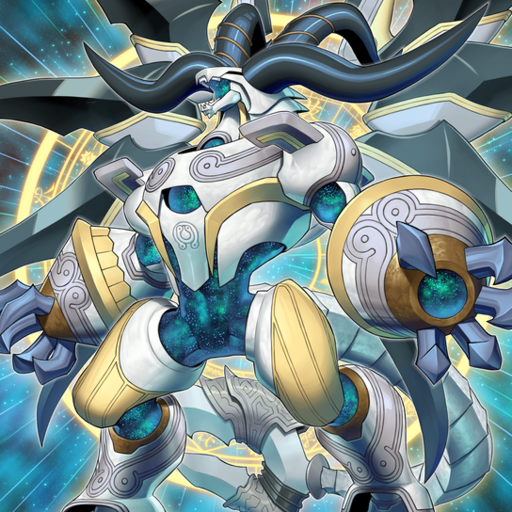
Dracotail Deck #766360 — Yu-Gi-Oh! Master Duel
45 Main, 15 Extra, incl. Dracotail Faimena x3, Dracotail Pan x3, Dracotail Urgula x3.
Created by: YGO Mod (20517634)
Created On: 10/18/2026
Main Deck (45)
- Bystial Magnamhut x1
- Dracotail Faimena x3
- Dracotail Lukias x1
- Dracotail Mululu x2
- Dracotail Pan x3
- Dracotail Phryxul x1
- Dracotail Urgula x3
- Fallen of Albaz x1
- Fallen of the White Dragon x2
- Maxx "C" x1
- Mulcharmy Fuwalos x3
- Nibiru, the Primal Being x3
- Ash Blossom & Joyous Spring x3
- Blazing Cartesia, the Virtuous x3
- Effect Veiler x3
- Incredible Ecclesia, the Virtuous x3
- Branded Fusion x1
- Ketu Dracotail x2
- Rahu Dracotail x1
- The Fallen & The Virtuous x2
- Dracotail Flame x1
- Dracotail Horn x1
- Dracotail Sting x1
Extra Deck (15)
- Alba-Lenatus the Abyss Dragon x1
- Albion the Branded Dragon x1
- Albion the Sanctifire Dragon x1
- Dracotail Arthalion x2
- Dracotail Gulamel x1
- Khaos Starsource Dragon x1
- Mirrorjade the Iceblade Dragon x1
- Rindbrumm the Striking Dragon x1
- Secreterion Dragon x1
- The Dragon that Devours the Dogma x1
- Titaniklad the Ash Dragon x1
- Predaplant Verte Anaconda x1
- S:P Little Knight x1
- Ecclesia and the Dark Dragon x1
Couldn't load the deck
Deck — Deck Power Evaluation
Final Contextual Deck Power: 51/100 (±8 · Confidence: Medium)
| Overall score | Value |
|---|---|
| Structural Deck Power | 58.4 |
| Going First | 62 |
| Going Second | 60 |
| Meta Power | provisional |
| Tournament Reliability | 58 |
- Primary strategy: Control
- Secondary strategies: Toolbox
- Format: master-duel
Legality
Main 45 / Extra 15 / Side 0 — status: Legal.
Identity & game plan
- Win condition: Fusion Summon Dracotail and Albaz bosses (Arthalion, Gulamel, Albion the Branded Dragon) after the opponent's interaction is spent; Recursive grind: Dracotail monsters return from GY/banish through Lukias, Urgula, Phryxul and the Flame/Horn/Sting draw trap effects
- Turn 1 (going first): Search or Normal Summon Dracotail monsters, hold Ash Blossom, Veiler and Nibiru as hand traps, and reach a Fusion from the Extra Deck on a later turn
- Turn 2 (going second): Use the six-card hand's hand traps (Ash, Veiler, Maxx C, Nibiru) to break the opponent's first summon, then Fusion Summon through the disrupted board
- Recovery: Dracotail GY recursion (Phryxul, Lukias, Urgula) and draw-on-send from the trap set rebuild the hand after a clean interaction exchange
- After siding: None: the list runs 0 side cards, so there is no post-side plan in Master Duel
Why it scores here
The deck reliably opens its engine: 28 archetype-core copies give a 0.995 chance of at least one in an opening 5, and 13 searcher-text cards add search density, though a single 3-copy starter is only 0.30 in an opening 5, so the starter is redundant but not guaranteed. Interaction is the strongest part of the system: 10 hand traps plus 9 negation-text cards and 10 removal-text cards give high disruption on both turns, and the going-second hand traps reach 0.80 in a six-card hand. The deck converts through Fusion Summons of Arthalion, Gulamel and Albion, but there are no recorded boards, so the ceiling and median are text-based inferences and are not reported as averages. Popularity did not earn points: the list covers only 64 percent of the archetype core, and it runs 38 off-archetype copies, which lowers the Structural score rather than raising it. The score comes from consistency, recursion and interaction on the system, not from averaging card scores, and it has no side deck and no metagame sample, so Meta is provisional.
Dimension scores
| # | Dimension | Score | Evidence |
|---|---|---|---|
| D1 | Engine Accessibility & Consistency | 62 | P(at least one 3-copy starter in opening 5) = 0.30; archetype core P(at least one) = 0.995; two-card bootstrap via searchers (Inferred) |
| D2 | Opening-Hand Quality & Brick Management | 60 | 10 hand traps and 13 searcher-text cards keep most hands functional; no full-brick rate measured (Inferred) |
| D3 | Combo Conversion & Ceiling | 55 | Fusion chains from Arthalion, Gulamel and Albion are described in card text but no recorded boards exist (Inferred) |
| D4 | Combo Floor & Median Output | 45 | No combos evidence, so median output cannot be measured; scored conservatively from text only (Inferred) |
| D5 | Interruption Resilience & Route Redundancy | 65 | Ten hand traps plus recursive Dracotail GY lines give at least two independent routes after one disruption (Inferred) |
| D6 | Resource Economy, Recovery & Grind | 70 | Draw-on-send trap effects (Flame, Horn, Sting) and GY recursion (Phryxul, Lukias, Urgula) regenerate resources (Inferred) |
| D7 | End-Board & Interaction Quality | 70 | Removal-text 10 and negation-text 9 across main deck; Gulamel and Sting destroy or banish on-field cards (Inferred semantic read from card text) |
| D8 | Going-Second & Board-Breaking Power | 62 | Going-second hand-trap coverage of 0.80 in a six-card hand, with fusion removal (Inferred) |
| D9 | Offensive Pressure & Closing Power | 40 | Closing bosses are 2500 to 3000 ATK with no direct-attack or piercing lines in the excerpts; closing power is limited (Inferred) |
| D10 | Main Deck Efficiency & Flexibility | 55 | 45 main cards across 23 distinct names, with 3-copy engine cards and 38 off-archetype copies; partially compact (Inferred from composition) |
| D11 | Extra Deck Efficiency & Coverage | 60 | Full 15-card Extra Deck with 12 Fusion, 2 Link and 1 Synchro; flexible use of slots (Verified composition) |
| D12 | Side Deck Adaptability | 25 | No side deck in Master Duel; no post-side performance data exists (Provisional) |
| D13 | Matchup Coverage & Format Fit | 50 | No tournament link and no dated metagame sample, so format fit cannot be verified (Provisional) |
| D14 | Pilotability & Error Tolerance | 45 | Multiple Fusion and hand-trap timing decisions across turns raise the pilot's burden (Inferred) |
How the score was computed
Strategy profile: Control. Structural ≈ 58.4, Going First ≈ 62, Going Second ≈ 60, Meta = provisional, Tournament Reliability ≈ 58. Modifiers: Banlist exposure (-2); Engine conflicts (-3); No side deck (-2). Final formula: 0.80*Structural + 0.20*TournamentReliability + ContextModifiers (Meta provisional, no metagame sample); 0.80*58.4 + 0.20*58 - 7 = 51
Probability & combo summary
- Opening a starter: P(≥1) ≈ 0.3 · key two-card combo ≈ — · full-brick estimate ≈ — (all Inferred)
- Combo output: best PowerIndex —, median —, board-per-starter —
- Turn order: 0 going-first lines vs 0 going-second lines
Strengths
- Archetype core is almost always present in an opening hand (0.995 for 28 copies)
- Ten hand traps and nine negation-text cards give strong disruption on both turns
- Draw-on-send trap effects and GY recursion regenerate resources through the game
- Extra Deck is full and flexible with 12 Fusion, 2 Link and 1 Synchro
Weaknesses
- No recorded boards, so the combo ceiling and median are text-based inferences only
- Single 3-copy starters are only about 0.30 in an opening 5, so the bootstrap relies on searchers
- Only 22 of 60 cards carry the exact Dracotail name, so engine coherence is diluted
- No side deck, so there is no post-side adaptation
- Closing power is limited with no direct-attack or piercing lines in the excerpts
Critical choke points
- Dracotail Fusion Summon requires the Extra Deck boss and its materials, so a single disruption in the Extra Deck breaks the main line
- Searcher density (13) is the main bootstrap; losing it to a hand trap or a single negate leaves few paths to a starter
Recommended changes
| Priority | Remove | Add | Reason |
|---|---|---|---|
| 1 | 1 Dracotail Pan (3 copies; typical is 1 per the usage statistics) | 1 Dracotail Gulamel (98.75 percent inclusion, not in the list) | Usage statistics show Gulamel is near-universal for this archetype and missing here, while Pan is run at triple the typical count; the swap adds a board-control boss and reduces a redundant copy. |
Evidence & confidence
- Verified: Legal status with 45 main, 15 extra and 0 side cards inside Master Duel size rules; Limited and Semi-Limited copies all within legal limits; Archetype core presence of 64 percent and missing core list from usage statistics; Card text for all 40 distinct cards in the evidence pack
- Inferred: Hypergeometric starter and archetype-core probabilities; Structural dimension scores D1 through D11 and D14; Interaction density from removal, negation and hand-trap text roles; Going-first and going-second power estimates
- Provisional: Meta power (no dated metagame sample); Matchup and format fit (D13); Post-side adaptability (D12) since no side deck exists
- Data gaps: no combos supplied; combo floor, median and ceiling are text-only inference no tournament link; archetype meta-share and per-pilot match record absent no win-rate telemetry (going-first/second, matchup, game-level, brick, starter and OTK rates) Meta Power is Provisional unless a dated metagame sample is supplied no side deck, so post-side performance is unmeasurable
Couldn't load the combos