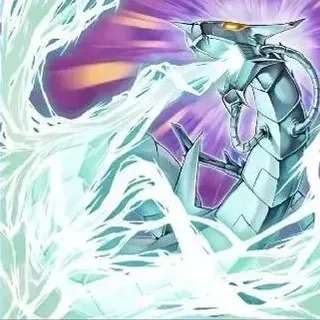
Cyber Dragon Deck #752013 — Yu-Gi-Oh! Master Duel
50 Main, 15 Extra, incl. Cyber Dragon Core x3, Cyberdark Claw x3, Mulcharmy Fuwalos x3. Created Sep 20, 2026 by YGO Mod.
Created by: YGO Mod (20517634)
Created On: 09/20/2026
Main Deck (50)
- Cyber Dragon x2
- Cyber Dragon Core x3
- Cyber Dragon Herz x1
- Cyber Dragon Nachster x1
- Cyber Dragon, the Luminous Mech Dragon x2
- Cyber Jormungardr x1
- Cyberdark Chimera x1
- Cyberdark Claw x3
- Cyberdark Wurm x1
- Droll & Lock Bird x2
- Infinitrack Crab Crane x1
- Maxx "C" x1
- Mulcharmy Fuwalos x3
- Therion "King" Regulus x1
- Ash Blossom & Joyous Spring x3
- Mecha Phantom Beast O-Lion x1
- Clockwork Night x1
- Crossout Designator x1
- Cyber Emergency x3
- Cyberdark Realm x3
- Cybernetic Horizon x3
- Forbidden Crown x1
- Future Fusion Nova x3
- Outrigger Extension x1
- Polymerization x1
- Power Bond x1
- Triple Tactics Talent x1
- Cybernetic Overflow x1
- Infinite Impermanence x3
Extra Deck (15)
- Chimeratech Fortress Dragon x1
- Chimeratech Megafleet Dragon x1
- Chimeratech Rampage Dragon x1
- Cyber End Dragon, the Final Strike Dragon x1
- Cyber Eternity Dragon x1
- Heosvarog the Mechanical Dawn x1
- Clockwork Knight x2
- Mecha Phantom Beast Auroradon x1
- Borreload Savage Dragon x1
- Accel Synchron x1
- Cyber Dragon Infinity x1
- Cyber Dragon Nova x1
- Infinitrack River Stormer x1
- Kashtira Arise-Heart x1
Couldn't load the deck
Deck — Deck Power Evaluation
Final Contextual Deck Power: 46/100 (±6 · Confidence: Medium)
| Overall score | Value |
|---|---|
| Structural Deck Power | 55 |
| Going First | 52 |
| Going Second | 62 |
| Meta Power | provisional |
| Tournament Reliability | 48 |
- Primary strategy: Combo
- Secondary strategies: Midrange, Tempo
- Format: master-duel
Legality
Main 50 / Extra 15 / Side 0 — status: Legal.
Identity & game plan
- Win condition: Summon a large Machine boss (Cyber End Dragon 4000 ATK, Chimeratech Rampage 2100 ATK, or Borreload Savage Dragon 3000 ATK) through a Cyber Dragon starter chain, with Power Bond as the ATK and damage spike; Link and Xyz pressure from Mecha Phantom Beast Auroradon, Infinitrack River Stormer and Cyber Dragon Infinity (not in this list) to finish off a stalled board
- Turn 1 (going first): Normal Summon Cyber Dragon Core to add a Cyber Spell/Trap (Cybernetic Overflow, Power Bond, Cyber Emergency, Clockwork Night), then use Cyber Dragon or Cyber Dragon Herz for a Machine Fusion or Link line; the T1 starter is only about 28 percent live
- Turn 2 (going second): Hold Ash Blossom, Droll and Lock Bird or Maxx C to protect the first starter, then convert the turn with Cyber Dragon special summons, Cybernetic Horizon and Future Fusion Nova into Fusion pressure
- Recovery: Rebuild from searchers (about 22 searcher-text copies) and Cyber Dragon Core recursion, banishing Cyber Dragons from the GY to Cyber Dragon Nova (not in this list) or Cyberdark Wurm to re-enter the board
- After siding: No side deck is registered (side_count 0), so there is no post-side plan in the evidence; Inferred, not scored from performance data
Why it scores here
The deck opens a functional plan on a modest but real rate: Cyber Dragon Core is live in the opening five only about 28 percent of the time, but the 22 searcher-text copies and the 26-copy Cyber core group give a high chance of at least one searcher, which is what carries the engine. Conversion is the strongest part of the system, since the Cyber End Dragon, Chimeratech and Borreload finishers and Power Bond give a real closing spike, and the interaction density of about 14 negation and 12 removal text effects plus Crossout Designator and Forbidden Crown makes the end board hard to answer. Brick risk is the main weakness: 9 hand traps and 11 tech cards plus 17 singleton slots mean many hands are dead or conflicting, and the guides themselves describe a single hand trap as a dead hand. Popularity did not earn points: the archetype usage data only shows that this list is real and accessible, the evidence has no combo boards and no tournament or win-rate data, and the score was built from the deck's system rather than by averaging card scores.
Dimension scores
| # | Dimension | Score | Evidence |
|---|---|---|---|
| D1 | Engine Accessibility & Consistency | 58 | P(Cyber Dragon Core in opening 5, 3 copies) ≈ 0.28, P(>=1 searcher-text card) ≈ 0.95 via 22 copies; starter access is fragile but redundant (Inferred) |
| D2 | Opening-Hand Quality & Brick Management | 45 | 9 hand traps, 11 tech, 17 singleton copies in 29 distinct main cards; guide notes state a single hand trap can leave a dead hand (Inferred) |
| D3 | Combo Conversion & Ceiling | 62 | No parsed combo boards; ceiling inferred from card text (Power Bond, Cyber End Dragon 4000 ATK, Chimeratech Rampage) and guide claims of an OTK route (Inferred) |
| D4 | Combo Floor & Median Output | 45 | No combo boards for the median; guide text describes the deck as not strong in the current meta, so median output is estimated low-to-mid (Inferred) |
| D5 | Interruption Resilience & Route Redundancy | 55 | Multiple hand-trap and Cyber Dragon re-summon routes give some independent lines, but the 21.5 percent exact-archetype purity suggests route fragmentation across sub-archetypes (Inferred) |
| D6 | Resource Economy, Recovery & Grind | 60 | 22 searcher-text copies, Cyber Dragon Core recursion and Mulcharmy draw give good regeneration; Power Bond costs LP (Inferred from text) |
| D7 | End-Board & Interaction Quality | 65 | 14 negation-text and 12 removal-text cards, plus Crossout Designator, Forbidden Crown and Cybernetic Overflow (Verified from text, layering Inferred) |
| D8 | Going-Second & Board-Breaking Power | 55 | Going-second hand-trap probability ≈ 0.72 for at least one of 9 hand traps; Chimeratech Rampage destroys backrow on summon (Inferred) |
| D9 | Offensive Pressure & Closing Power | 70 | Finisher ATKs of 4000, 3000, 2800 and 2100 through Power Bond; guide describes a strong OTK route (Verified stats, Inferred conversion) |
| D10 | Main Deck Efficiency & Flexibility | 45 | 50 main slots with 51 off-exact-archetype copies and 11 tech cards; compactness is low for the engine (Inferred) |
| D11 | Extra Deck Efficiency & Coverage | 50 | 15/15 Extra slots used across Fusion (6), Xyz (4), Link (3), Synchro (2); several Extra cards need a specific Machine/LIGHT route (Inferred) |
| D12 | Side Deck Adaptability | 30 | No side deck registered (side_count 0); no post-side evidence, scored as a structural gap (Provisional) |
| D13 | Matchup Coverage & Format Fit | 45 | No tournament link and no dated meta sample; only archetype usage and guide statements about meta weakness (Provisional) |
| D14 | Pilotability & Error Tolerance | 45 | Several multi-step Fusion, Link and Xyz routes with many decision points and lock-Machine conflicts; guide notes it is hard to mix (Inferred) |
How the score was computed
Strategy profile: Combo primary; Midrange not blended into the weights (weights taken from the Combo profile only). Structural ≈ 55, Going First ≈ 52, Going Second ≈ 62, Meta = provisional, Tournament Reliability ≈ 48. Modifiers: banlist exposure (-1); hard-garnet burden (-3); engine conflicts (-3); weak post-side plan (-1). Final formula: 0.80*Structural + 0.20*TournamentReliability (Meta provisional); 0.80*55 + 0.20*48 = 53.6, then modifiers -8 gives 45.6, rounded to 46
Probability & combo summary
- Opening a starter: P(≥1) ≈ 0.28 · key two-card combo ≈ — · full-brick estimate ≈ — (all Inferred)
- Combo output: best PowerIndex —, median —, board-per-starter —
- Turn order: 0 going-first lines vs 0 going-second lines
Strengths
- Searcher density (22 searcher-text copies) gives high odds of finding a searcher
- Strong interaction density across negation and removal text
- Large finishers and Power Bond give a real closing spike
- Fusion, Link and Xyz routes give multiple finishing options
Weaknesses
- 9 hand traps and 11 tech cards produce dead and conflicting hands
- Cyber Dragon Core is live in the opening five only about 28 percent of the time
- 21.5 percent exact-archetype purity suggests route fragmentation
- No side deck, so no post-side adaptation
- No combo boards or tournament data to confirm the median output
Critical choke points
- Cyber Dragon Core or Cyber Dragon as the first starter
- Power Bond's LP cost and the End Phase damage
- Machine-lock conflicts between Cyber and non-Machine Extra Deck cards
Recommended changes
| Priority | Remove | Add | Reason |
|---|---|---|---|
| 1 | One of the 3-copy tech/hand-trap slots (Infinite Impermanence) | A third searcher or a starter that does not need a hand trap | Cuts dead hands and adds starter access, which is the main consistency gap |
| 2 | Clockwork Night | Cyber Dragon Nova or Cyber Dragon Infinity (both already in the evidence as archetype core) | Consolidates the Cyber Dragon route and reduces engine conflicts with the Cyberdark and Infinitrack cards |
Evidence & confidence
- Verified: Main 50 and Extra 15 are within the master-duel size rules; Crossout Designator, Maxx C and Droll and Lock Bird are at or below their legal copy limits; Card text for all 29 main and 14 Extra distinct cards; Archetype usage: Cyber Dragon Core, Cyber Emergency and Cyberdark Claw at 100 percent inclusion
- Observed: Usage statistics show the list runs most of the archetype-standard core, including 16 of 25 core cards
- Inferred: Starter access (about 28 percent T1 Core in hand) and brick rate from the hypergeometric draw table; Interaction and closing power read from card text; The OTK and median claims from guide text
- Provisional: Meta power and matchup fit: no dated metagame sample and no tournament link; Post-side plan: no side deck registered
- Data gaps: no combos supplied: combo floor, median and ceiling are text-only inference no tournament link: archetype meta-share and per-pilot match record absent no win-rate telemetry (going first or second, matchup, brick or starter rates) Meta power is Provisional unless a dated metagame sample is supplied no side deck registered, so post-side performance cannot be assessed guide text dates are not given, so guide claims about the current meta may be stale
Couldn't load the combos