





Scareclaw Deck #751478 — Yu-Gi-Oh! Duel Links
30 Main, 9 Extra, incl. Scareclaw Belone x3, Book of Eclipse x3, Forbidden Droplet x3 - Skill: The King of Fear.
Created by: YGO Mod (20517634)
Created On: 09/14/2026


 The King of Fear
Main Deck (30)
- D.D. Crow x2
- Droll & Lock Bird x2
- Gadarla, the Mystery Dust Kaiju x2
- Scareclaw Acro x2
- Scareclaw Astra x2
- Scareclaw Belone x3
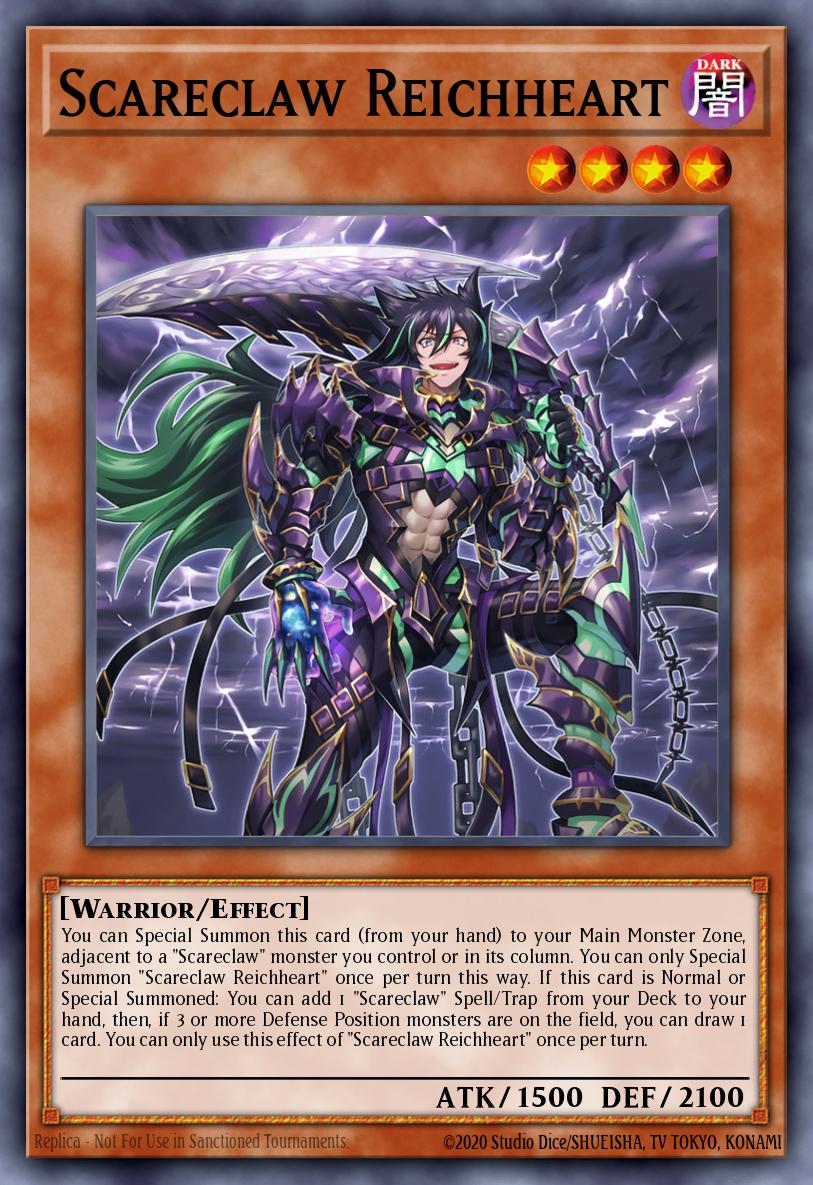
- Scareclaw Reichheart x2
- Ghost Belle & Haunted Mansion x1
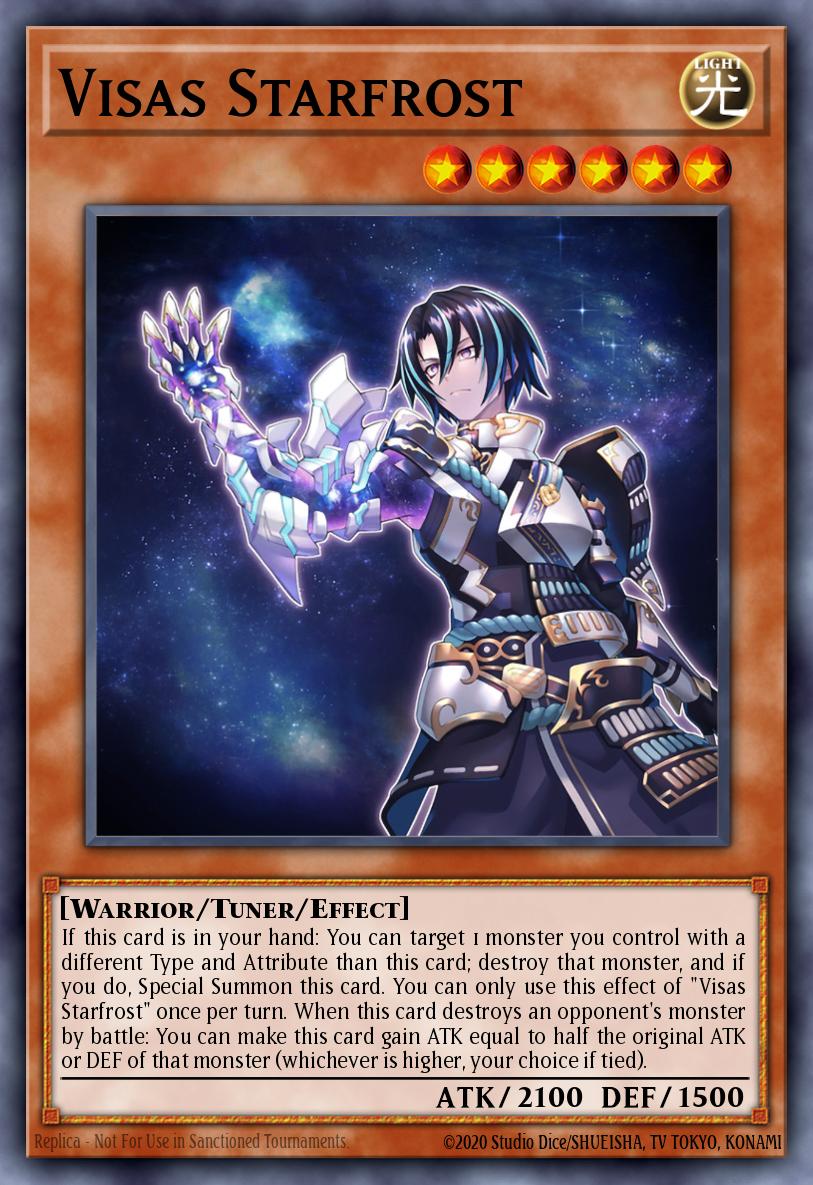
- Visas Starfrost x2
- Book of Eclipse x3
- Forbidden Droplet x3
- Primitive Planet Reichphobia x2
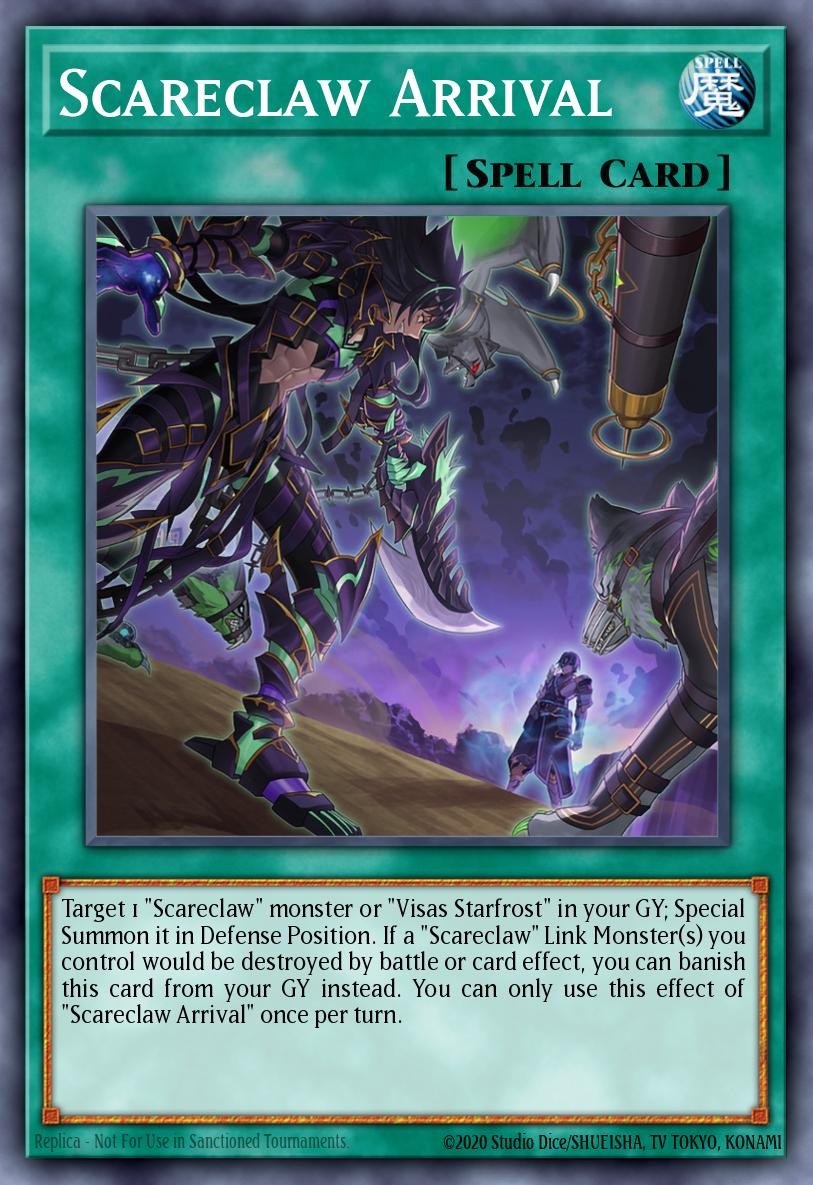
- Scareclaw Arrival x2
- Scareclaw Straddle x1
- Scareclaw Sclash x1
Extra Deck (9)
Couldn't load the deck
Deck — Deck Power Evaluation
Final Contextual Deck Power: 62/100 (±6 · Confidence: Medium)
| Overall score | Value |
|---|---|
| Structural Deck Power | 65.3 |
| Going First | 66 |
| Going Second | 68 |
| Meta Power | provisional |
| Tournament Reliability | 60 |
- Primary strategy: Midrange
- Secondary strategies: Stun, Toolbox
- Format: duel-links
Legality
Main 30 / Extra 9 / Side 0 — status: Legal.
Identity & game plan
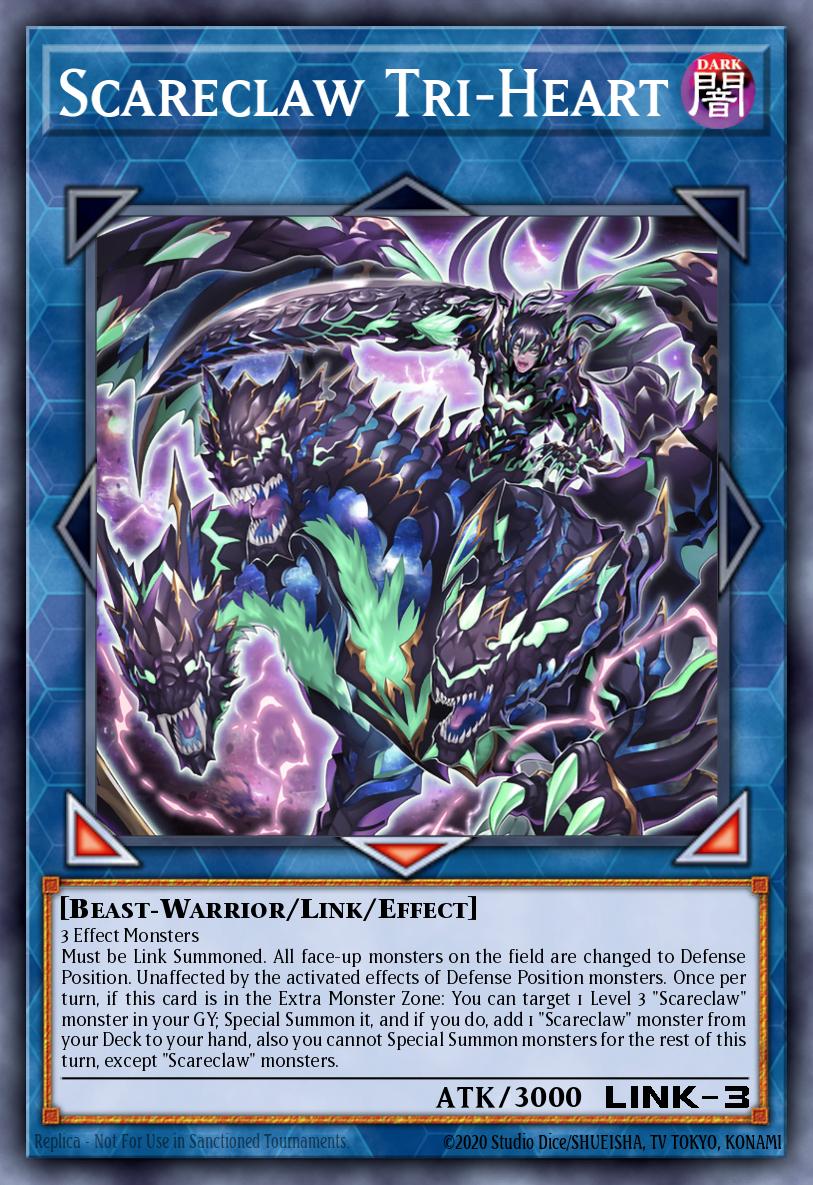
- Win condition: Link or Synchro boss (Scareclaw Tri-Heart, Swordsoul Chengying, Chaos Angel) attacking after the opponent's monsters are forced into Defense Position; Scareclaw Acro and Astra boost Extra Monster Zone attackers, so a single boss can pressure through a partial board
- Turn 1 (going first): Hand-summon a Scareclaw Beast (Belone, Acro, or Astra) beside an existing Scareclaw monster, link into Light-Heart or Tri-Heart, then use Tri-Heart to set the opponent's board to Defense Position and attack
- Turn 2 (going second): Hold Forbidden Droplet, Droll & Lock Bird, and Ghost Belle as reactive interaction, then answer the opponent's board and rebuild with a Scareclaw starter
- Recovery: Recycle Scareclaw Arrival from the Graveyard to revive a Level 3 Scareclaw, and use Primitive Planet Reichphobia to search the next Scareclaw starter
- After siding: Not applicable: Duel Links has no Side Deck, so the deck cannot adapt between games
Why it scores here
The deck reliably opens a Scareclaw engine: about 92% of opening five-card hands contain at least one hand-summonable starter, and the Scareclaw core is almost always present, though these figures are hypergeometric estimates rather than recorded results. Its strength is as a system: Defense Position setup from Tri-Heart and Astra feeds Extra Monster Zone bosses that can attack through a partial board, and three Droplets, Droll, Ghost Belle, Straddle, and Sclash give it layered interaction on both turns. Recorded boards are absent, so the ceiling and median are text-based estimates and kept separate, with the median held lower. Popularity and archetype familiarity earned no points, and the score was not built by averaging individual card strength. Off-archetype copies (Forbidden, Book of, D.D., Kaiju, Knightmare, Chaos, Swordsoul) dilute engine coherence and cost a small modifier.
Dimension scores
| # | Dimension | Score | Evidence |
|---|---|---|---|
| D1 | Engine Accessibility & Consistency | 74 | Roughly 0.92 chance of at least one hand-summonable Scareclaw or Visas starter in an opening five; the starter needs a Scareclaw monster already on the field, so this is a two-card bootstrap (Inferred) |
| D2 | Opening-Hand Quality & Brick Management | 62 | Hand traps and reactive spells (Droll, Ghost Belle, Droplet, Book of Eclipse) keep dead hands fairly low, but Scareclaw Arrival needs a Graveyard target and some copies are dead without a field monster (Inferred) |
| D3 | Combo Conversion & Ceiling | 60 | Ceiling from Tri-Heart forcing Defense Position and Astra enabling multi-attacks off Extra Monster Zone bosses; no recorded boards to confirm the line (Inferred) |
| D4 | Combo Floor & Median Output | 52 | Median output is lower than the ceiling because the boss line requires a specific Link Summon and a live Scareclaw monster; no recorded boards to measure it (Inferred) |
| D5 | Interruption Resilience & Route Redundancy | 68 | Multiple starters, Graveyard recursion through Arrival, and Visas's self-summon give more than one route back after a single interruption (Inferred) |
| D6 | Resource Economy, Recovery & Grind | 66 | Reichphobia and Reichheart search Scareclaw starters, and Arrival recycles from the Graveyard; Book of Eclipse costs card advantage by letting the opponent draw (Inferred) |
| D7 | End-Board & Interaction Quality | 78 | Three Droplets, Straddle, Sclash, Ghost Belle, Droll, Reichphobia's destruction, and Tri-Heart's forced Defense Position give layered interaction on the end board (Inferred from card text) |
| D8 | Going-Second & Board-Breaking Power | 72 | Droplet halves ATK and negates effects, and Tri-Heart forces the opponent's board into Defense Position; going second has strong board-breaking through reactive plays (Inferred) |
| D9 | Offensive Pressure & Closing Power | 74 | Extra bosses reach 3000 to 3500 ATK (Tri-Heart, Chengying, Chaos Angel, Underworld Goddess), and Acro and Astra add pressure (Verified from card stats; closing reliability Inferred) |
| D10 | Main Deck Efficiency & Flexibility | 60 | Thirty main-deck cards with 15 distinct names; about half of exact-name Scareclaw copies, with other archetypes diluting the engine, lowers coherence (Verified) |
| D11 | Extra Deck Efficiency & Coverage | 62 | Nine Extra Deck slots run four Scareclaw Links and several single-copy off-archetype bosses (Knightmare, Chaos, Swordsoul, Underworld Goddess), giving moderate coverage (Verified; coverage Inferred) |
| D12 | Side Deck Adaptability | 50 | Duel Links has no Side Deck, so no post-game adaptation exists; scored as a neutral placeholder (Provisional) |
| D13 | Matchup Coverage & Format Fit | 55 | No tournament share or dated meta sample, so format fit cannot be measured; the archetype's core cards are present in the list (Provisional) |
| D14 | Pilotability & Error Tolerance | 58 | Multi-step Defense Position sequencing, several once-per-turn conditions, and a Link Summon ladder require moderate skill but no unusual decision trees (Inferred) |
How the score was computed
Strategy profile: Midrange. Structural ≈ 65.3, Going First ≈ 66, Going Second ≈ 68, Meta = provisional, Tournament Reliability ≈ 60. Modifiers: Engine dilution from off-archetype copies (-2). Final formula: 0.80*Structural + 0.20*TournamentReliability + ContextModifiers (Meta provisional); 0.80*65.3 + 0.20*60 = 64.2, then -2 modifier = 62
Probability & combo summary
- Opening a starter: P(≥1) ≈ 0.92 · key two-card combo ≈ — · full-brick estimate ≈ — (all Inferred)
- Combo output: best PowerIndex —, median —, board-per-starter —
- Turn order: 0 going-first lines vs 0 going-second lines
Strengths
- Layered interaction on both turns: three Droplets, Droll, Ghost Belle, Straddle, Sclash, and Tri-Heart's forced Defense Position
- Several hand-summonable starters, so the engine is rarely blank
- Extra Deck bosses reach 3000 ATK or more, giving the deck a real closing threat
- Recursion and searches (Arrival, Reichphobia, Reichheart) to recover from disruption
Weaknesses
- About half of exact-name Scareclaw copies; off-archetype cards dilute the engine
- Starters need a Scareclaw monster already on the field, so a clean interruption of the first monster can stall the line
- No recorded boards, so the combo ceiling and median are estimates
- No Side Deck, so the deck cannot adapt between games
Critical choke points
- The first Scareclaw monster on the field, which every hand-summoned starter depends on
- Tri-Heart's Link Summon, which needs Scareclaw Light-Heart or a compatible Link material set to be live
Recommended changes
| Priority | Remove | Add | Reason |
|---|---|---|---|
| 1 | 1 Book of Eclipse | 1 Scareclaw Acro | Book of Eclipse lets the opponent draw cards; an extra Acro strengthens the on-engine Defense Position plan, and the usual build runs three Acro |
| 2 | 1 Gadarla, the Mystery Dust Kaiju | 1 Scareclaw Astra | Gadarla is an off-archetype Kaiju that needs a specific opponent board; Astra adds a third on-engine Extra Monster Zone enabler, which the usual build runs at three copies |
Evidence & confidence
- Verified: Legal in Duel Links: 30 Main and 9 Extra cards, all within copy and size rules, with no restricted cards; Card stats and text for every listed card; Scareclaw exact-name purity is 48.7%; Archetype core cards are present in the list
- Inferred: Opening-hand starter probability of about 0.92; Going-first and going-second plans from card text; Ceiling and median ratings from card text, because no recorded boards exist; Interaction density and resilience ratings
- Provisional: Meta Power and format fit, because no dated metagame sample exists; Side deck score, which is neutral because the format has no Side Deck
- Data gaps: No recorded boards, so the combo ceiling and median come from text only No tournament link, so archetype meta-share and pilot record are absent No win-rate telemetry for going-first, going-second, matchups, or brick rates Archetype usage cross-check disagrees with the card list for several Extra Deck cards (Tri-Heart, Light-Heart, Knightmare Phoenix, Underworld Goddess, Chengying), which the list runs; the 55% core-presence figure is understated and was not used for scoring Deck has no title (null), so the evaluation relies on the archetype and card list Duel Links has no Side Deck, so the post-side dimension is a neutral placeholder
Couldn't load the combos
