Traptrix Deck #744896 — Yu-Gi-Oh! Duel Links
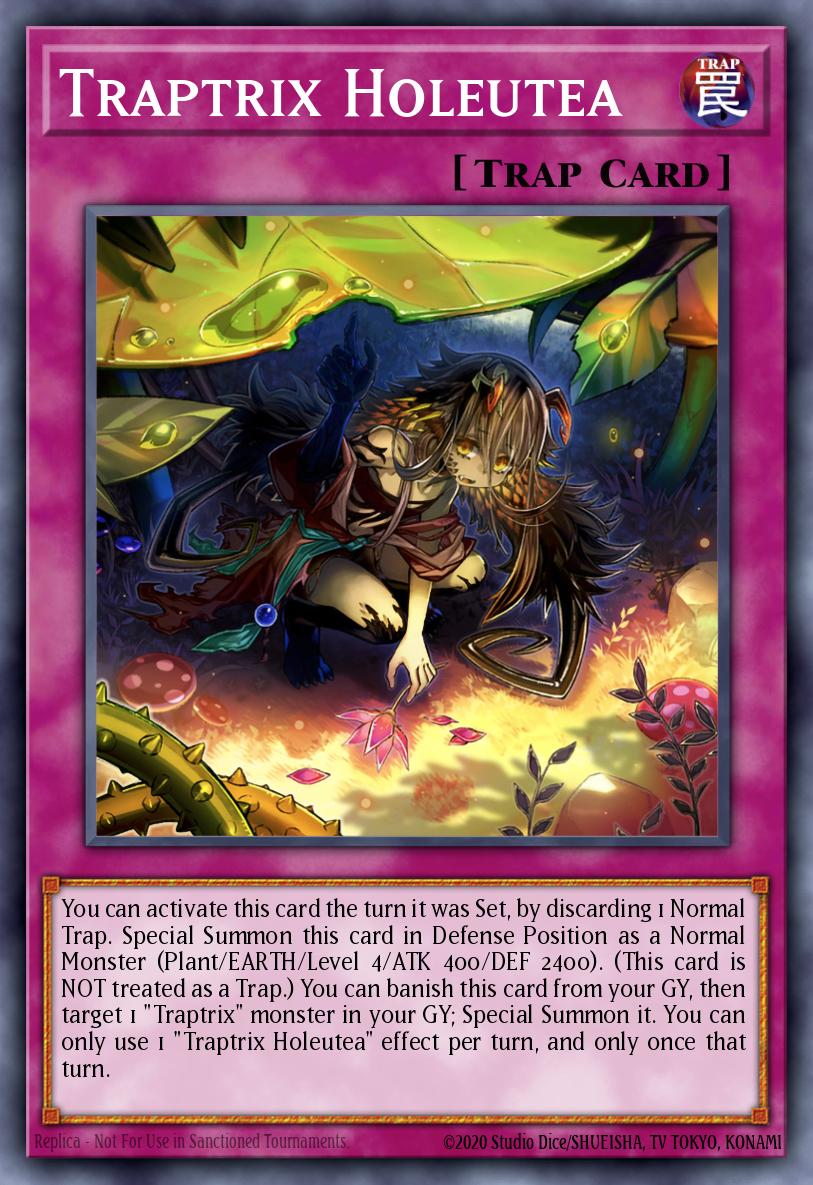
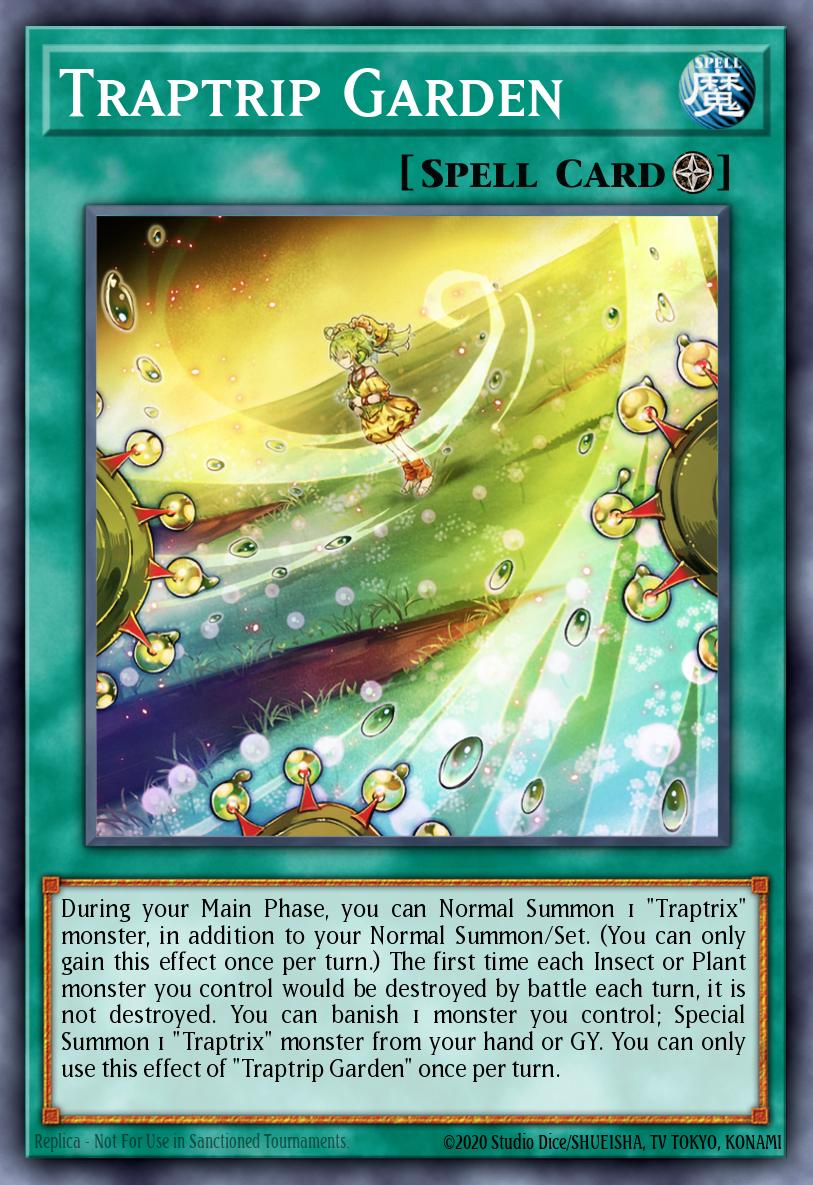
20 Main, 9 Extra, incl. Traptrix Pudica x3, Traptrip Garden x3, Traptrix Holeutea x3 - Skill: Traptrix Territory.
Created by: YGO Mod (20517634)
Created On: 08/26/2026


 Traptrix Territory
Main Deck (20)
- Droll & Lock Bird x2
- Kumongous, the Sticky String Kaiju x1
- Nibiru, the Primal Being x2
- Traptrix Dionaea x2
- Traptrix Myrmeleo x1
- Traptrix Pudica x3
- Traptrip Garden x3
- Terrifying Trap Hole Nightmare x1
- Time-Space Trap Hole x1
- Traptrix Holeutea x3
- Traptrix Trap Hole Nightmare x1
Extra Deck (9)
Couldn't load the deck
Deck — Deck Power Evaluation
Final Contextual Deck Power: 57/100 (±6 · Confidence: Medium)
| Overall score | Value |
|---|---|
| Structural Deck Power | 58 |
| Going First | 58 |
| Going Second | 63 |
| Meta Power | provisional |
| Tournament Reliability | 55 |
- Primary strategy: Control
- Secondary strategies: Stun, Tempo
- Format: duel-links
Legality
Main 20 / Extra 9 / Side 0 — status: Legal.
Identity & game plan
- Win condition: Link and XYZ pressure from Traptrix Extra Deck monsters (Sera, Cularia, Atypus, Pinguicula) after the Hole/Traptrix engine has stabilised the board; Gallant Granite and Underworld Goddess as board-control or closing follow-ups
- Turn 1 (going first): Open on Traptrip Garden or Traptrix Pudica (3 copies each, about 60% to have at least one in hand of 5), search the Traptrix core, and hold Holeutea or a Hole trap as interaction for the first Special Summon
- Turn 2 (going second): Use a hand trap (Droll & Lock Bird or Nibiru, about 79% to have one in a 6-card hand) or a Trap Hole Nightmare response to the opponent's first summon, then rebuild through Traptrix recursion
- Recovery: Recover Traptrix monsters and Hole Normal Traps from the GY through Dionaea, Holeutea and Myrmeleo, then re-establish a Link Summon using the 9 Extra Deck slots
- After siding: Not applicable: Duel Links has no Side Deck (Side Deck size 0), so no post-side plan exists
Why it scores here
The deck opens reliably: its three 3-copy starters (Traptrip Garden, Traptrix Pudica, Traptrix Holeutea) each have about a 60% chance of appearing in a 5-card opening hand, and the 15 archetype-core copies make a live Traptrix core almost certain (Inferred, from the hypergeometric draw table). It converts that engine into interaction and recursion through 14 removal-text cards, 4 hand traps and 2 negation-text cards, which is the main source of its score. The 9 Extra Deck slots give several Link and XYZ routes, but no recorded boards exist, so combo ceiling and median output are text-only estimates and are scored conservatively. The score comes from consistency, interaction and recursion as a system; it does not come from Traptrix being a popular archetype (usage stats only confirm the list is real), and it does not come from averaging card scores. The lack of a Side Deck, the absence of any tournament or win-rate data, and the 51.7% exact-name archetype purity (the rest is Hole and generic support) all keep the score moderate.
Dimension scores
| # | Dimension | Score | Evidence |
|---|---|---|---|
| D1 | Engine Accessibility & Consistency | 66 | P(≥1 of Garden/Pudica/Holeutea in hand of 5) ≈ 0.60 each; archetype core 15 copies, P(≥1) ≈ 0.9999 (Inferred) |
| D2 | Opening-Hand Quality & Brick Management | 62 | 11 distinct Main Deck cards with 4 hand traps and several situational Hole traps; some dead-draw risk on Normal Trap cards (Inferred) |
| D3 | Combo Conversion & Ceiling | 45 | No parseable recorded boards (total combos 0); ceiling read from card text only (Link/XYZ routes plus Hole recursion) (Inferred) |
| D4 | Combo Floor & Median Output | 45 | No recorded boards, so median output cannot be measured; estimated from starter redundancy only (Inferred) |
| D5 | Interruption Resilience & Route Redundancy | 60 | Recursion from GY through Dionaea, Holeutea and Myrmeleo plus three Traptrix searchers gives partially independent lines (Inferred) |
| D6 | Resource Economy, Recovery & Grind | 62 | 4 searcher-text cards and Traptrix recursion rebuild the hand; no resource telemetry exists (Inferred) |
| D7 | End-Board & Interaction Quality | 70 | 14 removal-text, 2 negation-text and 4 hand-trap cards, with Trap Hole Nightmare and Terrifying Trap Hole Nightmare layering the board (Inferred from card text) |
| D8 | Going-Second & Board-Breaking Power | 66 | Going-second hand-trap coverage ≈ 0.79 for at least one in 6 cards; no going-second split data (Inferred) |
| D9 | Offensive Pressure & Closing Power | 50 | Link and XYZ closers exist, but the end-board ATK and piercing text are not measured by any board data (Inferred) |
| D10 | Main Deck Efficiency & Flexibility | 70 | 20 Main Deck cards at the Duel Links minimum, 3-copy engine, compact (Verified from composition) |
| D11 | Extra Deck Efficiency & Coverage | 60 | 9/9 Extra Deck slots used across 8 distinct cards, with 7 Link and 2 XYZ monsters (Verified from composition; coverage Inferred) |
| D12 | Side Deck Adaptability | 15 | Duel Links has no Side Deck (Side Deck size 0), so there is no post-side adaptability (Verified) |
| D13 | Matchup Coverage & Format Fit | 45 | No tournament data or dated meta sample; archetype share unavailable (Provisional) |
| D14 | Pilotability & Error Tolerance | 55 | Traptrix routes need multi-step Link and Hole sequencing with several decision points; moderate complexity (Inferred) |
How the score was computed
Strategy profile: Control. Structural ≈ 58, Going First ≈ 58, Going Second ≈ 63, Meta = provisional, Tournament Reliability ≈ 55. Modifiers: Engine cohesion within the Hole/Traptrix family (2); No Side Deck (-2). Final formula: 0.80*Structural + 0.20*TournamentReliability (Meta provisional)
Probability & combo summary
- Opening a starter: P(≥1) ≈ 0.6 · key two-card combo ≈ — · full-brick estimate ≈ — (all Inferred)
- Combo output: best PowerIndex —, median —, board-per-starter —
- Turn order: 0 going-first lines vs 0 going-second lines
Strengths
- Three 3-copy starters with about a 60% opening-hand hit rate each
- Strong interaction density: removal text, negation text and four hand traps
- Compact 20-card Main Deck with high archetype core copies
- Hole and Traptrix recursion lets the deck rebuild after disruption
Weaknesses
- No recorded boards, so combo ceiling and median cannot be verified
- No Side Deck, so there is no post-side adaptability
- Exact-name archetype purity is only 51.7%; the rest is Hole and generic support
- Several Hole Normal Traps can become dead draws
Critical choke points
- The 3-copy starters (Garden, Pudica, Holeutea) are the single point of entry into the engine
- Going second relies on a single hand trap appearing in the first 6 cards (about 79%)
Recommended changes
| Priority | Remove | Add | Reason |
|---|---|---|---|
| 1 | One Time-Space Trap Hole or Terrifying Trap Hole Nightmare | A second copy of a core Traptrix searcher or Hole recursion card | Reduces dead-draw risk on situational traps and adds engine redundancy (Inferred from composition) |
Evidence & confidence
- Verified: Legal status and Main/Extra counts match Duel Links size rules; No banlist exposure: all cards are Unlimited; Copy histogram and Extra Deck breakdown from composition; Hypergeometric draw odds from the resolved list
- Inferred: Engine consistency from hypergeometric draw odds and archetype core; Interaction and resilience from card-text roles; Going-second hand-trap coverage from probability
- Provisional: Meta Power (no dated metagame sample); Matchup and format fit (no tournament data)
- Data gaps: No combos supplied, so combo floor, median and ceiling are text-only inference No tournament link, so archetype meta-share and per-pilot match record are absent No win-rate telemetry exists in YGOVN, so going-first/second and matchup signals are Inferred Meta Power is Provisional unless a dated metagame sample is supplied
Couldn't load the combos