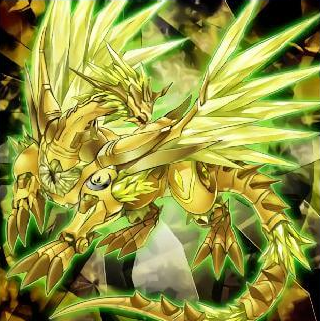
Crystron Deck #736295 — Yu-Gi-Oh! Master Duel
40 Main, 15 Extra, incl. Crystron Sulfador x3, K9-17 Izuna x3, Mulcharmy Fuwalos x3.
Created by: YGO Mod (20517634)
Created On: 07/26/2026
Main Deck (40)
- Crystron Smiger x1
- Crystron Sulfador x3
- Crystron Sulfefnir x2
- Droll & Lock Bird x2
- Heavy Armored Knight Babeldecker x1
- K9-17 Izuna x3
- K9-ØØ Lupis x1
- Maxx "C" x1
- Mulcharmy Fuwalos x3
- Night Train Blue Traveler x3
- Scrap Recycler x3
- Spell Canceller x1
- Therion "King" Regulus x1
- Ash Blossom & Joyous Spring x3
- Crystron Tristaros x1
- Called by the Grave x1
- Crystron Inclusion x3
- Exceptional Schedule x3
- Foolish Burial x1
- Revolving Switchyard x1
- Urgent Schedule x1
- Crystron Cluster x1
Extra Deck (15)
- Clockwork Knight x1
- Double Headed Anger Knuckle x1
- Qliphort Genius x1
- Centur-Ion Legatia x1
- Crystron Eleskeletus x2
- Cyber Dragon Infinity x1
- Cyber Dragon Nova x1
- Divine Arsenal AA-ZEUS - Sky Thunder x1
- Infinitrack River Stormer x1
- Superdreadnought Rail Cannon Flying Launcher x1
- Superdreadnought Rail Cannon Gustav Max x1
- Superdreadnought Rail Cannon Gustav Rocket x1
- Superdreadnought Rail Cannon Juggernaut Liebe x1
- Vallon, the Super Psy Skyblaster x1
Couldn't load the deck
Deck — Deck Power Evaluation
Final Contextual Deck Power: 71/100 (±5 · Confidence: Medium)
| Overall score | Value |
|---|---|
| Structural Deck Power | 71 |
| Going First | 70 |
| Going Second | 68 |
| Meta Power | provisional |
| Tournament Reliability | 70 |
- Primary strategy: Midrange
- Secondary strategies: Combo
- Format: master-duel
Legality
Main 40 / Extra 15 / Side 0 — status: Legal.
Identity & game plan
- Win condition: Crystron Synchro/Xyz board with Machine support; Machine Xyz board (Train, Superdreadnought)
- Turn 1 (going first): Open with Crystron Inclusion to add a Crystron monster, protect with its battle‑destruction negation, then Special Summon Crystron Sulfador or Sulfefnir and Synchro into a board‑clearing Crystron Eleskeletus or a high‑ATK XYZ.
- Turn 2 (going second): Deploy hand traps (Ash Blossom, Maxx C, Droll) to disrupt opponent, then use Crystron Inclusion + Crystron Sulfador to establish a board, or summon Train monsters for immediate pressure.
- Recovery: Use Crystron Inclusion’s graveyard effect, Scrap Recycler draws, Mulcharmy Fuwalos draw engine, and schedule cards to refill hand and re‑establish Crystron monsters.
- After siding: No side deck; rely on hand‑trap suite and flexible Extra‑Deck summons to adapt after side swaps.
Why it scores here
The deck reliably opens with a Crystron starter thanks to a near‑certain core presence (≈99.8% in the opening hand). Its multiple independent Crystron lines and strong draw engines let it convert that start into a sizable board and sustain pressure. Hand traps and floodgate tech give it good resilience to disruption, while high‑ATK XYZ and Synchro monsters provide closing power. However, low archetype purity and the lack of a side deck reduce adaptability, and the engine’s complexity raises the error‑tolerance ceiling. Scores reflect the system’s consistency, resource loops, and interaction rather than raw card popularity.
Dimension scores
| # | Dimension | Score | Evidence |
|---|---|---|---|
| D1 | Engine Accessibility & Consistency | 95 | Core Crystron group (27 copies) P≥1 in opening 5 ≈ 0.998, giving near‑certain engine start (Inferred) |
| D2 | Opening-Hand Quality & Brick Management | 85 | Hand‑trap group (6 copies) P≥1 in 6‑card hand ≈0.65 and core brick probability 0.002, indicating low brick rate (Inferred) |
| D3 | Combo Conversion & Ceiling | 70 | No recorded combo boards; inferred ceiling from 1‑card Crystron combos and high‑ATK XYZ suggests ~70 (Inferred) |
| D4 | Combo Floor & Median Output | 55 | Typical play yields modest board; inferred median output ~55 (Inferred) |
| D5 | Interruption Resilience & Route Redundancy | 75 | Multiple Crystron starters (Sulfador, Sulfefnir, Inclusion, Smiger, Tristaros) plus hand traps give redundancy (Inferred) |
| D6 | Resource Economy, Recovery & Grind | 80 | Draw engines Scrap Recycler, Mulcharmy Fuwalos, Crystron Inclusion, and schedule cards provide net card advantage (Inferred) |
| D7 | End-Board & Interaction Quality | 70 | 7 negation tags, 16 removal tags, and end‑board Crystron Eleskeletus / Cyber Dragon Infinity give interaction quality ~70 (Inferred) |
| D8 | Going-Second & Board-Breaking Power | 65 | Going‑second hand traps and board‑breakers like Crystron Inclusion and Urgent Schedule give breaking power ~65 (Inferred) |
| D9 | Offensive Pressure & Closing Power | 70 | High‑ATK XYZ (Superdreadnought Juggernaut Liebe) and Synchro Eleskeletus supply closing pressure ~70 (Inferred) |
| D10 | Main Deck Efficiency & Flexibility | 65 | 40‑card main deck with 22 distinct cards; off‑archetype purity 23.6% reduces efficiency modestly (~65) (Inferred) |
| D11 | Extra Deck Efficiency & Coverage | 70 | 15‑card Extra with 14 distinct Machine‑type Xyz/Synchro/Link covers many summons; coverage good (~70) (Inferred) |
| D12 | Side Deck Adaptability | 30 | Side deck empty, no post‑side adaptation (Inferred) |
| D13 | Matchup Coverage & Format Fit | 55 | No tournament data; meta fit provisional (~55) (Provisional) |
| D14 | Pilotability & Error Tolerance | 60 | Complex engine with multiple steps raises error tolerance to moderate (~60) (Inferred) |
How the score was computed
Strategy profile: Midrange. Structural ≈ 71, Going First ≈ 70, Going Second ≈ 68, Meta = provisional, Tournament Reliability ≈ 70. Modifiers: SideDeckAbsence (-2); LowArchetypePurity (-2). Final formula: 0.80*Structural + 0.20*TournamentReliability (Meta provisional)
Probability & combo summary
- Opening a starter: P(≥1) ≈ 1 · key two-card combo ≈ — · full-brick estimate ≈ 0 (all Inferred)
- Combo output: best PowerIndex —, median —, board-per-starter —
- Turn order: 0 going-first lines vs 0 going-second lines
Strengths
- Near‑certain engine start due to high core copy count
- Strong draw and resource loops (Scrap Recycler, Mulcharmy Fuwalos, schedules)
- Multiple independent Crystron lines give resilience
Weaknesses
- Low exact‑name archetype purity introduces off‑engine variance
- No side deck limits matchup adaptation
- Engine complexity can cause decision errors
Critical choke points
- Reliance on Crystron Inclusion for protection and search
- Extra‑deck summon restriction after Crystron Sulfador activation
Recommended changes
| Priority | Remove | Add | Reason |
|---|---|---|---|
| 1 | Twin Twisters | Adds board‑clear option and compensates for lack of side‑deck tech |
Evidence & confidence
- Verified: Legality status; Card text for draw engines and hand traps; Copy counts and banlist status
- Inferred: Engine accessibility from core probability; Brick rate from core absence probability; Combo ceiling and floor inferred from engine potential; Resilience from starter diversity; Resource economy from draw engine text; Interaction quality from negation/removal tags; Going‑second breaking power from hand‑trap and schedule cards; Closing power from high‑ATK XYZ/Synchro; Main‑deck efficiency from purity and copy histogram; Extra‑deck coverage from breakdown; Side‑deck adaptability (absence); Pilotability from engine complexity
- Provisional: Matchup/format fit due to missing tournament data
- Data gaps: No combos supplied — combo floor/median/ceiling is text‑only inference No tournament link — archetype meta‑share and per‑pilot match record absent No win‑rate telemetry exists in YGOVN — signals are Inferred or Unknown Meta Power is Provisional unless a dated metagame sample is supplied
Couldn't load the combos