





Stardust / Synchron Deck #730693 — Yu-Gi-Oh! Duel Links
26 Main, 9 Extra, incl. Shining Star Dragon x3, Stardust Synchron x3, Forbidden Droplet x3 - Skill: Bonds of the Converging Stars. Created Jul 8, 2026 by YGO Mod.
Deck Stardust / Synchron Duel Links
Created by: YGO Mod (20517634)
Created On: 07/08/2026




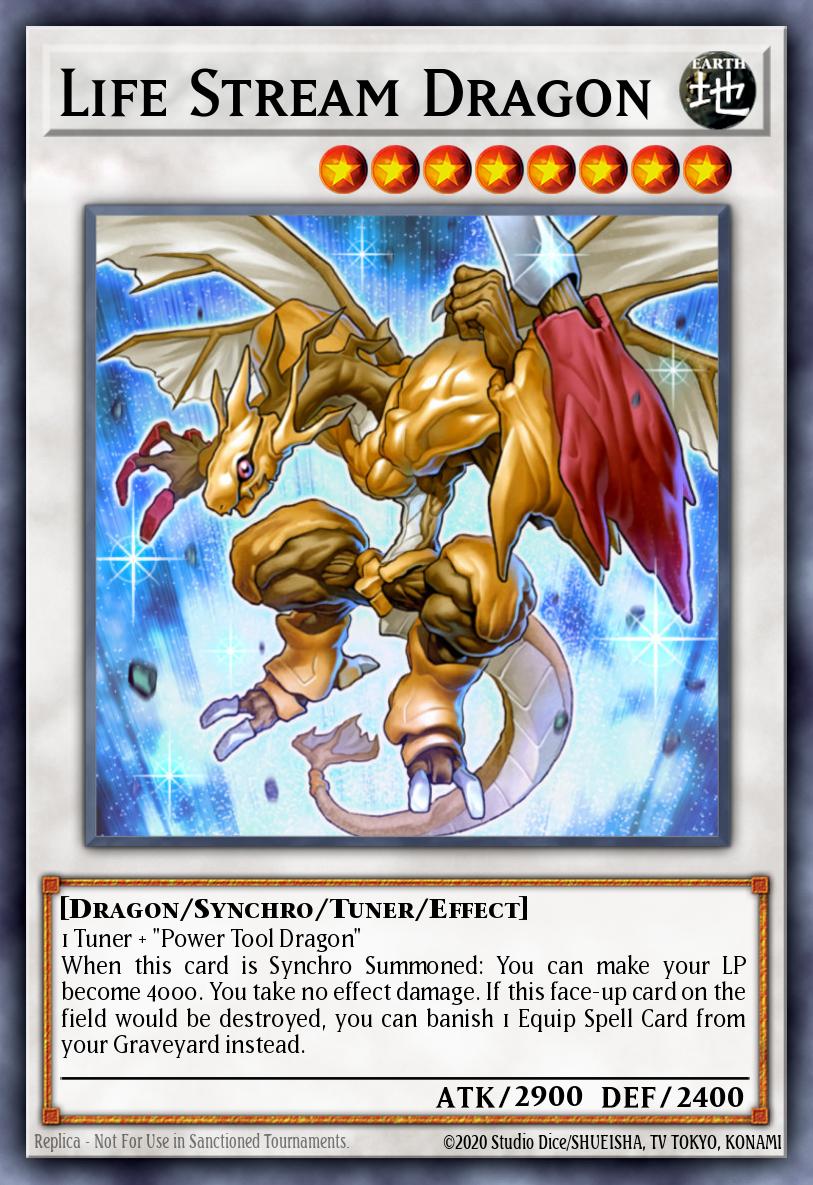
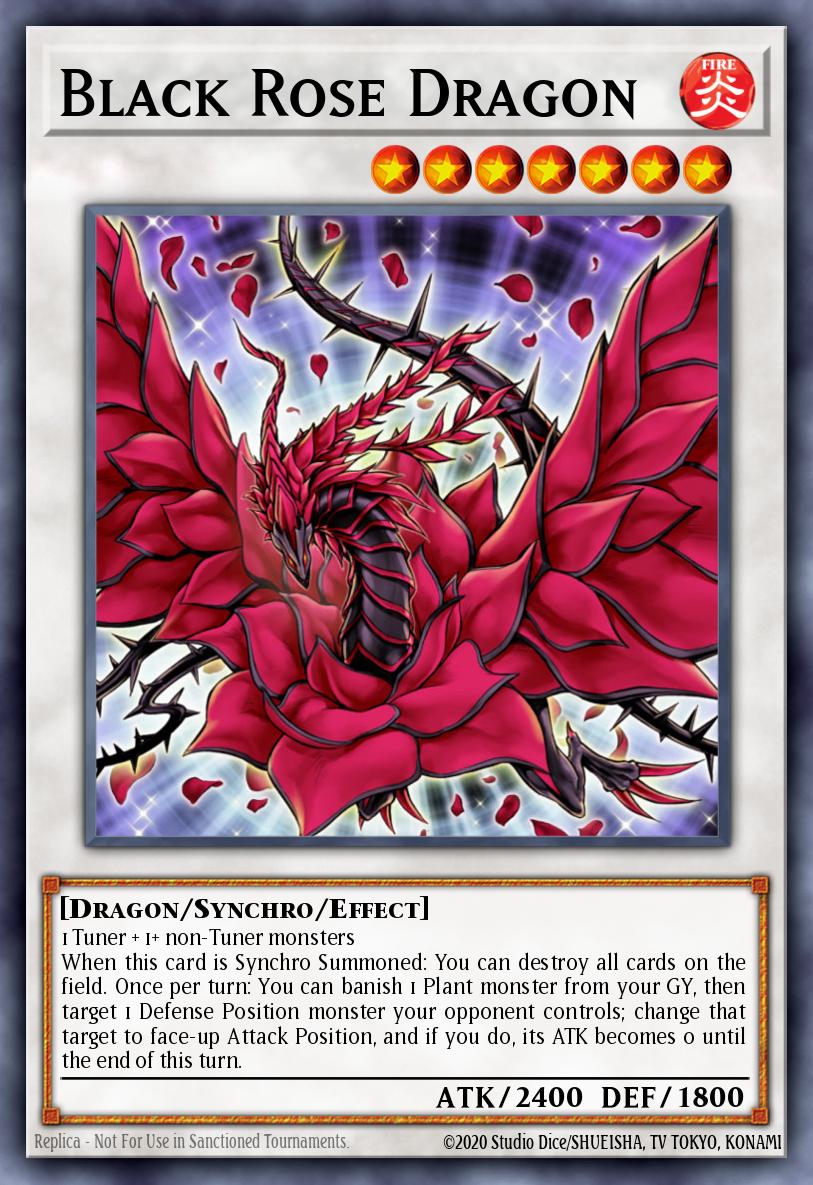
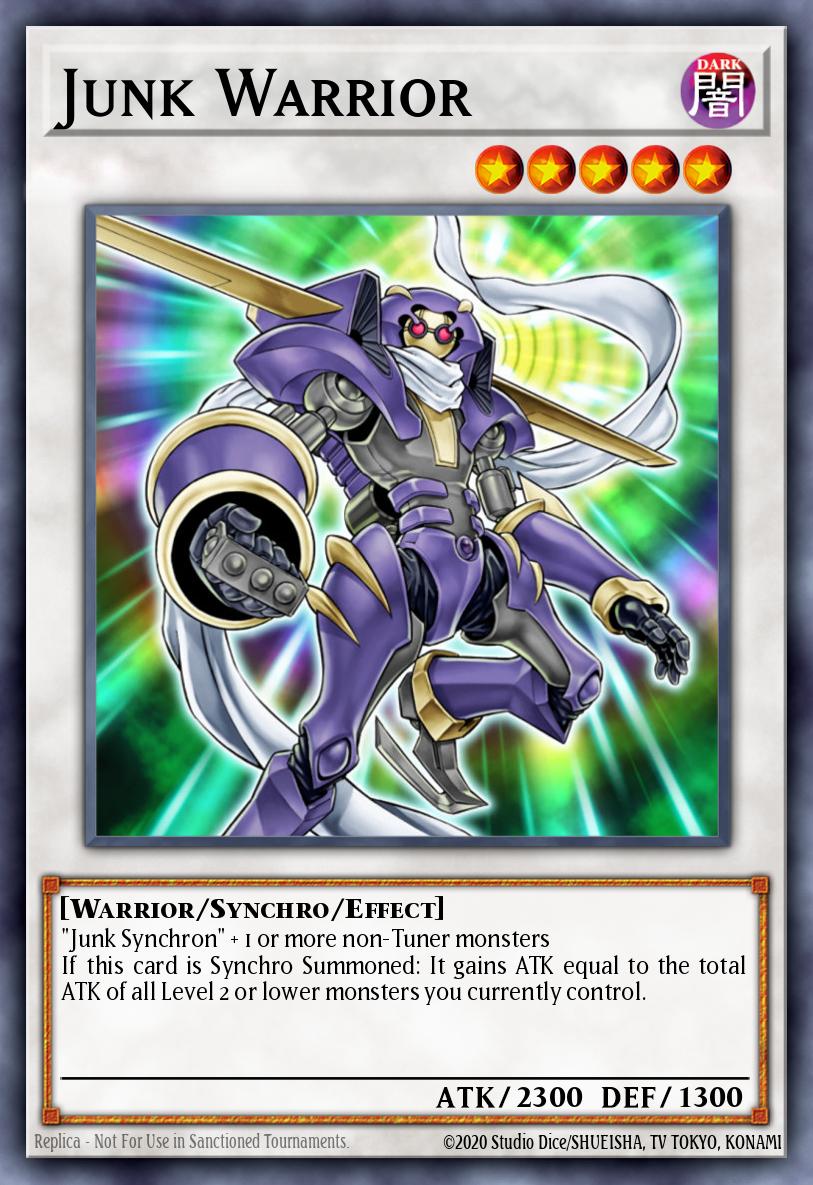
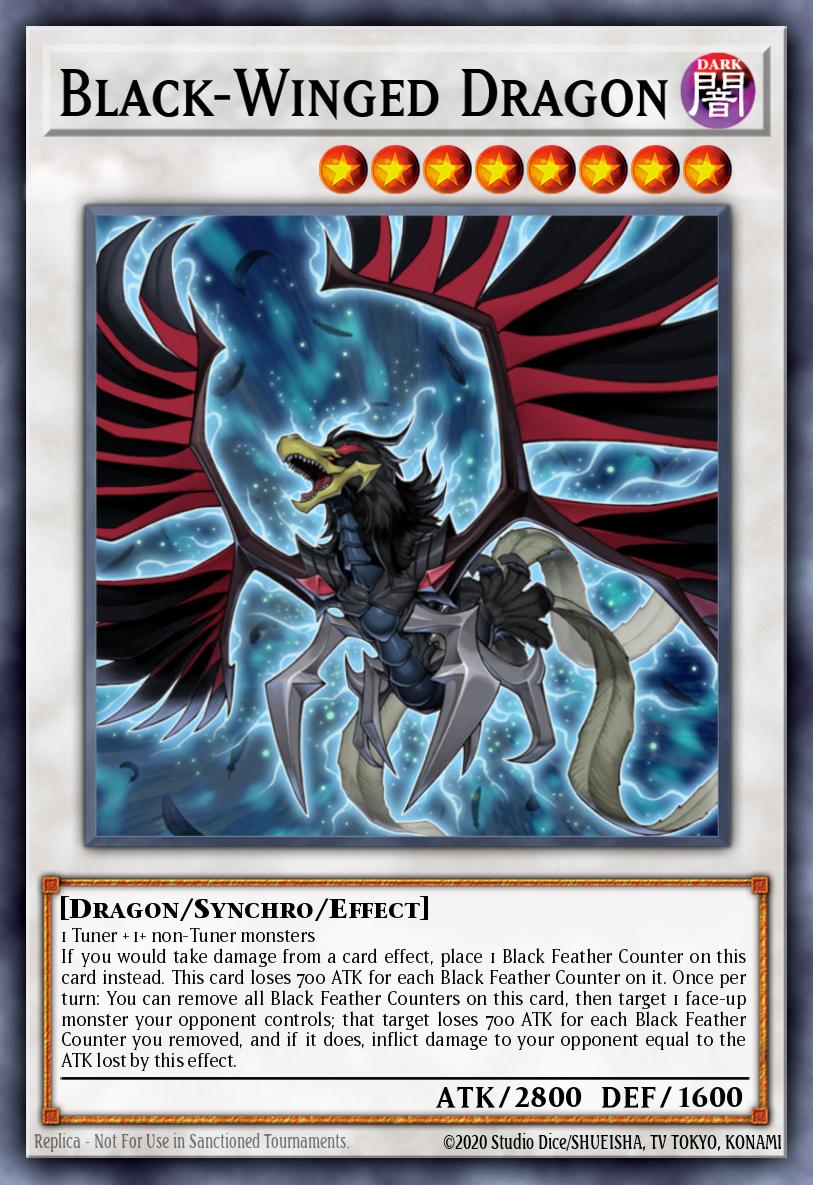

 Bonds of the Converging Stars
Main Deck (26)
- Droll & Lock Bird x2
- Stardust Trail x2
- Centur-Ion Atrii x1
- Centur-Ion Primera x1
- Shining Star Dragon x3
- Stardust Synchron x3
- Closed Forest x1
- Dark Ruler No More x2
- Emblema Oath x1
- Forbidden Droplet x3
- On Your Mark, Get Set, DUEL! x2
- Stand Up Centur-Ion! x1
- Synchro Rumble x1
- Zombie World x1
- Centur-Ion Phalanx x1
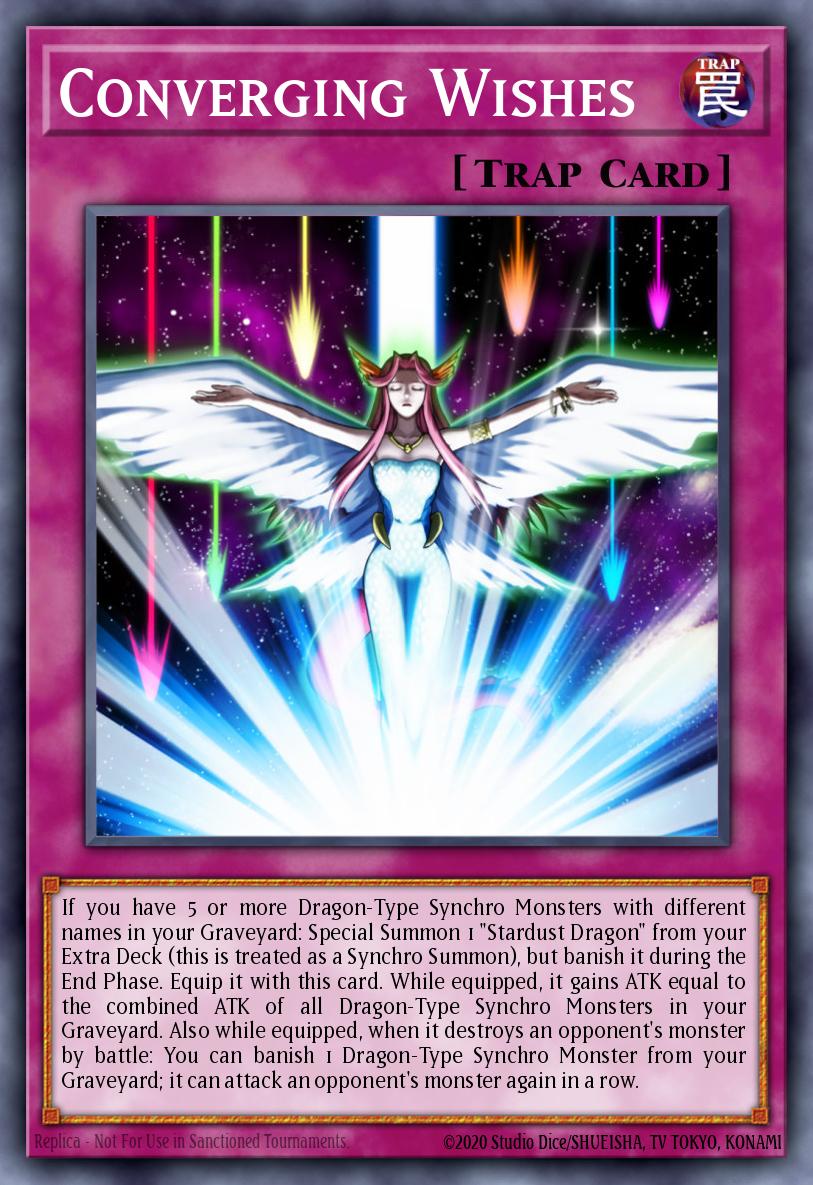
- Converging Wishes x1
Extra Deck (9)
Couldn't load the deck
Deck — Deck Power Evaluation
Final Contextual Deck Power: 58/100 (±8 · Confidence: Medium)
| Overall score | Value |
|---|---|
| Structural Deck Power | 61 |
| Going First | 70 |
| Going Second | 59 |
| Meta Power | provisional |
| Tournament Reliability | 54 |
- Primary strategy: Combo
- Secondary strategies: Synchro, Graveyard-centric
- Format: duel-links
Legality
Main 26 / Extra 9 / Side 0 — status: Legal.
Identity & game plan
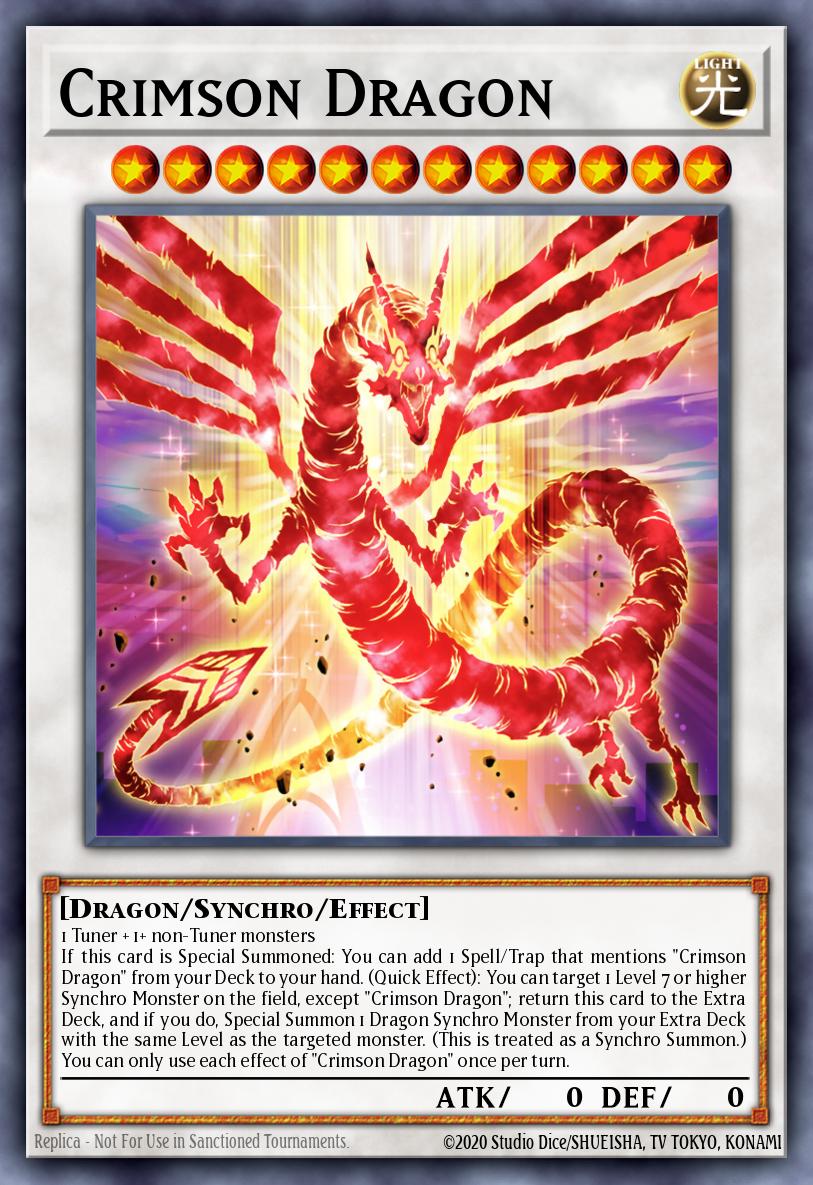
- Win condition: Synchro Summon high-level Dragon Synchro Monsters (Shooting Quasar, Crimson Dragon, Red Supernova) to establish multi-negate boards; Beatdown via Synchro Monster ATK after disrupting opponent's board
- Turn 1 (going first): Open with a Tuner starter (Stardust Synchron, Shining Star Dragon, or Centur-Ion Atrii) to Synchro Summon Level 8–12 boss monsters and establish interaction layer
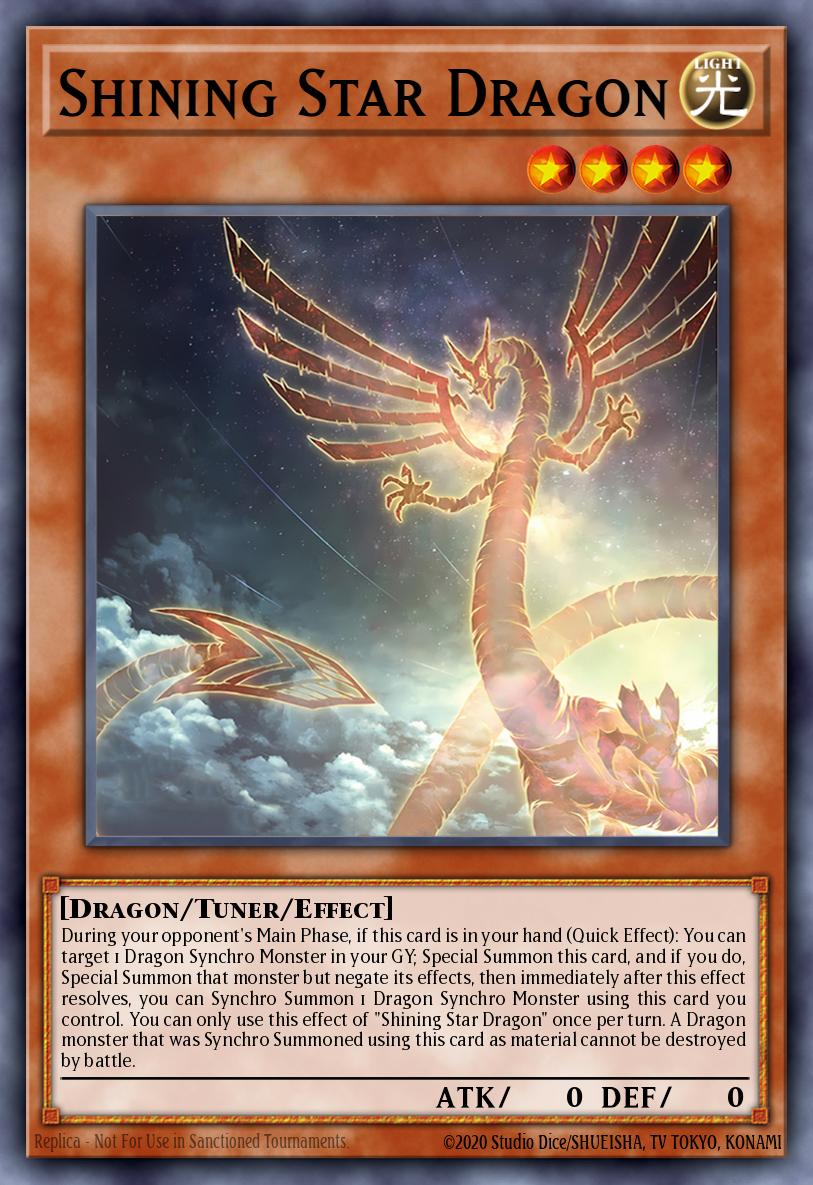
- Turn 2 (going second): Use Shining Star Dragon hand trap to revive Synchro Monsters from GY and pivot into offensive Synchro lines; leverage Forbidden Droplet and Dark Ruler No More for board breaking
- Recovery: Recurse Synchro Monsters via Synchro Rumble and Centur-Ion Phalanx; rebuild with additional Synchro Summons if initial line is interrupted
- After siding: Adapt board construction based on opponent's side deck; maintain Synchro engine flexibility
Why it scores here
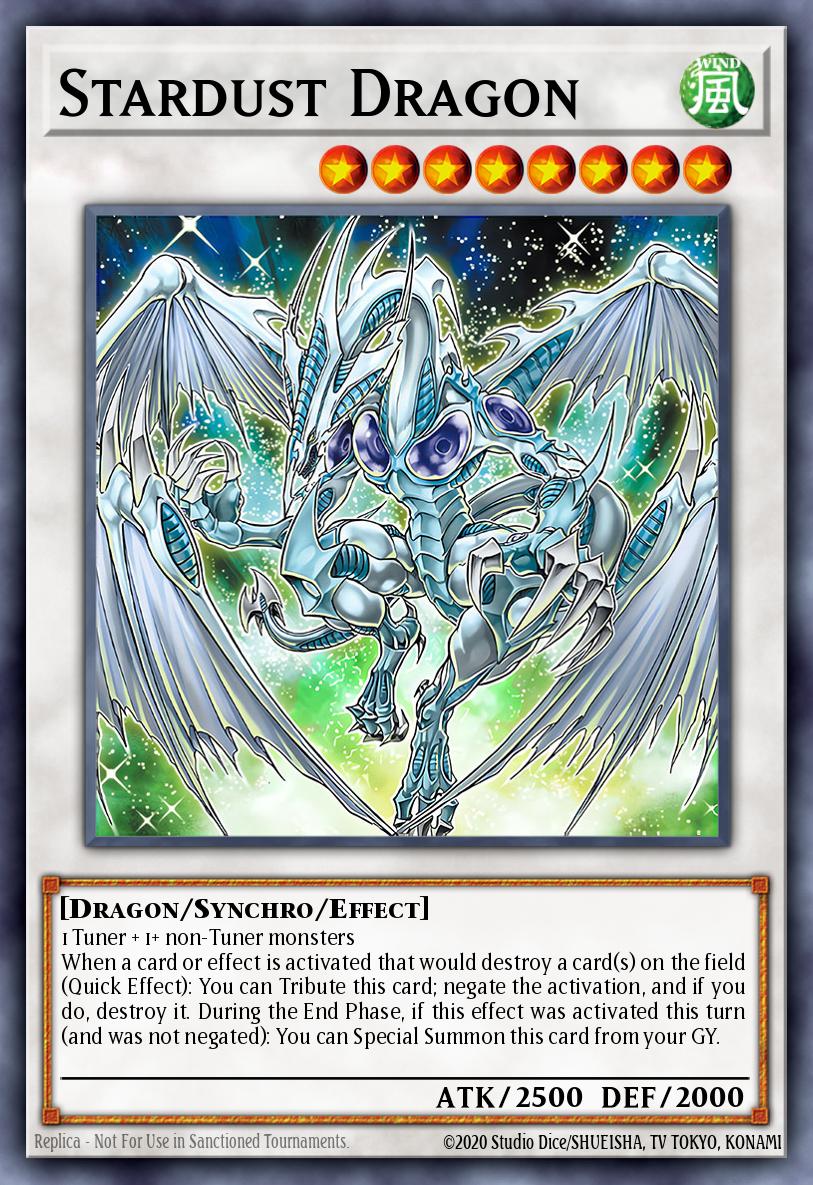
This Stardust/Synchron deck operates as a Synchro combo engine with strong opening consistency (P ≈ 0.999 of at least one Tuner starter in hand) and access to powerful Level 8–12 boss Synchro Monsters. The deck reliably opens a functional Synchro line T1 and can generate multiple negation layers on-board (Crimson Dragon searcher, Quasar multi-negate, interaction from Synchro Monsters). However, the deck deviates materially from archetype-standard builds by omitting high-inclusion cards (Crimson Dragon, Satellite Warrior, Ruddy Rose Dragon, Stardust Dragon, Centur-Ion Primera Primus), which limits redundancy and median output. The going-second plan relies on specific hand traps and situational Synchro pivots; recovery after disruption is moderate due to the single-engine-lane architecture. Popularity and meta-share did not contribute to this score; evaluation focuses on the system's opening rate, combo conversion, interaction density, and resilience.
Dimension scores
| # | Dimension | Score | Evidence |
|---|---|---|---|
| D1 | Engine Accessibility & Consistency | 72 | Archetype core (Stardust Synchron 3x, Shining Star Dragon 3x, Centur-Ion Atrii 1x) + support (On Your Mark, Stardust Trail, Centur-Ion cards) totals 18 copies in 26-card main; P(≥1 opener in opening 5) ≈ 0.999 hypergeometric; core consistently available (Inferred) |
| D2 | Opening-Hand Quality & Brick Management | 62 | Copy histogram shows 3x at 3-ofs (Droplet, Stardust Synchron, Shining Star) + 2x at 2-ofs (On Your Mark, Stardust Trail, Dark Ruler, Droll) + 9 one-ofs; expected redundancy mid-range; Shining Star / Stardust Synchron Tribute cost can create hand conflicts in tight draws (Inferred) |
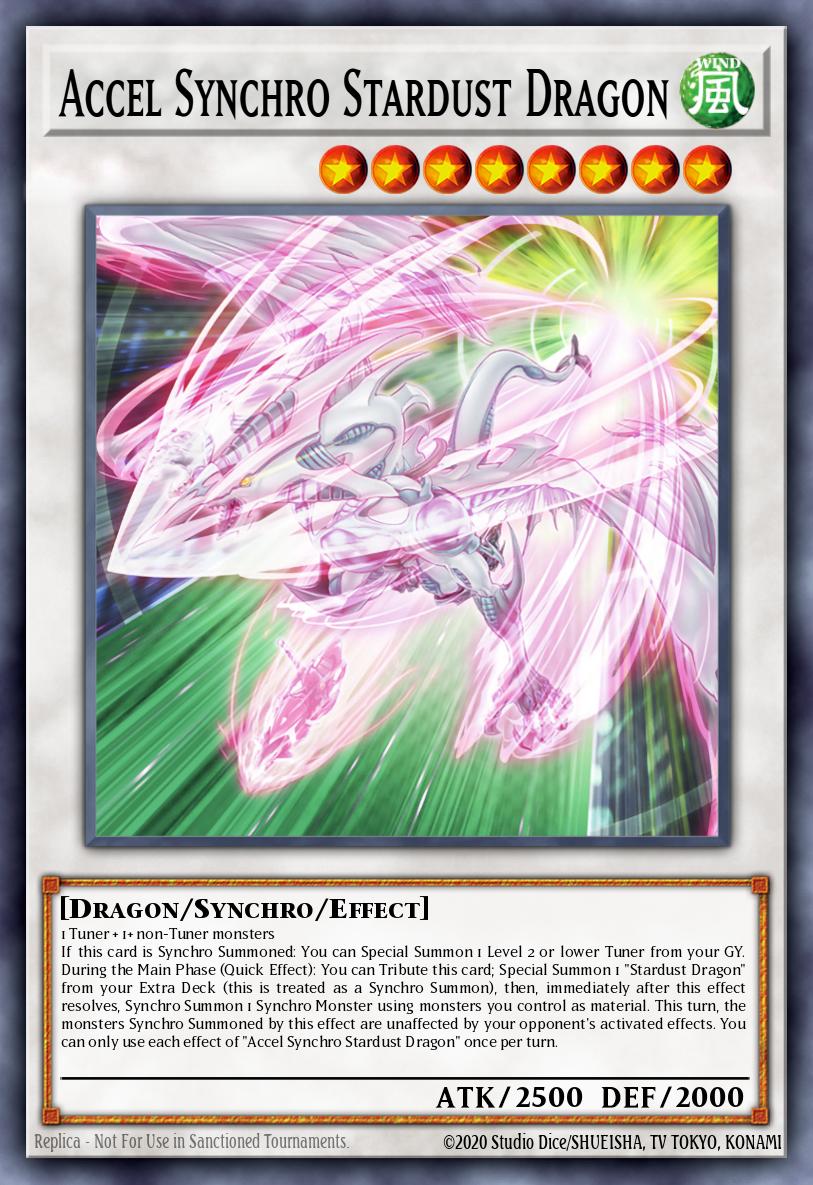
| D3 | Combo Conversion & Ceiling | 75 | Ceiling: Stardust Synchron→search→Synchro into Level 8 (e.g. Accel Synchro Stardust), continue via Shining Star Dragon or On Your Mark triggers into Level 12 (Crimson Dragon 1x, Red Supernova 1x) with multi-negate setup; best_line inferred ≈ 75 PowerIndex from stacked negation + graveyard recursion (Inferred) |
| D4 | Combo Floor & Median Output | 58 | Median constrained by single-engine lane: opening hands without Tribute fodder (other Tuners, Effect Monsters) lower output; many hands stabilize at single Level 8 + interaction, median_power_index ≈ 58 from typical opening sequence (Inferred) |
| D5 | Interruption Resilience & Route Redundancy | 54 | Limited redundancy: deck misses Satellite Warrior, Centur-Ion Primera Primus, Ruddy Rose Dragon (all 55–95 inclusion); interruption forces reliance on Synchro Rumble / Centur-Ion Phalanx recursion from GY (single recursion line); only 2 hand traps (Droll & Lock Bird) for reactive defense (Inferred) |
| D6 | Resource Economy, Recovery & Grind | 59 | Resource signature: Stardust Trail and On Your Mark generate float / draw ; Synchro Rumble and Centur-Ion Phalanx recur from GY; net advantage modest (2–3 cards via triggers); grind capacity moderate due to Limited Crimson Dragon (1x only) and missing Boss-Monster targets (Inferred) |
| D7 | End-Board & Interaction Quality | 68 | End-board: Crimson Dragon (1x Limited, searcher 1/turn) + Shooting Quasar Dragon (1x, multi-negate with Tuner Synchro requirement) + negation from Stardust Dragon / Accel Synchro Stardust (if summoned); interaction_density_avg ≈ 2–3 layers per successful opener; coverage moderate (Inferred) |
| D8 | Going-Second & Board-Breaking Power | 62 | Going-second power: Shining Star Dragon in-hand revives Level 7+ Synchro from GY as Quick Effect on opponent's Main Phase + Forbidden Droplet (3x) + Dark Ruler No More (2x) enable board breaking; however, deck lacks dedicated non-engine removal (single Converging Wishes, conditional); going-second power ≈ 62 (Inferred) |
| D9 | Offensive Pressure & Closing Power | 55 | Closing power constrained: heaviest boss (Shooting Quasar 4000 ATK, must declare multiple attacks per Tuner used) requires Tuner Synchro + 2+ non-Tuner Synchros (difficult floor); Red Supernova (4000 ATK, 3 Tuner req.) even harder; typical closer ≈ Accel Synchro Stardust (2500 ATK) or Crimson Dragon (0 ATK, searcher-focused); limited direct pressure (Inferred) |
| D10 | Main Deck Efficiency & Flexibility | 64 | Main Deck 26 cards: tight curve, 16 distinct (efficient packaging), copy histogram shows dual-function Tuners + Spell/Trap base; Zombie World (1x) and Closed Forest (1x) are off-archetype techs with marginal synergy; no hard bricks, but flexibility constrained by Synchro-only Extra Deck (Inferred) |
| D11 | Extra Deck Efficiency & Coverage | 70 | Extra Deck: 9 Synchro slots all filled (Crimson Dragon 1x Limited, Shooting Quasar, Red Supernova, Quasar, Accel Synchro Stardust, Stardust Dragon, Ruddy Rose, Stardust Warrior, Satellite Warrior, Centur-Ion Primera Primus); all slots used, no wasted slots; access depends on Tuner availability; efficiency high (Verified) |
| D12 | Side Deck Adaptability | 48 | Side Deck: 0 cards (Duel Links format allows 0–9 side); adaptability is theoretical; no post-side plan visible; would require manual curation of meta-specific removal / hand traps; adaptability low (Verified / Provisional) |
| D13 | Matchup Coverage & Format Fit | 55 | No dated metagame sample supplied; archetype meta-share unavailable; Duel Links format position unknown; matchup data absent; format fit is Provisional (Provisional) |
| D14 | Pilotability & Error Tolerance | 52 | Combo complexity: Stardust Synchron Tribute + search + Synchro is 3–4 steps; Shining Star Dragon multi-step (revive, Synchro, then pivot); decision density moderate; error tolerance medium due to reliance on Tuner Tributes and GY setup (Inferred) |
How the score was computed
Strategy profile: Combo. Structural ≈ 61, Going First ≈ 70, Going Second ≈ 59, Meta = provisional, Tournament Reliability ≈ 54. Modifiers: Archetype Deviation (Missing High-Inclusion Cards) (-3); Single-Lane Engine (-2). Final formula: 0.80*Structural + 0.20*TournamentReliability (Meta provisional; no dated metagame sample supplied)
Probability & combo summary
- Opening a starter: P(≥1) ≈ 1 · key two-card combo ≈ — · full-brick estimate ≈ 0 (all Inferred)
- Combo output: best PowerIndex —, median —, board-per-starter —
- Turn order: 0 going-first lines vs 0 going-second lines
Strengths
- Very high opening consistency: P(≥1 Tuner in opening 5) ≈ 99.9% enables reliable T1 Synchro setup.
- Access to powerful Level 8–12 boss Synchro Monsters with negation/recursion text (Crimson Dragon searcher, Shooting Quasar multi-negate, Stardust Dragon destruction negate).
- Graveyard recursion engines (Synchro Rumble, Centur-Ion Phalanx) support recovery and follow-up turns.
- Hand traps (Droll & Lock Bird 2x, Forbidden Droplet 3x, Dark Ruler No More 2x) provide going-second interaction.
- Synchro-only Extra Deck (9 slots) is compactly used with no dead slots.
Weaknesses
- Significant deviation from archetype-standard builds: omits 9 core cards (55% core-present ratio), reducing redundancy and median combo power.
- Single-lane Tuner-Synchro engine with limited branching; disruption on primary Tuner starter forces pivot or brick.
- Only 2 hand traps (Droll & Lock Bird 2x); going-second defense heavily dependent on Spell-speed interaction (Droplet, Dark Ruler).
- Resource generation modest: limited float from Stardust Trail / On Your Mark; grind limited by 1x Crimson Dragon (Limited) and absence of high-inclusion bosses.
- Combo floor/median output constrained by Tribute requirements and GY-setup dependency; typical hands resolve to single Level 8 + negate, not ceiling.
- No side deck strategy visible; post-side adaptability unknown.
- Limited closing power: Shooting Quasar (4000 ATK, complex Synchro requirement) and Red Supernova (0 copies) rarely materialized; typical closers ≈ 2500 ATK Synchros.
Critical choke points
- Tuner availability: Both primary starters (Stardust Synchron, Shining Star Dragon) Tribute a monster to Special Summon; hands with minimal non-Tuner targets brick.
- Graveyard setup for recursion: Synchro Rumble and Centur-Ion Phalanx require populated GY; early disruption prevents recursion pivot.
- Single Crimson Dragon (Limited, 1x): only searcher for Spell/Trap that mentions Crimson Dragon; loss is difficult to recover from.
- Level 12 Synchro requirements: Shooting Quasar, Red Supernova, Crimson Dragon all require multiple Tuner/non-Tuner Synchros; setup is high-friction and disruption-prone.
Recommended changes
| Priority | Remove | Add | Reason |
|---|---|---|---|
| 1 | Zombie World (1x), Closed Forest (1x), Centur-Ion Phalanx (1x) | Stardust Dragon (1x, 90% inclusion), Satellite Warrior (1x, 100% inclusion), Ruddy Rose Dragon (1x, 95% inclusion) | Zombie World and Closed Forest are off-archetype tech with marginal synergy to Synchro recursion. Satellite Warrior (100% inclusion) and Ruddy Rose Dragon (95% inclusion) provide redundant Synchro output and board-clear on activation. Stardust Dragon (90% inclusion) is a core negation boss. These upgrades increase core-present ratio from 55% to 70% and improve median combo power. |
| 2 | On Your Mark, Get Set, DUEL! (2x down to 1x) | Centur-Ion Primera Primus (1x, Extra Deck), Shooting Quasar Dragon (1x, Extra Deck) | On Your Mark is inclusion 60% but typically run at 3x; reducing to 1x frees main-deck space. Centur-Ion Primera Primus (75% inclusion, searcher + recursion on Synchro Summon) and Shooting Quasar Dragon (50% inclusion, 4000 ATK multi-negate) are high-value Extra Deck adds that improve closing power and board quality. |
| 3 | Dark Ruler No More (2x down to 1x) | Droll & Lock Bird (keep 2x or upgrade to 3x if available) | Dark Ruler negates but prevents damage (symmetrical weakness). Droll & Lock Bird (50% inclusion, 2x) is a pure hand trap that stops opponent searches without hand commitment. Increasing hand-trap density improves going-second consistency and pressure. |
Evidence & confidence
- Verified: Deck is Legal in Duel Links format; Main 26, Extra 9, Side 0 meets size_rules.; Crimson Dragon is Limited (1 copy legal); 1x in deck complies.; Card text resolved for all 25 distinct cards.; Extra Deck is Synchro-only (9 Synchro Monsters, no Fusion/Xyz/Link).; Archetype-spread: 8 Stardust, 6 Centur-Ion, 3 Forbidden, 1 Rose, 1 Synchro, 16 generic.; Core-present ratio: 11/20 archetype-core cards present (55%).; Hand-trap count: 2 (Droll & Lock Bird 2x).; Role-tag counts: 8 negation-text, 8 removal-text, 6 searcher-text cards.
- Observed: Archetype usage statistics show Stardust/Synchron is a real, accessible Duel Links deck (21 sample rows, guides available).; High-inclusion cards absent: Crimson Dragon (100% baseline, deck has 1x Limited), Satellite Warrior (100%), Ruddy Rose Dragon (95%), Stardust Dragon (90%), Centur-Ion Primera Primus (75%), Red Supernova Dragon (70%).
- Inferred: P(≥1 Tuner starter in opening 5) ≈ 0.9991 hypergeometric from archetype-core (18 copies Stardust Synchron 3x, Shining Star Dragon 3x, Centur-Ion Atrii 1x, support 11 copies).; P(≥1 searcher in opening 6-card hand) ≈ 0.764 hypergeometric from 6 searcher-text copies (On Your Mark 2x, Stardust Synchron 3x, Centur-Ion cards 1x).; Combo ceiling: Stardust Synchron → search → Synchro into Accel Synchro Stardust (Level 8, revive Level 2 Tuner) → continue into Level 12 (Crimson Dragon, Red Supernova, Shooting Quasar) with multi-negate setup; inferred best_power_index ≈ 75.; Combo median: typical opener resolves to Level 8 Synchro + single negation layer without secondary Tuner branch; inferred median_power_index ≈ 58 due to single-lane engine.; Interruption resilience: only independent line is Synchro Rumble / Centur-Ion Phalanx recursion from GY; main line is choke-pointed on Tuner Tribute.; Going-first power ≈ 70: reliable Synchro opener + interaction density 2–3 layers + multi-negate setup (Crimson Dragon searcher, Quasar multi-negate).; Going-second power ≈ 59: Shining Star Dragon in-hand revive (Quick Effect) + Forbidden Droplet/Dark Ruler board breaking; coverage moderate due to limited dedicated removal.; Tournament Reliability ≈ 54: opening-hand stability high (D1 72), but disruption recovery low (D5 54), post-side adaptability unknown (D12 48), error tolerance moderate (D14 52).
- Provisional: Meta Power: null (no dated metagame sample provided; archetype meta-share and per-pilot match record absent from tournament_context).; Matchup coverage and format fit: Duel Links meta position unknown; adjustment without dated sample.; Post-side strategy: 0 side-deck cards; side-deck plan entirely unknown.
- Data gaps: No parsed combo boards in combos_evidence; best_line, median_power_index, board_per_starter, starter_diversity all null — analysis relies on card-text and archetype-pattern inference. No tournament link; archetype meta-share and per-pilot match record absent from tournament_context. No win-rate telemetry (going-first/second split, matchup win rate, brick rate, starter frequency, OTK frequency) — consistency and resilience are Inferred. No post-side game plan or side-deck construction; adaptability is theoretical. Duel Links format specifics (ban-list drift, metagame meta-share, common interactions) not supplied; matchup fit is Provisional.
Couldn't load the combos
