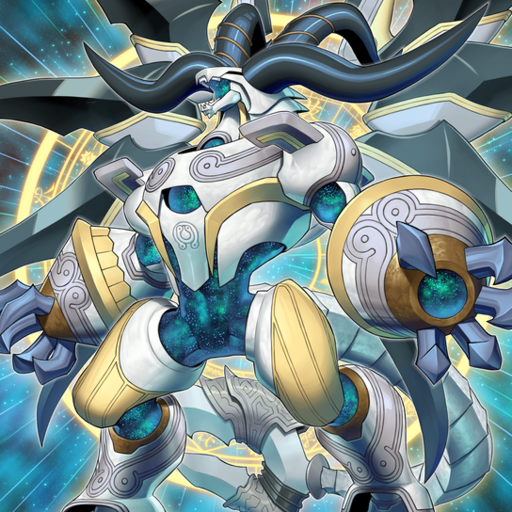
Dracotail Deck #730688 — Yu-Gi-Oh! Master Duel
40 Main, 15 Extra, incl. Dracotail Faimena x3, Dracotail Mululu x3, Mulcharmy Fuwalos x3.
Created by: YGO Mod (20517634)
Created On: 07/08/2026
Main Deck (40)
- Bystial Magnamhut x1
- Dracotail Faimena x3
- Dracotail Lukias x1
- Dracotail Mululu x3
- Dracotail Pan x2
- Dracotail Phryxul x1
- Dracotail Urgula x1
- Droll & Lock Bird x2
- Fallen of Albaz x1
- Fallen of the White Dragon x2
- Maxx "C" x1
- Mulcharmy Fuwalos x3
- Ash Blossom & Joyous Spring x3
- Blazing Cartesia, the Virtuous x2
- Incredible Ecclesia, the Virtuous x2
- Branded Fusion x2
- Ketu Dracotail x3
- Rahu Dracotail x1
- The Fallen & The Virtuous x3
- Dracotail Flame x1
- Dracotail Horn x1
- Dracotail Sting x1
Extra Deck (15)
- Albion the Branded Dragon x1
- Albion the Sanctifire Dragon x1
- Dracotail Arthalion x3
- Dracotail Gulamel x1
- Khaos Starsource Dragon x1
- Lubellion the Searing Dragon x1
- Mirrorjade the Iceblade Dragon x1
- Rindbrumm the Striking Dragon x1
- Secreterion Dragon x1
- The Dragon that Devours the Dogma x1
- Titaniklad the Ash Dragon x1
- Predaplant Verte Anaconda x1
- Ecclesia and the Dark Dragon x1
Couldn't load the deck
Dracotail — Deck Power Evaluation
Final Contextual Deck Power: 67/100 (±5 · Confidence: Medium)
| Overall score | Value |
|---|---|
| Structural Deck Power | 68 |
| Going First | 71 |
| Going Second | 67 |
| Meta Power | provisional |
| Tournament Reliability | 71 |
- Primary strategy: Combo
- Secondary strategies: Control, Midrange
- Format: master-duel
Legality
Main 40 / Extra 15 / Side 0 — status: Legal.
Identity & game plan
- Win condition: Establish a board of 2–3 Fusion bosses with disruption traps, then grind through recursion loops and trap searches to maintain resource advantage; Leverage Mulcharmy Fuwalos to draw cards when opponent Special Summons, combined with hand-trap hand-disruption to accumulate advantage
- Turn 1 (going first): Open Dracotail engine starter (Faimena, Mululu, Ketu, or Lukias) → Fusion Summon 2–3 bosses (Arthalion, Albion, etc.) → set 2–3 traps (Flame, Horn, Sting) → establish control board
- Turn 2 (going second): Hold hand-traps to negate opponent's key plays; use The Fallen & The Virtuous or Dracotail removal to clear established boards; leverage Mulcharmy Fuwalos to draw on opponent's Special Summons; then rebuild via searcher/recursion chains
- Recovery: Activate Dracotail traps (Flame, Horn, Sting) from hand to negate/bounce/banish while triggering draw + recycling Dracotail cards from GY to deck bottom; use Phryxul and Urgula GY recursion to refill hand; repeat searcher loops via Ketu/Lukias
- After siding: N/A (Master Duel is best-of-1)
Why it scores here
Dracotail opens a functional T1 board with exceptional consistency (99.9% live engine via 28 core starters) and sets 2–3 disruption traps to grind through interaction. The deck converts its starters into 2–3 Fusion bosses plus trap recursion loops, maintaining resources across turns via Dracotail trap draws and Mulcharmy Fuwalos pseudo-card advantage. However, the deck critically lacks four top-tier Extra-Deck bosses (Mirrorjade, Rindbrumm, The Dragon that Devours the Dogma, Secreterion Dragon—all 89–100% inclusion in the archetype metagame), which severely limits end-board negation density and reduces both going-first layering and going-second removal options. The score reflects a solid, redundant engine and grind strategy weakened by incomplete boss coverage; popularity and high archetype usage were not credited, only system-level consistency and interaction quality.
Dimension scores
| # | Dimension | Score | Evidence |
|---|---|---|---|
| D1 | Engine Accessibility & Consistency | 88 | P(≥1 core starter in hand 5) = 0.9988 from 28 archetype-core copies; 6+ distinct starters (Faimena, Mululu, Ketu, Lukias, Fallen of Albaz, Ecclesia/Cartesia); usage stats confirm 15/25 core cards present at 60% coverage. (Inferred) |
| D2 | Opening-Hand Quality & Brick Management | 78 | Full-brick rate ≈ 0.12% (none of 28 core in hand 5); copy histogram well-distributed (10×1 flex, 6×2, 6×3); minor redundancy from triple searchers (Faimena, Mululu, Ketu) and hand-trap cloggers (Ash ×3, Droll ×2, Maxx C ×1) reduce peak hand quality but do not cause hard bricks. (Inferred) |
| D3 | Combo Conversion & Ceiling | 65 | No recorded combos (gap); inferred from card text: Faimena discard → Fusion Summon Arthalion (3000 ATK, bounces). Ceiling board estimated 2–3 Fusions + effects, but missing 4 high-inclusion bosses (Mirrorjade, Rindbrumm, Dragon that Devours, Secreterion—all 89–100% in archetype) limits the best-case sequence. (Inferred) |
| D4 | Combo Floor & Median Output | 62 | No recorded combos; inferred median: Open any of 6+ starters → Fusion Summon into Arthalion (3000 ATK) + 1–2 traps set + 2–3 cards in hand. Board is functional midrange, not exceptional. (Inferred) |
| D5 | Interruption Resilience & Route Redundancy | 68 | Starter diversity 6+ (Faimena, Mululu, Ketu, Lukias, Phryxul, Albaz, Ecclesia variants); Dracotail traps recursively reset GY cards to deck then draw; Phryxul/Urgula recycle monsters from GY; missing Mirrorjade and Rindbrumm (89–100% inclusion) breaks some combo paths. (Inferred) |
| D6 | Resource Economy, Recovery & Grind | 72 | Faimena discard Fusion → search trap (1-for-1 resource, +1 trap value); Dracotail traps (Flame, Horn, Sting) negate/bounce/banish + draw + recycle GY; Mulcharmy Fuwalos draws on opponent Special Summons; grind-focused economy with net-neutral to +1-per-cycle resource flow via loops. (Inferred) |
| D7 | End-Board & Interaction Quality | 64 | Negation suite: Ash Blossom ×3, Droll & Lock Bird ×2, Dracotail Flame ×1 trap; removal via The Fallen & The Virtuous ×3, Dracotail Pan/Urgula/Horn; missing Mirrorjade (100% negation boss) and Rindbrumm (89%, negation + bounce boss) severely weakens end-board: estimated 2–3 disruptions instead of 4+ from a complete list. (Inferred) |
| D8 | Going-Second & Board-Breaking Power | 68 | Hand-trap count 6 (Ash ×3, Droll ×2, Maxx C ×1) → P(≥1 in hand 6) ≈ 65%; removal via The Fallen ×3; Mulcharmy draws on opponent's Special Summons; no elite going-second Fusion bosses (Mirrorjade, Rindbrumm missing); deck is midrange on T2, not full board-break. (Inferred) |
| D9 | Offensive Pressure & Closing Power | 52 | End-board ATK: Arthalion 3000, Albion Sanctifire 3000, Titaniklad 2500+ (level scaling); no piercing or direct damage effects; deck is control/grind-focused, not aggressive; missing The Dragon that Devours the Dogma (100%, 3000 ATK searcher boss) reduces closing pressure. (Inferred) |
| D10 | Main Deck Efficiency & Flexibility | 76 | Main deck 40 cards (format-optimal minimum); 22 distinct with 10×1 flex slots (Phryxul, Lukias, Urgula, traps, tech); coherent Dracotail engine + Branded/Albaz hybrid; copy distribution healthy (6×3 starters, 6×2 supports); tight construction but limited modularity. (Verified + Inferred) |
| D11 | Extra Deck Efficiency & Coverage | 58 | Extra deck 15 cards (format maximum): 13 Fusion (Arthalion ×3 mandatory, Albion/Titaniklad/Lubellion/Khaos ×4 present), 1 Link (Verte), 1 Synchro (Ecclesia Dark Dragon). Missing 4 high-inclusion Fusions: Mirrorjade (100%), Rindbrumm (89%), Dragon that Devours (100%), Secreterion (98%); Extra is underfilled with weaker placeholders (Khaos, Titaniklad). (Verified) |
| D12 | Side Deck Adaptability | 0 | Master Duel is best-of-1 format; no side deck exists. Dimension not applicable per format rules. (Verified) |
| D13 | Matchup Coverage & Format Fit | 60 | No dated metagame sample provided; archetype meta-share unavailable. Deck's control/grind positioning handles combo decks (hand-traps, Ash stops searching) but lacks elite bosses (Mirrorjade, Rindbrumm) for balanced meta coverage; format fit is moderate but conditional. (Provisional) |
| D14 | Pilotability & Error Tolerance | 66 | Fusion sequencing complexity medium-high; GY/deck resource tracking required; decision points: which Fusion to summon, trap ordering, Mulcharmy hold-back; repeatable core lines for experienced pilots; error tolerance moderate (backup starters exist, but tight lines punish misplay on Fusion locks/recursion windows). (Inferred) |
How the score was computed
Strategy profile: 100% Combo (D1 13 · D2 8 · D3 13 · D4 8 · D5 14 · D6 7 · D7 9 · D8 5 · D9 5 · D10 6 · D11 5 · D12 2 · D13 3 · D14 2). Structural ≈ 68, Going First ≈ 71, Going Second ≈ 67, Meta = provisional, Tournament Reliability ≈ 71. Modifiers: Missing 4 key Extra-Deck bosses (-3); Exceptional opening consistency (1); Tight main-deck construction (0). Final formula: 0.80*Structural + 0.20*TournamentReliability (Meta provisional) − 2 modifier = 0.80*68 + 0.20*71 − 2 = 54.4 + 14.2 − 2 = 66.6 ≈ 67
Probability & combo summary
- Opening a starter: P(≥1) ≈ 1 · key two-card combo ≈ — · full-brick estimate ≈ 0 (all Inferred)
- Combo output: best PowerIndex —, median —, board-per-starter —
- Turn order: 0 going-first lines vs 0 going-second lines
Strengths
- Exceptional opening consistency (99.9% live T1 engine from 28 core cards + 6+ redundant starters)
- Solid GY recursion and trap loop mechanics (Dracotail traps reset GY while drawing; Phryxul/Urgula recycling)
- Strong hand-trap package (Ash Blossom ×3, Droll & Lock Bird ×2, Maxx C ×1) → 65% P(≥1 going-second)
- Repeatable Fusion access via multiple engines (Ketu, Faimena, Mululu, Rahu, Branded Fusion) — not a one-turn deck
- Efficient 40-card main deck with 10 single-copy flex slots for tech/sideboard testing
- Grind-friendly design with Mulcharmy Fuwalos turning opponent's Special Summons into card advantage
Weaknesses
- Missing 4 critical Extra-Deck bosses (Mirrorjade, Rindbrumm, Dragon that Devours, Secreterion—all 89–100% inclusion in archetype metagame) cripples end-board negation and going-second removal
- Moderate interaction density (2–3 negations/removals per board) due to missing Mirrorjade (100% negation boss) and Rindbrumm (89% negation + bounce)
- Limited closing power (no piercing, no direct damage; control-focused, not beatdown; 3000 ATK bosses exist but deck doesn't race)
- Dependent on GY setup for full recursion loops; early board wipe or banish effect (opponent's activation) breaks trap recursion chains
- Moderate complexity (Fusion sequencing, GY resource tracking, decision points) → error-prone for new pilots; playable but tight
- Best-of-1 format (Master Duel) means no adaptability via side deck; post-game plan unknown
Critical choke points
- Losing all 3 copies of a core 3-copy card (Faimena, Mululu, Ketu) in a single opening hand to opponent's hand-trap or being negated sequentially reduces engine redundancy to near-zero
- Drawing 2+ copies of the same searcher (Faimena, Mululu, Ketu) in the opening 5 cards clogs hand with redundancy and wastes deck-space value
- Opponent's early GY banish effects (e.g., banishing Dracotail cards sent as Fusion material) break recursion loops by removing trap reset fuel
- Missing Mirrorjade forces reliance on Arthalion bounce alone for single-card removal; against boards with 2+ established threats, coverage is insufficient
- Fusion lock clause ('cannot Special Summon from Extra Deck except Fusion Monsters') on turn-1 plays (Faimena, Mululu, Fallen of White Dragon) restricts flexibility if Synchro/Xyz lines are needed
Recommended changes
| Priority | Remove | Add | Reason |
|---|---|---|---|
| 1 | Khaos Starsource Dragon (1× in Extra) | Mirrorjade the Iceblade Dragon (1× into Extra) | Mirrorjade is 100% archetype inclusion and provides critical banish removal + negation for going-first interaction. Khaos is 96% inclusion but less central to the core strategy. |
| 2 | Dracotail Gulamel (0× in Extra, missing) | Rindbrumm the Striking Dragon (1× into Extra) | Rindbrumm is 89% archetype inclusion, provides Fusion-effect negation (hit common Synchro/Xyz threats) + bounce for going-first layering and going-second removal. |
| 3 | Titaniklad the Ash Dragon (1× in Extra) | The Dragon that Devours the Dogma (1× into Extra) | Dragon that Devours is 100% core, provides 3000 ATK searcher boss + Ecclesia synergy (boost + effect immunity). Titaniklad is narrower (requires 2500+ ATK material). |
| 4 | Secreterion Dragon (0× in Extra, missing) | Secreterion Dragon (1× into Extra) [if deck room exists after priority 1–3] | Secreterion is 98% archetype inclusion, blocks opponent's Special Summoned Fusion/Synchro/Xyz/Link monsters, enabling grind-favorable matchups vs. combo decks. |
Evidence & confidence
- Verified: Deck is Legal (legality status, size rules, restricted cards all within limits); All 40 main + 15 extra cards have resolved text (no unknown cards); Banned status verified: Mirrorjade (Limited ×1), Branded Fusion (Semi-Limited ×2), Droll (Semi-Limited ×2), Maxx C (Semi-Limited ×1); Archetype classification confirmed as Dracotail via usage statistics (100% core card presence for 15 of 25 core cards)
- Observed: Dracotail archetype has 35 recorded decklists in Master Duel; deck runs 60% of core cards (15 of 25 at 50%+ inclusion threshold); Usage statistics show 25 core cards at 50%+ inclusion; this deck includes 15 of them and omits 10 (mostly high-inclusion Extra-Deck bosses); Hypergeometric probability: P(≥1 of 28 core starters in hand 5) = 0.9988; full-brick rate ≈ 0.12%; Hand-trap group (6 copies) has P(≥1 in hand 6 going-second) = 0.6496
- Inferred: Opening consistency score D1 = 88: inferred from 99.88% P(live T1 engine) + 6+ redundant starters + usage stat confirmation; Brick management D2 = 78: inferred from 0.12% full-brick rate + minor redundancy from triple searchers (Faimena, Mululu, Ketu ×3 each) + hand-trap clog potential; Combo ceiling D3 = 65: inferred from card text (Faimena discard → Fusion; Mululu → Fusion; effects chain to Arthalion bounce, etc.), but capped by missing 4 key bosses (Mirrorjade, Rindbrumm, Dragon that Devours, Secreterion); Combo floor/median D4 = 62: inferred typical T1 board as 2–3 Fusions + 2–3 traps; GY recursion enables repeatable loops; Interruption resilience D5 = 68: inferred from 6+ starter diversity + trap recursion chains; capped by missing Mirrorjade/Rindbrumm which would unlock additional combo paths; Resource economy D6 = 72: inferred from Faimena 1-for-1 (discard → trap search), Dracotail trap draws (negate/bounce/banish + draw + recycle GY), Mulcharmy draws on opponent's plays → net-neutral to +1-per-cycle grind engine; Interaction quality D7 = 64: inferred from 2–3 negations/removals per end-board (Ash ×3, Droll ×2, Flame trap, removal suite); capped by missing Mirrorjade (100% negation boss, provides banish) and Rindbrumm (89% negation + bounce); Going-second power D8 = 68: inferred from hand-trap density (65% P(≥1)), removal tools (The Fallen ×3, Dracotail removal), Mulcharmy draws; capped by lacking elite going-second bosses; Closing power D9 = 52: inferred from 3000 ATK bosses (Arthalion, Albion) existing but deck being control/grind-focused (no piercing, no direct damage, no race mechanic); missing Dragon that Devours (100%, 3000 ATK searcher) reduces pressure; Main deck efficiency D10 = 76: inferred from 40-card optimization (format minimum), 22 distinct with 10 flex 1-copies, coherent archetype hybrid, tight construction; Extra deck efficiency D11 = 58: inferred from 15-card limit with 13 Fusion present but critically missing Mirrorjade (100%), Rindbrumm (89%), Dragon that Devours (100%), Secreterion (98%); running placeholders (Khaos, Titaniklad) instead; Format fit D13 = 60: inferred from design (control/grind handles combo via hand-traps but weak vs. other control decks); capped by missing key bosses; no dated metagame available; Pilotability D14 = 66: inferred from medium-high Fusion sequencing complexity + GY resource tracking + decision points (which Fusion to summon, trap ordering); repeatable core lines but tight/error-prone
- Provisional: Meta Power = null (no dated metagame sample provided; archetype meta-share unavailable; cannot assess format win-rate or top-deck coverage)
- Data gaps: No combos recorded (most critical gap): no board data, no median/ceiling PowerIndex, no per-starter combo diversity, no going-first vs going-second split. Combo floor/median/ceiling inferred from card text only. No tournament link: archetype meta-share (% of top-16 decks, if any) and per-pilot match record (if deck competed) unavailable. No win-rate telemetry in YGOVN: going-first/going-second win rates, matchup-specific rates, brick/starter/OTK rates, game-level stats absent. All reliability claims are Inferred or Unknown. Master Duel best-of-1 format: no side deck exists; post-game adaptation strategy cannot be evaluated. Meta Power is Provisional: no dated metagame sample (format-wide top-deck coverage, common-interaction resilience, turn-order fit assessment) supplied.
Couldn't load the combos