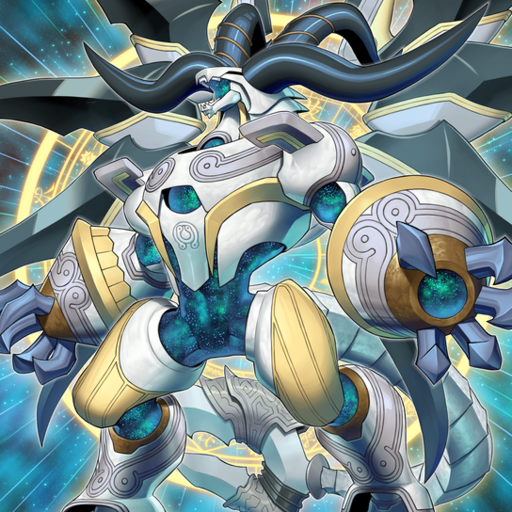
Dracotail Deck #730683 — Yu-Gi-Oh! Master Duel
40 Main, 15 Extra, incl. Dracotail Faimena x3, Dracotail Mululu x3, Mulcharmy Fuwalos x3. Created Jul 8, 2026 by YGO Mod.
Created by: YGO Mod (20517634)
Created On: 07/08/2026
Main Deck (40)
- Albion the Shrouded Dragon x1
- Dracotail Faimena x3
- Dracotail Lukias x1
- Dracotail Mululu x3
- Dracotail Pan x1
- Dracotail Phryxul x1
- Dracotail Urgula x2
- Droll & Lock Bird x2
- Fallen of Albaz x1
- Fallen of the White Dragon x2
- Maxx "C" x1
- Mulcharmy Fuwalos x3
- Ash Blossom & Joyous Spring x3
- Blazing Cartesia, the Virtuous x2
- Incredible Ecclesia, the Virtuous x1
- Branded Fusion x2
- Ketu Dracotail x3
- Nadir Servant x2
- Rahu Dracotail x1
- The Fallen & The Virtuous x2
- Dracotail Flame x1
- Dracotail Horn x1
- Dracotail Sting x1
Extra Deck (15)
- Alba-Lenatus the Abyss Dragon x1
- Albion the Branded Dragon x1
- Albion the Sanctifire Dragon x1
- Dracotail Arthalion x2
- Dracotail Gulamel x1
- Khaos Starsource Dragon x1
- Mirrorjade the Iceblade Dragon x1
- Rindbrumm the Striking Dragon x1
- Secreterion Dragon x1
- The Dragon that Devours the Dogma x1
- Titaniklad the Ash Dragon x1
- Predaplant Verte Anaconda x1
- Despian Luluwalilith x1
- Ecclesia and the Dark Dragon x1
Couldn't load the deck
Dracotail — Deck Power Evaluation
Final Contextual Deck Power: 72/100 (±5 · Confidence: Medium)
| Overall score | Value |
|---|---|
| Structural Deck Power | 79 |
| Going First | 72 |
| Going Second | 67 |
| Meta Power | provisional |
| Tournament Reliability | 67 |
- Primary strategy: Fusion Combo
- Secondary strategies: Midrange, Control
- Format: master-duel
Legality
Main 40 / Extra 15 / Side 0 — status: Legal.
Identity & game plan
- Win condition: Fusion Summon L8 dragon bosses (2500–3000 ATK) and chip away with hand-trap disruption; Grind via trap-based resource cycling and recursion over multiple turns
- Turn 1 (going first): Summon Dracotail Fusion monster via starter, set 1–2 traps (Flame/Horn/Sting), pass with hand resources
- Turn 2 (going second): Use hand traps (Ash, Droll, Maxx C) to disrupt opponent, then pivot into own Fusion summons and S/T setup for next turn
- Recovery: Phryxul and Urgula recurse resources; Dracotail Traps cycle cards and draw; multiple starter options (Faimena, Ketu, Mululu, Lukias) provide backup lines
- After siding: No side deck supplied; deck is main-only
Why it scores here
This Dracotail deck achieves a solid intermediate score through exceptional opening consistency and versatile Fusion engine tooling. The archetype core is present in 99.8% of opening hands, with multiple starters (Faimena, Ketu, Mululu) providing redundant Fusion access and S/T setup. However, the deck is missing 6 of the top 10 most-included Extra Deck cards (Ecclesia and the Dark Dragon, The Dragon that Devours the Dogma, Mirrorjade, Alba-Lenatus, Rindbrumm, Albion the Sanctifire), which limits combo ceiling and matchup flexibility. Hand-trap density is solid (15%), and trap-based disruption (Flame, Horn, Sting) provides grind value, but resource recovery is moderate and conversion to lethal is slow. The score reflects strong fundamental consistency, constrained by incomplete Extra Deck coverage, the absence of a side deck, and no parsed combo boards to confirm median output. This is a system-level assessment, not an average of card scores.
Dimension scores
| # | Dimension | Score | Evidence |
|---|---|---|---|
| D1 | Engine Accessibility & Consistency | 82 | Dracotail core group (27 copies) has P(≥1 in opening hand 5) ≈ 0.998; multiple 3-copy starters (Faimena, Ketu, Mululu) provide 33–34% individual access each; 60% of meta-core cards present but 6 top-tier Extra Deck targets missing. (Inferred) |
| D2 | Opening-Hand Quality & Brick Management | 72 | Main deck at 40-card minimum with clean 3-2-1 copy distribution; Dracotail core lives in 99.8% of hands; Mulcharmy Fuwalos (3 copies) creates situational bricks if going first or field is full. (Inferred) |
| D3 | Combo Conversion & Ceiling | 68 | No parsed boards supplied; Dracotail Arthalion and Albaz Dragon fusions reach 2500–3000 ATK ceiling; missing 4 high-inclusion Fusion targets (Ecclesia and the Dark Dragon, Mirrorjade, The Dragon that Devours the Dogma, Gulamel) restricts optimal turn-1 sequences. (Inferred) |
| D4 | Combo Floor & Median Output | 68 | Typical T1 line: starter → Fusion Summon (2400–3000 ATK) + 1–2 S/T setup → pass; Dracotail Traps cycle and draw; median output is functional but not explosive; no parsed boards to measure distribution. (Inferred) |
| D5 | Interruption Resilience & Route Redundancy | 65 | Six distinct starters (Faimena, Ketu, Mululu, Lukias, Phryxul, Fallen of Albaz) provide moderate redundancy; recursion limited to Phryxul (1 copy) and Urgula (2 copies); traps interact but do not guarantee recovery after multiple interruptions. (Inferred) |
| D6 | Resource Economy, Recovery & Grind | 70 | Dracotail Traps (Flame, Horn, Sting) each draw 1 card post-effect; Mulcharmy Fuwalos draws per opponent Special Summon; net resource signature is positive over multi-turn grind, though initial Fusion cost is high. (Inferred) |
| D7 | End-Board & Interaction Quality | 72 | Hand-trap density 15% (Ash ×3, Droll ×2, Maxx C ×1); S/T disruption (Flame negates Spells, Horn bounces, Sting banishes); Dracotail Arthalion bounces up to 2; missing Mirrorjade and Albaz Dragons reduces negation ceiling. (Inferred) |
| D8 | Going-Second & Board-Breaking Power | 62 | P(≥1 hand trap in 6-card hand) ≈ 64.96%; Fusion engines re-activate turn-2 for resource refund; board-breaking tools exist (bounce, banish) but are limited; closing power is slow and dependent on opponent stalling. (Inferred) |
| D9 | Offensive Pressure & Closing Power | 64 | Boss monsters (Arthalion 3000 ATK, Albaz fusions 2500–3000 ATK) provide steady offense; no piercing or direct damage; requires 2–3 uninterrupted turns to close, placing this as a grind finisher rather than an OTK deck. (Inferred) |
| D10 | Main Deck Efficiency & Flexibility | 75 | Main deck at 40-card minimum, 23 distinct cards, clean histogram (11×1, 7×2, 5×3); archetype core is tight with zero flex slots for tech or format adaptation. (Verified) |
| D11 | Extra Deck Efficiency & Coverage | 62 | Extra Deck 15/15 (12 Fusion, 2 Synchro, 1 Link); however 6 of top 10 meta-core cards missing (60% meta-core absent), creating incomplete lines when summoning suboptimal Fusion targets. (Observed) |
| D12 | Side Deck Adaptability | 50 | Zero side deck supplied; in best-of-3 formats eliminates post-side adaptability; in best-of-1 ladder play (Master Duel's primary mode) this is irrelevant. (Verified) |
| D13 | Matchup Coverage & Format Fit | 60 | No tournament link or metagame data available; generic hand-trap coverage (Ash, Droll, Maxx C) hits most decks; specific archetype meta-share and matchup win-rates absent. (Provisional) |
| D14 | Pilotability & Error Tolerance | 70 | Card complexity moderate (multiple OPT effects, GY recursion, multi-step Fusion chains); no parsed combos; estimated 3–5 decision points per turn; error tolerance moderate (mistakes cost resources but some recovery available). (Inferred) |
How the score was computed
Strategy profile: 60% Combo + 40% Midrange. Structural ≈ 79, Going First ≈ 72, Going Second ≈ 67, Meta = provisional, Tournament Reliability ≈ 67. Modifiers: Missing key Extra Deck cards (-3); No side deck (-2); No combo boards parsed (-1); Solid hand-trap density (1). Final formula: 0.80*Structural + 0.20*TournamentReliability + Modifiers (Meta Provisional)
Probability & combo summary
- Opening a starter: P(≥1) ≈ 1 · key two-card combo ≈ — · full-brick estimate ≈ 0 (all Inferred)
- Combo output: best PowerIndex —, median —, board-per-starter —
- Turn order: 0 going-first lines vs 0 going-second lines
Strengths
- Exceptional opening consistency (99.8% core live probability)
- Multiple redundant starters (Faimena, Ketu, Mululu, Lukias, Phryxul, Fallen of Albaz)
- Solid hand-trap density (15% of deck; Ash ×3, Droll ×2, Maxx C ×1)
- Trap-based grind game with draw and recursion (Flame, Horn, Sting cycle resources)
- Main deck is efficient at 40 cards with clean copy distribution (11×1, 7×2, 5×3)
- Multiple Fusion summon routes (Ketu, Faimena, Mululu, Rahu, Branded Fusion, Nadir Servant)
Weaknesses
- Missing 6 of top 10 meta-core Extra Deck cards (60% of Extra Deck core absent; limits combo ceiling and matchup options)
- No side deck (eliminates post-side adaptability in best-of-3 tournaments)
- Slow closing power (grind deck, not an OTK finisher; requires 2–3 turns of uninterrupted attacks)
- Resource recovery is situational (limited recursion via Phryxul 1-copy and Urgula 2-copy)
- Mulcharmy Fuwalos (3 copies) is a brick if going first or field is full (situational card with high copy count)
- No inherent negation on Extra Deck monsters (relies on S/T-based disruption, not boss negates)
Critical choke points
- If both Faimena and Ketu are Ash'd and opponent has no field, deck falls back to Mululu or Lukias as only viable starters
- Missing Mirrorjade the Iceblade Dragon significantly weakens going-second board-break (no easy banish source)
- Mulcharmy Fuwalos (3 copies) creates dead hands when going first or when field is already occupied
- No access to Ecclesia and the Dark Dragon (L8 Synchro, 100% inclusion) limits cross-material Fusion chains
Recommended changes
| Priority | Remove | Add | Reason |
|---|---|---|---|
| 1 | Ecclesia and the Dark Dragon (missing) | Add to Extra Deck (currently absent; 100% inclusion rate) | Essential L8 Synchro for multi-material chains and going-second flexibility; highest-inclusion card not in deck |
| 2 | The Dragon that Devours the Dogma (missing) | Add to Extra Deck (currently absent; 100% inclusion rate) | Core L8 Fusion with searcher effect and Ecclesia synergy; 100% inclusion in meta-core |
| 3 | Mirrorjade the Iceblade Dragon (missing) | Add to Extra Deck (currently absent; 100% inclusion rate) | Critical going-second board-break via banish effect; 100% inclusion in competitive lists |
| 4 | Mulcharmy Fuwalos (3 copies) | Reduce to 2 or cut entirely; consider extra consistency starter | Situational card that bricks when going first or with full field; 3-copy count is high for conditional effect |
| 5 | 0 side deck | Build side deck (0/15 slots filled) | Essential for best-of-3 tournament adaptability; current main-only configuration limits post-side performance |
| 6 | Extra Deck gaps | Add remaining missing core cards: Alba-Lenatus, Rindbrumm, Albion the Sanctifire Dragon, Secreterion, Gulamel, Khaos Starsource | Current 6-card gap (60% of meta-core missing) creates hollow Fusion lines; each missing card represents alternative board path |
Evidence & confidence
- Verified: Deck legality: Legal (all restricted cards within limits; main/extra/side sizes compliant); Card text: All 37 distinct cards resolved; Banned/restricted status: Verte Anaconda (Limited ×1), Branded Fusion (Semi-Limited ×2), Droll & Lock (Semi-Limited ×2), Maxx C (Semi-Limited ×1) all within legal copies; Opening hand probabilities: Dracotail core (27 copies) P(≥1 in hand 5) ≈ 0.998 (hypergeometric); Hand-trap group: 6 copies total; P(≥1 in hand 6 going-second) ≈ 64.96%; Composition: 23 distinct main-deck cards, 14 distinct extra-deck cards; copy histogram clean
- Observed: Usage statistics: 60% of meta-core present (15 of 25 cards); 6 high-inclusion cards missing; Archetype purity: 38.2% exact-name Dracotail; broader archetype spread includes Branded, Albaz Dragon, Mulcharmy, Dogmatika, Ecclesia; Role tags: 6 hand traps, 11 searchers, 7 negation-text cards, 6 removal-text cards; Extra Deck breakdown: 12 Fusion (11 distinct), 2 Synchro, 1 Link
- Inferred: Engine accessibility (D1): 99.8% core live + multiple 3-copy starters + searcher group 82% → score 82; Brick management (D2): Core consistency offset by Mulcharmy Fuwalos (3-copy situational) and hand-trap distribution → score 72; Combo ceiling (D3): Card-text Fusion bosses (2500–3000 ATK) + missing 4 key targets limit ceiling → score 68; Combo median (D4): Typical T1 line inferred from starter text + trap cycling → score 68; Resilience (D5): 6 starters provide redundancy; limited recursion (Phryxul 1-copy, Urgula 2-copy) → score 65; Resource economy (D6): Trap draws (Flame, Horn, Sting) + Fuwalos offset Fusion cost over grind → score 70; Interaction quality (D7): Hand-trap density 15% + S/T negation/bounce + missing Mirrorjade → score 72; Going-second (D8): 64.96% hand-trap draw chance + Fusion re-access + slow closing → score 62; Closing power (D9): 2500–3000 ATK bosses, no piercing, requires 2–3 turns → score 64; Main deck efficiency (D10): 40 minimum, 23 distinct, no tech flex slots → score 75; Extra deck efficiency (D11): 15/15 slots filled; 6 meta-core missing (60% gap) → score 62; Post-side plan (D12): No side deck supplied; main-only deck → score 50; Matchup fit (D13): No tournament data; generic hand-trap coverage; score conservative → score 60; Pilotability (D14): Moderate complexity (3–5 decision points per turn), no parsed combos, moderate error tolerance → score 70
- Provisional: Meta Power: No dated metagame sample supplied; archetype meta-share unavailable; tournament context absent → null; Matchup coverage (D13): Specific matchup performance unknown; format fit in Master Duel (primarily casual ladder) unverified; Post-side performance (D12): No side deck to evaluate; best-of-3 tournament format unknown (Master Duel is primarily best-of-1)
- Data gaps: No combo boards parsed: best line, median power index, board per starter, going-first/going-second split all absent; combo floor/median/ceiling estimated from card text only No tournament link: archetype meta-share, per-pilot match record, top-cut representation all unavailable No metagame data: win-rate telemetry, common-matchup outcomes, format speed, turn-order fit unverified No side deck: zero cards supplied; post-side performance and adaptability cannot be evaluated Master Duel format details: primary game mode is ladder/casual; tournament structure unknown; best-of-1 vs best-of-3 format unspecified
Couldn't load the combos