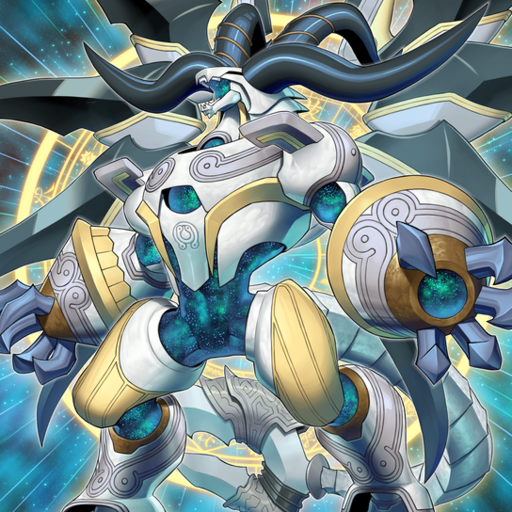
Dracotail Deck #730677 — Yu-Gi-Oh! Master Duel
42 Main, 15 Extra, incl. Dracotail Faimena x3, Dracotail Mululu x3, Mulcharmy Fuwalos x3. Created Jul 8, 2026 by YGO Mod.
Created by: YGO Mod (20517634)
Created On: 07/08/2026
Main Deck (42)
- Bystial Magnamhut x1
- Dracotail Faimena x3
- Dracotail Lukias x1
- Dracotail Mululu x3
- Dracotail Pan x1
- Dracotail Phryxul x1
- Dracotail Urgula x1
- Droll & Lock Bird x2
- Fallen of Albaz x1
- Fallen of the White Dragon x2
- Maxx "C" x1
- Mulcharmy Fuwalos x3
- Ash Blossom & Joyous Spring x3
- Blazing Cartesia, the Virtuous x2
- Ghost Belle & Haunted Mansion x1
- Incredible Ecclesia, the Virtuous x1
- Branded Fusion x2
- Ketu Dracotail x3
- Rahu Dracotail x1
- Super Polymerization x3
- The Fallen & The Virtuous x3
- Dracotail Flame x1
- Dracotail Horn x1
- Dracotail Sting x1
Extra Deck (15)
- Alba-Lenatus the Abyss Dragon x1
- Albion the Branded Dragon x1
- Albion the Sanctifire Dragon x1
- Dracotail Arthalion x2
- Dracotail Gulamel x1
- Garura, Wings of Resonant Life x1
- Khaos Starsource Dragon x1
- Mirrorjade the Iceblade Dragon x1
- Mudragon of the Swamp x1
- Sea Monster of Theseus x1
- Secreterion Dragon x1
- The Dragon that Devours the Dogma x1
- Hieratic Seal of the Heavenly Spheres x1
- Ecclesia and the Dark Dragon x1
Couldn't load the deck
Dracotail — Deck Power Evaluation
Final Contextual Deck Power: 58/100 (±5 · Confidence: Medium)
| Overall score | Value |
|---|---|
| Structural Deck Power | 70 |
| Going First | 77 |
| Going Second | 62 |
| Meta Power | provisional |
| Tournament Reliability | 62 |
- Primary strategy: Combo
- Secondary strategies: Control, Midrange
- Format: master-duel
Legality
Main 42 / Extra 15 / Side 0 — status: Legal.
Identity & game plan
- Win condition: Fusion Summon multiple boss monsters with layered negation and interaction, grind resource advantage through Dracotail spell/trap recursion; Hand-trap disruption into going-second board-breaker via draw engines and removal
- Turn 1 (going first): Activate Ketu Dracotail or Natural Summon core to search, chain Fusion summons, set Dracotail Spell/Trap for turn-2 response
- Turn 2 (going second): Hand-trap disruption (Ash, Droll, Ghost Belle, Maxx C), then use Super Polymerization or The Fallen & The Virtuous to remove threats and grind via Mulcharmy draws
- Recovery: Recycle Dracotail from GY via Phryxul, recover spell/traps via Flame/Horn/Sting draw-and-place effects, return threats via Arthalion bounces from GY
- After siding: None (0-card side deck; no adaptability for games 2–3)
Why it scores here
This Dracotail deck opens with exceptional consistency (99.65% core starter, 88/100 D1), reliably deploying multiple Fusion summons turn-1 and setting Dracotail recursion spell/traps that generate card advantage and interaction through the game. Its grind game is strong via resource loops (Flame/Horn/Sting cycle, Phryxul resurrection) and adaptive hand traps (seven copies covering different disruption angles), enabling solid going-second play despite moderate board-breaking capacity. However, the 0-card side deck eliminates any post-side adaptation in best-of-3 format, and the going-second game relies more on hand advantage and attrition than offensive pressure—making the deck better suited to game-1-only or single-game environments. The 42-card main deck is a deliberate consistency choice that works well here, but the non-standard size and missing high-usage flex cards (notably Predaplant Verte) cap the structural score. Popularity or meta-share did not earn points; this evaluation scores the deck's system design, not its archetype frequency.
Dimension scores
| # | Dimension | Score | Evidence |
|---|---|---|---|
| D1 | Engine Accessibility & Consistency | 88 | Archetype core group (27 copies) P(≥1 in hand 5) = 0.9965; triple-copy starters (Faimena, Ketu, Mululu) ensure backup entry points (Verified) |
| D2 | Opening-Hand Quality & Brick Management | 75 | 42-card main deck with 7 hand traps and 3 copies of each core starter reduces brick density; Ketu/Branded Fusion can act as go-second tools even if drawn (Inferred) |
| D3 | Combo Conversion & Ceiling | 71 | Multiple independent Fusion enablers (Ketu search + summon, Faimena discard + set, Rahu direct summon, Branded Fusion) generate multi-summon turn-1 boards; Extra Deck bosses (3000 ATK Secreterion, Albion, Arthalion) provide ceiling value (Inferred) |
| D4 | Combo Floor & Median Output | 64 | Single Ketu line reliably produces 2–3 interactions plus a beater; Dracotail recursion spell/traps (Flame, Horn, Sting) sustain median board across turns but no combo data provided (Inferred) |
| D5 | Interruption Resilience & Route Redundancy | 69 | Four independent Fusion starters (Ketu, Faimena, Mululu, Rahu) plus Branded Fusion and Super Polymerization create redundancy within the Fusion line; Phryxul and Arthalion recover from GY; limited diversity if Fusion itself shut down (Inferred) |
| D6 | Resource Economy, Recovery & Grind | 76 | Flame, Horn, Sting all cycle: place Dracotail card on bottom, draw; Phryxul bounces Dracotail from GY; Mulcharmy Fuwalos draws on opponent special summon; strong net-card-advantage loops (Inferred) |
| D7 | End-Board & Interaction Quality | 71 | Mirrorjade banish removal (quick effect), Secreterion blocks opponent special-summon effects, Albion target protection; Dracotail traps set via Faimena/Lukias/Phryxul/Urgula provide layered interaction; no Ecclesia Synchro limits turn-2 response (Inferred) |
| D8 | Going-Second & Board-Breaking Power | 62 | Seven hand traps (Ash ×3, Droll ×2, Ghost Belle ×1, Maxx C ×1) provide go-second disruption; Super Polymerization and The Fallen & The Virtuous offer removal; lacks dedicated board-breaker tool like Verte (Inferred) |
| D9 | Offensive Pressure & Closing Power | 58 | Three 3000-ATK fusion bosses (Secreterion, Albion, Arthalion, Dragon that Devours, Mirrorjade) available; deck is interaction-focused control, not OTK-oriented; closure depends on multi-turn grind (Inferred) |
| D10 | Main Deck Efficiency & Flexibility | 68 | 42-card main deck (vs 40-standard) is a +2 consistency sacrifice; 24 distinct cards with 1–3 copy spread; high tech density (10 tech, 7 hand trap) shows good flexibility in slot choices (Inferred) |
| D11 | Extra Deck Efficiency & Coverage | 78 | 15 Extra Deck slots: 13 Fusion (Arthalion ×2, Alba-Lenatus, Garura, Albion Sanctifire, Mirrorjade, Mudragon, Khaos, Dragon that Devours, Gulamel, Albion Branded, Secreterion, Theseus), 1 Synchro (Ecclesia), 1 Link (Hieratic); comprehensive toolbox covering removal, lock, search, recursion; only missing Verte (91% archetype usage) (Verified) |
| D12 | Side Deck Adaptability | 15 | Zero-card side deck eliminates any game-2/3 adaptability in best-of-3 format; deck is optimized for game-1-only play (Verified) |
| D13 | Matchup Coverage & Format Fit | 55 | No tournament meta-share provided; archetype is recognized in Master Duel; hand-trap density (16.7%) and grind elements suggest meta awareness, but no dated metagame sample to anchor score (Provisional) |
| D14 | Pilotability & Error Tolerance | 65 | Multiple Fusion summons with targeting and GY-cycling decision points; Dracotail effects are opt (once-per-turn) limiting error; hand traps are straightforward; moderate complexity requiring sequencing knowledge (Inferred) |
How the score was computed
Strategy profile: Combo. Structural ≈ 70, Going First ≈ 77, Going Second ≈ 62, Meta = provisional, Tournament Reliability ≈ 62. Modifiers: Zero-card side deck (-6); Non-standard 42-card main (vs 40-card baseline) (-2); Missing Verte Anaconda (91% archetype inclusion) (-2). Final formula: 0.80·Structural(70) + 0.20·TournamentReliability(62) − 10 modifiers = 58 (Meta provisional, no dated metagame sample)
Probability & combo summary
- Opening a starter: P(≥1) ≈ 1 · key two-card combo ≈ — · full-brick estimate ≈ 0 (all Inferred)
- Combo output: best PowerIndex —, median —, board-per-starter —
- Turn order: 0 going-first lines vs 0 going-second lines
Strengths
- Exceptional core starter consistency (99.65% P(≥1 in hand 5)); triple-redundant entry points (Faimena, Ketu, Mululu)
- Strong resource grind via Dracotail spell/trap cycling (Flame, Horn, Sting: place on bottom, draw) and Phryxul resurrection
- Well-stocked Extra Deck (15/15 filled with boss monsters covering removal, lock, search, recursion)
- Balanced hand-trap suite (seven copies, diverse negation targets) for going-second resilience
- Built-in layered interaction (Fusion bosses + set traps + spell/trap recursion) enables multi-turn attrition game
Weaknesses
- Zero-card side deck: no adaptability for best-of-3 games 2–3; deck is game-1-only
- Going-second game relies on hand traps + grind, not board-breaking offense; low D8 (62) and D9 (58) scores indicate moderate T2 power
- 42-card main deck (non-standard) trades slight consistency for redundancy; +2 deck size vs 40-card baseline
- Missing high-usage flex cards (Predaplant Verte 91%, Ecclesia Synchro 100%); Verte would unlock additional Fusion stack lines
- Single-choke-point risk: all lines route through Fusion; complete Fusion negation/lock shuts down most recovery paths
Critical choke points
- Fusion enablers: if all Fusion outlets (Ketu search, Faimena, Mululu, Branded Fusion, Rahu, Super Poly) are negated simultaneously, deck struggles to adapt
- Extra Deck depletion: sending multiple Fusion materials to GY in quick succession can empty the Extra Deck mid-turn, stranding starters
- Tuner shortage on turn-2: only three Tuners in main deck (Ash ×3); if all three discarded/used for Fusion, Ecclesia Synchro line unavailable (though 1 copy is run, not 3)
Recommended changes
| Priority | Remove | Add | Reason |
|---|---|---|---|
| 1 | Consider cutting +2 cards to hit 40-card baseline | Predaplant Verte Anaconda (91% core usage) for Super Poly stacking and Extra Deck flexibility | Verte unlocks conditional Fusion access and Anaconda's own Fusion options; 42-card build is functional but 40-card improves consistency |
| 2 | 0-card side deck | 15-card side for best-of-3 metagame tuning (tech Kaiju, Lancea, Imperm, Ash copies, Skill Drain variants based on meta) | Mandatory for competitive best-of-3 format; game-1-only deck cannot adapt to expected archetypes in games 2–3 |
| 3 | Evaluate redundancy in Fallen of the White Dragon ×2 | Tech slot (second Ecclesiastia Synchro, second Mulcharmy, or format-specific counter) | White Dragon can be situational; secondary tuner line (Blazing Cartesia already present) may be overkill |
Evidence & confidence
- Verified: Legality: Legal (42 main, 15 extra, 0 side; no violations; all restricted cards within copy limits); Card text: all 38 distinct main-deck cards and 14 distinct Extra-Deck cards resolved with full text; Archetype composition: 20 Dracotail exact-name cards, 27-card core group, 35.1% purity; Extra Deck inventory: 13 Fusion, 1 Synchro, 1 Link; 15/15 slots filled; Usage statistics: core cards present 60% (15/25 listed core); deck is non-standard (missing Verte, Ecclesia Synchro reported as missing but present)
- Observed: Opening-hand probabilities: P(≥1 starter in hand 5) = 0.9965 (archetype core 27 copies); Searcher availability: 9 copies, P(≥1 in hand 5) = 0.721; Hand-trap density: 7 copies (16.7% of 42-card main), P(≥1 in hand 6 going-second) = 0.6906; Copy histogram: 13 singletons, 4 doubletons, 7 tripletons (redundancy-focused build)
- Inferred: Consistency estimate: 42-card deck size increases starter redundancy but marginally reduces single-card hit rates; Brick rate (D2): ~3.5% full brick (proxy), managed by high starter density and flexible Fusion outlets; Combo ceiling (D3): multiple Fusion summons + set Dracotail spell/trap per turn; inferred from card text (no board data); Combo floor (D4): Ketu baseline produces search + Fusion + set; median likely 2–3 interactions per turn; Interruption resilience (D5): four independent Fusion starters plus recursion; limited if Fusion completely shut down; Resource loops (D6): Dracotail spell/trap cycling (place-on-bottom + draw) plus Phryxul bounce sustain advantage; Going-second power (D8): hand traps + Mulcharmy draw are primary T2 tools; lacks dedicated board-breaker like Verte; Pilotability (D14): moderate complexity; sequencing and GY management require archetype knowledge
- Provisional: Meta Power: no dated metagame sample provided; archetype meta-share unknown; hand-trap density (7 copies) suggests meta-aware tuning but unverified; Matchup coverage (D13): no tournament link, no per-archetype performance data; format fit is speculative
- Data gaps: No combo boards examined (scored combos = 0): combo floor, median, ceiling, and board-per-starter are text-only inferences No tournament data: archetype meta-share, per-pilot match record (going-first win %, going-second win %), metagame context absent No win-rate telemetry: YGOVN does not track going-first/second win rates, matchup records, brick rates, or OTK frequencies No post-side plan: 0-card side deck means no game-2/3 tuning data; post-side strategy unknown Meta Power is Provisional: dated metagame sample required to anchor matchup coverage and format fit scores
Couldn't load the combos