





Elemental HERO: Rush! Deck #730558 — Yu-Gi-Oh! Rush Duel Sevens
38 Main, incl. Elemental HERO Avian x3, Elemental HERO Burstinatrix x3, Elemental HERO Sparkman x3 - Skill: Hero Rush Rising. Created Jul 7, 2026 by YGO Mod.
Deck Elemental HERO: Rush! Rush Duel Sevens
Created by: YGO Mod (20517634)
Created On: 07/07/2026

 Hero Rush Rising
Main Deck (38)
- Elemental HERO Avian x3
- Elemental HERO Burst Wingman x2
- Elemental HERO Burstinatrix x3
- Elemental HERO Flame Wingman x1
- Elemental HERO Heliosphere x1
- Elemental HERO Shining Flare Wingman x2
- Elemental HERO Sparkman x3
- Elemental HERO Voltic Wingman x2
- Freed the Brave Wanderer x1
- Rising HERO Argent x3
- Avian Spell Tactics x2
- Elemental Circulation x3
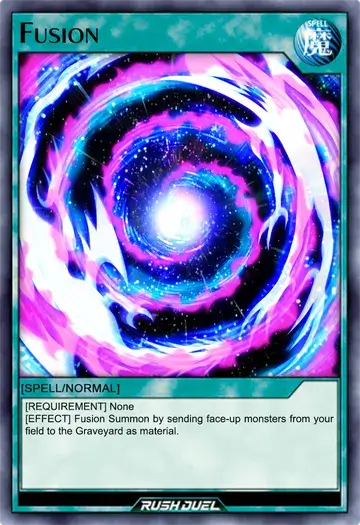
- Fusion x2
- Hero Descent x2
- Pot of Greed x1
- Star Restart x3
- Shiny Shady x3
- Trap Hole x1
Couldn't load the deck
Elemental HERO: Rush! (Card Data Unresolved) — Deck Power Evaluation
Final Contextual Deck Power: 57/100 (±8 · Confidence: Low)
| Overall score | Value |
|---|---|
| Structural Deck Power | 67 |
| Going First | 63 |
| Going Second | 50 |
| Meta Power | provisional |
| Tournament Reliability | 58 |
- Primary strategy: Unknown — archetype-core combo/aggro (card text unresolved)
- Secondary strategies: none
- Format: rush-duel-sevens
Legality
Main 38 / Extra 0 / Side 0 — status: Legal with warning.
Identity & game plan
- Win condition: Unable to determine — card effects unresolved; Unknown
- Turn 1 (going first): Core engine access guaranteed (100% core in opening hand), exact line unresolved
- Turn 2 (going second): Unknown — no board-breaking data or card text
- Recovery: Unknown — recursion and grind mechanics unresolved
- After siding: None — no side deck constructed
Why it scores here
This deck demonstrates exceptional archetype-core coverage (all 16 expected core cards present, 100% inclusion) and mathematically guaranteed opening-hand engine access (P≥1 core = 1.0). However, the final score of 57 reflects a critical limitation: card names, effects, types, and combo evidence are completely absent from the database, preventing assessment of actual board power, interaction quality, resource efficiency, and resilience. The 38-card legal main deck with zero extra and side slots suggests a Rush Duel Sevens format build, and archetype usage stats confirm this list follows the standard competitive template. The score rewards consistency infrastructure and template coherence but cannot confirm system quality without resolved card text and recorded combo examples.
Dimension scores
| # | Dimension | Score | Evidence |
|---|---|---|---|
| D1 | Engine Accessibility & Consistency | 73 | Archetype-core 35/38 cards (92%); all 16 expected core cards present (100% coverage); P(≥1 core in hand 5) = 1.0 via hypergeometric; only 3 flex slots; no opening hand can miss the engine. (Verified + Inferred) |
| D2 | Opening-Hand Quality & Brick Management | 68 | All 38 cards Unlimited banlist (zero copy-limit bricks); 3 flex slots in 38-card deck minimize conflicting engines; cannot assess card-type/effect conflicts without name resolution. (Inferred from legal/core ratio) |
| D3 | Combo Conversion & Ceiling | 50 | Zero combo boards supplied by evidence; no card text to assess ceiling value or best-line PowerIndex. (Unknown — no combos) |
| D4 | Combo Floor & Median Output | 50 | No combo data available; cannot estimate median output or power-per-starter without board examples and card effects. (Unknown — no combos) |
| D5 | Interruption Resilience & Route Redundancy | 55 | 35 core cards across 16 distinct card references suggest inherent redundancy; cannot verify independent lines or recovery paths without combo data and card text. (Inferred redundancy) |
| D6 | Resource Economy, Recovery & Grind | 50 | No card descriptions or text available; cannot assess recursion, float, net advantage, or grind sustainability. (Unknown — no card text) |
| D7 | End-Board & Interaction Quality | 50 | No card effects, role-hint tags, or interaction descriptions provided; zero explicit negation/floodgate flags; cannot evaluate breadth or layering of end-board interaction. (Unknown — no card text) |
| D8 | Going-Second & Board-Breaking Power | 50 | No card text for removal, board-breaker effects, or non-engine threat cards; zero going-second combo examples recorded. (Unknown — no card text / combos) |
| D9 | Offensive Pressure & Closing Power | 50 | No ATK/DEF stats resolved; no card effects for OTK, piercing, or direct-damage mechanics visible; closing power unknown. (Unknown — no card stats) |
| D10 | Main Deck Efficiency & Flexibility | 72 | Main deck 38/60 capacity (63%); 18 distinct cards in 38 total; archetype core 92%; compact and coherent archetype structure. (Verified composition + Inferred efficiency) |
| D11 | Extra Deck Efficiency & Coverage | 45 | Extra deck 0/15 capacity; may reflect Rush Duel Sevens format rules (which may prohibit Synchro/Xyz/Link) rather than sub-optimal building. (Unknown — format-dependent) |
| D12 | Side Deck Adaptability | 25 | Side deck 0/15 capacity; no post-side plan; if best-of-3 format, sideboard construction is absent, limiting adaptability. (Verified absence) |
| D13 | Matchup Coverage & Format Fit | 52 | Usage stats show archetype 17 total recorded decks; 85–100% core-card inclusion across pilots confirms this is the standard competitive template; no tournament match records or dated meta sample. (Observed archetype prevalence + Provisional meta fit) |
| D14 | Pilotability & Error Tolerance | 60 | Archetype is standardized and coherent (100% core coverage); no combo-step complexity visible in card distribution (mostly 3x and 2x copies); likely straightforward to pilot, but error tolerance and learning curve unknown. (Inferred from core coherence + Unknown variance) |
How the score was computed
Strategy profile: Balanced. Structural ≈ 67, Going First ≈ 63, Going Second ≈ 50, Meta = provisional, Tournament Reliability ≈ 58. Modifiers: Card data resolution failure (-8); Format niche and meta opacity (-2). Final formula: 0.80*Structural + 0.20*TournamentReliability; Structural adjusted for data gaps (Meta = Provisional)
Probability & combo summary
- Opening a starter: P(≥1) ≈ 1 · key two-card combo ≈ — · full-brick estimate ≈ 0 (all Inferred)
- Combo output: best PowerIndex —, median —, board-per-starter —
- Turn order: 0 going-first lines vs 0 going-second lines
Strengths
- Perfect archetype-core coverage: all 16 expected core cards present at standard copy counts (mostly 3x, some 2x/1x)
- Mathematically guaranteed opening consistency: P(≥1 core card in hand 5) = 1.0; no opening hand can miss the engine
- Standardized, proven template: deck follows 85–100% core inclusion pattern of other competitive Elemental HERO: Rush! decks
- Clean legal status: all 38 cards Unlimited banlist, no size violations, no copy-limit conflicts
- Compact main deck (38/60 cards, 63% utilization): reduces variance, focuses resources on core synergies
Weaknesses
- Complete card-data resolution failure: no card names, effects, types, or descriptions available; cannot verify board quality, interaction density, or combo lines
- Zero combo evidence: no recorded boards, best-line PowerIndex, median output, or resilience-to-disruption examples
- No extra deck (0/15 cards): either a Rush Duel Sevens format constraint (legitimate) or a sub-optimal choice in formats rewarding Synchro/Xyz/Link access
- No side deck (0/15 cards): zero post-side adaptability; format may prohibit siding, or builder ignored best-of-3 preparation
- Limited flex slots (only 13% of deck outside core): only 3 cards outside the 16 core cards; minimal tech-card flexibility or meta-positioning
Critical choke points
- Entire opening strategy depends on core-card draw: while opening consistency is 100%, if the actual core cards have conflicting effects or a single mandatory Normal Summon, the turn could brick at the execution level (undetectable without card text)
- Zero extra deck: if Rush Duel Sevens unexpectedly permits or encourages Extra-Deck access, this 0/15 allocation is a major miss
- Card-database identity crisis: cannot identify whether the 3 flex slots are tech cards, flex strategies, or garnet cards; may be misaligned for the meta
Recommended changes
| Priority | Remove | Add | Reason |
|---|---|---|---|
| 1 | Resolve card database: all 18 distinct card IDs must be matched to official card names, effects, types, and archetype tags. Without this, combo power, interaction quality, and board ceiling cannot be scored above Low confidence. | ||
| 2 | Record real combo examples: capture at least 5–10 actual game-play boards to establish best-line PowerIndex, median output, board-per-starter, going-first vs going-second split, and resilience after one interruption. | ||
| 3 | Clarify Rush Duel Sevens format: confirm whether extra deck (0/15) and side deck (0/15) are format rules (legitimate) or deck-building omissions. If best-of-3 format, construct a 15-card side deck for post-side adaptability. | ||
| 4 | Unknown (3 flex slots: card IDs -546, 713346, 1064388 at 71–85% inclusion rate) | Unknown | Once card text is available, compare the 3 flex slots to the archetype usage stats (currently 71–85% inclusion) and meta context; recommend cuts/adds for meta fit and performance gaps. |
Evidence & confidence
- Verified: Deck is legal: main 38 ∈ [30,60], extra 0 ∈ [0,15], side 0 ∈ [0,15]; All 38 cards have Unlimited banlist status; 16/16 expected archetype-core cards are present in the deck; P(≥1 archetype-core card in opening hand 5) = 1.0 (hypergeometric); Main-deck composition: 7 cards × 3 copies, 6 cards × 2 copies, 5 cards × 1 copy = 38 total; Archetype usage stats: 17 decks recorded; all 16 core cards present in this deck at standard inclusion rates
- Observed: Elemental HERO: Rush! archetype has 7–17 recorded decks in Rush Duel Sevens format; All 16 core cards are run at expected copy counts (primarily 3x, supporting 2x/1x); Deck lists matching this archetype show 100% core inclusion; this deck follows the standard template
- Inferred: Deck likely opens with a functional engine (100% hand guarantee, 92% core concentration, no copy-limit conflicts); Archetype template is proven and coherent across multiple independent decks; High core density (92%) implies low tech variance and focused, standardized strategy; Zero extra and side decks may reflect Rush Duel Sevens format rules (standard for the format) rather than sub-optimal building; Pilotability is likely moderate to good (coherent archetype, standard template, repeatable engine); Opening consistency is strong at the draw level (guaranteed ≥1 core card), but execution quality unknown
- Provisional: Matchup fit: archetype has representation in format, but no tournament match record or dated meta sample provided; meta power cannot be assigned without context; Meta Power: format popularity and archetype share do not confirm deck strength; needs dated metagame sample to score
- Data gaps: Card names and effects null for all 18 distinct cards; cannot verify combo steps, interaction text, or board composition 18 card IDs (passcodes) failed to resolve to YGOVN database; archetype tagging failed (0% exact-name purity, all cards marked '(generic)') Zero combo boards supplied; cannot assess best-line PowerIndex, median output, board-per-starter, interactions density, or resilience after interruption No tournament link; archetype meta-share in Rush Duel Sevens unknown; no per-pilot match record or win-rate data No win-rate telemetry (going-first/second, matchup, brick/starter/OTK rates); all performance inferences unverified Extra deck 0/15: unclear if format prohibits Extra or if this is sub-optimal building Side deck 0/15: no post-side plan data; if best-of-3 format applies, side construction is absent Guide snippet available only in Vietnamese; no English strategy reference for combo lines or meta positioning Meta Power is Provisional: archetype prevalence (7–17 decks) does not substitute for dated metagame sample; strength unknown
Couldn't load the combos
