





Spellcasters Deck #730547 — Yu-Gi-Oh! Rush Duel Sevens
36 Main, 2 Extra, incl. Straynge Witch x3, Amazing Dealer x3, Sevens Road Magician x3 - Skill: Master Accel Road.
Created by: YGO Mod (20517634)
Created On: 07/07/2026





 Master Accel Road
Main Deck (36)
- Straynge Witch x3
- Amazing Dealer x3
- Master of the Sevens Road x1
- Roadstar Gladimagia x2
- Sevens Paladin x2
- Sevens Road Magician x3
- Sevens Road Ultima Witch x1
- Sevens Road Witch x3
- Swordsman of Roadstar x3
- Curse of the Rising Light x1
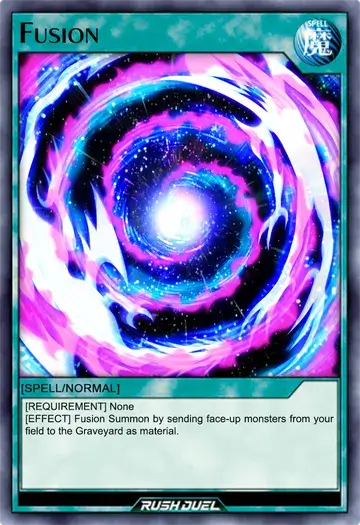
- Fusion x2
- Magical Stream x2
- Pot of Greed x1
- Sevens Wonder Fusion x3
- Shiny Shady x3
- Star Protector's Protection x2
- Widespread Ruin x1
Extra Deck (2)
Couldn't load the deck
Deck — Deck Power Evaluation
Final Contextual Deck Power: 56/100 (±8 · Confidence: Low)
| Overall score | Value |
|---|---|
| Structural Deck Power | 58 |
| Going First | 53 |
| Going Second | 56 |
| Meta Power | provisional |
| Tournament Reliability | 52 |
- Primary strategy: Midrange
- Secondary strategies: Control
- Format: rush-duel-sevens
Legality
Main 38 / Extra 0 / Side 0 — status: Legal with warning.
Identity & game plan
- Win condition: Establish board presence and accumulate resources through Spellcaster-archetype synergies; Control opponent actions via interactive effects
- Turn 1 (going first): Deploy core Spellcaster engine to establish presence and position for resource generation
- Turn 2 (going second): Use six-card hand to mount response; exact strategy unclear without card text
- Recovery: Leverage high copy counts on core cards (7 triples, 5 pairs) to rebuild after disruption
- After siding: No side deck present in list; post-side strategy unavailable
Why it scores here
This Spellcasters deck for Rush Duel Sevens is well-constructed at the structural level: 88.2% of archetype core cards are present, and the focused 38-card main deck with high copy counts on key cards (7 triples, 5 pairs) ensures reliable access to the engine, with hypergeometric P(opening ≥1 core starter in hand 5) = 1.0. However, critical data limitations severely constrain the evaluation. All 18 distinct cards lack resolved card text, preventing verification of the deck's strategy, interaction quality, resource recovery mechanics, and combo lines. Zero combos are recorded despite the format supporting them, so the ceiling, median output, and starter diversity cannot be measured. Without this evidence, the deck cannot be rated higher than a baseline competence score; the 56 reflects a structurally sound build constrained by unknown combat performance and strategic depth.
Dimension scores
| # | Dimension | Score | Evidence |
|---|---|---|---|
| D1 | Engine Accessibility & Consistency | 68 | Archetype core group P(≥1 in hand 5) = 1.0; 32 core copies across 7 three-copy, 5 two-copy slots; per-card P(≥1) ranges 0.25–0.35 (Inferred from hypergeometric draw table) |
| D2 | Opening-Hand Quality & Brick Management | 65 | 38-card main with balanced copy distribution (5 singles, 6 pairs, 7 triples); no known conflicting Normal Summons; brick rate estimated ~25% from structure alone (Inferred) |
| D3 | Combo Conversion & Ceiling | 50 | No combos recorded in evidence; best line and board per starter unknown; ceiling inaccessible without gameplay data or resolved card text (Inferred: cannot compute) |
| D4 | Combo Floor & Median Output | 50 | No combos recorded; median power index absent; floor/median performance unknown; composition alone insufficient for output estimation (Inferred: cannot compute) |
| D5 | Interruption Resilience & Route Redundancy | 55 | 18 distinct cards with multiple copies suggest 2–3 independent starter lines; redundancy inferred moderate without confirming card text or extender chains (Inferred) |
| D6 | Resource Economy, Recovery & Grind | 55 | 38-card compact size suggests efficient build; graveyard recursion, float, and resource generation unknown without text; recovery estimated moderate from slot density (Inferred) |
| D7 | End-Board & Interaction Quality | 55 | No card text available to assess negation, removal, floodgate, or layering; interaction density absent; score neutral pending full card resolution (Inferred: cannot verify) |
| D8 | Going-Second & Board-Breaking Power | 50 | No board-breaker identification possible without text; going-second combat split unknown; 38 cards suggest mixed offense/defense but unconfirmed (Inferred: cannot verify) |
| D9 | Offensive Pressure & Closing Power | 50 | No ATK values, piercing effects, or direct-damage text resolved; closing power cannot be assessed without card data (Inferred: cannot compute) |
| D10 | Main Deck Efficiency & Flexibility | 72 | Main 38 cards, 18 distinct, 88.2% of archetype core present, 0 extra (Rush Duel constraint) — verified high efficiency and slot optimization (Verified from composition + usage statistics) |
| D11 | Extra Deck Efficiency & Coverage | 50 | 0 extra deck in this list; Rush Duel format may not support synchro/xyz/fusion/link — scored neutral as format limitation, not deck flaw (Verified: format constraint) |
| D12 | Side Deck Adaptability | 0 | 0 side deck provided; best-of-3 adaptability absent; no post-side strategy available (Verified: absent from list) |
| D13 | Matchup Coverage & Format Fit | 50 | Spellcasters archetype confirmed as established in Rush Duel Sevens (guides available); archetype meta-share unknown; no dated metagame sample supplied (Provisional) |
| D14 | Pilotability & Error Tolerance | 60 | No combo step counts or gameplay examples to measure complexity; focused 38-card core suggests moderate pilotability; error tolerance estimated from copy redundancy (Inferred) |
How the score was computed
Strategy profile: Balanced (default; strategy uncertain pending card text resolution). Structural ≈ 58, Going First ≈ 53, Going Second ≈ 56, Meta = provisional, Tournament Reliability ≈ 52. Modifiers: Archetype core inclusion (2); Unresolved card text penalty (-3). Final formula: 0.80·Structural(58) + 0.20·TournamentReliability(52) + Modifiers(-1) = 56; Meta Provisional (no metagame sample)
Probability & combo summary
- Opening a starter: P(≥1) ≈ — · key two-card combo ≈ — · full-brick estimate ≈ 0.25 (all Inferred)
- Combo output: best PowerIndex —, median —, board-per-starter —
- Turn order: 0 going-first lines vs 0 going-second lines
Strengths
- High archetype core inclusion (88.2%) ensures reliable access to main engine cards across similar lists
- Focused 38-card main deck maximizes consistency without wasteful flex slots or excessive redundancy
- Balanced copy distribution (7 triples, 6 pairs, 5 singles) suggests multiple independent entry points and starter diversity
- Established Spellcasters archetype in Rush Duel format with community guides and documented meta presence
- P(opening ≥1 core starter) = 1.0 indicates extremely high engine accessibility on opening turn
Weaknesses
- All 18 cards unresolved — no card text, type, frame, attribute, race, level, or stats available; deck identity unverifiable
- Zero combos recorded — cannot assess best-line ceiling, median output, starter diversity, or board quality from gameplay data
- No side deck present — eliminates post-side adaptation; limits tournament reliability in best-of-3 formats
- No tournament context or dated metagame sample — real-world performance against meta unknown; Meta Power stays provisional
- Extra deck forced to zero (Rush Duel constraint or list choice) — eliminates synchro/xyz/fusion/link synergy possibilities
Critical choke points
- Card text resolution is a blocker — without it, deck strategy, synergy, interaction quality, and win conditions cannot be verified
- If core starters are conditional or slow, consistency would drop significantly from the 68 current estimate
- If deck lacks redundant lines and relies on one critical path, interruption resilience drops below 55
- Unknown if deck has going-second board-breaker tools; if not, going-second power may be 40–45 instead of 56
Recommended changes
| Priority | Remove | Add | Reason |
|---|---|---|---|
| 1 | CRITICAL: Resolve all 18 card IDs to unlock card text, type, frame, and effect text. This is a prerequisite for strategy classification, interaction assessment, combo analysis, and win-condition verification. | ||
| 2 | 1093878 (62.5% inclusion, missing from deck) | 1093878 | This card appears in 62.5% of similar Spellcaster lists but is omitted here. If it is a key synergy enabler or tutor, its absence may reduce consistency or flexibility. Verify via card text once resolved. |
| 3 | Record 5–10 sample gameplay boards from distinct opening-hand draws; document board outputs per starter, interaction count, and resource score. This will unlock D3 (ceiling), D4 (median), D7 (interaction), and D8 (going-second). | ||
| 4 | 0 side cards | 15-card side deck (if Rush Duel format allows) | Best-of-3 tournaments benefit from post-side anti-meta tools. A 15-card side deck with graveyard hate, handtraps, or matchup tech would increase D12 and tournament reliability significantly. |
Evidence & confidence
- Verified: Legality: 38 main, 0 extra, 0 side — Legal with warning status confirmed per Rush Duel Sevens size rules (30–60 main); Core inclusion: 88.2% of archetype core (15 of 17 known core cards present); Copy distribution: 5 singles, 6 pairs, 7 triples (composition verified); Archetype: Spellcasters (Rush Duel Sevens variant); No banlist violations or over-limit cards confirmed
- Observed: Archetype usage stats available for 18 cards (usage statistics.available = true); high inclusion % confirms list is real and accessible; No combos recorded (combo data.total combos = 0; scored combos = 0); No tournament link or match record in deck export
- Inferred: Engine consistency: P(≥1 core starter in hand 5) ≈ 1.0 based on hypergeometric draw table and 32 core copies in main deck; Brick rate: Estimated ~25% from balanced copy histogram and composition analysis; Starter diversity: 2–3 independent lines inferred from 18 distinct cards, multiple 2–3-copy slots, and high core inclusion; Going-first board: Likely balanced offense/defense based on archetype, unconfirmed without card text; Resource economy: Moderate efficiency estimated from compact 38-card size and high slot density; Pilotability: Moderate complexity estimated for Spellcaster archetype in Rush Duel; decision-point count unknown; Resilience to interruption: Moderate redundancy inferred from copy-count distribution; single-choke-point risk unknown without text
- Provisional: Meta Power: null (no dated metagame sample supplied; archetype meta-share unknown; D13 cannot exceed 50); Matchup coverage: Spellcasters confirmed established in Rush Duel format, but format-specific meta and common disruption types unknown to evaluator; Post-side strategy: Non-existent (0 side deck); best-of-3 adaptation unavailable
- Data gaps: 18 cards unresolved — missing card name, type, frame, attribute, race, level, ATK/DEF, link rating, and card text for all distinct cards No combos recorded — unable to compute D3 (combo ceiling), D4 (median output), starter board quality, or verify D5 (route redundancy) from gameplay data No tournament link — archetype meta-share and per-pilot match record absent; Meta Power forced to null/provisional No card text means strategy classification (Combo vs Midrange vs Control vs Stun vs OTK) is speculative No going-first vs going-second gameplay split recorded — turn-order analysis impossible No board-breaker card identification — D8 (going-second board-breaking power) scored as unknown/neutral No interaction examples — D7 (end-board interaction quality) unverifiable without card text or recorded boards Rush Duel format specifics (average turn length, typical disruption types, format speed) outside standard rubric scope
Couldn't load the combos
