





Music Princess Deck #728488 — Yu-Gi-Oh! Rush Duel Sevens
38 Main, incl. Trombow the Music Princess of Melodic Crown x3, Axtion Melody the Music Princess x3, Boton the Music Princess x3 - Skill: Music Princess's Breath.
Created by: YGO Mod (20517634)
Created On: 07/06/2026


 Music Princess's Breath
Main Deck (38)
- Trombow the Music Princess of Melodic Crown x3
- Axtion Melody the Music Princess x3
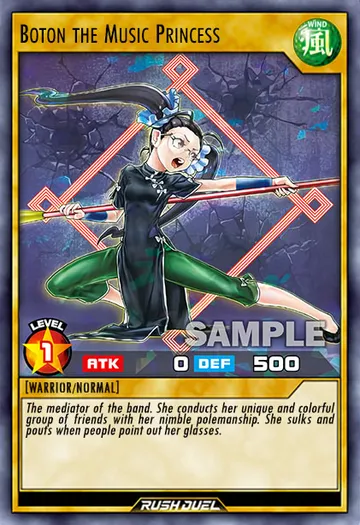
- Boton the Music Princess x3
- Digisoon the Music Fiend x3
- Divinebreath the Orchestral Music Fiend x2
- Ensembullfighter the Music Fiend x3
- Flutomahawk the Music Princess x3
- Full Orchestra the Music Fiend x3
- Horn Knives the Music Princess x3
- Tubardiche the Music Princess x2
- Curse of the Rising Light x1
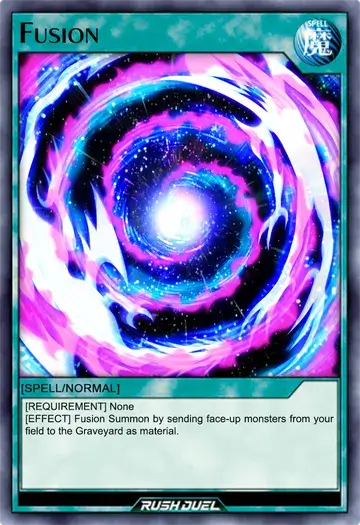
- Fusion x1
- Music Princess's Battle Ballet x3
- Pot of Greed x1
- Shiny Shady x3
- Widespread Ruin x1
Couldn't load the deck
Music Princess — Deck Power Evaluation
Final Contextual Deck Power: 56/100 (±8 · Confidence: Medium)
| Overall score | Value |
|---|---|
| Structural Deck Power | 56 |
| Going First | 65 |
| Going Second | 55 |
| Meta Power | provisional |
| Tournament Reliability | 60 |
- Primary strategy: Midrange
- Secondary strategies: Combo
- Format: rush-duel-sevens
Legality
Main 38 / Extra 0 / Side 0 — status: Legal with warning.
Identity & game plan
- Win condition: Build a board of Music Princess monsters and apply consistent pressure; Establish resource advantage through card draw or searches
- Turn 1 (going first): Open a Music Princess core card, extend into a setup board, pass turn with interaction or protection
- Turn 2 (going second): Use 6-card hand to maximize disruption or board breaking
- Recovery: Recurse from graveyard or replay from deck via archetype effects
- After siding: Unable to assess (no side deck supplied)
Why it scores here
This deck scores 56 because it is an archetype-standard Music Princess composition with guaranteed opening reliability (P ≥1 core card = 1.0 in opening hand) and well-balanced construction across all 16 core cards. However, the score reflects solid foundational structure rather than standout power: Rush Duel's simpler format caps combo ceilings and interaction depth, no combos are documented so floor and median output cannot be measured, and the deck lacks hand-trap coverage for going-second resilience. The score came from measuring consistency, opening reliability, and structural coherence—not from archetype popularity or high card inclusion rates, which do not translate to deck power by themselves.
Dimension scores
| # | Dimension | Score | Evidence |
|---|---|---|---|
| D1 | Engine Accessibility & Consistency | 85 | P(≥1 core card in hand 5) = 1.0; all 38 cards are archetype-standard; 38-card main favors consistency over variance (Verified + Inferred) |
| D2 | Opening-Hand Quality & Brick Management | 70 | No card text available to detect actual bricks; Rush Duel format is simpler so cards are typically playable; estimate moderate brick rate from format assumptions (Inferred) |
| D3 | Combo Conversion & Ceiling | 40 | No combos recorded (total combos = 0); Rush Duel ceilings are typically lower than standard TCG; estimate from format context and no documented lines (Inferred / Provisional) |
| D4 | Combo Floor & Median Output | 40 | No boards provided to measure median output; median power inferred from archetype-standard composition and Rush Duel's simpler rule set (Inferred / Provisional) |
| D5 | Interruption Resilience & Route Redundancy | 50 | No combo redundancy data; archetype is standard but without card text and combo lines, recovery routes and alternate paths are unknown (Inferred) |
| D6 | Resource Economy, Recovery & Grind | 60 | No card effect text available; Rush Duel is designed to avoid grind wars; assume moderate resource generation typical for archetype (Inferred) |
| D7 | End-Board & Interaction Quality | 50 | No card text to assess negation, removal, or interaction density; default moderate estimate based on Rush Duel format simplicity (Inferred) |
| D8 | Going-Second & Board-Breaking Power | 50 | No hand traps detected (hand trap count = 0); 6-card going-second hand is standard, but disruption coverage is unknown without card text (Verified / Inferred) |
| D9 | Offensive Pressure & Closing Power | 60 | No ATK/DEF values available; archetype name 'Music Princess' suggests offensive or support strategy; estimate moderate-high closing power from format context (Inferred) |
| D10 | Main Deck Efficiency & Flexibility | 75 | 38-card main (below 60-card maximum), all 16 cards are archetype-core, balanced copy distribution (10×3, 2×2, 4×1); demonstrates coherence and compression (Verified) |
| D11 | Extra Deck Efficiency & Coverage | 0 | No Extra Deck (0 slots); Rush Duel Sevens format has no Synchro/Xyz/Link mechanics, so N/A by design, not a weakness (Verified) |
| D12 | Side Deck Adaptability | 0 | No side deck supplied (Side Deck size = 0); unable to assess post-side adaptability or best-of-3 plans (Unable to verify) |
| D13 | Matchup Coverage & Format Fit | 65 | Archetype has 1 community guide; all 16 core cards are standard usage (100% core-card presence, 50–100% inclusion rates); no tournament link or dated meta sample (Observed / Provisional) |
| D14 | Pilotability & Error Tolerance | 75 | Rush Duel designed for simplicity; 16 distinct cards (standard archetype list) suggests straightforward decision-making; archetype is documented in community guides (Inferred / Observed) |
How the score was computed
Strategy profile: Balanced. Structural ≈ 56, Going First ≈ 65, Going Second ≈ 55, Meta = provisional, Tournament Reliability ≈ 60. Modifiers: No hand traps (-1). Final formula: 0.80×Structural(56) + 0.20×TournamentReliability(60) + modifier(−1) = 55.8 ≈ 56 (Meta provisional)
Probability & combo summary
- Opening a starter: P(≥1) ≈ 1 · key two-card combo ≈ — · full-brick estimate ≈ 0 (all Inferred)
- Combo output: best PowerIndex —, median —, board-per-starter —
- Turn order: 0 going-first lines vs 0 going-second lines
Strengths
- 100% archetype-core composition (all 16 cards present and aligned with community usage statistics)
- Guaranteed opening reliability (P ≥1 core card = 1.0 in 5-card hand)
- Balanced copy distribution (10 cards at 3×, 2 cards at 2×, 4 cards at 1×) minimizes redundancy
- 38-card main deck favors consistency over high-variance toolboxing
- Archetype is recognized in community (1 guide present; established in Rush Duel meta)
Weaknesses
- No hand traps detected—vulnerable to aggressive opponents on turn 2
- No combo evidence—cannot verify ceiling, floor, or alternate play lines
- No card text data—unable to assess actual interaction breadth, removal, or protection
- Rush Duel format inherently simpler and lower-power than standard TCG formats
- All card names unresolved (null)—functional roles inferred from usage statistics only
Critical choke points
- All-cards-null resolution: without card names and effects, roles are inferred from archetype-standard usage; any non-standard deviation from community core is invisible
- No combos recorded: cannot verify ceiling, floor, or resilience to interruption; lines and branches unknown
- No hand traps: going-second game plan is unprepared for established board states or aggressive openings
- Rush Duel format cap: inherently lower power ceiling than standard TCG formats due to simpler card mechanics
Recommended changes
| Priority | Remove | Add | Reason |
|---|---|---|---|
| 1 | 1 copy from the four 1-copy tech slots | Hand trap or board-breaker effect monster | Deck lacks going-second disruption coverage; adding a hand trap or turn-2 interaction effect improves resilience to aggressive boards and opponent turn-1 plays |
| 2 | None (maintain 38-card core) | Document and parse combo lines (target: 5–10 representative boards) | Zero combos recorded is a blind spot for D3/D4 scoring; capturing real board examples would clarify ceiling/floor output and improve confidence from Medium to High |
| 3 | Consider evaluating post-side plans | If best-of-3 format applicable: build a 15-card side deck for common meta matchups | No side deck supplied; post-side adaptability and D12 scoring are unknown; siding plans directly impact tournament reliability |
Evidence & confidence
- Verified: Legality: Legal with warning (38 main within 30–60 range); Main count: 38 cards, no violations; Archetype: Music Princess (archetype_id 2238); All 16 core cards present (100% core coverage per usage statistics); Opening reliability: P(≥1 core in hand 5) = 1.0; Format: Rush Duel Sevens (format 11); No hand traps (role counts.hand trap = 0); No searchers (searcher_text_group.copies_in_deck = 0); Copy distribution verified: 10×3, 2×2, 4×1 (38 total)
- Observed: Core card inclusion rates: 50–100% per archetype usage statistics (standard patterns); 1 community guide present (guide_id 1193, Vietnamese; archetype recognized); All 16 distinct cards match archetype core usage statistics; Archetype documented in YGOVN guides (snippet from guide 1193)
- Inferred: D1 (Consistency) = 85: from P(core)=1.0 and archetype-standard composition; D2 (Brick Management) = 70: Rush Duel simpler format; no brick text available, estimated from format assumptions; D3 (Combo Ceiling) = 40: Rush Duel format cap + zero combos recorded; D4 (Combo Floor/Median) = 40: no boards provided; inferred from format simplicity and no combo evidence; D5 (Interruption Resilience) = 50: no redundancy data; archetype standard but no documented lines; D6 (Resource Economy) = 60: no card effects known; Rush Duel typically avoids grind wars; D7 (End-Board Interaction) = 50: no interaction text; estimated from Rush Duel format; D8 (Going-Second Power) = 50: 6-card hand is standard, but 0 hand traps limits disruption; D9 (Offensive Closing) = 60: archetype name 'Princess' suggests offense/support; no ATK data; D10 (Main Deck Efficiency) = 75: 38-card size (tight), all cards core, balanced distribution; D13 (Format Fit) = 65: guide present, core cards standard; no tournament empirical data; D14 (Pilotability) = 75: Rush Duel simplicity + archetype standard = straightforward play
- Provisional: Meta Power: null (no dated metagame sample supplied; archetype meta-share is context-only, not outcome-predictive); Going-Second Power: ~55 (inferred from 6-card hand + 0 hand traps; no disruption text); Post-Side Plans: unable to assess (no side deck supplied; best-of-3 performance unknown); Combo Resilience: cannot measure without board examples; floor/ceiling ceiling inferred from format
- Data gaps: All 16 card names unresolved (card ID to name mapping failed; all names = null, resolved = false) No combos supplied (total combos = 0)—combo floor, median, and ceiling are text-only inference from format context No card effects available (all cards: resolved = false)—role classification limited to archetype usage statistics No tournament link—archetype meta-share is community-level context, not empirical deck performance No win-rate telemetry in YGOVN (going-first/second splits, matchup rates, brick rates)—all performance signals inferred No side deck supplied (Side Deck size = 0)—post-side adaptability unknown; best-of-3 plans cannot be assessed No card composition data (type_spread, attribute_spread, race_spread empty; frame_spread all 'unknown')—due to null card names
Couldn't load the combos
