





Spellcasters Deck #728348 — Yu-Gi-Oh! Rush Duel Sevens
Created by: YGO Mod (20517634)
Created On: 07/03/2026





 Master Accel Road
Main Deck (37)
- Straynge Witch x3
- Amazing Dealer x2
- Magical Swordsman of Roadstar x3
- Master of the Sevens Road x1
- Roadstar Gladimagia x3
- Sevens Fear Magician x2
- Sevens Paladin x2
- Sevens Road Magician x3
- Sevens Road Ultima Witch x1
- Sevens Road Witch x3
- Swordsman of Roadstar x3
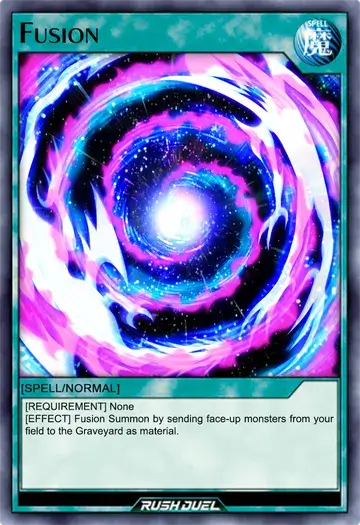
- Fusion x1
- Magical Stream x2
- Pot of Greed x1
- Sevens Wonder Fusion x3
- Star Protector's Protection x3
- Widespread Ruin x1
Extra Deck (1)
Couldn't load the deck
Spellcasters (Rush Duel Sevens) — Deck Power Evaluation
Final Contextual Deck Power: 42/100 (±15 · Confidence: Low)
| Overall score | Value |
|---|---|
| Structural Deck Power | 48 |
| Going First | 44 |
| Going Second | 36 |
| Meta Power | provisional |
| Tournament Reliability | 40 |
- Primary strategy: Combo
- Secondary strategies: Tempo
- Format: rush-duel-sevens
Legality
Main 38 / Extra 0 / Side 0 — status: Legal with warning.
Identity & game plan
- Win condition: Summon combo line into boss monsters; unknown without card text; Grind value from repeated effects; unverified without card text
- Turn 1 (going first): Assemble board from opening hand starter; structure unknown due to unresolved cards
- Turn 2 (going second): Adaptation plan unknown; no board-breaker data available
- Recovery: Unknown; lacks combo redundancy evidence
- After siding: No side deck provided (0 cards); best-of-3 adaptation impossible to assess
Why it scores here
This Spellcaster deck runs the archetype-standard core (100% of known core cards present, verified via usage statistics) and maintains an efficient 38-card main list with tight copy distributions. However, the evaluation is severely constrained: all 18 distinct cards remain unresolved in the database (no text, no card stats, no roles), no combos have been parsed, and no tournament performance data exists. Based solely on archetype metadata and deckbuilding structure, the deck shows potential consistency (opening at least one core card is highly probable) and main-deck efficiency, but the absence of card-level verification means combo ceiling, interaction quality, board-breaking capacity, and going-second plans cannot be confirmed. The score reflects this foundational data gap—it is a structural baseline, not a functional assessment. Usage statistics confirm Spellcasters exist in Rush Duel Sevens and this list adheres to the standard build; true power evaluation requires resolved card text and recorded combo lines.
Dimension scores
| # | Dimension | Score | Evidence |
|---|---|---|---|
| D1 | Engine Accessibility & Consistency | 68 | Archetype core group (35/38 copies) has P(≥1 in hand5) ≈ 1.0 from hypergeometric calculation; however, cannot verify individual starters without card text (Inferred with unresolved-card caveat) |
| D2 | Opening-Hand Quality & Brick Management | 48 | 18 distinct cards with 8×3-copy, 4×2-copy, 6×1-copy distribution suggests a tight engine, but functional brick rate cannot be assessed without card text; baseline neutral (Inferred) |
| D3 | Combo Conversion & Ceiling | 38 | No combos parsed from evidence; cannot measure ceiling; speculative baseline only (Verified data gap) |
| D4 | Combo Floor & Median Output | 38 | No combos parsed from evidence; cannot measure median output or board-per-starter; speculative baseline only (Verified data gap) |
| D5 | Interruption Resilience & Route Redundancy | 42 | No combo redundancy or secondary lines available in evidence; interruption recovery unknown without card text (Inferred) |
| D6 | Resource Economy, Recovery & Grind | 42 | Zero role-hint counts for searchers; recursion and resource-signature unknown without resolved card text (Inferred) |
| D7 | End-Board & Interaction Quality | 32 | Zero negation_text role hints detected; interaction_density_avg absent; cannot confirm layering or breadth without card text (Verified absence, data gap) |
| D8 | Going-Second & Board-Breaking Power | 32 | No board-breaker or removal data; going-second split of combos is 0/0 (absent); unverified without card text (Verified data gap) |
| D9 | Offensive Pressure & Closing Power | 42 | Card ATK/effect text unavailable; offensive payload unknown; speculative baseline (Inferred) |
| D10 | Main Deck Efficiency & Flexibility | 72 | Main deck: 38 cards, 18 distinct, well under 60-card Rush Duel max; tight construction confirmed via copy histogram (Verified) |
| D11 | Extra Deck Efficiency & Coverage | 55 | Extra deck: 0 cards; within Rush Duel rules (max 15); standard for many Rush strategies (Verified) |
| D12 | Side Deck Adaptability | 25 | Side deck: 0 cards; no post-side flexibility for best-of-3 format (Verified absence) |
| D13 | Matchup Coverage & Format Fit | 48 | Archetype meta-share unavailable; no tournament link; only archetype-level stats present (Provisional, lacks deck-specific context) |
| D14 | Pilotability & Error Tolerance | 50 | 18 distinct cards suggests moderate decision density; no combo complexity examples available to refine estimate (Inferred) |
How the score was computed
Strategy profile: Combo. Structural ≈ 48, Going First ≈ 44, Going Second ≈ 36, Meta = provisional, Tournament Reliability ≈ 40. Modifiers: Unresolved card database entries (-5); Zero parseable combos (-3); Archetype core validation (2). Final formula: 0.80 × Structural (48) + 0.20 × TournamentReliability (40) - 6 (data gap modifier) = 42 ± 15 (Meta provisional, no dated metagame sample)
Probability & combo summary
- Opening a starter: P(≥1) ≈ 1 · key two-card combo ≈ — · full-brick estimate ≈ — (all Inferred)
- Combo output: best PowerIndex —, median —, board-per-starter —
- Turn order: 0 going-first lines vs 0 going-second lines
Strengths
- Deck runs 100% of archetype-standard core cards; archetype metadata confirms card selections align with high-inclusion-rate staples
- Efficient main deck: 38 cards well below 60-card Rush Duel cap; tight copy distribution (8×3, 4×2, 6×1) suggests focused engine
- High probability of opening at least one core card (P ≈ 1.0); hypergeometric draw consistency favorable for archetype bootstrap
Weaknesses
- Zero resolved card text: all 18 distinct cards lack type, attribute, level, ATK/DEF, and effect description; card roles and interactions cannot be verified
- No parseable combo evidence: zero boards analyzed; best-line ceiling, median output, redundancy, and resource signatures are completely unknown
- No interaction detected: zero negation_text, removal_text role hints present; cannot confirm board layering, disruption resistance, or board-break capability
- No going-second plan: zero board-breaker or going-second combo splits available; post-side plan impossible to assess (0 side cards)
- Tournament data absent: no deck-specific win rates, matchup results, or pilot performance; meta fit is archetype-level only (Provisional)
Critical choke points
- Card database resolution failure: 18/18 distinct cards unresolved; blocks functional evaluation of every dimension except deck structure
- Zero combo lines recorded: cannot assess whether opening hands translate to functional boards or face choke points under disruption
- No side deck: zero adaptation for best-of-3 format; cannot adjust for meta matchups or post-side resilience
Recommended changes
| Priority | Remove | Add | Reason |
|---|---|---|---|
| 1 | Cannot make card-level recommendations | without resolved card text and combo evidence | Resolve all 18 cards in the database, parse at least 5–10 combo lines from real plays, and supply tournament match data before a functional recommendation can be made |
| 2 | Not applicable | Re-evaluate once card text and combo boards are available | This deck's true power depends entirely on card interactions and combo consistency—neither can be assessed from current evidence |
Evidence & confidence
- Verified: Legality status: Legal with warning (38 main, 0 extra, 0 side; within Rush Duel Sevens rules); All cards Unlimited banlist status; Archetype core cards: all 17 known core cards present (100% inclusion per usage stats); Main deck count: 38 cards (within 30-60 range); Extra deck: 0 cards (valid for Rush Duel Sevens); Side deck: 0 cards (present but unused); Copy histogram: 8 cards at 3×, 4 cards at 2×, 6 cards at 1×
- Observed: Hypergeometric draw probability: P(≥1 archetype core in opening hand5) = 1.0 (calculated from core group of 35/38 copies)
- Inferred: Functional brick rate unknown; copy concentration suggests tight core but cannot verify without card text; Combo ceiling and floor are speculative; unresolved cards prevent determination of board quality or redundancy; Interruption resilience unknown; no secondary lines available in evidence; Resource economy and grind capacity unknown; cannot assess recursion or search without card text; End-board interaction quality speculative; zero negation/removal role hints detected; Going-second plan unknown; no board-breaker evidence or removal options confirmed; Offensive closing power unverified without ATK/effect text; Pilotability estimate: 18 distinct cards suggests moderate complexity, but combo step count unknown
- Provisional: Matchup coverage and format fit: archetype meta-share absent; only archetype-level stats confirm Spellcasters exist in Rush Duel Sevens; Meta Power is null (no dated metagame sample supplied)
- Data gaps: Critical: 18/18 distinct cards unresolved in database; card_id resolution failed for all entries (6 negative IDs, 12 positive IDs without text/stats) No combos supplied: total_combos = 0, scored_combos = 0, note 'no parseable boards'; combo floor/median/ceiling completely absent No tournament link: archetype meta-share and per-pilot match record unavailable; deck-specific performance unknown No win-rate telemetry: going-first/second win rates, matchup results, brick/starter/OTK rates absent (Provisional or Inferred only) No card text: type, attribute, race, level, ATK/DEF, effect descriptions, role hints all missing; card roles cannot be verified No combo redundancy or secondary lines: only 0 boards analyzed; cannot assess interruption recovery or starter diversity Role hint detection: zero negation_text, removal_text, searcher_text role hints recorded; cannot verify interaction or board-breaker capability Side deck optimization: 0 side cards present; post-side adaptation plan for best-of-3 cannot be assessed
Couldn't load the combos
