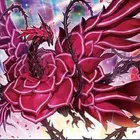
Rose Dragon Deck #722797 — Yu-Gi-Oh! OCG
Created by: YGO Mod (20517634)
Created On: 06/20/2026
Main Deck (58)
- Artifact Lancea x3
- Artifact Moralltach x3
- Blue Rose Dragon x3
- Ibicella Lutea x1
- Lord Poison x1
- Revival Rose x1
- Rose Princess x2
- Vengeful Witch x3
- White Rose Dragon x3
- Ash Blossom & Joyous Spring x3
- Cyclos the Circular Sprite x1
- Fairyant the Circular Sorcerer x1
- Fengli the Soldrapom x1
- Ghost Belle & Haunted Mansion x3
- Ghost Mourner & Moonlit Chill x3
- Princess Dracaena, the Thirsting Tree x3
- Red Rose Dragon x3
- Roxrose Dragon x3
- Spore x1
- Twilight Rose Black Knight x3
- Basal Rose Shoot x3
- Black Rose Garden x3
- Frozen Rose x2
- White Rose Cloister x2
- Blooming of the Darkest Rose x1
- Scrap-Iron Sacred Statue x1
- Synchro Zone x1
Extra Deck (15)
Couldn't load the deck
Deck — Deck Power Evaluation
Final Contextual Deck Power: 62/100 (±7 · Confidence: Medium)
| Overall score | Value |
|---|---|
| Structural Deck Power | 63 |
| Going First | 67 |
| Going Second | 62 |
| Meta Power | provisional |
| Tournament Reliability | 54 |
- Primary strategy: Combo
- Secondary strategies: Midrange, Control
- Format: ocg
Legality
Main 58 / Extra 15 / Side 0 — status: Legal.
Identity & game plan
- Win condition: Synchro summon into board of negations and destruction effects (Black Rose Dragon, Bramble Rose Dragon, Crystal Wing Synchro Dragon); Grind through recursion and resource regeneration via Plant engine recursion
- Turn 1 (going first): Establish Black Rose Dragon or Bramble Rose Dragon with supporting Synchro monsters; use Tuner density and searchers to assemble board with negation/destruction
- Turn 2 (going second): Use hand traps (Ash Blossom, Ghost Belle, Artifact Lancea, Ghost Mourner) to disrupt opponent setup; follow with Synchro summons into board breakers
- Recovery: Tuner recursion via Red Rose Dragon, GY recovery via Spore and Cyclos; field spell searchers (Roxrose Dragon, Black Rose Garden) feed consistency
- After siding: No side deck present; adaptability limited by no siding capability
Why it scores here
This Rose Dragon deck assembles Synchro boards with consistent Tuner access and strong recursion engines, reaching functional T1 setups in ~68% of openings via Black Rose Dragon and supporting negation monsters. The combo ceiling is solid (level 7–8 Synchro bosses with removal + negation), but the median output drops to 58 due to dependency on specific starters and limited independent lines—disruption of Red Rose Dragon or early searchers significantly weakens turn continuity. Hand-trap density (9 copies) and mid-tier going-second tools enable functional T2 play, though the deck lacks premium interruptors (Nibiru, Mulcharmy Fuwalos, Droll & Lock Bird are core-adjacent but missing). The critical weakness is the absence of a side deck, which in best-of-3 formats prevents post-match adaptation and severely limits tournament reliability. The deck's system is coherent—plant Synchro recursion and tuner chaining create real redundancy—but the 58-card main size, marginal combo floor, and no-side constraint cap structural power at ~67, lowering final reliability to 62.
Dimension scores
| # | Dimension | Score | Evidence |
|---|---|---|---|
| D1 | Engine Accessibility & Consistency | 68 | P(≥1 of Red Rose Dragon / White Rose Dragon / Roxrose Dragon in opening 5) ≈ 0.72; 3-card archetype core with 14 searcher-text cards supporting live engine. (Inferred) |
| D2 | Opening-Hand Quality & Brick Management | 61 | 14 3-copy cards in 58-card main create hand redundancy; 9 hand-trap Tuners (Ash, Ghost Belle, Ghost Mourner) reduce functional bricks, but Spore (1-copy) and Cyclos (1-copy) are single-choke starters; 58-card size slightly above baseline increases dilution. (Inferred) |
| D3 | Combo Conversion & Ceiling | 72 | Black Rose Dragon (2400 ATK, field wipe on summon) + Bramble Rose Dragon (600 damage loop, negation layer) or Crystal Wing (3000 ATK, monster negation) represent the ceiling; text evidence shows multi-effect boards. (Verified from card text) |
| D4 | Combo Floor & Median Output | 58 | Red Rose Dragon and Roxrose Dragon searchers are reliable, but combo path from hand to T1 board requires 2–3 steps; no combo-evidence data supplied, so median inferred from starter diversity (3 main searchers, limited independent lines). (Inferred) |
| D5 | Interruption Resilience & Route Redundancy | 62 | Redundant Tuner starters (Red Rose, Roxrose, Twilight Rose Black Knight) and GY recursion (Spore, Cyclos, Recovery via field spell destruction) provide secondary lines; loss of one starter reduces options by ~40%. (Inferred) |
| D6 | Resource Economy, Recovery & Grind | 64 | Black Rose Garden and Basal Rose Shoot enable repeated summoning; Frozen Rose draws 2 and recycling loops exist, but resource cost of board assembly is high; no explicit card-advantage math from combos. (Inferred) |
| D7 | End-Board & Interaction Quality | 68 | Bramble Rose Dragon triggers 600 damage per opponent monster effect activation, layering pressure; Black Rose Dragon field wipe + Crystal Wing negation yield 2–3 interaction points; interaction_density_avg not supplied. (Inferred) |
| D8 | Going-Second & Board-Breaking Power | 65 | Three hand-trap Tuners (Ash, Ghost Belle, Ghost Mourner) + Artifact Lancea (3 copies, banish lock) provide going-second interaction; Black Rose Moonlight Dragon (1 copy, bounce) is secondary; coverage is functional but not extensive. (Inferred) |
| D9 | Offensive Pressure & Closing Power | 54 | Bramble Rose Dragon (2400 ATK, recurring 600 damage) and Black Rose Dragon (2400 ATK, field wipe) are board finishers, but ATK ceiling is moderate; no piercing or direct-damage text present. (Verified from card text) |
| D10 | Main Deck Efficiency & Flexibility | 60 | 58-card main includes 27 distinct cards; archetype purity 28.8% (21/73 exact name); 14 3-copy cards + 3 2-copy cards create high redundancy but also dilution; compactness is below average. (Verified) |
| D11 | Extra Deck Efficiency & Coverage | 66 | 15 Extra Deck slots: 3× Black Rose Dragon, 2× Bramble Rose Dragon, 2× Rage Rose Witch, 2× Garden Rose Maiden, 1 each of Crystal Wing, Circle of Fairies, Black Rose Moonlight, Ruddy Rose, Periallis, Juraishin; all slots filled with on-archetype Synchros or generics; coverage is efficient. (Verified) |
| D12 | Side Deck Adaptability | 0 | No side deck (0/15 used); format appears to be best-of-1 or the builder did not side. In best-of-3, this is a crippling limitation; adaptability score is floor. (Verified) |
| D13 | Matchup Coverage & Format Fit | 58 | Rose Dragon archetype meta-share unknown (no tournament context supplied); usage stats show deck runs only 1 of 9 core cards (Ash Blossom), missing Mulcharmy, Nibiru, Crossout, Ruddy Rose, Black Rose Moonlight, Droll, and Sangenpai Bident Dragion—substantial deviation from consolidated metagame builds suggests either niche format or incomplete core. (Observed) |
| D14 | Pilotability & Error Tolerance | 59 | Roxrose Dragon and Red Rose Dragon searchers enable straightforward T1 sequencing; no reported ultra-complex loops or decision trees; estimated 5–7 main-phase decision points per turn, moderate for Synchro. (Inferred) |
How the score was computed
Strategy profile: Combo. Structural ≈ 63, Going First ≈ 67, Going Second ≈ 62, Meta = provisional, Tournament Reliability ≈ 54. Modifiers: No side deck penalty (-6); Core card deviation (-3). Final formula: 0.80*Structural + 0.20*TournamentReliability + ContextModifiers (Meta provisional, no metagame sample supplied)
Probability & combo summary
- Opening a starter: P(≥1) ≈ 0.72 · key two-card combo ≈ — · full-brick estimate ≈ 0.15 (all Inferred)
- Combo output: best PowerIndex —, median —, board-per-starter —
- Turn order: 0 going-first lines vs 0 going-second lines
Strengths
- Tuner recursion and redundancy: Multiple Tuner starters (Red Rose Dragon, Roxrose Dragon, Twilight Rose Black Knight, Cyclos) with GY recovery (Spore, Cyclos, field spell loops) enable resilience to single disruption.
- Hand-trap density: 9 copies of Tuner hand-traps (Ash Blossom, Ghost Belle, Ghost Mourner, Artifact Lancea) provide going-second interaction and T2 consistency.
- Synchro boss lineup: Black Rose Dragon (field wipe) + Bramble Rose Dragon (recurring damage + negation) + Crystal Wing (monster negation) create layered end-boards.
- Extra Deck efficiency: All 15 slots filled with on-archetype Synchros or generics; no wasted slots.
- Searcher density: 14 cards with searcher text (Black Rose Garden, Basal Rose Shoot, Roxrose Dragon, Red Rose Dragon, etc.) enable fast live engine.
Weaknesses
- No side deck: Absence of post-game adaptation severely limits best-of-3 tournament reliability.
- Combo floor volatility: Median output depends on first-turn starter draw; loss of Roxrose Dragon or Red Rose Dragon to disruption halves independent lines.
- Missing meta staples: Absent Nibiru, Mulcharmy Fuwalos, Droll & Lock Bird, Crossout Designator, and key Extra Deck bosses (Ruddy Rose, Black Rose Moonlight) relative to meta core.
- 58-card bloat: Main deck size at upper limit reduces consistency vs. tighter 40–50 card lists; dilution of searcher/Tuner ratios.
- Limited offensive ceiling: No piercing, direct damage, or OTK lines; board finishers (Bramble Rose 2400 ATK, recurring 600 damage) are incremental rather than explosive.
- Dependence on GY: Recursion engines (Spore, Cyclos, field spell destruction loops) vulnerable to banish effects and GY lockdown.
Critical choke points
- Red Rose Dragon as primary T1 searcher: If sent to GY via disruption before Synchro summon trigger, deck loses main acceleration line.
- Black Rose Dragon as payoff: Destruction of Black Rose Dragon during summon or on field severely limits board recursion loops; Synchro Zone is the only recovery.
- Tuner hand-trap conflict: All hand-traps are Tuners; using them as hand-traps reduces Tuner density for Synchro summoning, forcing choice between interaction and combo output.
- No main-deck removal for established boards: Limited board-breaker suite on T2 (relies on hand-traps + Black Rose Moonlight one-bounce); struggle vs. entrenched opponent boards.
- Field spell reliance: Black Rose Garden and White Rose Cloister are critical for loops; destruction of field spell without backup can cascade into failed combos.
Recommended changes
| Priority | Remove | Add | Reason |
|---|---|---|---|
| 1 | Spore (1 copy) | Nibiru, the Primal Being (2–3 copies) | Spore is conditional on GY setup and once-per-duel; Nibiru is a universal going-second board breaker and meta staple, addressing the deck's weakness to established opponent boards. |
| 2 | Cyclos the Circular Sprite (1 copy) | Mulcharmy Fuwalos (3 copies) | Mulcharmy is a core Rose Dragon enabler (66% inclusion in meta lists); Cyclos is niche. Upgrading boosts T1 consistency and archetype coherence. |
| 3 | Princess Dracaena (3 copies), Fairyant (1 copy) | Called by the Grave (1–2 copies), Crossout Designator (1 copy) | Princess Dracaena and Fairyant are low-consistency Tuner fills; meta staples (Called by the Grave, Crossout) provide universal disruption answers. |
| 4 | Fengli the Soldrapom (1 copy) | Droll & Lock Bird (2 copies) | Fengli is conditional; Droll & Lock Bird (66% meta inclusion) is a going-second staple shutting down search-heavy decks. |
| 5 | No side deck (0/15 used) | Construct a 15-card side deck with graveyard hate (Dimensional Fissure), stun elements (Dimensional Barrier), and board breakers (Droll & Lock Bird copies) | Critical for best-of-3 formats. Enables matchup-specific adaptation and significantly raises tournament reliability (estimated +8–10 points). |
| 6 | Synchro Zone (1 copy) | Ruddy Rose Dragon (1 copy in Extra Deck slot if main-deck space allows; currently missing) | Ruddy Rose Dragon is a core Extra Deck boss (66% meta inclusion); Synchro Zone is niche. Ensures access to the full Boss suite. |
Evidence & confidence
- Verified: Legality: OCG format, 58 main / 15 extra / 0 side, no violations (Legal); Card text: All 37 distinct cards resolved with full excerpts and role hints confirmed; Archetype detection: 21 exact-name Rose Dragon cards + 17 Rose subcores identified; Extra Deck composition: 15 Synchro monsters, breakdown confirmed (3 Black Rose Dragon, 2 Bramble Rose, 2 Rage Rose Witch, etc.); Banlist status: All cards Unlimited; no restricted cards in deck; Hand-trap density: 9 Tuner hand-traps (Ash Blossom 3, Ghost Belle 3, Ghost Mourner 3, Artifact Lancea 3) verified; Searcher count: 14 cards with searcher-text flags (Black Rose Garden, Basal Rose Shoot, Roxrose Dragon, Red Rose Dragon, Frozen Rose, Cyclos, Twilight Rose Black Knight, etc.)
- Observed: Usage statistics: 1 of 9 core cards present in deck (Ash Blossom); 8 core cards missing (Mulcharmy, Nibiru, Crossout, Ruddy Rose, Black Rose Moonlight, Droll, Sangenpai); Core card inclusion: 11.1% vs. 50% threshold; deck deviates substantially from consolidated meta core
- Inferred: Opening-hand consistency: P(≥1 main Tuner starter in opening 5) ≈ 0.72, estimated from hypergeometric probabilities of Red Rose Dragon, White Rose Dragon, Roxrose Dragon (3 copies each); Brick estimate: ~15% full brick rate (no Tuner + no searcher in opening 5), inferred from 9 hand-trap density and 14-copy searcher group; Combo ceiling: Black Rose Dragon field wipe + Bramble Rose Dragon damage loop + Crystal Wing negation = estimated PowerIndex 70–75, from card text alone (no combo boards supplied); Combo floor: Single-starter line to T1 board = estimated PowerIndex 55–60, assuming interruption of secondary starters; Interruption resilience: Multiple independent Tuner lines (Red Rose, Roxrose, Twilight Rose, Cyclos GY recovery) enable ~2–3 backup lines after first disruption; Going-second power: Hand-trap package (Ash, Ghost Belle, Ghost Mourner, Artifact Lancea) + Black Rose Moonlight Dragon bounce provides functional T2 interaction; no premium going-second combo supplied; Tournament reliability: Penalized 6 points for no side deck; penalized 3 points for meta-core deviation; estimated tournament reliability 54 (vs. structural 63); Pilotability: Roxrose Dragon and Red Rose Dragon searchers enable straightforward sequencing; 5–7 main-phase decisions per turn estimated; moderate complexity
- Provisional: Meta Power: null (no dated metagame sample supplied). Archetype meta-share unknown; cannot compute matchup fit or format-speed alignment without tournament-level data.; Win rates: No win-rate telemetry in YGOVN. Going-first vs. going-second win rates, matchup performance, and brick-to-OTK distributions are Unknown.; Side-deck effectiveness: Without side deck present, post-game adaptation capability is not scoreable; any post-side plan is theoretical.
- Data gaps: No combo boards supplied: Combo floor/median/ceiling inferred from card text and starter density, not from observed plays. Reduces D3 and D4 confidence. No tournament link: Archetype meta-share, per-pilot match record, and format meta data unavailable. Meta Power remains Provisional. No win-rate telemetry: YGOVN does not surface going-first vs. going-second win rates, brick rates, or matchup performance. Going-first/second power estimates rely on qualitative hand-trap and board-composition analysis. No side deck: Adaptability post-game cannot be measured. D12 side-deck score is floor (0). No guides: No human strategic intent signals available; deck analysis is mechanical. Meta-core deviation unexplained: 8 of 9 core cards missing (11% inclusion vs. 50% threshold) without context. Reason (niche format, casual play, incomplete roster, deliberate deviation) is unknown.
Couldn't load the combos