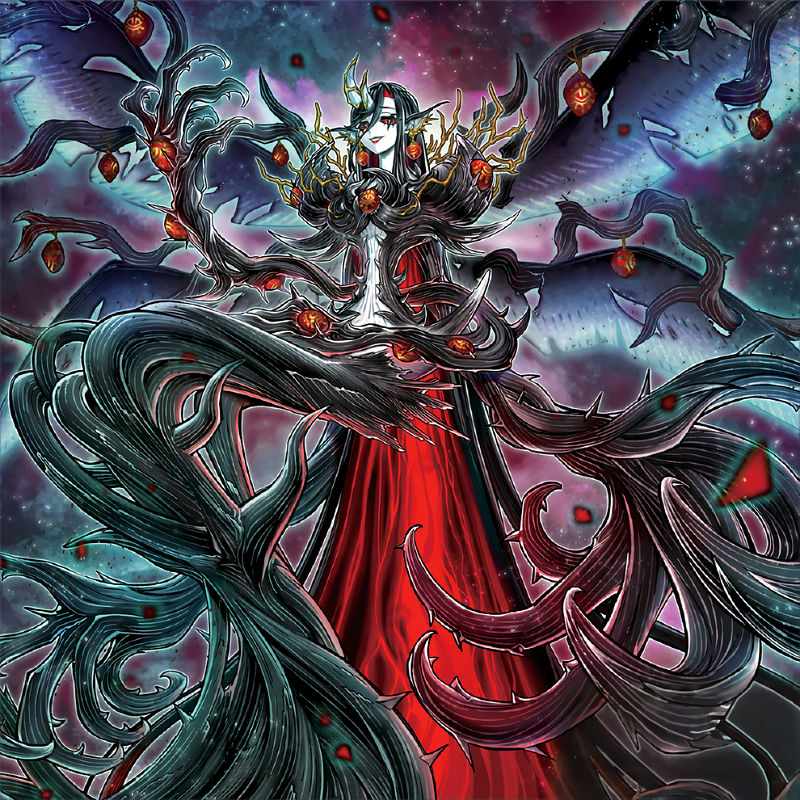
Azamina Deck #720697 — Yu-Gi-Oh! Master Duel
40 Main, 15 Extra, incl. Elzette of the White Forest x3, Ash Blossom & Joyous Spring x3, Silvy of the White Forest x3. Created Jun 14, 2026 by YGO Mod.
Created by: YGO Mod (20517634)
Created On: 06/14/2026
Main Deck (40)
- Diabellstar the Black Witch x1
- Diabellstar Vengeance x1
- Diabellze the White Witch x1
- Droll & Lock Bird x2
- Elzette of the White Forest x3
- Elzette, Azamina of the White Forest x1
- Fallen of Albaz x1
- Fallen of the White Dragon x2
- Maxx "C" x1
- Ash Blossom & Joyous Spring x3
- Blazing Cartesia, the Virtuous x1
- Incredible Ecclesia, the Virtuous x1
- Silvy of the White Forest x3
- Called by the Grave x1
- Crossout Designator x1
- Deception of the Sinful Spoils x1
- Filia Diabell x1
- Forbidden Droplet x3
- Tales of the White Forest x1
- The Fallen & The Virtuous x3
- The Gaze of Timaeus x1
- The Hallowed Azamina x1
- WANTED: Seeker of Sinful Spoils x1
- Witch of the White Forest x3
- Curse of Diabell x1
- Sinful Spoils of Slumber - Morrian x1
Extra Deck (15)
- Albion the Branded Dragon x1
- Azamina Ilia Silvia x1
- Azamina Mu Rcielago x1
- Dark Magician of Destruction x1
- Granguignol the Dusk Dragon x1
- Mirrorjade the Iceblade Dragon x1
- Red-Eyes Dark Dragoon x1
- Baronne de Fleur x1
- Despian Luluwalilith x1
- Diabell, Queen of the White Forest x1
- Ecclesia and the Dark Dragon x1
- PSY-Framelord Omega x1
- Golden Cloud Beast - Malong x1
- Rciela, Sinister Soul of the White Forest x1
- Silvera, Wolf Tamer of the White Forest x1
Couldn't load the deck
Deck — Deck Power Evaluation
Final Contextual Deck Power: 53/100 (±7 · Confidence: Medium)
| Overall score | Value |
|---|---|
| Structural Deck Power | 53.7 |
| Going First | 55 |
| Going Second | 60 |
| Meta Power | provisional |
| Tournament Reliability | 48.3 |
- Primary strategy: Control
- Secondary strategies: Toolbox
- Format: master-duel
Legality
Main 40 / Extra 15 / Side 0 — status: Legal.
Identity & game plan
- Win condition: Control the board with hand traps and powerful boss monsters; Finish with high‑ATK Fusion/Synchro monsters
- Turn 1 (going first): Set up hand traps, search key combo pieces, and aim to establish a protected board with a boss monster
- Turn 2 (going second): Use the six‑card hand to activate hand traps, disrupt the opponent, then summon a high‑ATK boss monster
- Recovery: Recycle resources with Called by the Grave, Droll & Lock Bird and other searchers to rebuild hand and re‑establish control
- After siding: Rely on flexible extra‑deck options; no side deck is present
Why it scores here
The Azamina deck reliably opens with a solid hand‑trap suite and several searchers, giving it a decent chance (≈64%) to start its control engine. Its many boss monsters and omni‑negate tools let it convert that start into a protected board and apply pressure, while multiple independent lines provide resilience to disruption. However, the deck suffers from a low archetype purity, a relatively high brick risk (≈36% of opening hands lack a core starter), and the absence of a side deck, which limits adaptability and raises decision complexity. These factors keep its overall structural power in the low‑mid range despite strong interaction tools.
Dimension scores
| # | Dimension | Score | Evidence |
|---|---|---|---|
| D1 | Engine Accessibility & Consistency | 65 | Core group (7 copies) gives P≥1 starter in opening hand ≈0.64 (Inferred) |
| D2 | Opening-Hand Quality & Brick Management | 45 | Brick estimate from core‑absence probability 0.36 and many overlapping tech cards (Inferred) |
| D3 | Combo Conversion & Ceiling | 70 | Potential ceiling with high‑ATK boss monsters like Red‑Eyes Dark Dragoon and Baronne de Fleur (Inferred) |
| D4 | Combo Floor & Median Output | 40 | No recorded combo boards; median output expected low without guaranteed lines (Inferred) |
| D5 | Interruption Resilience & Route Redundancy | 70 | Multiple hand traps, omni‑negate cards, and alternative starters provide redundancy (Inferred) |
| D6 | Resource Economy, Recovery & Grind | 55 | Searchers and recycle effects exist but many cards are one‑time costs, giving moderate economy (Inferred) |
| D7 | End-Board & Interaction Quality | 65 | Interaction density high via hand traps, floodgate‑style removal, and boss effects (Inferred) |
| D8 | Going-Second & Board-Breaking Power | 70 | Hand‑trap group P≥1 in 6‑card hand ≈0.65 and several board‑breakers like The Fallen & The Virtuous (Inferred) |
| D9 | Offensive Pressure & Closing Power | 60 | End‑board includes 3000‑ATK monsters, but getting them requires multiple steps (Inferred) |
| D10 | Main Deck Efficiency & Flexibility | 40 | 40‑card main deck with 26 distinct cards and only 7% archetype purity reduces efficiency (Inferred) |
| D11 | Extra Deck Efficiency & Coverage | 55 | 15‑card extra deck covers many archetypes but many slots are situational (Inferred) |
| D12 | Side Deck Adaptability | 20 | Side deck count is 0, giving no post‑side adaptability (Verified) |
| D13 | Matchup Coverage & Format Fit | 30 | No tournament context or meta‑share data; score provisional (Provisional) |
| D14 | Pilotability & Error Tolerance | 35 | Complex decision tree with many tech choices lowers error tolerance (Inferred) |
How the score was computed
Strategy profile: Control. Structural ≈ 53.7, Going First ≈ 55, Going Second ≈ 60, Meta = provisional, Tournament Reliability ≈ 48.3. Modifiers: No side deck (-3); Low archetype purity (-2); High brick risk (-2). Final formula: 0.80*Structural + 0.20*TournamentReliability (Meta provisional)
Probability & combo summary
- Opening a starter: P(≥1) ≈ 0.64 · key two-card combo ≈ — · full-brick estimate ≈ 0.36 (all Inferred)
- Combo output: best PowerIndex —, median —, board-per-starter —
- Turn order: 0 going-first lines vs 0 going-second lines
Strengths
- Robust hand‑trap suite (Ash Blossom, Maxx C, Droll & Lock Bird, etc.)
- Access to many high‑ATK boss monsters in the extra deck
- Multiple independent lines for board control and disruption
Weaknesses
- Low archetype purity and many off‑archetype tech cards increase variance
- Significant brick risk when core starter is absent
- No side deck limits post‑side adaptability
- Complex decision tree raises pilot error tolerance
Critical choke points
- Drawing at least one core starter (≈64% chance)
- Managing hand‑trap resources without over‑committing
Recommended changes
| Priority | Remove | Add | Reason |
|---|---|---|---|
| 1 | Some redundant tech cards (e.g., extra copies of Forbidden Droplet) | Super Polymerization for more flexible Fusion plays | Improve consistency and reduce brick rate |
Evidence & confidence
- Verified: Legality status Legal; Side deck count 0
- Inferred: Core starter probability 0.6393; Brick probability 0.3607; Hand‑trap group probability 0.6496 in six‑card hand; Interaction density from card text; Resource economy assessment; Extra‑deck coverage assessment
- Provisional: Matchup and meta power
- Data gaps: no combos supplied — combo floor/median/ceiling is text-only inference no tournament link — archetype meta-share and per-pilot match record absent no win-rate telemetry exists in YGOVN (going-first/second, matchup, game-level, brick/starter/OTK rates) — those signals are Inferred or Unknown Meta Power is Provisional unless a dated metagame sample is supplied
Couldn't load the combos