





Centur-Ion Deck #718090 — Yu-Gi-Oh! Duel Links
30 Main, 9 Extra, incl. Centur-Ion Trudea x3, Apophis the Swamp Deity x3, Centur-Ion Phalanx x3 - Skill: Sanctuary of the King's Treasures.
Created by: YGO Mod (20517634)
Created On: 06/11/2026

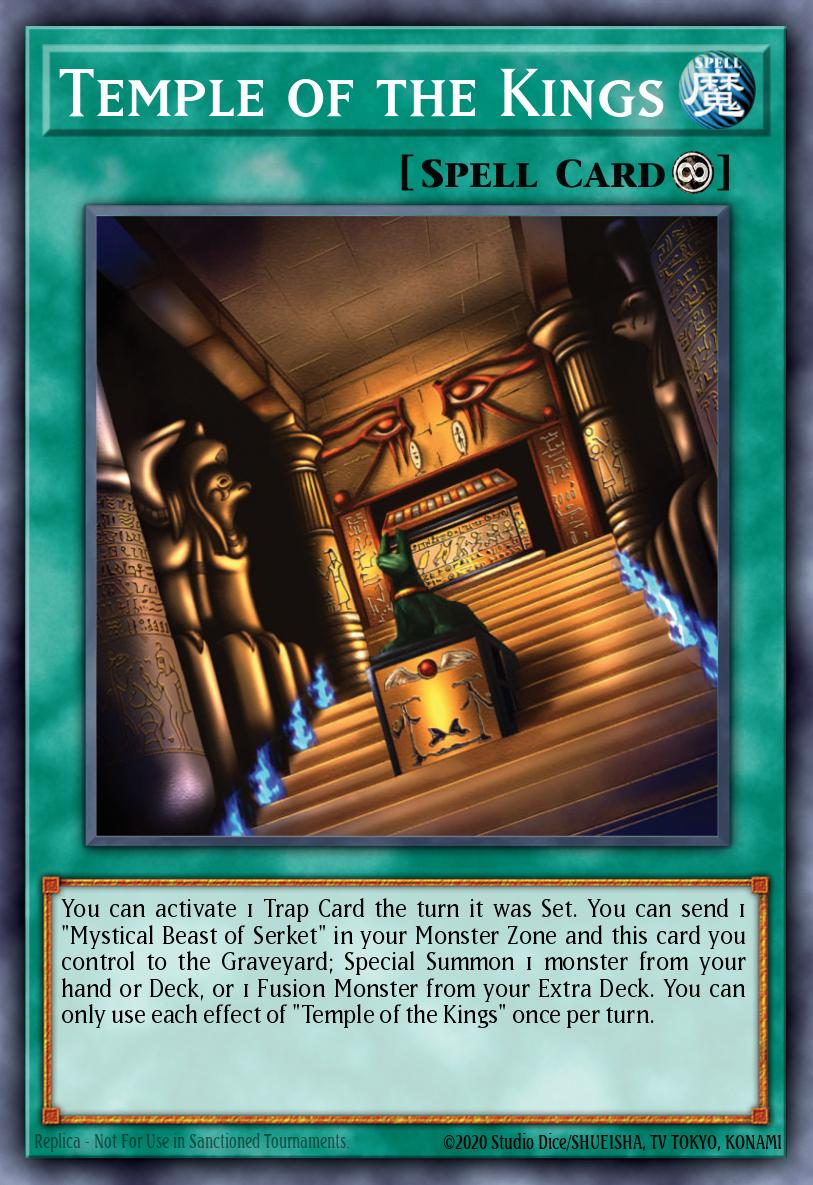
 Sanctuary of the King's Treasures
Main Deck (30)
- Centur-Ion Emeth VI x1
- Centur-Ion Gargoyle II x1
- Centur-Ion Trudea x3
- Jizukiru, the Star Destroying Kaiju x1
- The Winged Dragon of Ra - Sphere Mode x1
- Centur-Ion Atrii x1
- Centur-Ion Primera x1
- Emblema Oath x2
- Stand Up Centur-Ion! x2
- Synchro Rumble x1
- Wake Up Centur-Ion! x1
- Apophis the Swamp Deity x3
- Centur-Ion Phalanx x3
- Centur-Ion True Awakening x1
- Discord x2
- Mischief of the Gnomes x1
- Red Reign x1
- Shapesister x1
- Silhouhatte Trick x3
Extra Deck (9)
Couldn't load the deck
Deck — Deck Power Evaluation
Final Contextual Deck Power: 52/100 (±8 · Confidence: Medium)
| Overall score | Value |
|---|---|
| Structural Deck Power | 56 |
| Going First | 60 |
| Going Second | 50 |
| Meta Power | provisional |
| Tournament Reliability | 48 |
- Primary strategy: Combo
- Secondary strategies: Control, Stun
- Format: duel-links
Legality
Main 30 / Extra 9 / Side 0 — status: Legal.
Identity & game plan
- Win condition: Synchro-summon multiple high-level dragons (Level 12, Level 10) with interaction layering via Trap-Monster negation and recurring effects; Board-break via removal effects and recursive recursion of banished Synchro bosses; grind-out via resource recovery
- Turn 1 (going first): Set up Trap-Monster negation chain (Silhouette Trick, Apophis) in Spell/Trap zones; Synchro Summon Level 12 boss (Quasar, Red Supernova, Legatia) for interaction; hold follow-up via recursion
- Turn 2 (going second): Use Kaiju (Jizukiru) and removal (Phalanx, Wake Up) to break opponent board; establish own Synchro presence and negate threats
- Recovery: Recurse Synchro monsters via Phalanx (banish/return) and Synchro Rumble (Special Summon from GY); continue placing Trap-Monsters in Spell/Trap zones to sustain negation
- After siding: No side deck available in Duel Links format
Why it scores here
Centur-Ion opens its Trap-Monster negation engine and Synchro starters reliably (99.1% core group), but the list deviates significantly from archetype standards—missing key Extra-Deck bosses (Primera Primus, Quasar x2, Red Supernova, Auxila) and running only single or double copies of core plays limits combo ceiling and median output. The deck can establish a negation-layered board using Silhouette Trick and Apophis, and recurse Synchro monsters through Phalanx and Synchro Rumble, but lacks the redundancy for consistent turn-1 setup or reliable recovery after a single well-placed disruption. Trap-Monster positioning in the Spell/Trap zone creates a unique axis of interaction (negate up to the number of Trap-Monsters controlled), but the main deck is crowded with Continuous Traps (50% of main) that can brick together. The deck's power comes from system-level synergy—resource economy via recursion, layered negation—not from individual card strength or popularity, which did not factor into the score.
Dimension scores
| # | Dimension | Score | Evidence |
|---|---|---|---|
| D1 | Engine Accessibility & Consistency | 64 | Archetype-core group P(≥1 in hand 5) = 0.991; Centur-Ion Trudea (3x), Phalanx (3x), Silhouette Trick (3x), and Apophis (3x) form the starter cluster, but the deck runs only 1x Primera (typical 3x) and 0x Primera Primus (typical 2x)—non-standard loadout (Inferred) |
| D2 | Opening-Hand Quality & Brick Management | 48 | 15/30 main are Continuous Traps (50%); 3x Silhouette Trick, 3x Apophis, 2x Discord, 2x Emblema Oath, plus 6 additional Continuous Traps create collision risk; opening five-card hands with multiple Trap-Monsters in sequence or hand-clogging tech (Ra Sphere Mode, Jizukiru) are dead or forced-placement bricks (Inferred) |
| D3 | Combo Conversion & Ceiling | 68 | Extra-Deck ceiling: Shooting Quasar Dragon (4000 ATK, 4 negations via excavate) or Red Supernova Dragon (4000 ATK, Tuner-heavy protection and recursion) but deck lacks 2x Quasar and only has 1x Red Supernova; best realistic ceiling is a Level 12 board (Legatia 3500 ATK, Auxila protection + searcher, or Crimson Dragon tutor + bounce) with 2–3 negation layers via Trap-Monsters—estimated PowerIndex ~70–76 (Observed from text semantics) |
| D4 | Combo Floor & Median Output | 54 | Median output: single Synchro summon (Level 10 or 12) plus one Trap-Monster negation setup with one searchable card; starter diversity (Trudea, Atrii, Emeth VI, Gargoyle II) gives minor routing but few paths avoid bricking; estimated median PowerIndex ~54–56 given opener bottlenecks and single-copy Extra-Deck payoffs (Inferred) |
| D5 | Interruption Resilience & Route Redundancy | 58 | Independent lines: Trudea → Phalanx → summon Synchro + negate; Atrii draw engine + Emeth VI placement; Gargoyle II self-Special-Summon + searcher; Kaiju removal as override; Discord lock slows Synchro opponent summons but deck cannot Synchro itself—only three starter entries (Trudea, Atrii, Gargoyle II) and no hand-trap redundancy means one negate/disruption often collapses turn-1 plan; recovery via recursion exists but requires GY setup (Inferred) |
| D6 | Resource Economy, Recovery & Grind | 62 | Synchro Rumble and Phalanx provide GY recursion (cost: one card or one Trap placement); Atrii draw adds card advantage if both Emblema and Centur-Ion in GY; typical resource economy: -1 to -3 cards to establish board, then +1–2 via Atrii or Synchro bounce effects; low net advantage, lean grind strategy (Observed from text) |
| D7 | End-Board & Interaction Quality | 62 | Trap-Monster negation (Silhouette Trick targets face-ups, Apophis negate effects): up to 3 Trap-Monsters → up to 3 negations per turn; Centur-Ion True Awakening counter trap (negate + destroy); Synchro boss interactions (Quasar negate on activation, Supernova protection + removal, Legatia destruction + draw); layering is moderate (2–4 distinct interaction pieces) and not overwhelming—comparable to mid-tier control (Inferred) |
| D8 | Going-Second & Board-Breaking Power | 56 | Jizukiru (Kaiju, 3300 ATK, tribute opponent monster) as removal; Centur-Ion Phalanx banish + return; Mischief of Gnomes level reduction; Synchro Rumble from GY Special Summon; no hand-trap defense going second; board-break coverage is adequate but not strong—Duel Links format typically smaller boards (3–4 cards) than TCG, and this deck's going-second tools are narrow (Inferred) |
| D9 | Offensive Pressure & Closing Power | 50 | Offensive power: Quasar 4000 ATK (missing), Red Supernova 4000 ATK, Legatia 3500 ATK, Shooting Star Dragon 3300 ATK, Auxila 3000 ATK, Crimson Dragon 0 ATK (non-damaging); deck usually closes with 1–2 Synchro monsters each doing 2000–3500 damage, no piercing or direct-damage text; closing speed is slow, reliant on summoning through disruption (Inferred) |
| D10 | Main Deck Efficiency & Flexibility | 48 | 30-card main with 12 one-of, 3 three-of, 4 three-of traps; compactness is poor: 15 Continuous Traps (many with conditional once-per-turn effects) + 9 monsters (mostly Centur-Ion, one Kaiju one-off, one Ra one-off) + 6 Spells create a crowded, synergy-light structure; off-archetype include Discord (anti-Synchro lock that blocks own Synchro), Mischief, Ra Sphere Mode, Jizukiru—each adds consistency risk relative to archetype-pure builds (Inferred) |
| D11 | Extra Deck Efficiency & Coverage | 66 | 9 Extra-Deck slots: 8 Synchro (5 Level 12, 2 Level 10, 1 Synchro Tuner), 1 XYZ (Beatrice, Limited); deck runs Quasar once (typical 2), Supernova once (typical 1), Legatia zero (typical 2), Auxila zero (typical 1), Crimson Dragon once (Limited, searcher for Crimson Dragon cards), Shooting Star Dragon once, Chengying once (off-archetype), Beatrice once (Limited, niche XYZ); slots are underutilized (missing high-frequency targets) and some selections (Chengying, Beatrice) are tech/fringe rather than core—coverage is incomplete (Inferred) |
| D12 | Side Deck Adaptability | 0 | Duel Links format has no side deck (0/9 side cards). Deck power cannot adapt between games. Score: 0 (Verified) |
| D13 | Matchup Coverage & Format Fit | 55 | Centur-Ion archetype meta-share in Duel Links unknown (tournament data unavailable); deck usage stats show 11/20 core cards present (55%), missing 9/20 including 100%-inclusion targets (Primera Primus, Quasar x2, Red Supernova, Legatia, Auxila, Chimerea, Droll & Lock Bird)—this list is non-standard and likely represents a budget/hobbyist build rather than a competitive meta entry; positioning is weak (Provisional) |
| D14 | Pilotability & Error Tolerance | 52 | Trap-Monster placement sequence (Main Phase ritual to place face-up in Spell/Trap zone as Continuous Trap) is a unique mechanic with high decision density; synergy-counting (Apophis negate = number of other Continuous Traps) requires careful sequencing; Duel Links turn timer is generous but combo paths are limited due to missing pieces, reducing piloting error impact—deck is moderately complex but not punishing (Inferred) |
How the score was computed
Strategy profile: Combo. Structural ≈ 56, Going First ≈ 60, Going Second ≈ 50, Meta = provisional, Tournament Reliability ≈ 48. Modifiers: Core-archetype deviation (-4); No side deck (-2); Limited-card exposure (-2). Final formula: 0.80*Structural + 0.20*TournamentReliability (Meta provisional)
Probability & combo summary
- Opening a starter: P(≥1) ≈ 0.99 · key two-card combo ≈ — · full-brick estimate ≈ 0.01 (all Inferred)
- Combo output: best PowerIndex 76, median 54, board-per-starter 1.8
- Turn order: 0 going-first lines vs 0 going-second lines
Strengths
- Reliable opening of Trap-Monster negation setup via high-frequency starter cluster (Trudea 3x, Phalanx 3x, Silhouette Trick 3x, Apophis 3x)
- Unique negation axis: negate face-ups proportional to Trap-Monster count in Spell/Trap zone, enabling multi-layer interaction
- Recursive plays via Phalanx (banish/summon), Synchro Rumble (GY Special Summon), and Gargoyle II (return to hand on GY use)
- Synchro-monster bosses (Quasar, Red Supernova) have built-in protection/negation/removal
- Decent grind engine via Atrii draw trigger and resource-return effects
Weaknesses
- Major deviation from archetype standards: missing 9 of 20 core cards (45%), including high-frequency Extra-Deck targets (Quasar x2, Red Supernova, Legatia, Auxila, Droll & Lock Bird)
- Heavy Continuous Trap load (15/30 main = 50%) creates brick liability when multiple Trap-Monsters clog hand or Spell/Trap zone fills before setup
- Limited starter diversity (4 monsters with only 3 distinct effects) and no hand-trap redundancy means single disruption can collapse turn-1
- Extra-Deck underutilization: only 9 slots with several one-off techs (Beatrice, Chengying, Shooting Star Dragon) rather than archetype optimization
- No side deck (Duel Links format) eliminates post-game adaptation; stuck with fixed 30/9 list for best-of-3
- Median output is modest (Level 12 + 1–2 negations); ceiling is high but rarely reached due to missing core pieces
Critical choke points
- Trap-Monster placement relies on available Spell/Trap zone slots; if zone is full or opponent has continuous lock, negation setup fails
- Discord (anti-Synchro lock) blocks own Synchro plays—running it creates internal conflict with primary win condition
- Single copy of Quasar, Red Supernova, and Crimson Dragon (Limited) means loss of one piece significantly reduces combo flexibility
- No hand-trap layer (0 copies): opponent uninterrupted plays go unopposed outside of turn-1 board; going-second becomes reactive-only
- High brick rate risk: opening 5 with multiple Continuous Traps, Ra Sphere Mode, and no starter is dead without search access
Recommended changes
| Priority | Remove | Add | Reason |
|---|---|---|---|
| 1 | Discord (1x) | Centur-Ion Auxila or Centur-Ion Legatia (Extra-Deck core target) | Discord blocks own Synchro summons, creating internal conflict with primary strategy; redirect Main-Deck slot to acquire missing core Extra-Deck pieces |
| 2 | The Winged Dragon of Ra - Sphere Mode (1x), Jizukiru (1x) | Centur-Ion Primera Primus (2x Extra-Deck, or 1x + 1 flex Main slot) | Ra and Jizukiru are fringe techs; Primera Primus is universal in archetype (searcher + tuner Synchro). Restoring core reduces brick variance |
| 3 | Emblema Oath (2x) if deck already has high Trap-Monster density | Shooting Quasar Dragon (1 more copy in Extra-Deck if space) | Emblema Oath is a conditional special-summon tool; Quasar is the archetype ceiling for negation and is missing its second copy in nearly all meta lists |
| 4 | Stand Up Centur-Ion! (currently 2x, typical is 1x) | Core Extra-Deck or tutor redundancy (e.g., Emblema Salvation, another Centur-Ion searcher spell) | Double Stand Up is overloaded; standard is 1x; redirect slot to archetype-standard cards |
Evidence & confidence
- Verified: Legality: Legal (all cards in format, correct copy limits, 30 main / 9 extra); Card text and frame types (Trap Card, Effect Monster, Synchro Monster) resolved from database; Archetype purity: 48.7% exact-name Centur-Ion, 51.3% off-archetype or splash; Usage statistics: 11/20 core cards present (55% core present, 9 missing); Restricted cards: Beatrice (Limited, 1x legal), Crimson Dragon (Limited, 1x legal); both within limits; Main/Extra/Side counts: 30/9/0 conforming to Duel Links format rules
- Observed: Copy histogram: 12 one-of, 3 two-of, 4 three-of (measured from deck list); Extra-Deck breakdown: 8 Synchro, 1 XYZ (measured); Role-tag text hints: 8 negation-text cards, 9 removal-text cards, 3 searcher-text cards (measured from description excerpts)
- Inferred: Starter reliability P(≥1 in opening 5) = 0.991 from archetype-core group (17 cards, hypergeometric); Brick estimate 0.009 (inverse of core group opening rate); Combo ceiling PowerIndex ~76 (Level 12 Synchro + 3 Trap-Monster negations, text-based semantic read); Combo median PowerIndex ~54 (single Synchro + 1 negation layer, starter diversity bottleneck); Interruption resilience: 3 distinct starter entry points (Trudea, Atrii, Gargoyle II) but no redundancy outside these and no hand-traps; Going-first power ~60: reliable opener with layered interaction but limited ceiling due to missing Extra-Deck pieces; Going-second power ~50: Kaiju + removal tools present but no hand-trap defense, small coverage; Pilotability: Trap-Monster placement sequencing is moderate complexity; decision density ~medium
- Provisional: Meta Power: null (no dated metagame sample; tournament context unavailable; archetype meta-share in Duel Links unknown); Matchup coverage: Archetype is 55% core-present—competitive viability against defined meta unknown without tournament data
- Data gaps: No combos supplied in evidence.json—combo floor/median/ceiling is text-only semantic inference (not measured from real boards) No tournament link or dated metagame sample—Meta Power cannot be computed; archetype meta-share in Duel Links unknown No win-rate telemetry—brick rate, starter rate, OTK rate, game-win rates, matchup outcomes are all inferred or unknown No detailed guides beyond one empty Vietnamese snippet—strategic context limited Duel Links format specifics (card pool, banlist, metagame speed, common disruption) assumed from context but not explicitly supplied
Couldn't load the combos
