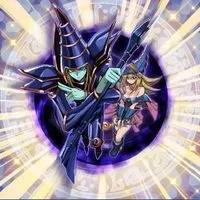
Dark Magician Deck #712504 — Yu-Gi-Oh! Master Duel
Created by: YGO Mod (20517634)
Created On: 06/01/2026
Main Deck (40)
- Crowley, the Gifted Magistus x1
- Dark Magician Girl the Magician's Apprentice x2
- Dark Magician the Magician of Black Magic x1
- Droll & Lock Bird x2
- Fabled Lurrie x1
- Fiendsmith Engraver x1
- Lacrima the Crimson Tears x1
- Magician's Rod x1
- Magicians' Souls x1
- Maxx "C" x1
- Mulcharmy Fuwalos x3
- Mulcharmy Purulia x1
- Nibiru, the Primal Being x1
- Spenta, the Magistus Sealer x3
- Dark Magician x1
- Illusion of Chaos x1
- Ash Blossom & Joyous Spring x3
- Effect Veiler x2
- Zoroa, the Magistus of Flame x1
- Fiendsmith's Tract x1
- Forbidden Droplet x1
- Future Silence x2
- Shining Sarcophagus x2
- Soul Servant x1
- The Gaze of Timaeus x2
- Triple Tactics Talent x1
- Infinite Impermanence x2
Extra Deck (15)
- Dark Magician of Destruction x1
- Fiendsmith's Lacrima x1
- Magistus Chorozo x1
- Master of Chaos x1
- Red-Eyes Dark Dragoon x1
- Artemis, the Magistus Moon Maiden x1
- Fiendsmith's Requiem x1
- Fiendsmith's Sequence x1
- Moon of the Closed Heaven x1
- S:P Little Knight x1
- Baronne de Fleur x1
- Borreload Savage Dragon x1
- D/D/D Wave High King Caesar x1
- Ninaruru, the Magistus Glass Goddess x1
- Number 60: Dugares the Timeless x1
Couldn't load the deck
Deck — Deck Power Evaluation
Final Contextual Deck Power: 59/100 (±5 · Confidence: Medium)
| Overall score | Value |
|---|---|
| Structural Deck Power | 60 |
| Going First | 55 |
| Going Second | 70 |
| Meta Power | provisional |
| Tournament Reliability | 55 |
- Primary strategy: Control
- Secondary strategies: Toolbox
- Format: master-duel
Legality
Main 40 / Extra 15 / Side 0 — status: Legal.
Identity & game plan
- Win condition: Dark Magician / Fusion monster board (e.g., Red-Eyes Dark Dragoon, Dark Magician of Destruction); Control via hand traps and disruption
- Turn 1 (going first): Open with hand traps (Ash Blossom, Infinite Impermanence, Effect Veiler, Droll & Lock Bird, Maxx "C"); search Dark Magician or key spellcasters with Magician's Rod / Spenta; set Shining Sarcophagus and begin Fusion setup.
- Turn 2 (going second): Use hand traps to negate opponent plays; draw engine (Mulcharmy Fuwalos / Purulia) to refill hand; then launch Fusion or Ritual summons on turn 2‑3.
- Recovery: If board is cleared, use draw engines (Mulcharmy, Droll & Lock Bird) and Magician's Rod to retrieve spells; recycle banished monsters with Fiendsmith's Tract or Ninaruru effects.
- After siding: No side deck; rely on hand‑trap density and on‑field resources to adapt.
Why it scores here
The deck reliably opens with a strong hand‑trap suite (≈78% chance of a starter) and draws engines that keep resources flowing. It converts that consistency into board control and can break opponent boards on turn 2‑3, especially when going second. Recovery is possible via draw cards and recycling effects, but the lack of a side deck and low combo ceiling limit its ceiling potential. Popularity of the Dark Magician archetype does not inflate the score; the evaluation is based on system‑wide consistency, interaction and resource loops.
Dimension scores
| # | Dimension | Score | Evidence |
|---|---|---|---|
| D1 | Engine Accessibility & Consistency | 78 | P(at least one core starter in opening 5) = 0.7834 (Inferred) |
| D2 | Opening-Hand Quality & Brick Management | 70 | Estimated brick probability = 0.2166, giving decent opening quality (Inferred) |
| D3 | Combo Conversion & Ceiling | 30 | No recorded combo boards; deck lacks dedicated multi‑step combos (Inferred) |
| D4 | Combo Floor & Median Output | 35 | Median output inferred low due to absence of combo data (Inferred) |
| D5 | Interruption Resilience & Route Redundancy | 65 | Multiple independent disruption lines (hand traps, draw engines) provide resilience (Inferred) |
| D6 | Resource Economy, Recovery & Grind | 70 | Draw engines (Mulcharmy Fuwalos, Droll & Lock Bird) and recycle effects (Magician's Rod) support resource economy (Inferred) |
| D7 | End-Board & Interaction Quality | 65 | Hand‑trap density and removal spells give solid end‑board interaction (Inferred) |
| D8 | Going-Second & Board-Breaking Power | 80 | Hand‑trap count 11 and 6‑card hand quality p≈0.8762 give strong going‑second board‑breaking (Inferred) |
| D9 | Offensive Pressure & Closing Power | 70 | High‑ATK fusion monsters (Red‑Eyes Dark Dragoon 3000, Dark Magician of Destruction 2800) provide closing power (Inferred) |
| D10 | Main Deck Efficiency & Flexibility | 55 | 40‑card main deck with 27 distinct cards; low archetype purity (12.7%) reduces efficiency (Inferred) |
| D11 | Extra Deck Efficiency & Coverage | 60 | 15‑card extra deck covers many archetypes but many slots are non‑core (Inferred) |
| D12 | Side Deck Adaptability | 20 | Side deck empty; no post‑side adaptability (Inferred) |
| D13 | Matchup Coverage & Format Fit | 40 | No tournament data; archetype meta‑share unavailable (Provisional) |
| D14 | Pilotability & Error Tolerance | 55 | Many decision points (hand traps, multiple tech cards) raise pilot error tolerance (Inferred) |
How the score was computed
Strategy profile: Control. Structural ≈ 60, Going First ≈ 55, Going Second ≈ 70, Meta = provisional, Tournament Reliability ≈ 55. Modifiers: Low archetype purity (-2); No side deck (-3). Final formula: 0.80*Structural + 0.20*TournamentReliability (Meta provisional)
Probability & combo summary
- Opening a starter: P(≥1) ≈ 0.78 · key two-card combo ≈ — · full-brick estimate ≈ 0.22 (all Inferred)
- Combo output: best PowerIndex —, median —, board-per-starter —
- Turn order: 0 going-first lines vs 0 going-second lines
Strengths
- Very high hand‑trap density for disruption
- Multiple draw engines (Mulcharmy, Droll & Lock Bird) sustain resources
- Flexible extra‑deck with several powerful fusion/synchro options
Weaknesses
- Low combo ceiling; no dedicated multi‑step combos
- No side deck limits post‑side adaptability
- Low exact‑archetype purity makes the deck reliant on tech cards
Critical choke points
- Reliance on drawing Dark Magician or key fusion material early
- Need to protect the board once high‑ATK fusion monsters are summoned
Recommended changes
| Priority | Remove | Add | Reason |
|---|---|---|---|
| 1 | Some off‑archetype filler (e.g., Fiendsmith cards not essential) | Side‑deck anti‑graveyard cards (e.g., Evenly Matched, Droll & Lock Bird copies) to improve post‑side plans | Reduces side‑deck void and strengthens late‑game resilience |
Evidence & confidence
- Verified: Legality status Legal; Card text excerpts for each listed card; Copy histogram and copy limits
- Inferred: Engine accessibility probability 0.7834; Brick estimate 0.2166; Hand‑trap count and hand‑trap probability 0.8762; Resource loops from draw engines; Extra‑deck slot usage
- Provisional: Matchup coverage due to missing tournament data
- Data gaps: No combos supplied — combo floor/median/ceiling is text‑only inference No tournament link — archetype meta‑share and per‑pilot match record absent No win‑rate telemetry exists in YGOVN — those signals are Inferred or Unknown
Couldn't load the combos