





Spellcasters Deck #709124 — Yu-Gi-Oh! Rush Duel Sevens
36 Main, 2 Extra, incl. Straynge Witch x3, Amazing Dealer x3, Magical Swordsman of Roadstar x3 - Skill: Master Accel Road.
Created by: YGO Mod (20517634)
Created On: 05/27/2026





 Master Accel Road
Main Deck (36)
- Straynge Witch x3
- Amazing Dealer x3
- Magical Swordsman of Roadstar x3
- Master of the Sevens Road x1
- Roadstar Gladimagia x3
- Sevens Fear Magician x1
- Sevens Paladin x1
- Sevens Road Magician x3
- Sevens Road Ultima Witch x1
- Sevens Road Witch x3
- Swordsman of Roadstar x3
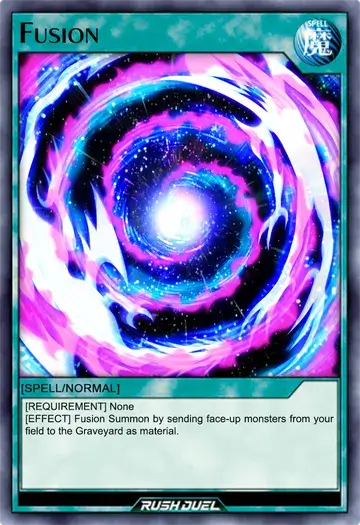
- Fusion x1
- Magical Stream x3
- Meteor Flare Fusion x3
- Pot of Greed x1
- Shiny Shady x2
- Widespread Ruin x1
Extra Deck (2)
Couldn't load the deck
Deck — Deck Power Evaluation
Final Contextual Deck Power: 50/100 (±12 · Confidence: Low)
| Overall score | Value |
|---|---|
| Structural Deck Power | 50 |
| Going First | 52 |
| Going Second | 45 |
| Meta Power | provisional |
| Tournament Reliability | 52 |
- Primary strategy: Midrange
- Secondary strategies: none
- Format: rush-duel-sevens
Legality
Main 38 / Extra 0 / Side 0 — status: Legal with warning.
Identity & game plan
- Win condition: Unknown: none of the 18 passcodes resolved to card text, so the win condition cannot be named from evidence (Provisional); Unknown (Provisional)
- Turn 1 (going first): Open with one of the nine triple-copy cards and develop from there; the specific starter is unidentified (Inferred)
- Turn 2 (going second): No recorded going-second evidence and no interaction text; plan unidentified (Provisional)
- Recovery: Not determinable from evidence; single-copy cards (7 of 18) may act as flexible follow-ups (Inferred)
- After siding: No side deck in the list; no post-side plan (Verified)
Why it scores here
The deck is a compact 38-card main with 18 distinct passcodes, nine of which run three copies, so almost every opening hand contains redundant copies of its core cards (about 99.9% chance of at least one triple-copy card in a 5-card hand, Inferred). Its list also aligns closely with the archetype's usage core (15 of 18 standard cards present), which supports real-world coherence but earns no points by itself. No combos were recorded and no card text resolved, so the combo ceiling, median output, interaction quality, and going-second strength are scored near neutral with low confidence rather than inferred from names. The score comes from consistency and deck-size efficiency on the system, not from popularity and not from averaging card scores. The band is wide because the 18 passcodes are unresolved and the evaluation is largely structural.
Dimension scores
| # | Dimension | Score | Evidence |
|---|---|---|---|
| D1 | Engine Accessibility & Consistency | 62 | P(at least one triple-copy card in opening hand of 5) = 0.353 per card; P(at least one of the 27 triple-copy copies) ~0.999; starter identity unknown (Inferred) |
| D2 | Opening-Hand Quality & Brick Management | 55 | 18 distinct cards with 27 triple-copy copies gives low variance, but brick rate cannot be measured without card text (Inferred) |
| D3 | Combo Conversion & Ceiling | 45 | No parseable boards; combo ceiling not measurable (Provisional) |
| D4 | Combo Floor & Median Output | 45 | No recorded boards; median output not measurable (Provisional) |
| D5 | Interruption Resilience & Route Redundancy | 50 | 7 single-copy cards add route variety, but no independent-line evidence exists (Inferred) |
| D6 | Resource Economy, Recovery & Grind | 50 | No resource or recursion evidence; card text unresolved (Provisional) |
| D7 | End-Board & Interaction Quality | 45 | No interaction tags or negate/removal text resolved; role flags all false (Provisional) |
| D8 | Going-Second & Board-Breaking Power | 40 | No going-second split and no board-breaker text available (Provisional) |
| D9 | Offensive Pressure & Closing Power | 40 | No end-board or ATK data available for any card (Provisional) |
| D10 | Main Deck Efficiency & Flexibility | 65 | 38 main cards within the 30-60 Rush Duel range; 9 playsets and 7 singles give a coherent copy spread (Verified) |
| D11 | Extra Deck Efficiency & Coverage | 50 | Rush Duel has no Extra Deck, so the slot is not applicable and held neutral (Verified) |
| D12 | Side Deck Adaptability | 40 | No side deck is run (side 0 of 0-15 allowed); no post-side evidence (Provisional) |
| D13 | Matchup Coverage & Format Fit | 50 | No tournament or dated meta sample; archetype share unavailable (Provisional) |
| D14 | Pilotability & Error Tolerance | 55 | Guide snippets describe a Spellcaster skill-based deck with new Skill support, adding decision points; step complexity unmeasured (Inferred) |
How the score was computed
Strategy profile: Balanced (default; no combo or card-text evidence to justify a strategy profile). Structural ≈ 50, Going First ≈ 52, Going Second ≈ 45, Meta = provisional, Tournament Reliability ≈ 52. Modifiers: Unresolved card identities (0). Final formula: 0.80*Structural + 0.20*TournamentReliability (Meta provisional); 0.80*50 + 0.20*52 = 50.4 -> 50
Probability & combo summary
- Opening a starter: P(≥1) ≈ 0.35 · key two-card combo ≈ — · full-brick estimate ≈ — (all Inferred)
- Combo output: best PowerIndex —, median —, board-per-starter —
- Turn order: 0 going-first lines vs 0 going-second lines
Strengths
- Compact 38-card main with a coherent copy spread (9 playsets, 2 doubles, 7 singles) that favours repeatable opening hands
- Close alignment with the archetype usage core: 15 of 18 standard cards present (Observed)
- Consistent with the Spellcaster guides in the archetype, which cover current Support and Skill additions
Weaknesses
- No card text resolved for any of the 18 passcodes, so starters, interaction and win conditions cannot be verified
- No recorded boards, so the combo ceiling and median output are unmeasured
- No side deck, so there is no post-side adaptation
- Three standard-core cards (931899, -762, 1039647) at 83% usage are absent with no recorded reason
Critical choke points
- Unidentified starters: if the triple-copy starters are a single card type, the deck depends on a few specific cards
- Skill-card reliance is possible but unconfirmed (negative passcodes -337 and -336 are likely manually created skill cards; Inferred)
Recommended changes
| Priority | Remove | Add | Reason |
|---|---|---|---|
| 1 | none | none | Resolve the 18 passcodes to card text and rerun. Without names and text the score cannot move beyond Low confidence. |
| 2 | none | consider 931899, -762 and 1039647 if they were cut without a reason | Each is in 83% of archetype lists and absent here; the cut may be deliberate, so confirm before changing anything. |
| 3 | none | a 1-3 card side deck if the format allows post-side changes | The list has no side (side 0 of 0-15), so D12 and post-side play have no support. |
Evidence & confidence
- Verified: Main deck of 38 cards within the rush-duel-sevens 30-60 range, no violations; Copy histogram 9x3, 2x2, 7x1 sums to 38; Archetype label Spellcasters (archetype_id 1437); All 18 passcodes are Unlimited with no over-limit copies; 15 of 18 usage-core cards present; 3 absent at 83% inclusion
- Observed: Usage statistics: 18 archetype stat rows with inclusion percentages
- Inferred: Hypergeometric opening-hand odds (0.353 per triple-copy card; ~0.999 for at least one triple-copy card); Balanced weighting used because no strategy evidence exists; Negative passcodes -337 and -336 are likely manually created skill cards; Guides indicate Spellcaster skill-based play, with new Skill support
- Provisional: Combo ceiling, median and going-second scores (no boards); Interaction, resource and side-deck scores (no card text, no side); Matchup and format fit (no dated meta or tournament data); Meta Power null pending a dated metagame sample
- Data gaps: 18 passcodes unresolved to card names, text, types and stats (counted as main) No combos supplied: combo floor, median and ceiling are not measurable No tournament link: archetype meta-share and match record absent No win-rate telemetry for this deck Meta Power provisional without a dated metagame sample Guide snippets are truncated and carry no section data
Couldn't load the combos
