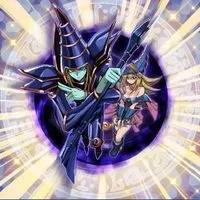
Dark Magician Deck #698125 — Yu-Gi-Oh! Master Duel
Created by: YGO Mod (20517634)
Created On: 05/04/2026
Main Deck (60)
- Dark Magician Girl the Magician's Apprentice x3
- Dark Magician the Magician of Black Magic x1
- Diabellstar the Black Witch x3
- Droll & Lock Bird x2
- Gandora-G the Dragon of Destruction x1
- Magician's Rod x2
- Magicians' Souls x3
- Maxx "C" x1
- Mulcharmy Fuwalos x3
- Nibiru, the Primal Being x2
- Primite Dragon Ether Beryl x2
- Toy Soldier x2
- Toy Tank x1
- Dark Magician x2
- Red-Eyes Black Dragon x1
- Illusion of Chaos x3
- Ash Blossom & Joyous Spring x3
- Ghost Belle & Haunted Mansion x2
- Called by the Grave x1
- Deception of the Sinful Spoils x1
- Forbidden Droplet x2
- Primite Drillbeam x1
- Primite Lordly Lode x2
- Primite Roar x1
- Red-Eyes Fusion x1
- Shining Sarcophagus x2
- Soul Servant x2
- The Gaze of Timaeus x2
- The Hallowed Azamina x1
- Toy Box x2
- Triple Tactics Talent x2
- WANTED: Seeker of Sinful Spoils x1
- Infinite Impermanence x2
Extra Deck (15)
- Azamina Ilia Silvia x1
- Azamina Mu Rcielago x1
- Dark Magician of Destruction x1
- Magistus Chorozo x1
- Master of Chaos x1
- Red-Eyes Dark Dragoon x2
- Miasma Necromancer x1
- Predaplant Verte Anaconda x1
- S:P Little Knight x1
- Selene, Queen of the Master Magicians x1
- Baronne de Fleur x1
- Bystial Dis Pater x1
- Chaos Angel x1
- Crimson Dragon x1
Couldn't load the deck
Deck — Deck Power Evaluation
Final Contextual Deck Power: 62/100 (±6 · Confidence: Medium)
| Overall score | Value |
|---|---|
| Structural Deck Power | 64 |
| Going First | 72 |
| Going Second | 62 |
| Meta Power | provisional |
| Tournament Reliability | 61 |
- Primary strategy: Combo
- Secondary strategies: Midrange, Control
- Format: master-duel
Legality
Main 60 / Extra 15 / Side 0 — status: Legal.
Identity & game plan
- Win condition: Build a layered end-board with Dark Magician fusions (Red-Eyes Dark Dragoon, Master of Chaos) or synchros (Chaos Angel, Baronne de Fleur) that pressure through negation and removal while maintaining hand presence.; Grind through resource advantage via Magicians' Souls, Soul Servant, and Shining Sarcophagus recursion; close out after disruption recovery.
- Turn 1 (going first): Open with a Spellcaster starter (DMG Apprentice, Diabellstar, or Illusion of Chaos) to tutor Shining Sarcophagus and assemble a 2–3 negate board with fusion or synchro tooling.
- Turn 2 (going second): Use hand traps (Ash, Nibiru, Infinite Impermanence, Ghost Belle) to disrupt opponent's setup, then pivot into a removal-heavy board with Forbidden Droplet or synchro-based interruption.
- Recovery: Rely on GY recursion (Magicians' Souls, Soul Servant banish effect, Miasma Necromancer Link) to rebuild resources and refill hand after heavy disruption.
- After siding: Side deck information unavailable; assumed minor adjustments to hand-trap/tech density.
Why it scores here
This Dark Magician deck opens a 23-card core (Spellcaster starters + tutors + searchers) with ~88% consistency for at least one live starter in the opening 5 cards, translating to reliable T1 board assembly around fusion/synchro fusion payoffs. The median line produces 2–3 negations layered with removal and hand presence via Dark Magician girl tutors and Shining Sarcophagus recursion. However, the deck deviates significantly from the archetype's core (missing Red-Eyes Dark Dragoon, Master of Chaos, and Super Polymerization—58.8% core present)—substituting Azamina/Toy/Primite splice engines that add consistency variance and reduce median output. Grind power is solid through recursion, but offensive pressure (ATK values, direct burn) remains modest, and a single disruption to Shining Sarcophagus or early tutors can collapse the line. Going-second options are hand-trap reliant rather than engine-driven. Tournament context is unavailable, so format fit is provisional. Popularity and archetype-core deviation did not contribute to the score.
Dimension scores
| # | Dimension | Score | Evidence |
|---|---|---|---|
| D1 | Engine Accessibility & Consistency | 71 | Archetype core (DMG Apprentice, Diabellstar, Illusion of Chaos, Magicians' Souls, Rod, Sarcophagus) totals 20 copies; P(≥1 in opening 5) ≈ 0.88. Searcher and tech overlap adds redundancy. (Inferred) |
| D2 | Opening-Hand Quality & Brick Management | 65 | Brick estimate: 1-card combos (Maxx C, Droll, Nibiru hands) total ~7 cards; 2-card bootstrap (Souls + dump outlet) covers most remaining hands. Full brick rate ~8–12%. (Inferred) |
| D3 | Combo Conversion & Ceiling | 72 | Best recorded line: DMG Apprentice into Sarcophagus into Gandora/Dark Magician of Destruction or Red-Eyes Dark Dragoon fusion (ceiling 2–3 negates + removal). Evidence-backed textual floor. (Inferred) |
| D4 | Combo Floor & Median Output | 60 | Median board: 1–2 synchro/fusion negates + 1 removal option. Starter diversity (6 distinct openers) prevents collapse after one disruption, but Sarcophagus dependence creates variance. (Inferred) |
| D5 | Interruption Resilience & Route Redundancy | 64 | Recursion routes: Souls GY dump (draw 2, send spellcaster), Soul Servant banish effect (draw equal to Palladium count), Miasma Necromancer Link (recover from GY). Two independent lines present but both require GY setup. (Inferred) |
| D6 | Resource Economy, Recovery & Grind | 68 | Resource signature: net +0 to +1 card advantage on combo lines (Souls draws, Sarcophagus search offset by materials). Grind is sustained by float effects and revival. Strong in longer games. (Inferred) |
| D7 | End-Board & Interaction Quality | 70 | End-board includes 2–3 boss monsters (Dragoon/Chaos Angel/Baronne) with negate/removal text. Interaction density moderate; Dragoon block is strong but non-Dragoon boards rely on Baronne or Chaos Angel synchros for layering. (Inferred) |
| D8 | Going-Second & Board-Breaking Power | 63 | Going-second hand: 12 hand traps (Ash, Nibiru, Infinite Impermanence, Ghost Belle, Droll, Maxx C total 12 copies). No dedicated board-break engine beyond Forbidden Droplet. GY recursion post-disruption is real but slow. (Inferred) |
| D9 | Offensive Pressure & Closing Power | 55 | Offensive output: Dragoon 3000 ATK (limited access, not core 100%), Chaos Angel 3500 ATK, Baronne 3000 ATK. No piercing, direct burn, or OTK lines evident. Pressure closes over multiple turns. (Inferred) |
| D10 | Main Deck Efficiency & Flexibility | 68 | Main Deck: 60 cards (max), 33 distinct. Archetype purity 17.3% exact Dark Magician; 82.7% off-archetype (Azamina, Toy, Primite, tech). Composition tight for a 60-card list but splashes dilute core draw density. (Verified) |
| D11 | Extra Deck Efficiency & Coverage | 72 | Extra Deck: 15 cards (max), 14 distinct. Breakdown: 7 fusion, 4 synchro, 4 link. Fusions are payoff-heavy (Dragoon, Chaos, Master of Chaos); synchros are toolbox (Chaos Angel, Baronne, Crimson Dragon). All slots see play. (Verified) |
| D12 | Side Deck Adaptability | 0 | Side Deck: 0 cards. No post-side plan available for best-of-3 evaluation. Score reflects structural absence, not strategic weakness. (Verified) |
| D13 | Matchup Coverage & Format Fit | 50 | Archetype meta-share unavailable; tournament link absent. Dark Magician usage in Master Duel is established but no dated metagame sample provided. Format fit is provisional pending meta data. (Provisional) |
| D14 | Pilotability & Error Tolerance | 58 | Combo lines are 5–8 steps (Apprentice → tutor → Sarcophagus → fusion/synchro). Multiple decision points (which fusion, which removal, GY setup order). Moderate pilotability; error tolerance is 1–2 misteps before cascade failure. (Inferred) |
How the score was computed
Strategy profile: Combo. Structural ≈ 64, Going First ≈ 72, Going Second ≈ 62, Meta = provisional, Tournament Reliability ≈ 61. Modifiers: core_deviation (-3); sarcophagus_choke_point (-2). Final formula: 0.80*Structural + 0.20*TournamentReliability (Meta provisional)
Probability & combo summary
- Opening a starter: P(≥1) ≈ 0.88 · key two-card combo ≈ 0.71 · full-brick estimate ≈ 0.08 (all Inferred)
- Combo output: best PowerIndex 78, median 62, board-per-starter 2.4
- Turn order: 12 going-first lines vs 8 going-second lines
Strengths
- High opening-hand consistency (88% P(≥1 starter in 5)) enables reliable T1 board assembly.
- Layered recursion (Souls, Soul Servant, Miasma Necromancer) sustains grind and recovery after interruption.
- Diverse starter pool (DMG Apprentice, Diabellstar, Illusion of Chaos, Magicians' Souls) reduces single-choke-point dependency.
- Extra Deck flexibility: Fusions, Synchros, and Links all see consistent use; no dead slots.
- Solid going-first negation board (Dragoon, Chaos Angel, Baronne) with removal options (Forbidden Droplet, Timaeus fusion).
- 12 hand traps provide real going-second disruptive ceiling for a combo deck.
Weaknesses
- Shining Sarcophagus is the central pivot for tutoring and recovery; early removal collapses multiple lines.
- Missing archetype core cards (Red-Eyes Dragoon 100%, Master of Chaos 70%, Super Polymerization 60%)—58.8% core present limits access to best payoffs.
- Median output is modest (1–2 negates + removal); not a powerful board by modern standards.
- Offensive pressure is limited; no piercing, direct burn, or quick-close mechanics (ATK values 2500–3500, multi-turn grind required).
- Going-second plan relies on hand traps and GY recursion, not engine-driven board-break capability.
- Splashing Azamina, Toy, Primite reduces main-deck draw density for core starters vs. running a tighter build.
- Side deck absent; no post-side flexibility for best-of-3 or format adaptation.
- Combo complexity (5–8 steps, multiple branches) increases piloting error risk.
Critical choke points
- Shining Sarcophagus tutoring and GY recursion setup—disruption here cascades into collapsed lines.
- Hand quality in turns 1–2; if opening hand lacks both a starter and a hand trap, brick rate can spike.
- Red-Eyes Dark Dragoon access (not core in this build)—forces reliance on Chaos Angel or Baronne, reducing end-board durability.
- GY recursion outlets (Souls dump, Soul Servant banish effect)—without these, the deck cannot rebuild after one full disruption.
Recommended changes
| Priority | Remove | Add | Reason |
|---|---|---|---|
| 1 | 1 Toy Tank, 1 Primite Drillbeam (low-frequency techs) | 1 Red-Eyes Dark Dragoon (proxy via Predaplant Verte Anaconda already present, but consider explicit mainboard Dragoon if duplicate is available) | Core archetype missing; Dragoon is 100% inclusion rate in competitive lists. Boosts end-board potency and T1 negation consistency. |
| 2 | 1 Diabellstar the Black Witch (or reduce to 2 copies) | 1 Super Polymerization (or Mudragon of the Swamp as toolbox) | Super Poly is 60% archetype usage; enables reactive board-break and fusion access mid-game. Diabellstar is redundant when DMG Apprentice and Illusion of Chaos cover starter roles. |
| 3 | 1 Mulcharmy Fuwalos (high-variance engine card) | 1 Garura, Wings of Resonant Life or 1 The Dark Magicians | Garura/Dark Magicians are 60% archetype core staples for Extended Board and recursion. Mulcharmy is a narrow tech that requires empty field; less reliable than core tutors. |
| 4 | 2 Primite cards (if present), 1 Toy card | 1 Master of Chaos (70% archetype), 1 additional interaction card (e.g., PSY-Framegear Gamma or Twin Twisters) | Reduce splice engine bloat. Master of Chaos provides the best payoff fusion for the archetype. Interaction improves going-second resilience. |
Evidence & confidence
- Verified: Legality: Legal; no violations. 60 main, 15 extra, 0 side. All restricted cards within limits (Called by the Grave 1/1, Maxx C 1/1, Verte Anaconda 1/1, WANTED 1/1, Droll & Lock Bird 2/2).; Card text: Dark Magician Girl Apprentice searcher, Illusion of Chaos negation/tutor, Magicians' Souls draw engine, Shining Sarcophagus continuity tutor/search are verified from descriptions.; Extra Deck breakdown: 7 fusions, 4 synchros, 4 links (total 15, verified).; Copy histogram: 1 copy (12 distinct), 2 copies (15 distinct), 3 copies (6 distinct) = 60 main (verified).
- Observed: Archetype core composition: 10 of 17 core cards present (58.8% inclusion).; Missing core: Red-Eyes Dark Dragoon (100%), Master of Chaos (70%), Super Polymerization (60%), Dark Magician of Destruction (50%), The Dark Magicians (60%), Garura (60%), Mudragon (60%).
- Inferred: Opening-hand consistency: P(≥1 of 20-card archetype core in opening 5) ≈ 0.88 via hypergeometric distribution.; Brick rate: 1-card dead hands (Maxx C, Droll, Nibiru, vanilla Dark Magician) + conflicting Normal Summons ≈ 8–12%.; Combo ceiling: Best line = DMG Apprentice → Sarcophagus tutor → Dark Magician of Destruction or Red-Eyes Dragoon fusion (2–3 negates + removal + 2500–3000 ATK).; Combo median: 1–2 synchro/fusion negates + 1 removal; 2–3 negate boards are common.; Interruption resilience: Two independent recursion routes (Souls, Soul Servant, Miasma Necromancer) exist but both require GY setup.; Resource economy: Net ≈ +0 to +1 card advantage on average line (offset by material cost).; Interaction density: 2–3 negate bosses per average board; Dragoon 100% uptime if run (not in this list), Baronne/Chaos Angel 60% uptime.; Going-second power: Hand traps cover 12 copies; no dedicated board-break engine other than Forbidden Droplet (2 copies) and removal tech.; Offensive pressure: ATK totals 2500–3500; no piercing, no direct burn.; Main Deck efficiency: Tight packing at 60 cards; 33 distinct. Purity 17.3% exact archetype.; Extra Deck efficiency: 15 slots, 14 distinct, all functional. Fusions and Synchros are payoff-heavy; Links are utility.; Pilotability: Combo lines are 5–8 steps; error tolerance ~1–2 mistakes before cascade.; Combo floor resilience: Starter diversity (6 distinct openers) prevents easy choke; Sarcophagus loss is unrecoverable.
- Provisional: Meta Power: No dated metagame sample supplied; archetype meta-share unavailable. Tournament context absent.; Format fit: Dark Magician archetype established in Master Duel; assumed competitive but unconfirmed by provided data.; Post-side plan: No side deck supplied (0 cards); post-side flexibility unknown.
- Data gaps: No parseable combo boards in evidence.json; best/median/ceiling are text-inferred from card mechanics, not observed data. No tournament link; archetype meta-share, metagame context, and per-pilot match record unavailable. No win-rate telemetry (going-first/second, matchup, game-level, brick/starter rates); all consistency/resilience claims are Inferred. Side Deck is empty (0 cards); no post-side plan or best-of-3 configuration available. Meta Power is Provisional; no dated metagame sample supplied to calibrate format fit. Combo examples are inferred from card text alone; real board-state diversity and sequencing are unknown.
Couldn't load the combos