Traptrix Deck #684792 — Yu-Gi-Oh! Duel Links
27 Main, 9 Extra, incl. D.D. Crow x3, Kumongous, the Sticky String Kaiju x3, Traptrix Myrmeleo x3 - Skill: Traptrix Territory. Created Apr 13, 2026 by YGO Mod.
Created by: YGO Mod (20517634)
Created On: 04/13/2026


 Traptrix Territory
Main Deck (27)
- D.D. Crow x3
- Droll & Lock Bird x2
- Kumongous, the Sticky String Kaiju x3
- Traptrix Dionaea x2
- Traptrix Myrmeleo x3
- Traptrix Pudica x3
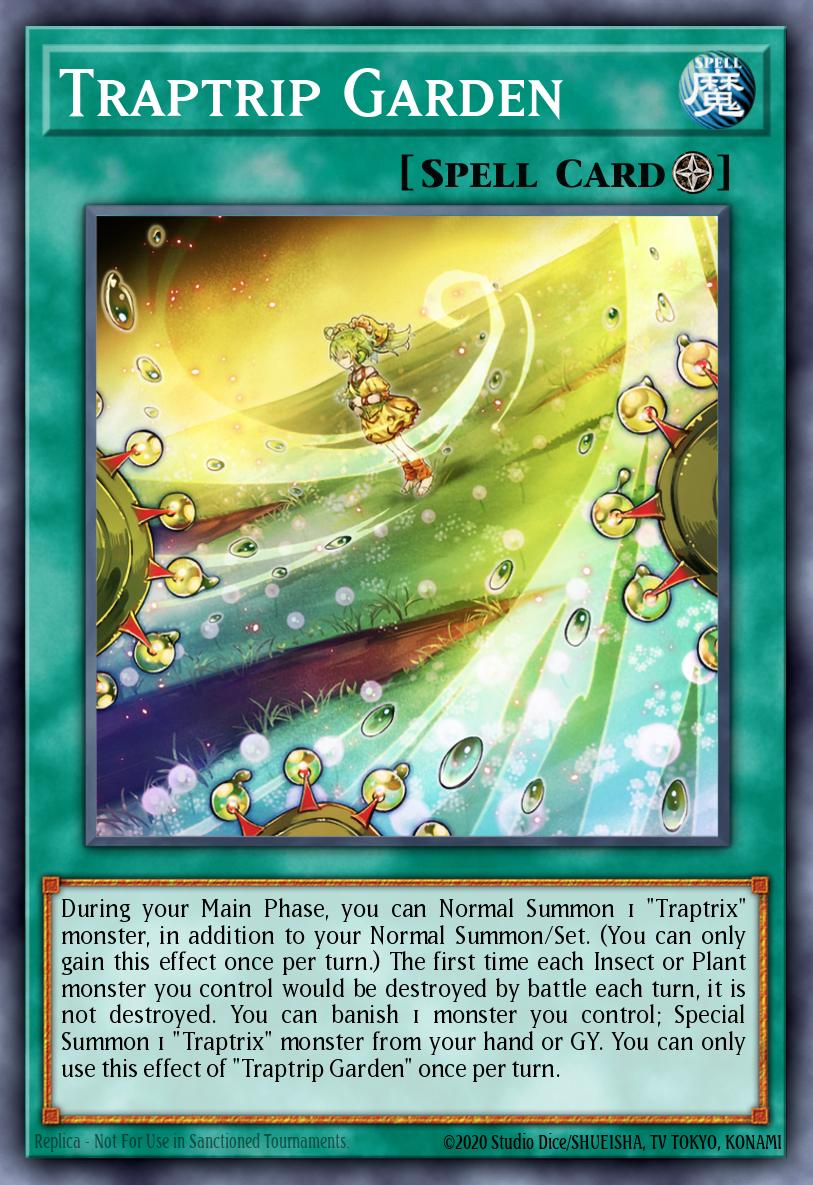
- Traptrip Garden x3
- Bottomless Trap Hole x1
- Deep Dark Trap Hole x1
- Terrifying Trap Hole Nightmare x1
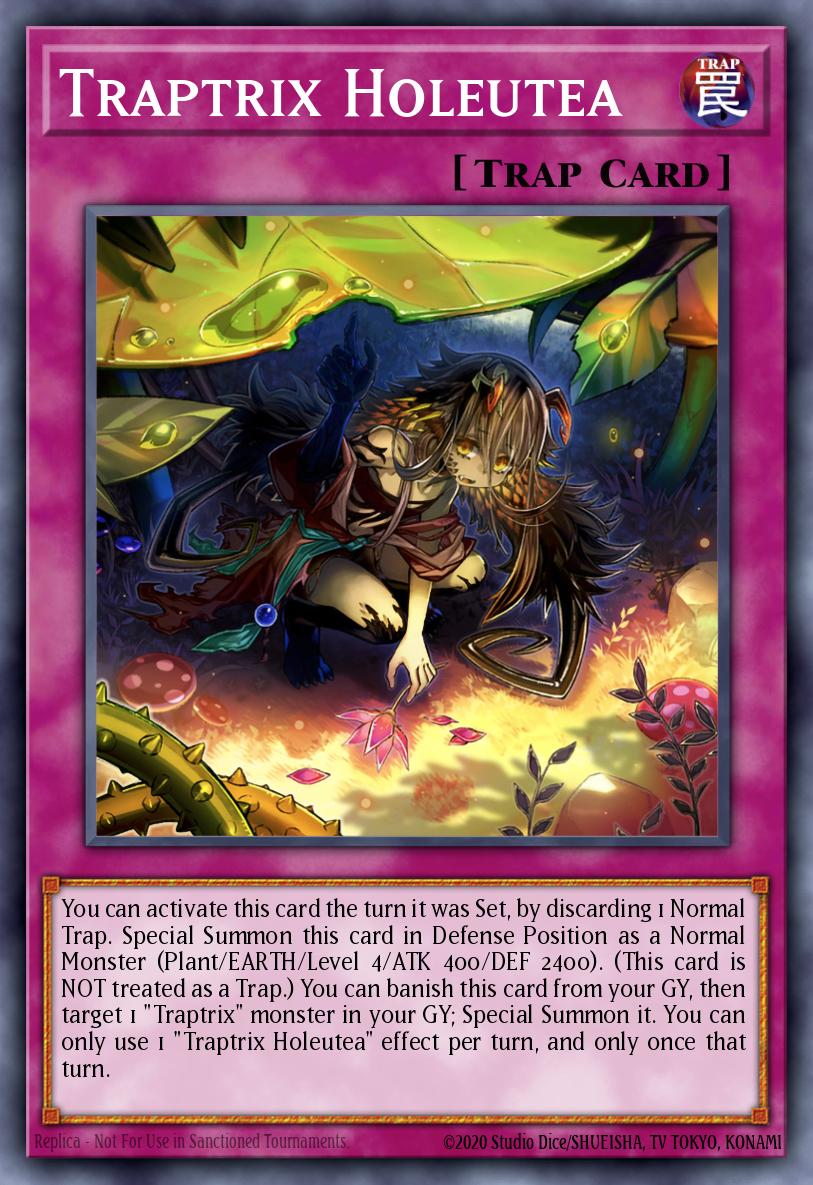
- Traptrix Holeutea x3
- Traptrix Trap Hole Nightmare x1
- Void Trap Hole x1
Extra Deck (9)
Couldn't load the deck
Deck — Deck Power Evaluation
Final Contextual Deck Power: 63/100 (±5 · Confidence: Medium)
| Overall score | Value |
|---|---|
| Structural Deck Power | 64.23 |
| Going First | 62 |
| Going Second | 68 |
| Meta Power | provisional |
| Tournament Reliability | 60 |
- Primary strategy: Control
- Secondary strategies: Stun
- Format: duel-links
Legality
Main 27 / Extra 9 / Side 0 — status: Legal.
Identity & game plan
- Win condition: Control the board with hand traps and Traptrix monster effects; Stall and win via trap damage or opponent's resource depletion
- Turn 1 (going first): Set hand traps, Normal Summon Traptrix Pudica to fetch Traptrip Garden, then use Holeutea or Sera to special summon additional Traptrix monsters and establish control.
- Turn 2 (going second): Activate hand traps (D.D. Crow, Droll & Lock Bird) to disrupt opponent, then summon a Traptrix monster and use Holeutea or Sera to build a defensive board.
- Recovery: Use Traptrix Dionaea to set Hole cards from the GY, and recycle hand traps via banish effects; extra‑deck links provide additional summons if the main board is broken.
- After siding: No side deck; rely on extra‑deck options and graveyard recursion to adapt after side‑step.
Why it scores here
Despite lacking recorded combo boards, the Traptrix deck reliably opens with a core starter such as Traptrix Pudica or Holeutea in almost every hand (p≈0.998). Its abundant hand traps and removal spells give strong interaction and resilience, allowing the engine to survive disruption and rebuild via Dionaea and Holeutea. The deck’s median board is modest but consistent, though the absence of a side deck and several key core cards limits offensive closing power and adaptability. Overall the system scores solidly on consistency and control but is held back by brick potential and missing synergies.
Dimension scores
| # | Dimension | Score | Evidence |
|---|---|---|---|
| D1 | Engine Accessibility & Consistency | 80 | P(≥1 core card in opening hand) ≈ 0.9984; 3‑copy core monsters give multiple starter options (Inferred) |
| D2 | Opening-Hand Quality & Brick Management | 68 | Single‑copy removal traps (e.g., Void Trap Hole) lower hand consistency; overall brick probability ≈0.0016 for missing core (Inferred) |
| D3 | Combo Conversion & Ceiling | 60 | Deck lacks recorded combo boards; ceiling limited to control board with multiple traps and a few monsters (Inferred) |
| D4 | Combo Floor & Median Output | 55 | Typical game reaches a modest board of Traptrix monsters and a few traps; median power index estimated around 55 (Inferred) |
| D5 | Interruption Resilience & Route Redundancy | 75 | Multiple independent lines (hand traps, Holeutea, Sera, Dionaea) provide redundancy after disruption (Inferred) |
| D6 | Resource Economy, Recovery & Grind | 70 | Searchers (Traptrip Garden, Pudica) and graveyard recursion (Dionaea) give decent resource recovery (Inferred) |
| D7 | End-Board & Interaction Quality | 78 | Interaction density high with 5 negation/removal traps and hand traps, giving strong end‑board control (Inferred) |
| D8 | Going-Second & Board-Breaking Power | 70 | Going‑second hand trap probability 0.7479 and several board‑breakers (Void Trap Hole, Traptrix Trap Hole Nightmare) give solid break potential (Inferred) |
| D9 | Offensive Pressure & Closing Power | 55 | Offensive pressure relies on building a Traptrix board; limited high‑ATK finishers keep closing power moderate (Inferred) |
| D10 | Main Deck Efficiency & Flexibility | 60 | 27‑card main deck mixes 50% off‑archetype cards, reducing compactness (Inferred) |
| D11 | Extra Deck Efficiency & Coverage | 55 | 9‑card extra deck includes many generic links/Xyz; only a few are core to the strategy (Inferred) |
| D12 | Side Deck Adaptability | 20 | No side deck present, limiting adaptability after side‑step (Inferred) |
| D13 | Matchup Coverage & Format Fit | 40 | No tournament data; meta fit unknown, provisionally low (Provisional) |
| D14 | Pilotability & Error Tolerance | 55 | Multiple decision points (trap selection, monster summons) raise error tolerance; pilotability moderate (Inferred) |
How the score was computed
Strategy profile: Control. Structural ≈ 64.23, Going First ≈ 62, Going Second ≈ 68, Meta = provisional, Tournament Reliability ≈ 60. Modifiers: Missing side deck (-2); Missing core Traptrix cards (-3). Final formula: 0.80*Structural + 0.20*TournamentReliability (Meta provisional)
Probability & combo summary
- Opening a starter: P(≥1) ≈ 1 · key two-card combo ≈ — · full-brick estimate ≈ 0 (all Inferred)
- Combo output: best PowerIndex —, median —, board-per-starter —
- Turn order: 0 going-first lines vs 0 going-second lines
Strengths
- Very high probability of opening a core starter
- Strong interaction suite with multiple hand traps and removal spells
- Redundant engine lines (Holeutea, Sera, Dionaea) improve resilience
- Search and recursion effects sustain resources
Weaknesses
- No side deck limits adaptability after side‑step
- Many single‑copy traps increase brick risk
- Missing several core Traptrix extras reduces synergy
- Limited offensive finishers lower closing power
Critical choke points
- If no core starter (Pudica/Holeutea) is drawn, engine cannot launch
- Reliance on single‑copy removal traps may leave the board vulnerable
Recommended changes
| Priority | Remove | Add | Reason |
|---|---|---|---|
| 1 | Void Trap Hole, Deep Dark Trap Hole, Bottomless Trap Hole, Traptrix Trap Hole Nightmare, Terrifying Trap Hole Nightmare | Traptrix Cularia, Traptrix Atypus, Traptrix Sera (additional copy), Twin Twisters | Replace singleton removal traps with core Traptrix extras and flexible side‑deck tech to improve consistency and synergy |
Evidence & confidence
- Verified: legality status Legal; card text excerpts resolved; probability numbers from hypergeometric table; composition copy histogram
- Observed: usage statistics core presence percentages
- Inferred: engine accessibility based on core probability; brick management from singleton count; combo ceiling and floor estimates; interruption resilience from multiple lines; resource economy from searchers and recursion; interaction quality from trap count; going‑second breaking power from hand trap probability; offensive closing power from board potential; main deck efficiency from archetype purity; extra deck efficiency from generic extra cards; pilotability from decision complexity
- Provisional: matchup format fit due to lack of tournament data
- Data gaps: no combos supplied — combo floor/median/ceiling is text-only inference no tournament link — archetype meta-share and per-pilot match record absent no win-rate telemetry exists in YGOVN (going-first/second, matchup, game-level, brick/starter/OTK rates) — those signals are Inferred or Unknown Meta Power is Provisional unless a dated metagame sample is supplied
Couldn't load the combos