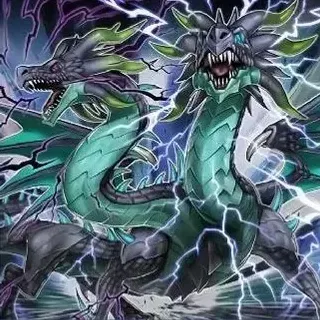
Thunder Dragon Deck #677451 — Yu-Gi-Oh! Master Duel
60 Main, 15 Extra, incl. Batteryman Solar x3, Imsety, Glory of Horus x3, Mulcharmy Purulia x3.
Created by: YGO Mod (20517634)
Created On: 04/02/2026
Main Deck (60)
- Batteryman Solar x3
- Bystial Baldrake x2
- Bystial Druiswurm x1
- Bystial Magnamhut x1
- Bystial Saronir x1
- Droll & Lock Bird x2
- Duamutef, Blessing of Horus x1
- Fiendsmith Engraver x2
- Hapi, Guidance of Horus x1
- Imsety, Glory of Horus x3
- Lacrima the Crimson Tears x1
- Maxx "C" x1
- Mulcharmy Purulia x3
- The Bystial Lubellion x3
- Thunder Dragon x3
- Thunder Dragondark x3
- Thunder Dragonhawk x1
- Thunder Dragonroar x2
- Ash Blossom & Joyous Spring x3
- Dimensional Allotrope Varis x1
- Ghost Belle & Haunted Mansion x2
- Ghost Ogre & Snow Rabbit x2
- Branded Regained x1
- Called by the Grave x1
- Crossout Designator x1
- Emergency Teleport x3
- Fiendsmith's Sanct x1
- Gold Sarcophagus x1
- King's Sarcophagus x2
- One for One x1
- Thunder Dragon Fusion x1
- Triple Tactics Talent x1
- Walls of the Imperial Tomb x3
- Infinite Impermanence x2
Extra Deck (15)
- Necroquip Princess x1
- Thunder Dragon Colossus x2
- Thunder Dragon Titan x2
- Cross-Sheep x1
- Fiendsmith's Requiem x1
- Moon of the Closed Heaven x1
- S:P Little Knight x1
- Chaos Angel x1
- Virtual World Kyubi - Shenshen x1
- D/D/D Wave High King Caesar x1
- Dingirsu, the Orcust of the Evening Star x1
- Evolzar Lars x1
- The Zombie Vampire x1
Couldn't load the deck
Deck — Deck Power Evaluation
Final Contextual Deck Power: 59/100 (±6 · Confidence: Medium)
| Overall score | Value |
|---|---|
| Structural Deck Power | 61 |
| Going First | 66 |
| Going Second | 60 |
| Meta Power | provisional |
| Tournament Reliability | 56 |
- Primary strategy: Midrange
- Secondary strategies: Control, Toolbox
- Format: master-duel
Legality
Main 60 / Extra 15 / Side 0 — status: Legal.
Identity & game plan
- Win condition: Establish Thunder Dragon Colossus search-lock plus supplemental Bystial and Horus bodies to grind through the opponent's resources over multiple turns; Convert Thunder Dragon Titan's trigger-removal and multiple 3000+ ATK bodies into a game-closing offensive push
- Turn 1 (going first): Normal Summon Batteryman Solar to mill a Thunder Dragon to GY, chain Thunder Dragon and Dragondark discard hand effects to set up Thunder Dragon Colossus via Tribute or Thunder Dragon Fusion; layer Bystial disruption and Horus recursion for follow-up boards
- Turn 2 (going second): Deploy hand traps (Ash Blossom, Infinite Impermanence, Ghost Ogre, Droll and Lock Bird) to break opponent momentum; pivot to Mulcharmy Purulia draw engine then rebuild with Thunder Dragon engine once opponent board is disrupted
- Recovery: Horus monsters (Imsety, Duamutef, Hapi) revive from GY via King's Sarcophagus; Thunder Dragondark and Dragonroar search back spent Thunder Dragon pieces; Thunder Dragonhawk shuffles hand to redraw; Fiendsmith Engraver self-revives from GY by shuffling a LIGHT Fiend back
- After siding: No side deck available; relies on main-deck hand traps and Bystial GY hate as built-in adaptation tools across all game states
Why it scores here
This Thunder Dragon deck scores 59 as a 60-card multi-engine hybrid — evaluated as a connected system, not an average of card scores, and not inflated by the archetype's historical popularity in Master Duel. The deck reliably opens a functional plan in roughly 80–83% of hands (Inferred from the 16-card Thunder Dragon core group P≈0.8012 plus a broader ~18-card starter pool), but the 60-card build dilutes individual engine slot probability by approximately 40% relative to a 40-card equivalent and elevates the risk of engine-conflicted hands across six distinct packages (Thunder Dragon, Bystial, Horus, Fiendsmith, Batteryman, generics). The ceiling involves Thunder Dragon Colossus's potent search-lock alongside Bystial disruption and potential Rank-6 XYZ negation — meaningful going-first pressure — while the median board is typically one Colossus and supplemental bodies rather than a fully layered setup. Going-second performance relies primarily on a 12-card hand-trap suite (P≥1 in 6-card hand ≈ 0.755, Inferred) rather than dedicated board-breaker spells, capping proactive second-turn power. Meta Power stays Provisional as no dated metagame sample was supplied.
Dimension scores
| # | Dimension | Score | Evidence |
|---|---|---|---|
| D1 | Engine Accessibility & Consistency | 65 | P(≥1 of 16 TD archetype-core cards in opening-5) ≈ 0.8012; broader ~18-card functional starter pool raises estimate to ~0.83, but 60-card format halves individual slot probability vs a 40-card build (Inferred) |
| D2 | Opening-Hand Quality & Brick Management | 54 | 17 singletons include conditionally dead opening-hand cards (Duamutef and Hapi need Sarcophagus on field; Bystial Druiswurm, Saronir, Magnamhut need GY presence for their SS); discard-activated effects on Lubellion, Dragondark, and Imsety reduce hard brick rate to an estimated 15–20% of openings (Inferred) |
| D3 | Combo Conversion & Ceiling | 68 | No combo boards supplied; text-based ceiling infers: Batteryman Solar NS mills Thunder to GY, Dragondark GY trigger searches a Thunder Dragon card, discard chain sets up Thunder Dragon Colossus search-lock plus Bystial bodies and potential Rank-6 XYZ or Chaos Angel extension (Inferred) |
| D4 | Combo Floor & Median Output | 59 | No combo evidence; median estimated as Colossus plus 1–2 additional bodies; 60-card dilution lowers median floor relative to optimized 40-card builds; Thunder Dragon discard chains reliably generate 1–2 cards of minimum advantage even on leaner openings (Inferred) |
| D5 | Interruption Resilience & Route Redundancy | 62 | Three partially independent engine axes (Thunder Dragon hand-effect chains, Horus GY recursion via Sarcophagus, Bystial GY-banish SS) provide route redundancy; Hapi and Duamutef floating effects generate additional resources when opponent removes your cards from field; no recorded multi-interruption lines available (Inferred) |
| D6 | Resource Economy, Recovery & Grind | 66 | Thunder Dragon discard effects are resource-neutral to resource-positive (spend 1 to search 2); Branded Regained draws when LIGHT or DARK is banished, directly synergizing with Bystial banish effects; Dragonhawk shuffles hand and redraws after disruption; Horus GY engine loads recursion across multiple turns (Inferred) |
| D7 | End-Board & Interaction Quality | 67 | Thunder Dragon Colossus prevents opponent from adding Main Deck cards to hand except by drawing — strong blanket search-lock; Titan generates targeted destruction on each Thunder hand-effect activation; Evolzar Lars and D/D/D Wave High King Caesar provide Rank-6 Quick-Effect negates (single copies each, access conditional on assembling two Lv6 bodies); no combo boards for average interaction density (Inferred) |
| D8 | Going-Second & Board-Breaking Power | 55 | 12 hand-trap copies (Ash Blossom x3, Infinite Impermanence x2, Ghost Ogre x2, Droll and Lock x2, Maxx C x1, Called by the Grave x1, Crossout Designator x1); hand-trap group P(≥1 in 6-card hand) ≈ 0.755 per provided probability table; no dedicated board-breaking spells limits breakthrough against established boards (Inferred) |
| D9 | Offensive Pressure & Closing Power | 62 | Thunder Dragon Titan at 3200/3200 ATK and Chaos Angel at 3500 ATK are primary closers; Titan destroys opponent cards on each Thunder hand-effect activation during battle; Colossus search-lock prevents opponent rebuilding; Imsety at 3000 and Caesar at 2800 supply additional closing bodies (Inferred) |
| D10 | Main Deck Efficiency & Flexibility | 55 | 60-card main deck with 17 singleton cards across 34 distinct names and 6+ engine packages; 21 searcher-text cards help compensate for dilution, but individual-card draw probability and overall slot efficiency remain below equivalent 40-card build standards (Inferred) |
| D11 | Extra Deck Efficiency & Coverage | 70 | 15/15 Extra Deck slots used purposefully: Colossus x2 and Titan x2 as primary boss fusions, Chaos Angel and Virtual World Kyubi as Synchro options, Evolzar Lars and Caesar as Rank-6 negates, S:P Little Knight and Cross-Sheep as going-second utilities — well-structured full-coverage Extra Deck for this deck's multi-axis strategy (Verified card list) |
| D12 | Side Deck Adaptability | 40 | Side deck: 0 cards; no post-game adaptation tools available; not a liability in Master Duel BO1 ranked format but eliminates adaptability in BO3 tournament contexts (Verified) |
| D13 | Matchup Coverage & Format Fit | 55 | Thunder Dragon Colossus's search-lock passive is particularly powerful in Master Duel's search-heavy metagame; Bystial engine provides built-in GY hate against GY-reliant archetypes without consuming side slots; no dated metagame sample available to verify matchup spread or format-speed alignment (Provisional) |
| D14 | Pilotability & Error Tolerance | 45 | Six distinct engine packages require precise knowledge of Thunder Dragon hand-effect trigger windows, Bystial banish activation sequencing, Horus GY recursion priority ordering, and Fiendsmith micro-lines; high decision-point count per game makes optimal piloting demanding (Inferred) |
How the score was computed
Strategy profile: Midrange. Structural ≈ 61, Going First ≈ 66, Going Second ≈ 60, Meta = provisional, Tournament Reliability ≈ 56. Modifiers: Thunder Dragon Colossus search-lock format relevance (2); Multi-engine coherence risk in 60-card format (-2); No side deck (-1). Final formula: 0.80*Structural(61) + 0.20*TournamentReliability(56) + ContextModifiers(-1) = 59 (Meta provisional — no dated metagame sample supplied)
Probability & combo summary
- Opening a starter: P(≥1) ≈ 0.8 · key two-card combo ≈ — · full-brick estimate ≈ 0.19 (all Inferred)
- Combo output: best PowerIndex —, median —, board-per-starter —
- Turn order: 0 going-first lines vs 0 going-second lines
Strengths
- Thunder Dragon Colossus's search-lock passive is a potent format-relevant stax piece against Master Duel's search-heavy archetypes
- Multiple self-replacing discard effects (Dragondark, Thunder Dragon, Imsety, Lubellion) make the deck resource-positive even through disruption
- Horus engine provides GY-based recursion that generates additional resources specifically when the opponent removes your cards
- 12 hand traps with P(≥1 in 6-card hand) ≈ 0.755 give reliable going-second disruption
- Bystial engine provides built-in GY hate against graveyard-reliant decks without consuming side deck slots
- Full 15-slot Extra Deck with purposeful multi-axis coverage: search-lock fusions, trigger-removal boss, negate XYZ, Synchro removal options, and utility Links
Weaknesses
- 60-card build reduces individual card draw probability by approximately 40% relative to a 40-card equivalent, lowering single-engine consistency
- 17 singleton cards create high variance; conditionally dead openings (Horus pieces without Sarcophagus, Bystials without GY targets) occur frequently
- No dedicated board-breaker spells limits going-second breakthrough against established boards
- No side deck provides zero post-game adaptation in BO3 tournament play
- High piloting complexity across six distinct engine packages makes error-free execution demanding
- Omission of the Branded Fusion engine (Branded Fusion, Albion, Mirrorjade) that standard Bystial-Thunder Dragon builds rely on means this list lacks those battle-tested synergy paths
Critical choke points
- Thunder Dragon Colossus is the primary going-first threat; negating the Batteryman Solar summon or the Thunder Dragon hand effect before Colossus resolves prevents its search-lock from landing entirely
- King's Sarcophagus (2 copies only) is required for Horus GY recursion; removing the field spell before Horus monsters reach the GY collapses the Horus engine axis
- The Bystial SS chain requires LIGHT or DARK monsters in either GY; early game before GYs are loaded, all Bystial bodies except Lubellion (which has a hand discard search) are dead in hand
Recommended changes
| Priority | Remove | Add | Reason |
|---|---|---|---|
| 1 | Moon of the Closed Heaven (x1), Dimensional Allotrope Varis (x1), Necroquip Princess (x1 from Extra) | Branded Fusion (x1–2), Albion the Branded Dragon (x1 to Extra), Mirrorjade the Iceblade Dragon (x1 to Extra) | Adding the Branded Fusion engine restores the 100%-inclusion-rate synergy package used by standard Bystial-Thunder Dragon builds; Lubellion already present at x3 enables Branded Fusion lines immediately |
| 2 | Hapi, Guidance of Horus (x1), Duamutef, Blessing of Horus (x1) | The Fallen and The Virtuous (x2–3), Branded in High Spirits (x1–2) | The Fallen and The Virtuous and Branded in High Spirits are 100%-core-inclusion cards per usage statistics; they provide draw and engine access the singleton Horus utility members cannot reliably replicate |
| 3 | 5–10 lowest-impact singleton or 2-of cards to reduce from 60 to 40–42 card size | N/A — trimming only | Reducing to 40–42 cards significantly improves individual card probability for every engine in the list; the 60-card format is legal but structurally weakens all six engines simultaneously |
Evidence & confidence
- Verified: Main deck card count: 60 (Legal per Master Duel 40–60 main rule); Extra deck card count: 15 (at maximum allowed); Side deck card count: 0; All restricted cards within copy limits: Magnamhut x1 of 1, Called by the Grave x1 of 1, Crossout Designator x1 of 1, Gold Sarcophagus x1 of 1, Maxx C x1 of 1, One for One x1 of 1, Droll and Lock Bird x2 of 2; Legality status: Legal; archetype core P(≥1 in hand-5) = 0.8012 for 16 TD-named main deck cards (hypergeometric from evidence); hand_trap_group P(≥1 in hand-6) = 0.7549 for 12 hand-trap cards (hypergeometric from evidence); Extra Deck breakdown: 5 fusion, 2 synchro, 4 XYZ, 4 link (card list verified); Thunder Dragon Colossus x2 and Thunder Dragon Titan x2 confirmed in Extra Deck via card list (usage statistics in this deck flag appears to track main-deck only — card list is authoritative)
- Inferred: Broader ~18-card functional starter pool gives P(≥1 in hand-5) ≈ 0.83 (derived from hypergeometric draw table); Full-brick rate estimated at ~19% of openings based on archetype core proxy_brick and singleton conditional requirements; Going-First Power ≈ 66 (weighted blend of D1 x0.25, D7 x0.25, D5 x0.20, D6 x0.15, D3 x0.15); Going-Second Power ≈ 60 (weighted blend of D8 x0.35, D9 x0.20, D4 x0.20, D1 x0.15, D6 x0.10); Tournament Reliability ≈ 56 (weighted blend of D1 x0.20, D2 x0.15, D5 x0.20, D12 x0.15, D14 x0.15, D6 x0.15); Structural Deck Power ≈ 61 (Midrange weight profile applied to 14 dimension scores); Thunder Dragon Colossus accessible via Batteryman Solar NS chain (text-based inference from description excerpts); Rank-6 XYZ (Lars, Caesar) accessible via 2x Bystial Lv6 bodies or 2x Fiendsmith Engraver GY revival (text-based inference); Chaos Angel accessible via Emergency Teleport to Ghost Ogre plus non-Tuner LIGHT or DARK (text-based inference); Horus GY recursion triggers on opponent removal of your cards from field (text-based inference from Duamutef and Hapi description excerpts)
- Provisional: Meta Power: null — no dated metagame sample supplied; Colossus format-fit claims are format-reads only; Matchup coverage claims based on Colossus and Bystial text reads vs assumed opponent mechanics, not recorded match data; Tournament meta-share and per-pilot win rate: not available per tournament data
- Data gaps: No combo boards supplied — D3, D4, D5, and D7 are text-only inferences with elevated uncertainty No tournament data — Meta Power stays Provisional Usage statistics compare against a Bystial-Thunder-Branded standard build; this deck deliberately omits the Branded Fusion engine, making core-card presence of 36% misleading about true engine completeness for this specific variant No going-first vs going-second performance split available No win-rate telemetry exists in YGOVN — brick rate, starter rate, and OTK rate are Inferred only
Couldn't load the combos