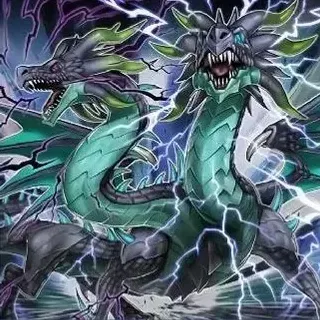
Thunder Dragon Deck #670201 — Yu-Gi-Oh! Master Duel
42 Main, 15 Extra, incl. Batteryman Solar x3, Bystial Druiswurm x3, K9-17 Izuna x3.
Created by: YGO Mod (20517634)
Created On: 03/22/2026
Main Deck (42)
- Batteryman Solar x3
- Bystial Baldrake x2
- Bystial Druiswurm x3
- Bystial Magnamhut x1
- Droll & Lock Bird x2
- K9-04 Noroi x1
- K9-17 Izuna x3
- K9-66a Jokul x2
- K9-66b Lantern x1
- K9-ØØ Lupis x1
- Maxx "C" x1
- Mulcharmy Fuwalos x3
- Thunder Dragon x3
- Thunder Dragondark x3
- Thunder Dragonhawk x1
- Thunder Dragonroar x2
- Ash Blossom & Joyous Spring x3
- Effect Veiler x2
- Chaotic Elements x1
- Sekka's Light x3
- Thunder Dragon Fusion x1
Extra Deck (15)
- Thunder Dragon Colossus x2
- Thunder Dragon Titan x1
- Gorgon of Zilofthonia x1
- I:P Masquerena x1
- S:P Little Knight x1
- Underworld Goddess of the Closed World x1
- Chaos Angel x1
- CXyz N.As.Ch. Knight x1
- K9-17 "Ripper" x1
- N.As.H. Knight x1
- Number 104: Masquerade x1
- Number C104: Umbral Horror Masquerade x1
- Number C106: Giant Red Hand x1
- Vallon, the Super Psy Skyblaster x1
Couldn't load the deck
Deck — Deck Power Evaluation
Final Contextual Deck Power: 52/100 (±6 · Confidence: Medium)
| Overall score | Value |
|---|---|
| Structural Deck Power | 56 |
| Going First | 58 |
| Going Second | 60 |
| Meta Power | provisional |
| Tournament Reliability | 52 |
- Primary strategy: Midrange
- Secondary strategies: Toolbox, Stun
- Format: master-duel
Legality
Main 42 / Extra 15 / Side 0 — status: Legal.
Identity & game plan
- Win condition: Thunder Dragon Titan, Thunder Dragon Colossus and the Xyz/Link boss monsters (Chaos Angel, Umbral Horror Masquerade, Underworld Goddess) take over the board once the Thunder Dragon searcher chain resolves.; Bystial Druiswurm and Bystial Baldrake banish from the GY to reach 2500 ATK beatsticks and remove opposing monsters.
- Turn 1 (going first): Open a searcher (Thunder Dragon, Thunder Dragondark, K9-66a Jokul or Thunder Dragonroar), discard it to fetch the next Thunder Dragon, then Normal Summon a Level 5 K9 or Thunder monster to start a Fusion, Xyz or Link line, holding Ash Blossom and Droll as protection.
- Turn 2 (going second): Use hand traps (Ash Blossom, Effect Veiler, Droll and Lock Bird, Maxx C) to answer the opponent's first summon or search, then rebuild through the GY recursion effects of Dragonroar and Dragonhawk.
- Recovery: Recurse banished or GY Thunder Dragons (Dragonroar, Dragonhawk, Dragondark) and use the Bystial banish-from-GY effects to re-enable a Special Summon line.
- After siding: No side deck is registered, so there is no post-side plan; the deck cannot change its configuration between games.
Why it scores here
The deck reliably opens a searcher chain: 14 searcher-text cards give about 88% odds of at least one in a 5-card opening hand, so the engine is accessible even though the core Thunder Dragon (3 copies) is only about 32% live on the opening hand alone. Recursion through the GY and banish zones (Dragonroar, Dragonhawk, Dragondark, Bystial) and eight hand traps let the deck keep converting after the opponent interrupts, which carries the Midrange score. Interaction is layered across hand traps, negate-text Xyz and Link monsters and the Bystial removal effects, which supports the endboard score. The score is not raised by popularity: the archetype appears as a guide-backed build but has no meta-share or tournament data, and no combo boards were recorded, so the combo ceiling and median are text-only inferences. The rubric was applied to the deck as a system and no card scores were averaged; the score is held down by the absence of a side deck and the lack of any recorded combos.
Dimension scores
| # | Dimension | Score | Evidence |
|---|---|---|---|
| D1 | Engine Accessibility & Consistency | 62 | P(at least one searcher in opening 5) ~0.88 across 14 searcher-text cards; core Thunder Dragon 3 copies P>=1 ~0.32 in hand of 5 (Inferred) |
| D2 | Opening-Hand Quality & Brick Management | 58 | 21 distinct main cards with 8 hand traps and 14 searchers gives redundant but low-density openings; 8 singletons add some brick risk (Inferred) |
| D3 | Combo Conversion & Ceiling | 45 | No parseable boards, so the ceiling is a text-only read of Bystial/Thunder Dragon removal and Xyz/Link negations (Inferred) |
| D4 | Combo Floor & Median Output | 42 | No combo evidence supplied, so the median output cannot be measured; kept low to reflect the absence of data (Provisional) |
| D5 | Interruption Resilience & Route Redundancy | 60 | GY and banish recursion (Dragonroar, Dragonhawk, Dragondark) plus two independent starter families give some route redundancy (Inferred) |
| D6 | Resource Economy, Recovery & Grind | 66 | Recursion from GY and banish zones and searcher text give strong rebuild value; no resource signature is recorded (Inferred) |
| D7 | End-Board & Interaction Quality | 62 | Ash Blossom, Effect Veiler, Droll and Lock Bird, Maxx C and multiple negate-text Xyz/Link monsters give broad, layered interaction (Inferred) |
| D8 | Going-Second & Board-Breaking Power | 55 | Hand traps are strong on the going-second turn (P>=1 hand trap in 6 cards ~0.74), but no going-second split data exists (Inferred) |
| D9 | Offensive Pressure & Closing Power | 60 | Extra Deck closers reach 3000 to 3500 ATK (Chaos Angel, Umbral Horror Masquerade, Underworld Goddess, Thunder Dragon Titan) but no ATK-conversion data exists (Verified stats / Inferred) |
| D10 | Main Deck Efficiency & Flexibility | 62 | 42 main cards with 21 distinct names and an exact Thunder Dragon name purity of about 23% (archetype_spread shows K9, Bystial and others); compact enough but loosely pure (Verified) |
| D11 | Extra Deck Efficiency & Coverage | 68 | 15 Extra slots hold 3 Fusion, 7 Xyz, 4 Link and 1 Synchro with broad coverage across lines (Verified / Inferred) |
| D12 | Side Deck Adaptability | 30 | Side deck is empty (Side Deck size 0), so no post-side adaptability can be credited (Verified) |
| D13 | Matchup Coverage & Format Fit | 45 | No tournament link and no dated meta sample, so format fit is Provisional; archetype-level usage is only 'core Thunder Dragon present' (Provisional) |
| D14 | Pilotability & Error Tolerance | 45 | Multi-step searcher chains with several optional hand-trap timings give moderate complexity (Inferred) |
How the score was computed
Strategy profile: Midrange. Structural ≈ 56, Going First ≈ 58, Going Second ≈ 60, Meta = provisional, Tournament Reliability ≈ 52. Modifiers: no side deck (-2); banlist exposure (-1). Final formula: 0.80*Structural + 0.20*TournamentReliability + ContextModifiers (Meta provisional); 0.80*56.02 + 0.20*52 - 3 = 52.2
Probability & combo summary
- Opening a starter: P(≥1) ≈ 0.32 · key two-card combo ≈ — · full-brick estimate ≈ — (all Inferred)
- Combo output: best PowerIndex —, median —, board-per-starter —
- Turn order: 0 going-first lines vs 0 going-second lines
Strengths
- Searcher density (14 searcher-text cards) makes the engine accessible in most openings
- Recursion from GY and banish keeps the deck resilient after one interruption
- Layered interaction with eight hand traps and multiple negate-text Extra Deck monsters
- Extra Deck coverage across Fusion, Xyz, Link and Synchro gives several closing routes
Weaknesses
- No side deck, so the deck cannot adapt between games
- Exact archetype purity is about 23%, so the engine relies on splash and generic cards
- Core Thunder Dragon is only about 32% live in a 5-card opening hand
- No recorded combo boards, so the combo ceiling and median cannot be verified
Critical choke points
- The first searcher (Thunder Dragon, Thunder Dragondark, K9-66a Jokul or Thunder Dragonroar) is needed for most lines and its loss to a single hand trap or Ash Blossom slows the start
- Single-copy Limited cards (Bystial Magnamhut, Maxx C) are removal and draw density that cannot be replaced by a second copy
Recommended changes
| Priority | Remove | Add | Reason |
|---|---|---|---|
| 1 | one Maxx C | a second Thunder Dragon-family searcher or a Thunder Dragon-compatible hand trap | Maxx C is a Limited single copy that leaves the opening hand; a second searcher raises the core Thunder Dragon hit rate |
| 2 | one tech card with no archetype synergy | a side deck of 5 to 8 cards covering the most common opposing engine | A side deck is absent entirely, so a short side plan restores the post-side score dimension |
Evidence & confidence
- Verified: 42 main and 15 extra cards meet master-duel size rules with no violations; All four restricted cards are within their legal copy limits (Bystial Magnamhut 1/1, Maxx C 1/1, Droll and Lock Bird 2/2, K9-66a Jokul 2/2); Thunder Dragon exact-name purity is 22.8% per archetype_spread; Usage statistics show the Thunder Dragon core at 100% inclusion (3 copies); Side deck is empty
- Observed: Three guides cover the archetype build (topic_ids 530, 508, 132)
- Inferred: P(at least one searcher in hand5) ~0.88 gives high engine accessibility; Hand-trap density gives strong going-second interaction (P>=1 in hand6 ~0.74); Recursion through the GY and banish zones gives route redundancy; Layered negation and removal give good endboard quality
- Provisional: Meta Power and matchup fit need a dated metagame sample, which is absent; Tournament reliability is estimated from consistency dimensions only
- Data gaps: no combos supplied; combo floor, median and ceiling are text-only inference no tournament link; archetype meta-share and per-pilot match record are absent no win-rate telemetry for going-first, going-second, matchups, or brick and starter rates Meta Power is Provisional without a dated metagame sample no side deck registered, so no post-side performance can be assessed
Couldn't load the combos