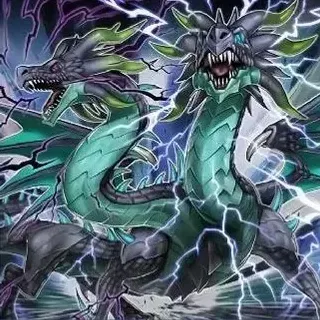
Thunder Dragon Deck #660740 — Yu-Gi-Oh! Duel Links
30 Main, 9 Extra, incl. Aloof Lupine x3, Thunder Dragon x3, Thunder Dragondark x3 - Skill: Princess Adena's Protection.
Created by: YGO Mod (20517634)
Created On: 03/11/2026

 Princess Adena's Protection
Main Deck (30)
- Aloof Lupine x3
- Chaos Dragon Levianeer x2
- Nibiru, the Primal Being x2
- Radian, the Multidimensional Kaiju x2
- Thunder Dragon x3
- Thunder Dragondark x3
- Thunder Dragonhawk x3
- Thunder Dragonmatrix x2
- Thunder Dragonroar x3
- Book of Eclipse x3
- Final Bringer of the End Times x1
- Forbidden Droplet x2
- Thunder Dragon Fusion x1
Extra Deck (9)
Couldn't load the deck
Deck — Deck Power Evaluation
Final Contextual Deck Power: 61/100 (±6 · Confidence: Medium)
| Overall score | Value |
|---|---|
| Structural Deck Power | 63.3 |
| Going First | 66 |
| Going Second | 62 |
| Meta Power | provisional |
| Tournament Reliability | 62 |
- Primary strategy: Combo
- Secondary strategies: Midrange
- Format: duel-links
Legality
Main 30 / Extra 9 / Side 0 — status: Legal.
Identity & game plan
- Win condition: Search and recycle Thunder Dragon starters into Thunder Dragon Colossus or Thunder Dragon Titan, then close with a 2600-3200 ATK fusion body, backed by Chaos Dragon Levianeer and Nibiru as high-ATK threats.; Link and Xyz beatdown through Knightmare and Underworld Goddess once the Thunder Dragon engine has put monsters on the field.
- Turn 1 (going first): Turn 1: a Thunder Dragon searcher (Thunder Dragonroar, Thunder Dragon, Thunder Dragondark or Thunder Dragonhawk) discards to add or revive another Thunder Dragon piece, then the second starter extends into a fusion or link route.
- Turn 2 (going second): Use Forbidden Droplet, Book of Eclipse or Nibiru to disrupt the opposing board, then rebuild from the graveyard and banish zone with the Thunder Dragon recursion effects and finish with a fusion or Chaos Dragon Levianeer.
- Recovery: Recursion from the graveyard and banish zone (Thunder Dragonroar, Thunder Dragonhawk, Thunder Dragondark, Thunder Dragonmatrix) restores the searcher count after a disruption, and the 15 searcher-text cards provide redundant reloads.
- After siding: Not applicable: Duel Links has no side deck, so the deck cannot adjust between games.
Why it scores here
The deck reliably opens a functional plan: about 98% of opening hands contain at least one of its 15 searcher-text cards, and the 17 archetype-core copies are present in almost every opening hand, so the engine is live on turn 1 or 2 for most draws. Conversion is real but unproven: the deck has two fusion monsters, two link monsters and an Xyz monster that can turn the searched starters into 2600 to 3200 ATK bodies. Recursion from the graveyard and banish zone gives it redundancy after a disruption, and interaction is present but thin (Book of Eclipse, Forbidden Droplet, Final Bringer, Knightmare Phoenix, Underworld Goddess, and Nibiru as a hand-triggered answer). No recorded boards exist, so the floor, median and ceiling are inferred from card text rather than observed. The score comes from consistency, closing bodies and recovery on the system, not from the deck being a popular archetype and not from averaging card scores.
Dimension scores
| # | Dimension | Score | Evidence |
|---|---|---|---|
| D1 | Engine Accessibility & Consistency | 72 | P(at least one searcher in 5 cards) about 0.98; P(at least one archetype-core card in 5 cards) about 0.99; only 1 Thunder Dragon Fusion spell, so most fusions depend on the hand-summon route (Inferred) |
| D2 | Opening-Hand Quality & Brick Management | 62 | Copy histogram of 2/5/6 across 13 distinct main-deck cards with many 3-of starters; Levianeer, Radian and Final Bringer are dead without board or graveyard setup (Inferred) |
| D3 | Combo Conversion & Ceiling | 58 | No recorded boards; the ceiling is read from card text as a 2-3 card line into a 3000 ATK fusion or link body (Inferred) |
| D4 | Combo Floor & Median Output | 52 | No recorded boards; median output is unknown and set near the midpoint because the searcher density is high but the interaction density is low (Inferred) |
| D5 | Interruption Resilience & Route Redundancy | 66 | Searcher redundancy and graveyard recursion give several independent starters; no observed interruption data (Inferred) |
| D6 | Resource Economy, Recovery & Grind | 70 | Multiple graveyard and banish recursion effects (Dragonroar, Dragonhawk, Dragondark, Dragonmatrix) recover the engine after spending cards (Verified text, Inferred value) |
| D7 | End-Board & Interaction Quality | 60 | Interaction is 2-3 copies of Book of Eclipse and Forbidden Droplet, one Final Bringer, plus Knightmare Phoenix and Underworld Goddess on the Extra Deck (Verified text, Inferred quality) |
| D8 | Going-Second & Board-Breaking Power | 58 | Going-second answers are Forbidden Droplet, Book of Eclipse and Nibiru, but no observed going-second data exists (Inferred) |
| D9 | Offensive Pressure & Closing Power | 74 | End-board bodies include Thunder Dragon Titan 3200, Thunder Dragon Colossus 2600, Levianeer 3000, Nibiru 3000 and Underworld Goddess 3000 (Verified stat) |
| D10 | Main Deck Efficiency & Flexibility | 70 | 30 main-deck cards with 7 spells and 23 monsters; 13 distinct cards; mostly 3-of starters with a small amount of tech (Verified composition) |
| D11 | Extra Deck Efficiency & Coverage | 70 | 9 Extra Deck cards: 4 fusion, 4 link, 1 Xyz; the link and fusion slots are mostly mandatory, with Knightmare Phoenix and Gallant Granite as the flex options (Verified composition) |
| D12 | Side Deck Adaptability | 40 | No side deck exists in Duel Links, so no post-side adaptation is possible; scored as a neutral placeholder (Provisional) |
| D13 | Matchup Coverage & Format Fit | 50 | No dated metagame share or tournament link is available for this archetype (Provisional) |
| D14 | Pilotability & Error Tolerance | 58 | Three-step fusion, link and Xyz routes with several hand-triggered summons, requiring multiple decision points per turn (Inferred) |
How the score was computed
Strategy profile: Combo. Structural ≈ 63.3, Going First ≈ 66, Going Second ≈ 62, Meta = provisional, Tournament Reliability ≈ 62. Modifiers: single fusion-spell reliance (-2). Final formula: 0.80*Structural(63.3) + 0.20*TournamentReliability(62) + modifiers(-2) = 61 (Meta provisional)
Probability & combo summary
- Opening a starter: P(≥1) ≈ 0.98 · key two-card combo ≈ — · full-brick estimate ≈ 0.01 (all Inferred)
- Combo output: best PowerIndex —, median —, board-per-starter —
- Turn order: 0 going-first lines vs 0 going-second lines
Strengths
- Very high searcher density (15 cards) makes the engine live on turn 1 or 2 for nearly every hand
- Graveyard and banish recursion lets the deck rebuild after disruption
- High-ATK closing bodies in both the fusion and main deck (Titan, Colossus, Levianeer, Nibiru)
Weaknesses
- Interaction is thin and mostly conditional (Book of Eclipse, Forbidden Droplet, Final Bringer)
- Only one Thunder Dragon Fusion spell, so fusion access depends on specific hand-summon conditions
- Several main-deck cards (Levianeer, Radian, Final Bringer) are dead without setup
- Only 48.7% of the main deck is exact archetype names, so the engine relies on off-archetype support cards
Critical choke points
- Thunder Dragon Fusion is the only fusion spell; if it is not drawn, fusion routes depend on specific Thunder effects being active
- Going second, the deck has to rebuild after its starters are answered, and the interaction count is low
Recommended changes
| Priority | Remove | Add | Reason |
|---|---|---|---|
| 1 | 1 Aloof Lupine | 1 Thunder Dragon Fusion | Lupine is off-archetype and only a generic searcher, while a second Fusion spell raises the reliability of reaching Thunder Dragon Colossus and Titan. |
Evidence & confidence
- Verified: Deck is legal in Duel Links: 30 main cards within 20-30, 9 Extra Deck cards within 0-9, no banned or limited cards; Card text and stats of all listed cards match the card data; Exact-name archetype purity of 48.7% (19 of 39 core copies)
- Inferred: Consistency is high: about 98% of opening hands include a searcher and about 99% include an archetype-core card; Going-first and going-second strength estimated from card text and draw odds, not from recorded games; Combo ceiling and median inferred from text, since no boards were recorded
- Provisional: Matchup and format fit cannot be scored without a dated metagame sample; Side deck adaptability is not applicable and held at a neutral placeholder
- Data gaps: No recorded combo boards, so floor, median and ceiling are text-only inference No tournament link, so archetype meta-share and per-pilot records are absent No win-rate telemetry for going first, going second, matchups or brick rates The archetype usage statistics flag Thunder Dragon Colossus and Thunder Dragon Titan as not in this deck even though both appear in the Extra Deck list, so the usage-based core check is unreliable Many of the usage-statistic core cards belong to other archetypes (Bystial, Orcust, Number), so they do not describe this deck's core
Couldn't load the combos