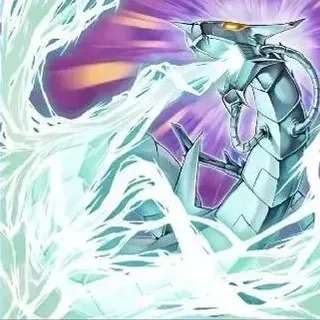
Cyber Dragon Deck #595015 — Yu-Gi-Oh! Master Duel
40 Main, 15 Extra, incl. Cyber Dragon Core x3, Mulcharmy Fuwalos x3, Ash Blossom & Joyous Spring x3.
Created by: YGO Mod (20517634)
Created On: 11/16/2025
Main Deck (40)
- Cyber Dragon x2
- Cyber Dragon Core x3
- Cyber Dragon Herz x1
- Cyber Dragon Nachster x1
- Cyber Jormungardr x1
- Cyberdark Chimera x2
- Cyberdark Claw x1
- Cyberdark Wurm x1
- Jizukiru, the Star Destroying Kaiju x1
- Mulcharmy Fuwalos x3
- Mulcharmy Meowls x1
- Mulcharmy Purulia x1
- Therion "King" Regulus x1
- Ash Blossom & Joyous Spring x3
- Cyber Emergency x3
- Cyber Repair Plant x1
- Cyberdark Realm x3
- Cybernetic Horizon x1
- Heavy Storm x1
- Lightning Storm x1
- Polymerization x1
- Power Bond x1
- Raigeki x1
- Triple Tactics Thrust x2
- Infinite Impermanence x3
Extra Deck (15)
Couldn't load the deck
Deck — Deck Power Evaluation
Final Contextual Deck Power: 50/100 (±10 · Confidence: Low)
| Overall score | Value |
|---|---|
| Structural Deck Power | 57 |
| Going First | 52 |
| Going Second | 56 |
| Meta Power | provisional |
| Tournament Reliability | 50 |
- Primary strategy: Combo
- Secondary strategies: Blind-Second/OTK, Toolbox
- Format: master-duel
Legality
Main 40 / Extra 15 / Side 0 — status: Legal.
Identity & game plan
- Win condition: Fusion boards (Cyber End Dragon, Cyberdark End Dragon, Cyber Twin Dragon) built from Cyber Dragon and Cyberdark materials, closing with piercing or double-attack damage and Power Bond burst; Direct damage from Power Bond and Mulcharmy draw pressure into a long game
- Turn 1 (going first): Normal Summon Cyber Dragon Core to search a Cyber spell or trap, then use Cyber Dragon Nachster or Cyber Dragon Herz to reach a first Fusion Summon, protected by Infinite Impermanence or Ash Blossom & Joyous Spring
- Turn 2 (going second): Hold Ash Blossom & Joyous Spring and Infinite Impermanence against the opponent's starter, then rebuild through Cyber Dragon (Special Summoned when only the opponent controls a monster) into a Fusion
- Recovery: Cyber Repair Plant and Cyber Dragon Herz recover Cyber Dragons from the Graveyard, and Cyberdark Realm and Cybernetic Horizon refill the hand with searchers
- After siding: No side deck is registered, so the deck has no post-side plan and must rely on its main deck for every matchup
Why it scores here
The deck reliably opens a functional starter in roughly 69% of going-first opening hands (5-card hand, about 8 starter-capable copies) and about 76% going second, so the engine is accessible but not dependable on the first turn. Its interaction package is the strongest part of the system: six hand traps (Infinite Impermanence and Ash Blossom & Joyous Spring at 3 copies each) plus card text for negation and removal give it layered protection of the first Fusion Summon. Its conversion ceiling comes from Fusion boards that end with piercing or double-attack damage, but there are no recorded boards to show how often that ceiling is reached, so the median output stays text-inferred and uncertain. The deck loses points for its incoherent build: 5 Mulcharmy copies and an engine lock on Machine monsters conflict with the Cyber Dragon plan, only 36% of the archetype-standard core is present, and there is no side deck at all. Popularity and archetype usage were not credited, and the score comes from the system as a whole rather than from averaging card scores.
Dimension scores
| # | Dimension | Score | Evidence |
|---|---|---|---|
| D1 | Engine Accessibility & Consistency | 58 | P(at least one starter-capable card in 5 cards) is about 0.69 across roughly 8 starter cards; P(at least one in 6 going second) is about 0.76 (Inferred) |
| D2 | Opening-Hand Quality & Brick Management | 48 | Six hand traps and nineteen searcher effects offer a good chance of a working hand, but five Mulcharmy cards and a Machine lock add dead or conflicting draws (Inferred) |
| D3 | Combo Conversion & Ceiling | 65 | Ceiling read from card text only: Fusion boards with piercing or double attack, plus Power Bond burst; no recorded boards exist to confirm it (Inferred) |
| D4 | Combo Floor & Median Output | 45 | No recorded boards, so the median output cannot be measured and is estimated only from text and the guides' descriptions (Inferred) |
| D5 | Interruption Resilience & Route Redundancy | 55 | Two hand-trap families protect the starter, and Cyber Repair Plant and Cyber Dragon Herz recur Cyber Dragons; there is no second independent line recorded (Inferred) |
| D6 | Resource Economy, Recovery & Grind | 62 | Nineteen searcher-text cards and recursion from the Graveyard support rebuilds; Power Bond costs life, which lowers the score (Inferred) |
| D7 | End-Board & Interaction Quality | 66 | Eleven negation-text and nine removal-text cards, with Heavy Storm, Lightning Storm and Raigeki, give layered end-board interaction (Inferred from text) |
| D8 | Going-Second & Board-Breaking Power | 60 | Strong going-second hand traps and removal-text cards challenge a board; the 65% chance of a hand trap in a going-second hand supports this (Inferred) |
| D9 | Offensive Pressure & Closing Power | 68 | Cyber End Dragon (4000 ATK, piercing), Cyberdark End Dragon (5000 ATK) and Cyber Twin Dragon (double attack) give strong end-board pressure (Verified stats, Inferred use) |
| D10 | Main Deck Efficiency & Flexibility | 50 | Forty cards with 16 singletons and 5 off-plan Mulcharmy cards dilute consistency, and the copy spread is uneven (Verified composition, Inferred impact) |
| D11 | Extra Deck Efficiency & Coverage | 62 | Fifteen Fusion cards with 11 distinct names; most are reachable from Cyber Dragon materials, though several are niche (Verified composition, Inferred) |
| D12 | Side Deck Adaptability | 30 | No side deck is registered, so post-side adaptability is effectively zero for this list (Verified) |
| D13 | Matchup Coverage & Format Fit | 42 | No dated meta sample or tournament link; a Vietnamese guide says the deck is still not strong enough in the current meta (Provisional) |
| D14 | Pilotability & Error Tolerance | 45 | Multi-step Fusion routes and several conditional summon effects demand careful sequencing, but the core lines are short (Inferred) |
How the score was computed
Strategy profile: Combo. Structural ≈ 57, Going First ≈ 52, Going Second ≈ 56, Meta = provisional, Tournament Reliability ≈ 50. Modifiers: engine conflict (-3); weak post-side plan (-2). Final formula: 0.80*Structural + 0.20*TournamentReliability (Meta provisional); structural 56.7 gives 55.3 before modifiers, then -5 modifiers = 50
Probability & combo summary
- Opening a starter: P(≥1) ≈ 0.69 · key two-card combo ≈ — · full-brick estimate ≈ — (all Inferred)
- Combo output: best PowerIndex —, median —, board-per-starter —
- Turn order: 0 going-first lines vs 0 going-second lines
Strengths
- Layered hand-trap protection: six hand traps covering the first Fusion Summon
- Strong Fusion end-boards with piercing and double attack
- Nineteen searcher-text cards give good consistency for finding starters
Weaknesses
- Five Mulcharmy cards and a Machine lock conflict with the Cyber Dragon plan
- Only about 36% of the archetype-standard core is present, so the engine is less coherent than the archetype norm
- No side deck, so no post-side adaptation
- Going-first starter access is only about 69%, so one unlucky opening hand can stall the turn
Critical choke points
- The first Cyber Dragon or Cyber Dragon Core summon, which everything else depends on
- Hand-trap protection of the first Fusion Summon, which the two 3-copy hand traps mainly cover
Recommended changes
| Priority | Remove | Add | Reason |
|---|---|---|---|
| 1 | Mulcharmy Purulia and one Mulcharmy Fuwalos | Cyber Dragon Sieger (listed as a core card in archetype usage stats, not in this list) | Cutting the off-plan Machine-lock cards reduces dead draws and engine conflict; the replacement is Inferred from usage stats, not card text |
Evidence & confidence
- Verified: Legal in Master Duel: 40 main, 15 Extra, 0 side; Heavy Storm at 1 copy, its Limited cap; Copy histogram: 16 singletons, 3 two-copy cards, 6 three-copy cards; Exact archetype-name purity is 21.8%; Fifteen Fusion cards in the Extra Deck
- Inferred: Starter access about 69% going first and 76% going second; Hand-trap protection of the first Fusion Summon; Ceiling from card text (Fusion boards, Power Bond burst); Interaction quality from negation and removal text
- Provisional: Meta position: the only meta signal is a guide saying the deck is not strong enough in the current meta; Matchup fit has no dated sample
- Data gaps: No recorded combos, so the floor, median and ceiling are text-only inference No tournament link, so archetype meta-share and pilot results are absent No win-rate telemetry (going first or second, matchup, brick or starter rates) No side deck registered for this list Core-presence flags conflict with the card list: Cyber Eternity Dragon, Chimeratech Megafleet Dragon and Chimeratech Fortress Dragon are marked as not in this deck but appear in the Extra Deck, so core coverage (36%) may be understated Meta Power is provisional without a dated metagame sample
Couldn't load the combos