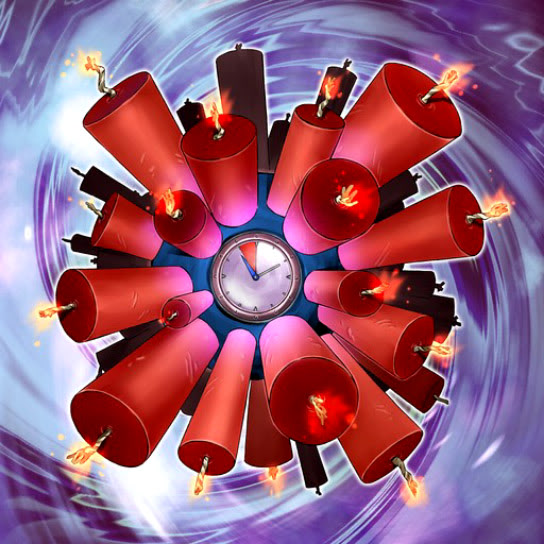
Chain Burn Deck #509793 — Yu-Gi-Oh! Master Duel
40 Main, 15 Extra, incl. Lava Golem x3, Mulcharmy Fuwalos x3, Mahaama the Fairy Dragon x3 - Tournament: Tuần #5.
Created by: quoctuan2003 (57034162)
Top 2 giải Mythic Ascension Meta Weekly Tuần #5
Created On: 06/29/2025
Main Deck (40)
- Dimension Shifter x1
- Kashtira Fenrir x1
- Kashtira Riseheart x1
- Kashtira Unicorn x2
- Lava Golem x3
- Mulcharmy Fuwalos x3
- Mahaama the Fairy Dragon x3
- Kashtiratheosis x1
- Bad Luck Blast x2
- Ceasefire x3
- Dimension Wall x3
- Gravedigger's Trap Hole x3
- Just Desserts x3
- Magic Cylinder x2
- Ring of Destruction x2
- Secret Barrel x3
- Secret Blast x3
- Trap Trick x1
Extra Deck (15)
- Accesscode Talker x1
- Knightmare Cerberus x1
- Knightmare Phoenix x1
- S:P Little Knight x1
- Dark Armed, the Dragon of Annihilation x2
- Divine Arsenal AA-ZEUS - Sky Thunder x1
- Kashtira Arise-Heart x2
- Kashtira Shangri-Ira x2
- Number 11: Big Eye x1
- Red-Eyes Flare Metal Dragon x2
- Super Starslayer TY-PHON - Sky Crisis x1
Couldn't load the deck
Top 2 giải Mythic Ascension Meta Weekly Tuần #5 — Deck Power Evaluation
Final Contextual Deck Power: 53/100 (±7 · Confidence: Medium)
| Overall score | Value |
|---|---|
| Structural Deck Power | 52.7 |
| Going First | 55 |
| Going Second | 58 |
| Meta Power | provisional |
| Tournament Reliability | 55 |
- Primary strategy: Stun
- Secondary strategies: Toolbox
- Format: master-duel
Legality
Main 40 / Extra 15 / Side 0 — status: Legal.
Identity & game plan
- Win condition: Burn damage via multiple Trap cards and the hand‑trap Dimension Shifter; Damage from high‑ATK Xyz/Link monsters and occasional monster effects
- Turn 1 (going first): Set a suite of burn traps (Secret Blast, Just Desserts, Secret Barrel, etc.), activate Dimension Shifter if possible, aim for early damage on opponent’s turn.
- Turn 2 (going second): Use Dimension Shifter to lock the GY, flood the opponent with burn traps, and respond to their board with Magic Cylinder, Ring of Destruction, or Gravedigger's Trap Hole.
- Recovery: If the burn engine is disrupted, fall back to generic damage traps and draw engines (Mulcharmy Fuwalos, Knightmare Phoenix) to rebuild hand advantage.
- After siding: No side deck; the deck cannot adapt after side‑decking.
Why it scores here
The deck reliably opens with a high‑probability burn engine, thanks to a 99 % chance of drawing at least one core trap in the opening hand. It converts that starter into steady damage and can still apply pressure even when a single trap is negated, thanks to many independent burn cards and a hand‑trap floodgate. Resource recovery is modest, relying on occasional draw effects, and the lack of a side deck limits post‑side adaptability. Overall the system is consistent but hampered by low deck purity and a heavy filler load, which caps its power in the middle range.
Dimension scores
| # | Dimension | Score | Evidence |
|---|---|---|---|
| D1 | Engine Accessibility & Consistency | 85 | Core group (24 copies) appears in opening hand with P≈0.9934; starter reliability high (Inferred) |
| D2 | Opening-Hand Quality & Brick Management | 60 | 25 Traps + 26 Normal cards create potential garnish; conditional monsters (Lava Golem, Kashtira) raise brick risk (Inferred) |
| D3 | Combo Conversion & Ceiling | 55 | No parsed combo boards; best conceivable line would involve Kashtira Xyz + burn traps, but unproven (Inferred) |
| D4 | Combo Floor & Median Output | 45 | Typical game will only resolve a few burn traps; median output modest without combo data (Inferred) |
| D5 | Interruption Resilience & Route Redundancy | 70 | Multiple independent burn traps and hand‑trap floodgate give redundancy against single negations (Inferred) |
| D6 | Resource Economy, Recovery & Grind | 55 | Draw engines (Mulcharmy Fuwalos, Knightmare Phoenix) are situational; overall resource economy moderate (Inferred) |
| D7 | End-Board & Interaction Quality | 65 | Negation traps (Gravedigger's Trap Hole, Magic Cylinder) and Xyz monsters with damage effects provide interaction depth (Inferred) |
| D8 | Going-Second & Board-Breaking Power | 60 | Six‑card hand on go‑second lets the deck load many burn traps and board‑breakers like Ring of Destruction (Inferred) |
| D9 | Offensive Pressure & Closing Power | 55 | Burn damage can close games; Xyz monsters add extra damage but not guaranteed (Inferred) |
| D10 | Main Deck Efficiency & Flexibility | 40 | 40‑card main deck is 65 % traps, 35 % filler; low archetype purity reduces efficiency (Inferred) |
| D11 | Extra Deck Efficiency & Coverage | 55 | 15‑card Extra Deck mixes generic XYZ and thematic Kashtira/Link cards; coverage decent but some slots redundant (Inferred) |
| D12 | Side Deck Adaptability | 0 | Side deck count is 0; no post‑side plan (Verified) |
| D13 | Matchup Coverage & Format Fit | 40 | No tournament context; meta fit unknown, score provisional (Provisional) |
| D14 | Pilotability & Error Tolerance | 45 | Many decision points (trap selection, monster summons) increase error tolerance difficulty (Inferred) |
How the score was computed
Strategy profile: Stun. Structural ≈ 52.7, Going First ≈ 55, Going Second ≈ 58, Meta = provisional, Tournament Reliability ≈ 55. Modifiers: No side deck (-5); Low archetype purity (-3). Final formula: 0.80*Structural + 0.20*TournamentReliability (Meta provisional)
Probability & combo summary
- Opening a starter: P(≥1) ≈ 0.99 · key two-card combo ≈ — · full-brick estimate ≈ 0.01 (all Inferred)
- Combo output: best PowerIndex —, median —, board-per-starter —
- Turn order: 0 going-first lines vs 0 going-second lines
Strengths
- Very high opening‑hand consistency for burn traps
- Multiple independent damage sources (burn traps, hand‑trap floodgate)
- Negation and removal traps add interaction depth
Weaknesses
- Low deck purity; many filler cards dilute engine
- No side deck limits adaptability after ban‑list changes or matchup pressure
- Reliance on conditional monsters (Lava Golem, Kashtira) creates brick risk
Critical choke points
- Dimension Shifter hand‑trap must be drawn to lock the GY
- Kashtira engine needs specific summons to reach Xyz monsters
- Mulcharmy Fuwalos draw effect depends on opponent special‑summoning
Recommended changes
| Priority | Remove | Add | Reason |
|---|---|---|---|
| 1 | Lava Golem, Kashtira Unicorn, Kashtira Fenrir, Kashtira Riseheart | Additional burn traps (e.g., Dark Hole? actually not burn) or more consistent damage cards like Dark Ruler Ha Des | Reduce conditional monsters that increase brick rate and free slots for more reliable burn sources |
| 2 | None (side deck empty) | Side‑deck cards such as Solemn Judgment, Cosmic Cyclone, and Twin Twisters | Provide post‑side adaptability and protection against backrow removal |
Evidence & confidence
- Verified: Legality status and copy limits; Side deck count = 0
- Inferred: All dimension scores derived from probabilities, card text and deck composition; Engine consistency from archetype core probability; Brick estimate from archetype core none‑in‑hand probability
- Provisional: Matchup coverage (no tournament data)
- Data gaps: No combos supplied — combo floor/median/ceiling is text‑only inference No tournament link — archetype meta‑share and per‑pilot match record absent No win‑rate telemetry exists in YGOVN (going‑first/second, matchup, brick rates) — signals are inferred or unknown
Couldn't load the combos