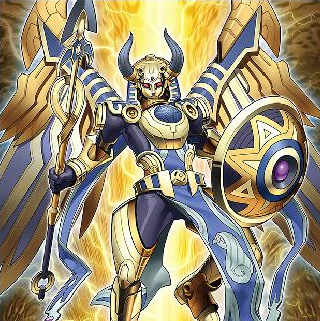
Horus Deck #444943 — Yu-Gi-Oh! Master Duel
42 Main, 15 Extra, incl. Heart of the Blue-Eyes x3, Imsety, Glory of Horus x3, Sengenjin Wakes from a Millennium x3.
Created by: YGO Mod (20517634)
Created On: 02/25/2025
Main Deck (42)
- Blue Dragon Summoner x1
- Duamutef, Blessing of Horus x1
- Exodia the Forbidden One x1
- Golem that Guards the Millennium Treasures x2
- Hapi, Guidance of Horus x1
- Heart of the Blue-Eyes x3
- Imsety, Glory of Horus x3
- Qebehsenuef, Protection of Horus x1
- Sengenjin Wakes from a Millennium x3
- Shield of the Millennium Dynasty x3
- Summoner Monk x3
- Left Arm of the Forbidden One x1
- Left Leg of the Forbidden One x1
- Right Arm of the Forbidden One x1
- Right Leg of the Forbidden One x1
- Foolish Burial Goods x1
- King's Sarcophagus x2
- Millennium Ankh x2
- Obliterate!!! Blaze x1
- Upstart Goblin x3
- Wedju Temple x2
- Angel Statue - Azurune x1
- Exxod Fires of Rage x3
- Obliterate!!! x1
Extra Deck (15)
- The Unstoppable Exodia Incarnate x2
- Apollousa, Bow of the Goddess x1
- I:P Masquerena x1
- S:P Little Knight x1
- Selene, Queen of the Master Magicians x3
- Silhouhatte Rabbit x1
- Coach King Giantrainer x1
- Constellar Ptolemy M7 x1
- Number 38: Hope Harbinger Dragon Titanic Galaxy x1
- Number 62: Galaxy-Eyes Prime Photon Dragon x1
- Number 90: Galaxy-Eyes Photon Lord x1
- Number C62: Neo Galaxy-Eyes Prime Photon Dragon x1
Couldn't load the deck
Deck — Deck Power Evaluation
Final Contextual Deck Power: 25/100 (±8 · Confidence: Medium)
| Overall score | Value |
|---|---|
| Structural Deck Power | 38 |
| Going First | 30 |
| Going Second | 33 |
| Meta Power | provisional |
| Tournament Reliability | 32 |
- Primary strategy: Combo
- Secondary strategies: FTK/Alternate-Win, Midrange
- Format: master-duel
Legality
Main 42 / Extra 15 / Side 0 — status under the rules at evaluation time: Illegal. 1 violation(s).
Identity & game plan
- Win condition: Horus recursion from the Graveyard on King's Sarcophagus, converting into board pressure through Imsety, Hapi, Duamutef and Qebehsenuef, with Galaxy-Eyes and Exodia Incarnate as the closers; Assembling the five Forbidden One pieces for an Exodia win, backed by Obliterate!!! Blaze and Exodia Incarnate
- Turn 1 (going first): Open Sarcophagus or a Millennium starter, place Wedju Temple or a Millennium monster as a Continuous Spell, then build toward a Horus Special Summon from the Graveyard
- Turn 2 (going second): Use the six-card hand to find King's Sarcophagus and a Horus body, then rebuild from the Graveyard if the opponent's interaction clears the board
- Recovery: Re-summon Horus monsters from the Graveyard while King's Sarcophagus remains face-up; Upstart Goblin and Imsety's search provide card flow
- After siding: No side deck is registered, so no post-side plan can be evaluated
Why it scores here
The deck is scored as a system, not by averaging its cards. Its main engine, King's Sarcophagus with Horus recursion, appears in only 2 copies and is in the opening hand about 23% of the time when going first, so the engine is often not live on turn 1. The Exodia pieces and Millennium cards add a second and third plan that compete for the same hand space, which lowers the floor and raises brick risk. There are no recorded boards, so the combo ceiling and median are text-based estimates with low certainty, and popularity or archetype standing earned no points. The list is also Illegal: Apollousa is Forbidden and was run once, which caps the final score and makes this a structural-only evaluation.
Dimension scores
| # | Dimension | Score | Evidence |
|---|---|---|---|
| D1 | Engine Accessibility & Consistency | 35 | King's Sarcophagus x2 and Imsety x3 are the Horus engine; P(at least one Sarcophagus in a 5-card opening) is about 0.23 (Inferred) |
| D2 | Opening-Hand Quality & Brick Management | 30 | Four singleton Forbidden One pieces and a 2-copy Exodia Incarnate are dead without their partners; 19 searcher-text cards help but brick risk is high (Inferred) |
| D3 | Combo Conversion & Ceiling | 40 | No recorded boards exist, so the ceiling rests on the Horus recursion and Exodia 5-piece text alone (Inferred) |
| D4 | Combo Floor & Median Output | 30 | No recorded boards exist, so the typical output is unknown and this estimate is text-based only (Inferred) |
| D5 | Interruption Resilience & Route Redundancy | 35 | Recursion through the Graveyard helps, but the lines depend on Sarcophagus staying face-up and there are few independent routes (Inferred) |
| D6 | Resource Economy, Recovery & Grind | 50 | Searcher and draw text is dense (Imsety, Upstart Goblin, Ankh), and Graveyard recursion regenerates resources (Inferred) |
| D7 | End-Board & Interaction Quality | 50 | Three negation-text cards and five removal-text cards exist, but no hand traps or floodgates are present (Verified card text, Inferred quality) |
| D8 | Going-Second & Board-Breaking Power | 40 | Going-second plan depends on rebuilding from the Graveyard against a set board; no hand traps or board breakers beyond the Galaxy-Eyes text (Inferred) |
| D9 | Offensive Pressure & Closing Power | 55 | Galaxy-Eyes Prime Photon Dragon at 4000 ATK and Exodia Incarnate close games, but reach depends on the line working (Verified stats, Inferred reach) |
| D10 | Main Deck Efficiency & Flexibility | 30 | 42 main-deck cards across 24 distinct names with 13 singletons and mixed Horus, Exodia, Millennium and Exodd pieces; the list is not compact (Verified counts, Inferred consequence) |
| D11 | Extra Deck Efficiency & Coverage | 40 | 15 Extra cards: 7 Link, 6 Xyz, 2 Fusion; the Link and Xyz choices are spread across several engines (Verified counts, Inferred) |
| D12 | Side Deck Adaptability | 10 | No side deck is registered, so adaptability cannot be scored and the value is a placeholder (Provisional) |
| D13 | Matchup Coverage & Format Fit | 35 | No tournament link or dated meta sample, so matchup fit is provisional (Provisional) |
| D14 | Pilotability & Error Tolerance | 35 | Several engines with several conditions per turn, plus the Forbidden One assembly, make this hard to pilot consistently (Inferred) |
How the score was computed
Strategy profile: Combo. Structural ≈ 38, Going First ≈ 30, Going Second ≈ 33, Meta = provisional, Tournament Reliability ≈ 32. Modifiers: banlist exposure (-8); engine conflicts (-4). Final formula: 0.80*Structural + 0.20*TournamentReliability (Meta provisional), then Illegal cap via modifiers; structural-only evaluation
Probability & combo summary
- Opening a starter: P(≥1) ≈ 0.23 · key two-card combo ≈ — · full-brick estimate ≈ — (all Inferred)
- Combo output: best PowerIndex —, median —, board-per-starter —
- Turn order: 0 going-first lines vs 0 going-second lines
Strengths
- Graveyard recursion gives the Horus lines repeat value
- Dense searcher text (19 cards) supports consistent card flow
- Two independent win routes: Horus pressure and the Exodia 5-piece finish
Weaknesses
- Illegal list: Apollousa is Forbidden
- Engine split across four archetypes lowers consistency
- Only 2 of 25 standard core cards for this archetype are present
- No side deck
Critical choke points
- King's Sarcophagus (2 copies): without it the Horus recursion is off
- Single-copy Forbidden One pieces: a missing piece turns the Exodia finish into a dead card
Recommended changes
| Priority | Remove | Add | Reason |
|---|---|---|---|
| 1 | Apollousa, Bow of the Goddess | A legal Link monster that fits the Link slots | Removes the Forbidden-card violation so the list can be legal |
| 2 | Off-engine singletons (for example Blue Dragon Summoner, Angel Statue - Azurune) | Extra copies of King's Sarcophagus or the core Horus monsters | Raises the chance the main engine is live on turn 1 and reduces dead cards |
| 3 | Exodia pieces, if the Exodia finish is not the plan | Horus or Millennium support | The five Forbidden One pieces need a dedicated plan; without it they are bricks |
Evidence & confidence
- Verified: Main deck 42 cards, extra deck 15 cards, side deck 0 cards; Apollousa is Forbidden and was run in 1 copy; Card text for the 2-copy Sarcophagus and the Horus recursion cards
- Inferred: Sarcophagus hand probability of about 0.23 going first; Brick risk from singleton Forbidden One pieces; Recursion-based resilience
- Provisional: Matchup fit and meta position (no dated meta sample); Side-deck adaptability (no side deck)
- Data gaps: No combos supplied, so the floor, median and ceiling are text-only inference No tournament link, so archetype meta-share and per-pilot match record are absent No win-rate telemetry, so going-first and going-second results are Inferred Meta Power is Provisional without a dated metagame sample Title is null and no side deck is registered
Couldn't load the combos